Former St. Louis Fed President James Bullard stated that he anticipates three interest rate cuts this year as inflation trends towards the central bank's target and the economy remains robust, emphasizing that this is the base case scenario.
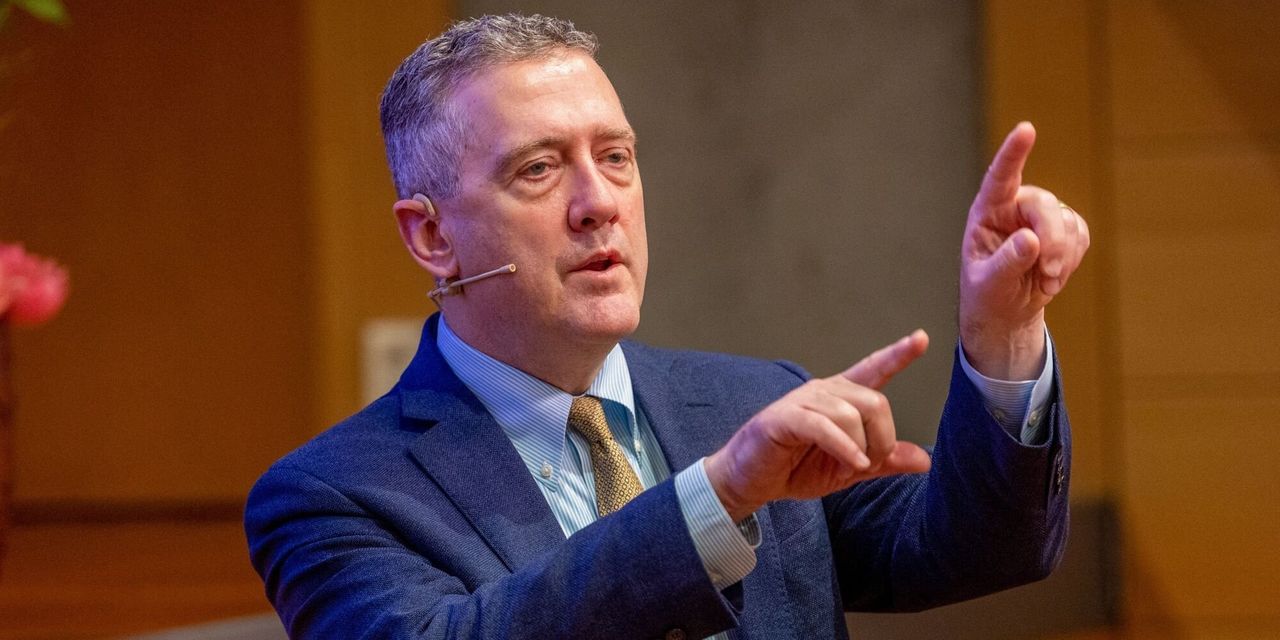
Former St. Louis Fed chief James Bullard believes that concerns about a recession have been disproven, as the U.S. economy faces new risks of stronger growth that may require higher interest rates to combat inflation in the coming months.
James Bullard, the President of the Federal Reserve Bank of St. Louis, has resigned from his position to become the dean of Purdue University's business school. Bullard, known for advocating stronger measures to combat inflation, will not participate in the next Fed policy meeting.
St. Louis Federal Reserve President James Bullard has dismissed concerns of a credit crunch in reaction to the turmoil in the financial system following the collapse of Silicon Valley Bank and other institutions in recent weeks. Bullard said he does not expect lending standards to rise to a level that would push the economy into a recession. Some economists have expressed concern that the series of high-profile bank failures in recent weeks could severely tighten credit for U.S. households and businesses, taking a toll on economic growth.
St. Louis Federal Reserve President James Bullard downplayed concerns over financial stress on the economic outlook, stating that financial stress readings have already retreated and financial conditions metrics remain low compared to the financial crisis of 2007-2009 and the onset of the pandemic in 2020. Bullard believes that the Fed needs to continue to raise interest rates to put pressure on high inflation, and that appropriate monetary policy can continue to put downward pressure on inflation.
St. Louis Fed President James Bullard raised his outlook for how high interest rates should rise by 25 basis points to 5.625% based on stronger economic data and under the assumption that financial stress weakens in weeks and months ahead. Bullard is optimistic stress in the banking system will abate in the weeks and months ahead, leaving a stronger economy that could force the central bank to push interest rates higher.