
Hubble Searches for Rare Black Holes Close to Earth
TL;DR Summary
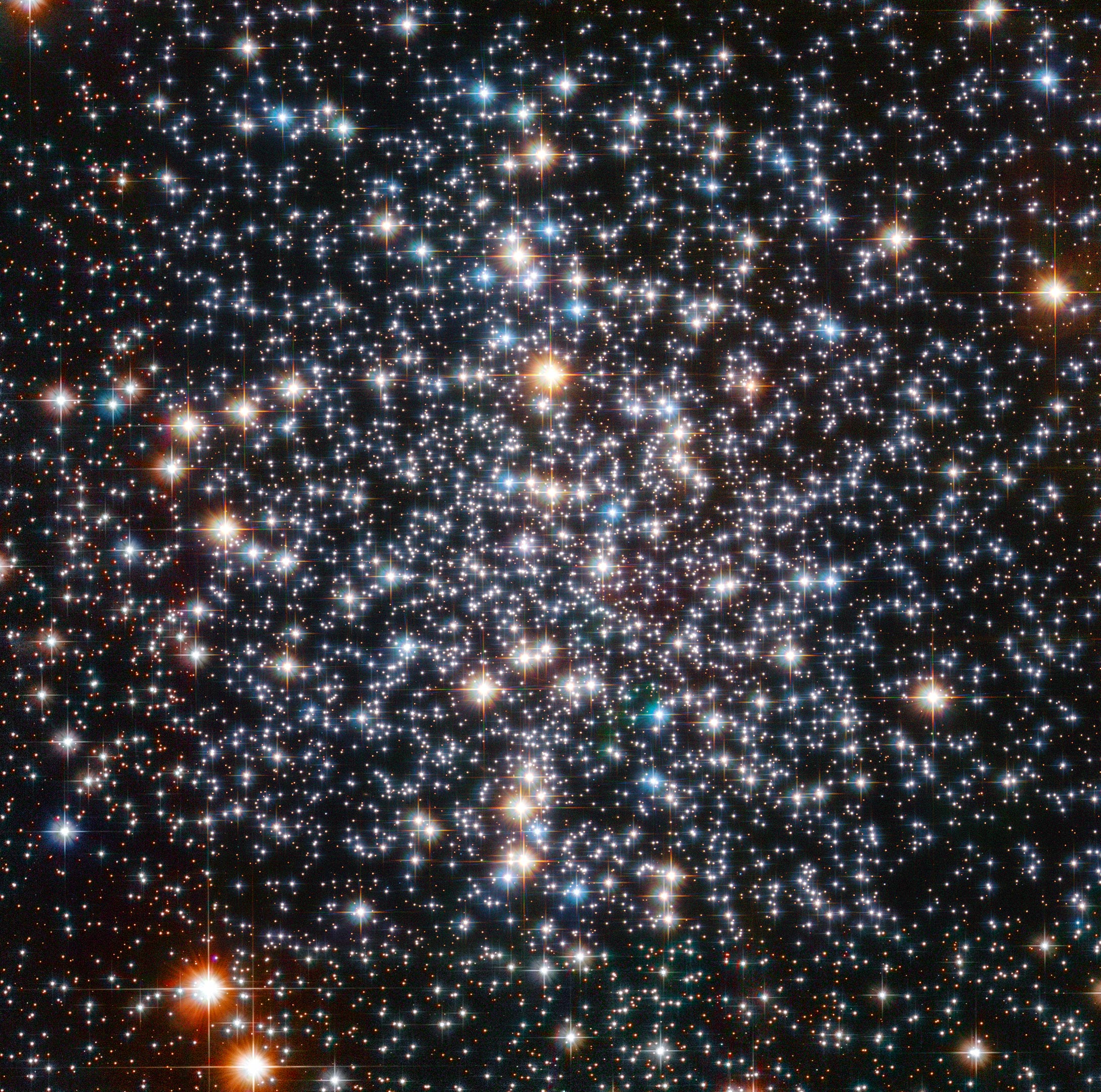
NASA's Hubble Space Telescope has detected a possible intermediate-mass black hole of roughly 800 solar masses in the core of the globular star cluster Messier 4, located 6,000 light-years away from Earth. The black hole's mass is calculated by studying the motion of stars caught in its gravitational field. Hubble's data tend to rule out alternative theories for this object, such as a compact central cluster of unresolved stellar remnants like neutron stars, or smaller black holes swirling around each other.
Topics:science#astronomy#black-hole#globular-star-cluster#gravitational-field#hubble-space-telescope#intermediate-mass-black-hole
- Star Swarms Reveal a Hidden Beast: NASA's Hubble Hunts for Black Hole Close to Earth SciTechDaily
- Strange star system may hold first evidence of an ultra-rare 'dark matter star' Livescience.com
- Hubble Hunts for Intermediate-Sized Black Hole Close to Home NASA Goddard
- Where Are the Missing Black Holes? The Hubble May Have Helped Find One Universe Today
- We May Have Just Found The Closest Of The Most Elusive Type Of Black Hole IFLScience
- View Full Coverage on Google News
Reading Insights
Total Reads
0
Unique Readers
8
Time Saved
7 min
vs 8 min read
Condensed
94%
1,467 → 81 words
Want the full story? Read the original article
Read on SciTechDaily