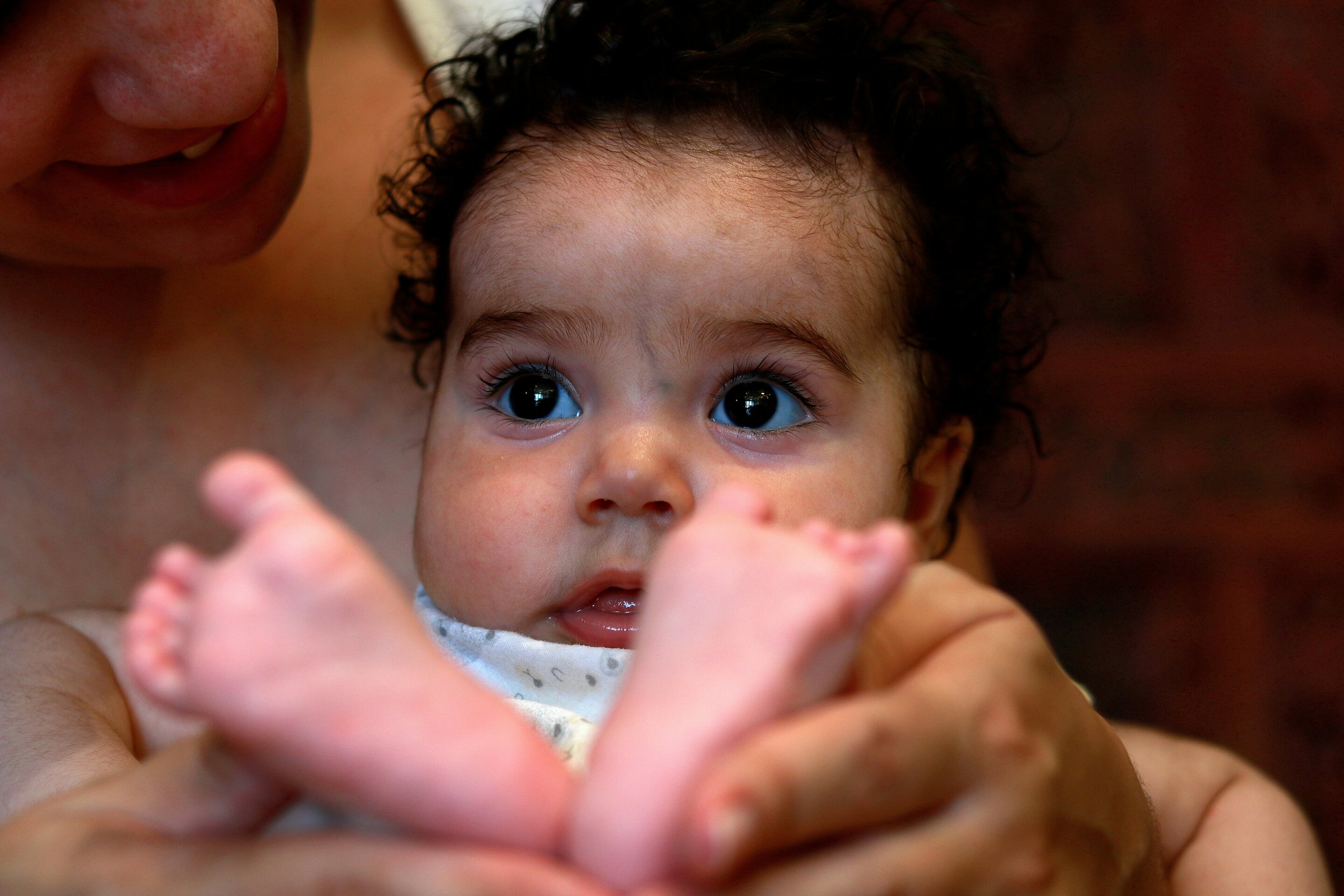
A meta-analysis by researchers from MIT, Northeastern University, and Johns Hopkins University has identified two distinct patterns in infant looking behavior, influenced by different factors. The study, published in Nature Human Behavior, found that looking at unexpected stimuli is influenced by infant age, while looking at visually new stimuli is predicted by habituation rate. These findings suggest that perceptual and conceptual novelty guide infant looking behavior independently, offering new insights into cognitive development.
A study conducted by Florida Atlantic University (FAU) has shed light on the origins of agency and conscious awareness by observing the behavior of human infants. By tethering an infant's foot to a mobile, researchers found that each foot movement caused the mobile to move, creating a positive feedback loop that highlighted the cause-and-effect relationship between the infant and the mobile. This realization led to a transition from spontaneous to intentional behavior, marked by an abrupt increase in infant movement rate. The study also revealed that agency emerges from the coordinated relationship between the infant and the environment. The findings provide valuable insights into the development of conscious awareness in humans.