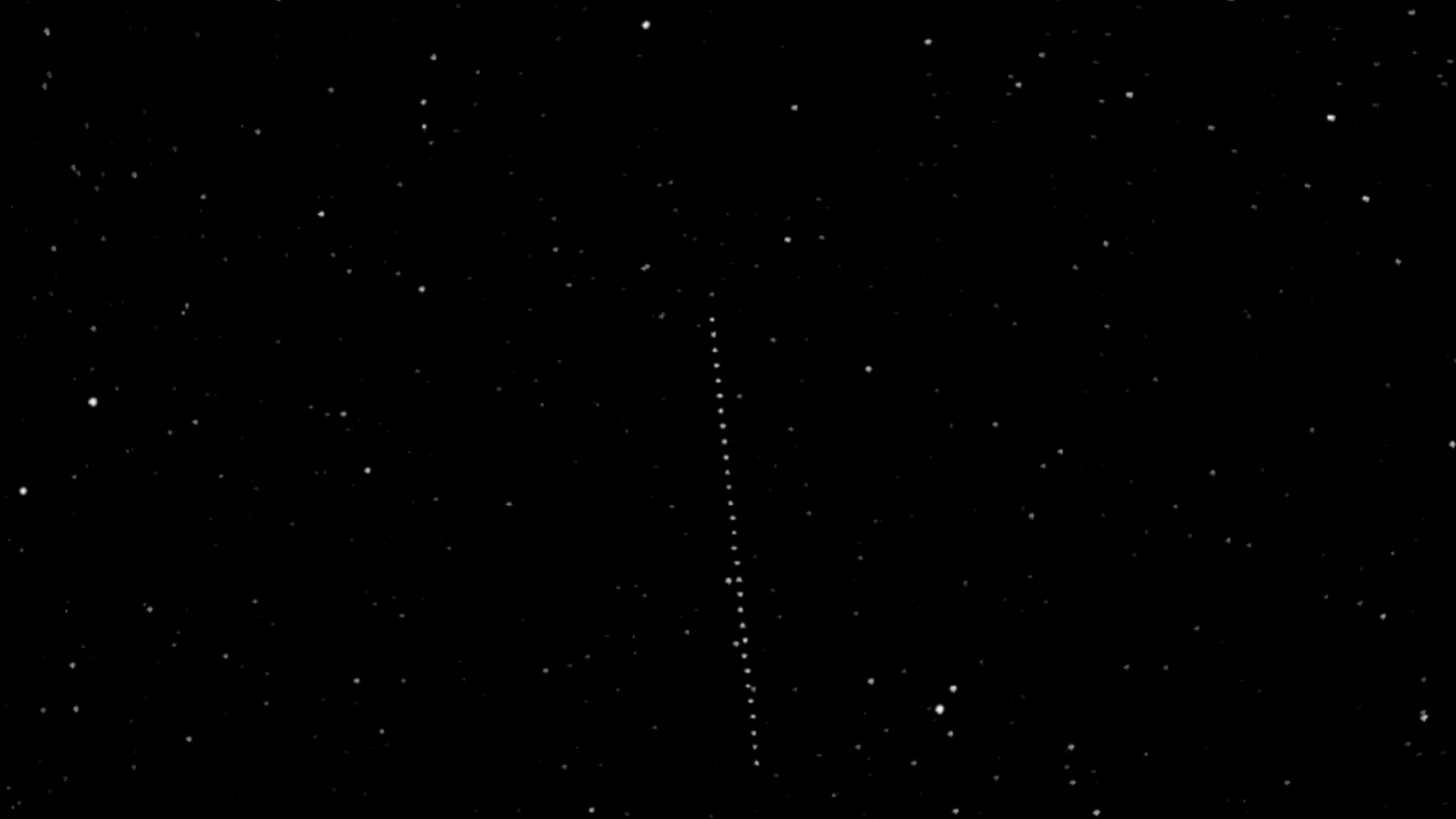
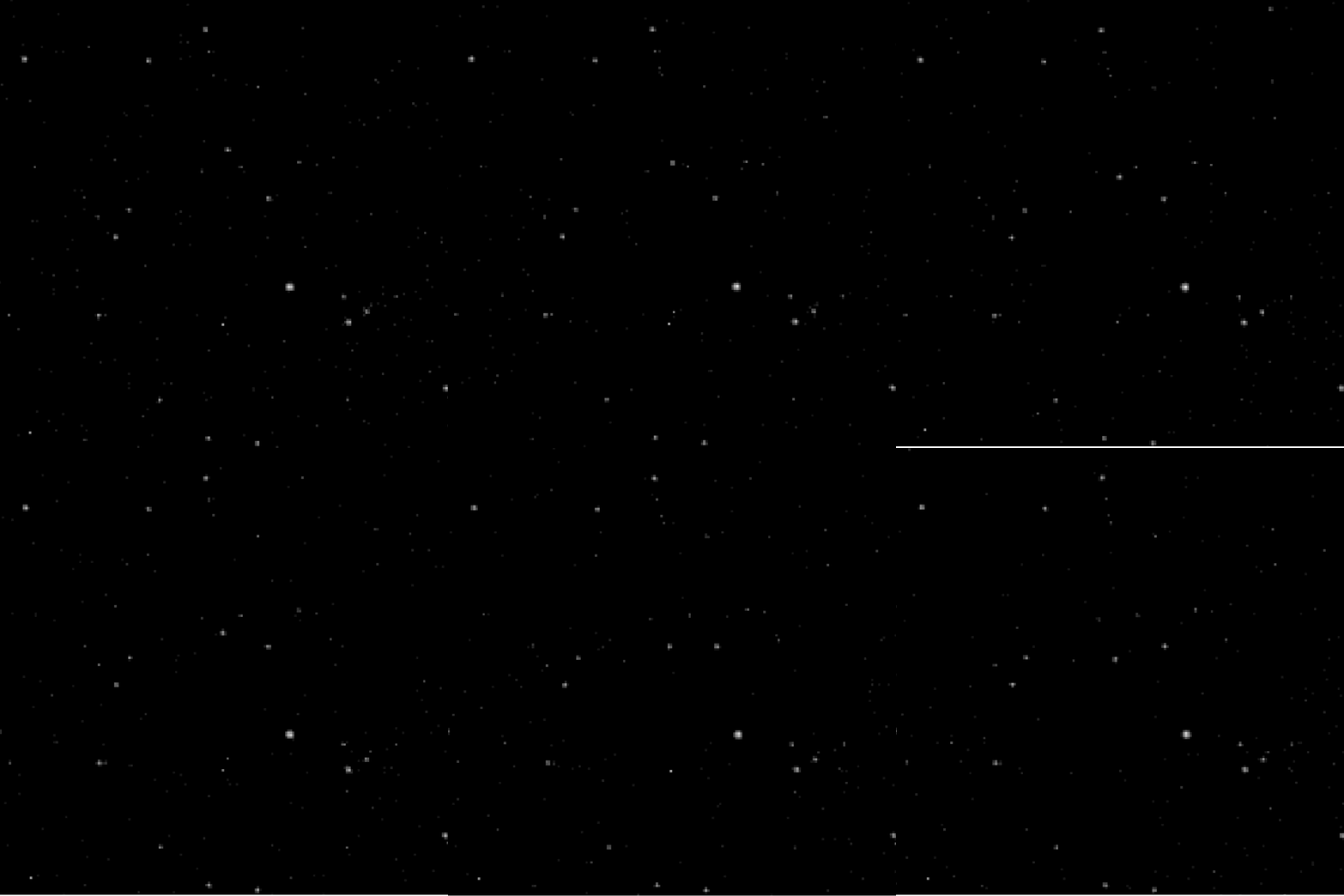
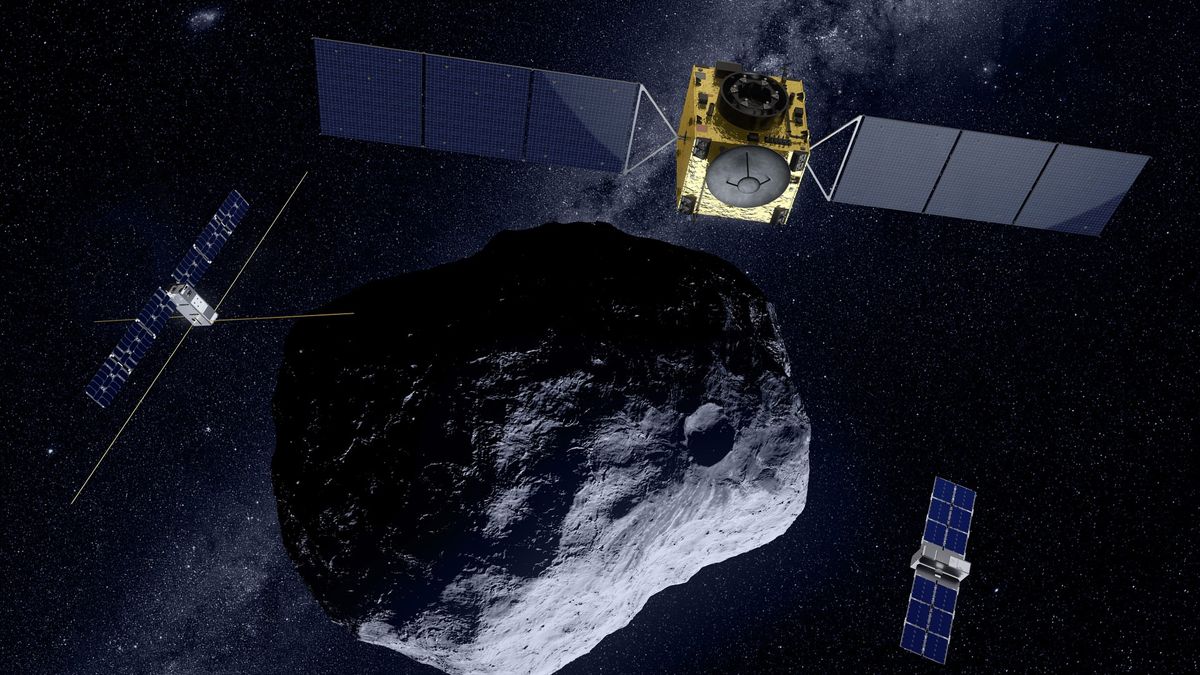
The ESA's Hera mission successfully tested its camera by imaging two faint asteroids, Otero and Kellyday, as it prepares to follow up on NASA's DART impact on the asteroid system of Didymos and Dimorphos, aiming to improve planetary defense strategies.
ESA's Hera spacecraft has successfully captured images of asteroids Otero and Kellyday during its cruise to the Didymos binary system, testing its instruments and operational capabilities for future planetary defense efforts, including observing faint objects and rapid response observations in deep space.
ESA's Hera mission has successfully completed its first deep-space maneuvers, adjusting its trajectory for a gravity assist at Mars in March 2025. This maneuver will help Hera reach the Didymos binary asteroid system faster, where it will study the effects of NASA's DART mission's asteroid deflection experiment. The Mars flyby will also allow Hera to conduct opportunistic science by closely observing Mars' moon Deimos.
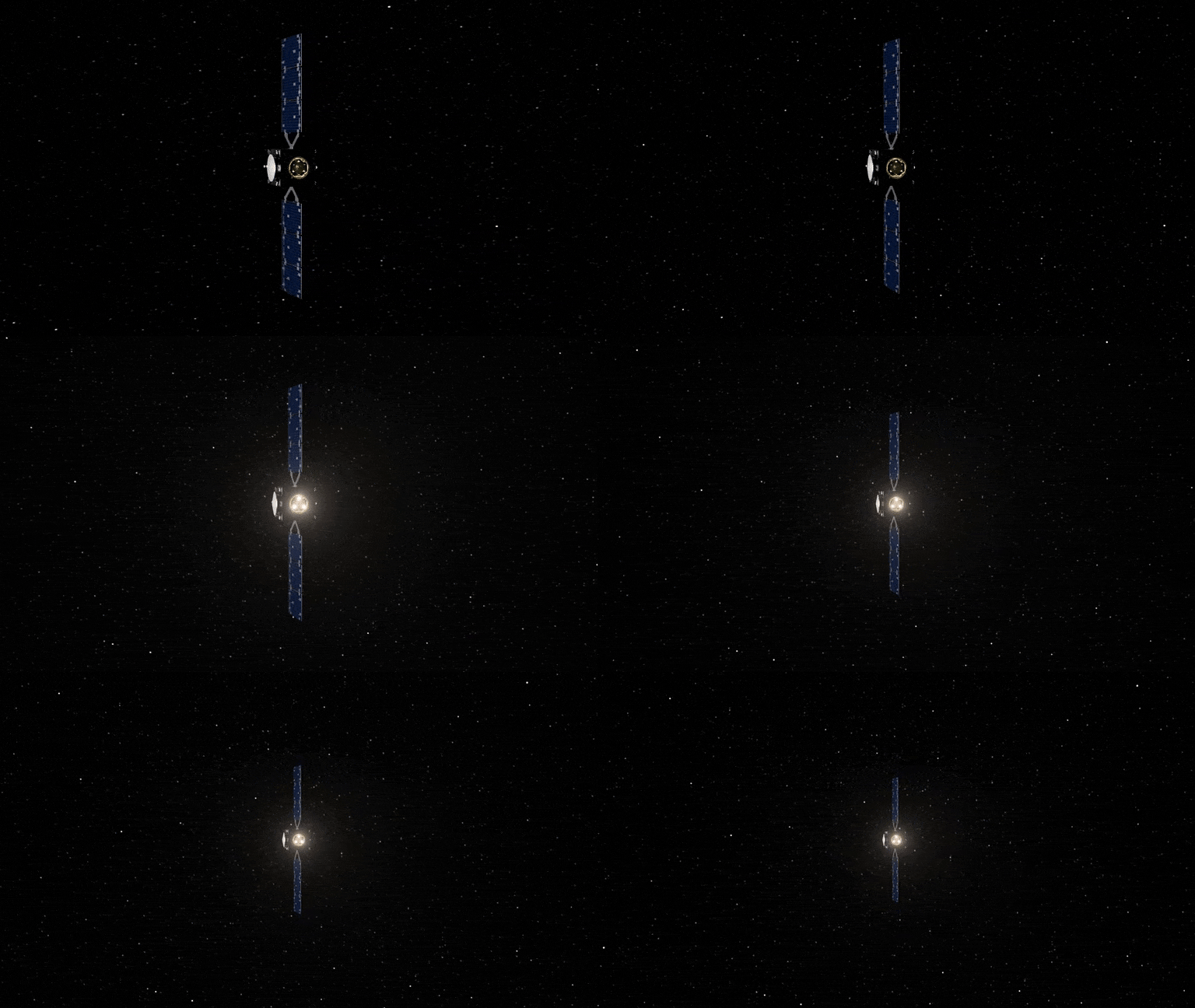
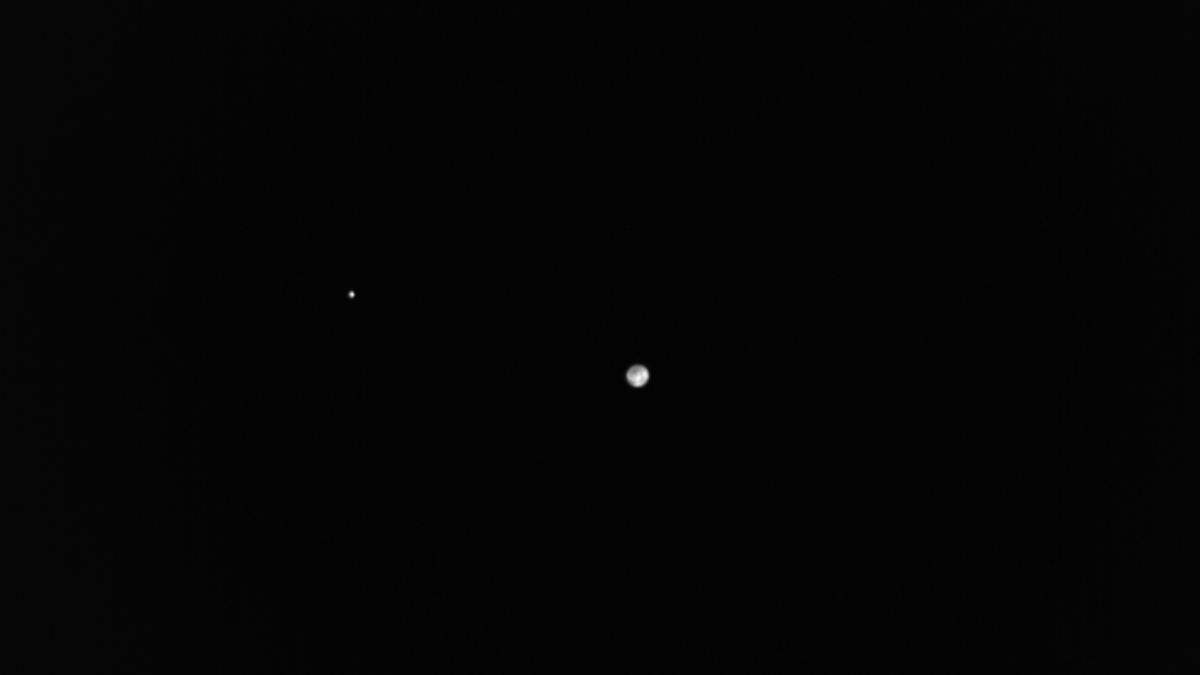
The European Space Agency's Hera spacecraft, en route to the asteroid Dimorphos, captured images of Earth and the moon shrinking into the distance as it traveled from 860,000 to 2.4 million miles away. Hera's mission is to study the impact site of NASA's DART mission, which successfully altered Dimorphos' trajectory in 2022, as part of a planetary defense strategy. This research aims to refine asteroid deflection techniques, preparing for potential future threats, despite no known asteroid risks for the next century.
The European Space Agency is preparing to launch its Hera mission in October to investigate the Didymos asteroid system, which NASA's DART mission impacted in 2022. The mission aims to gather data to improve planetary defense systems, with the spacecraft undergoing final preflight tests and expected to reach the asteroid system by October 2026.
Scientists suggest that the asteroid Dimorphos, which was intentionally impacted by NASA's DART spacecraft, may be "healing" and changing shape after the collision, potentially reshaping rather than creating a crater. Simulations indicate that the impact caused global deformation and resurfacing of the asteroid, revealing it to be a "weak" pile of "rubble" formed from loose rocks shed by its larger twin. These findings could have significant implications for future asteroid redirection efforts and provide valuable insights into the formation and characteristics of binary asteroids.
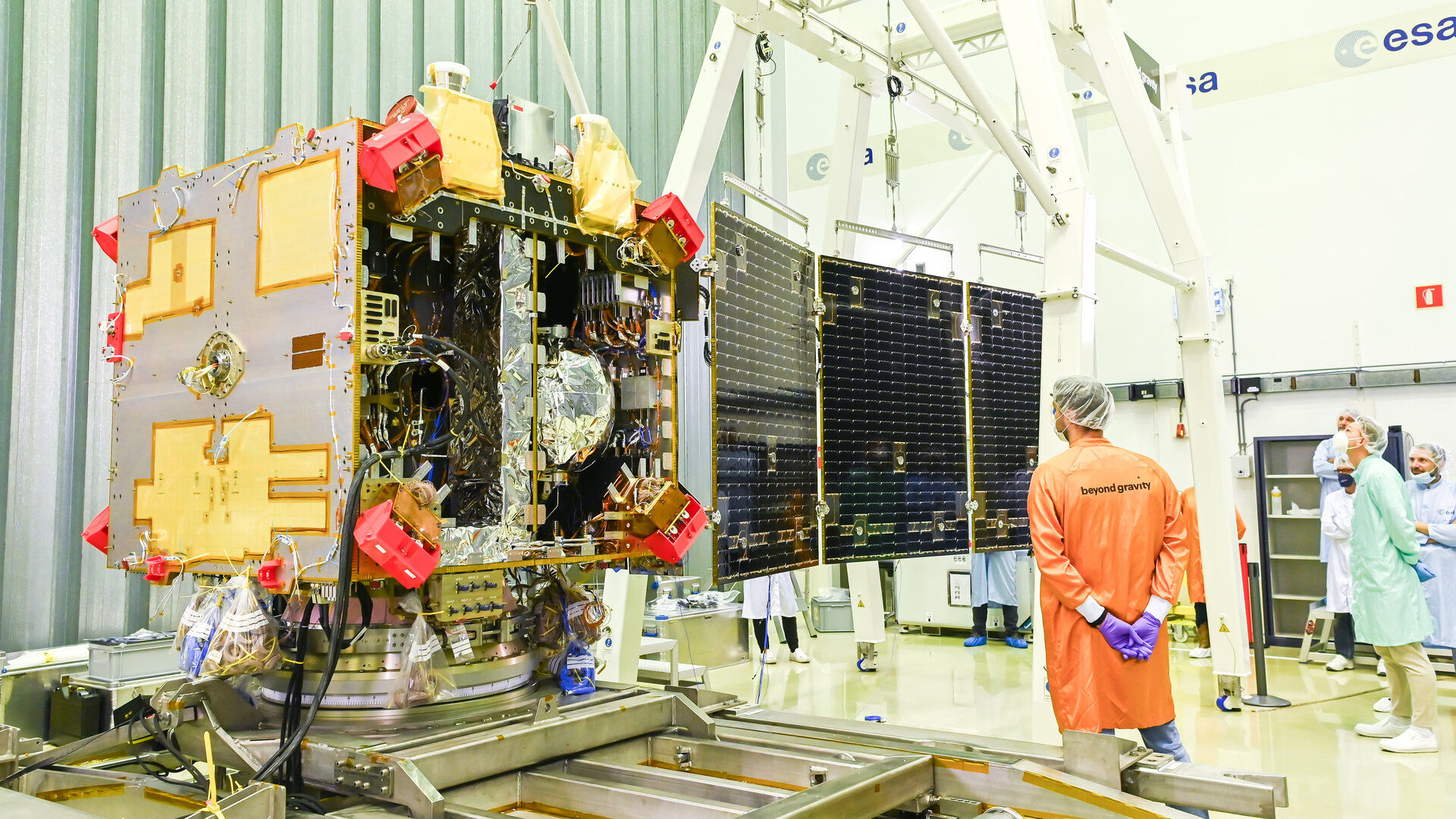
ESA's Hera asteroid mission, Europe's contribution to an international planetary defense experiment, has successfully tested the deployment of one of its two solar wings. The van-sized spacecraft, powered by solar array wings provided by Leonardo in Italy and Beyond Gravity in Switzerland, will perform a close-up survey of the crater left by the DART mission's impact on the Dimorphos asteroid. Hera will also measure the mass and composition of Dimorphos and its larger counterpart, Didymos. The spacecraft is scheduled for launch in October 2024 and will reach its destination in just over two years.
The European Space Agency's (ESA) Hera mission, aimed at studying the Dimorphos and Didymos asteroids for planetary defense, has been fully assembled in Germany. The spacecraft, consisting of a Core Module and a Propulsion Module, was carefully mated together over a three-hour period. The modules were aligned with precision and will undergo rigorous testing in the Netherlands to ensure readiness for space. Hera's mission includes a close-up survey of the crater left by NASA's DART mission on Dimorphos and the measurement of Dimorphos' mass and composition, as well as that of the larger Didymos asteroid.
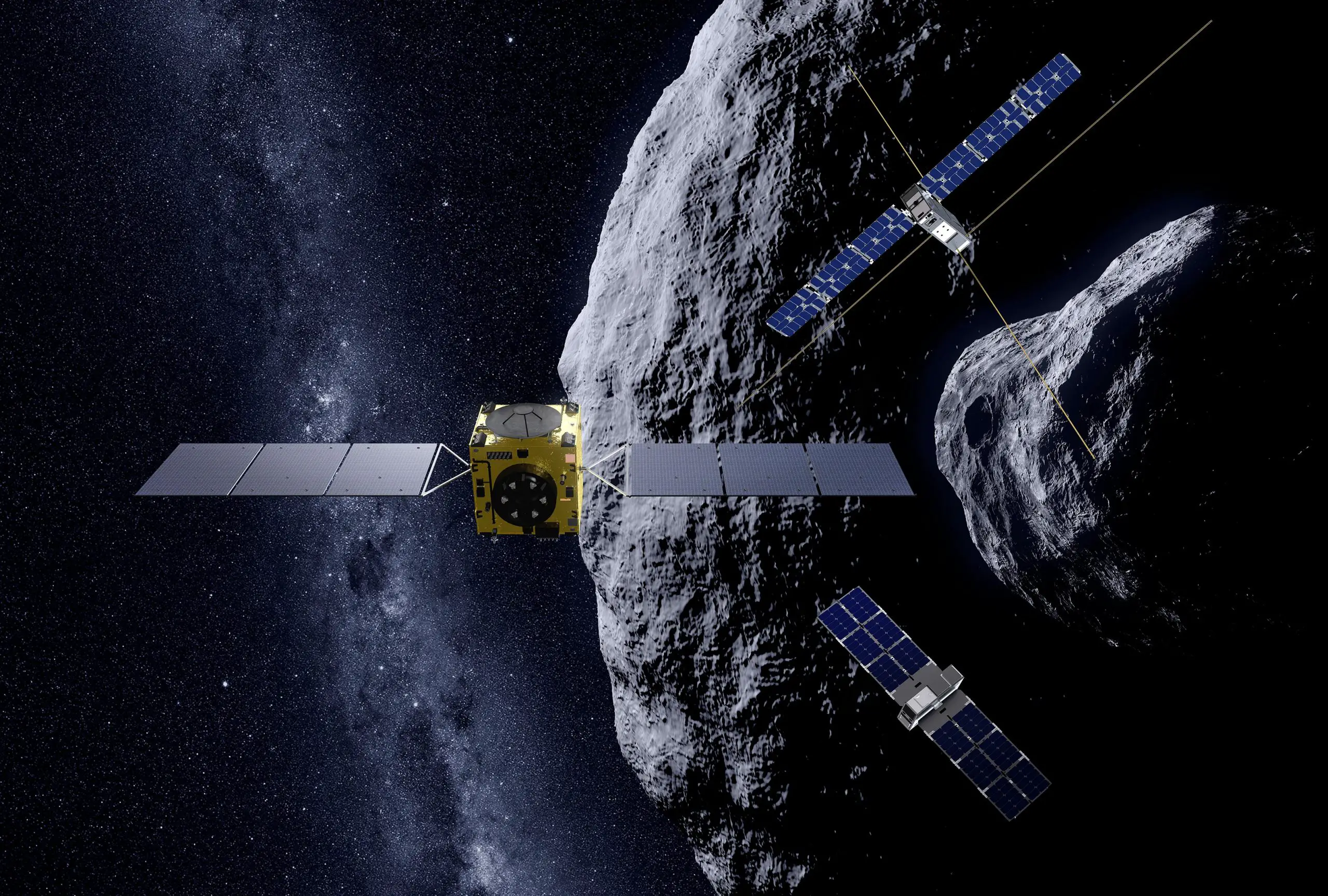
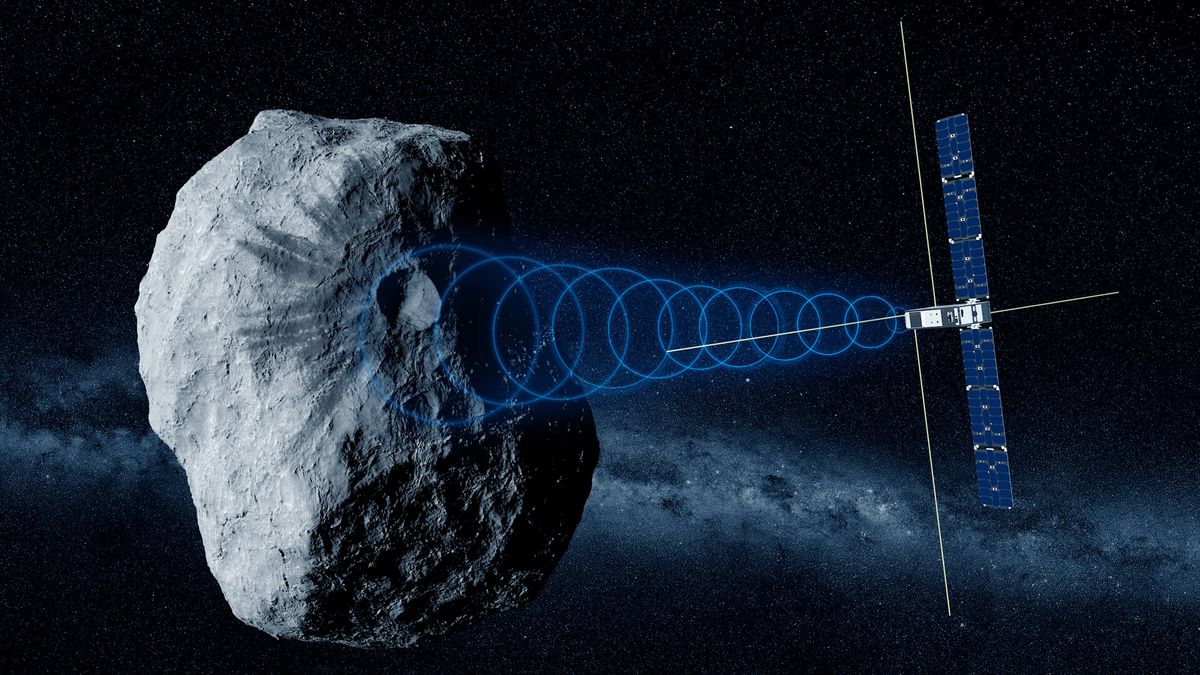
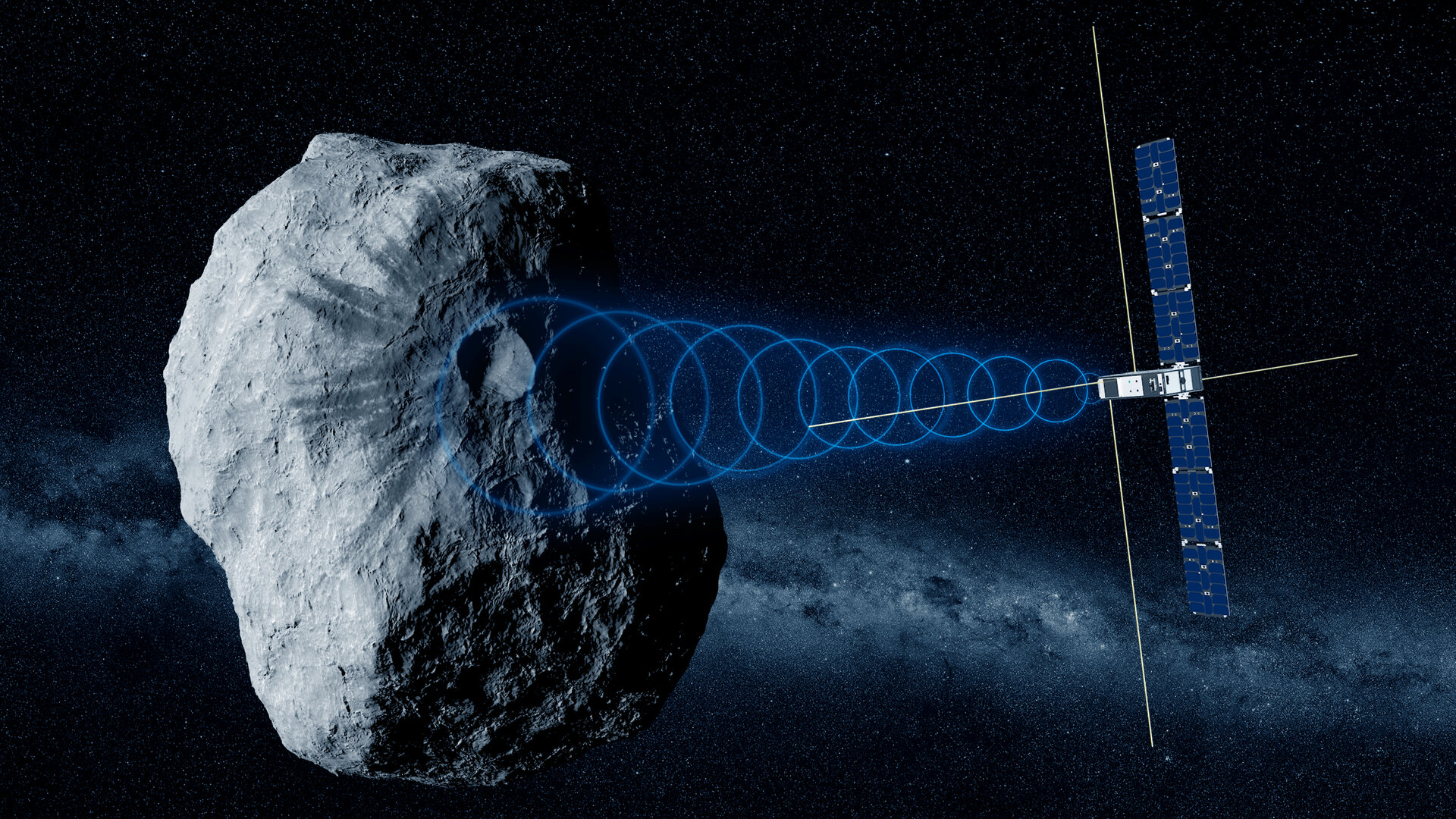
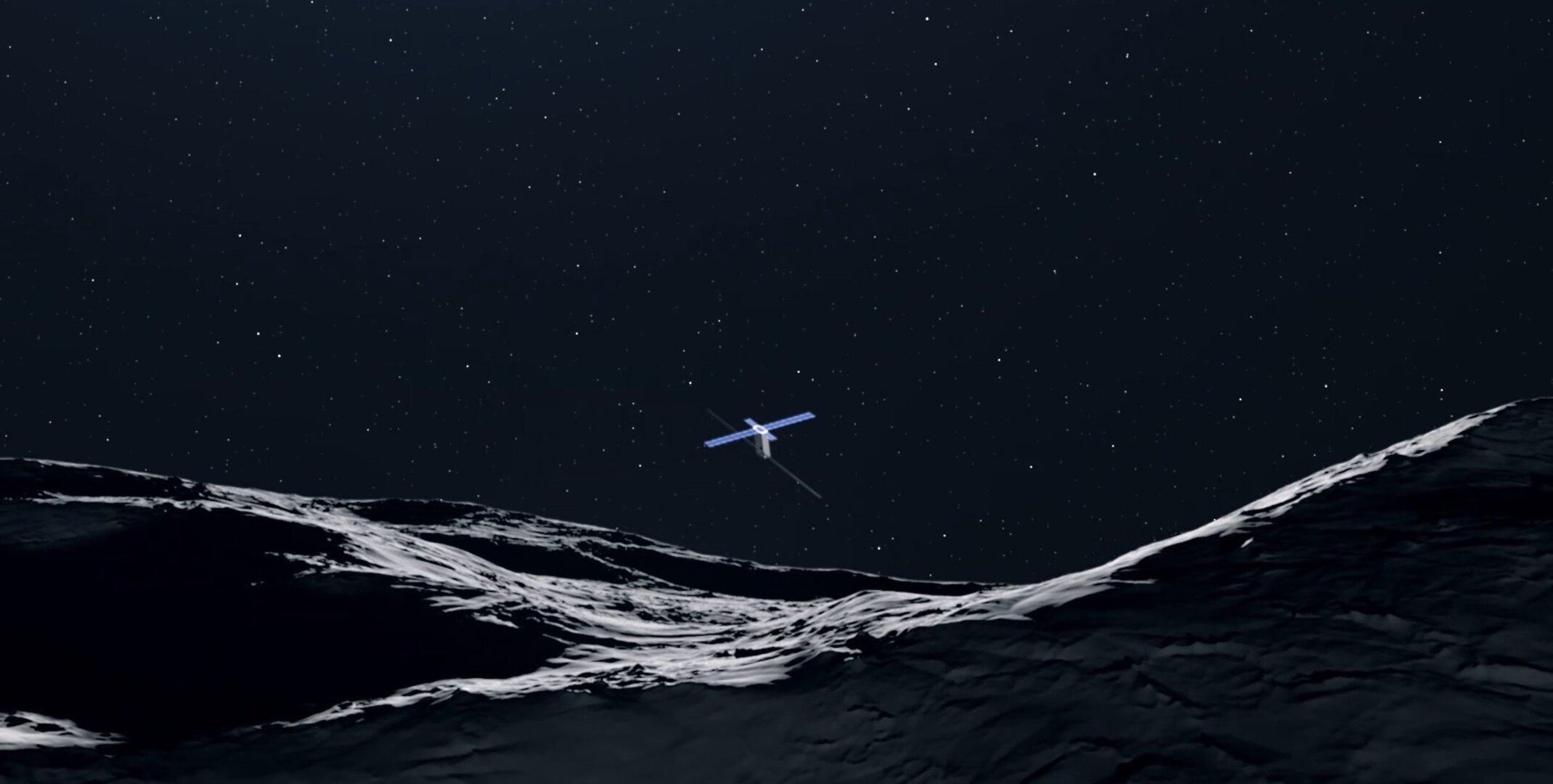
The European Space Agency (ESA) is preparing to send its Hera probe and CubeSats to study the asteroid Dimorphos after it was struck by NASA's DART probe. The CubeSat, called Juventas, will be equipped with a radar system to scan the interior of the asteroid. The radar analysis will be the smallest radar system to ever fly in space and will examine the effects of the impact, including gravimetric measurements and mineral surveys. The mission is seen as a critical step in developing a planetary defense mechanism against potentially harmful asteroids.
The European Space Agency (ESA) has received the smallest radar to be flown in space for integration into the Juventas CubeSat, part of the Hera mission for planetary defense. The radar, called JuRa, will perform the first-ever radar imaging of an asteroid by peering deep beneath the surface of Dimorphos, a moonlet of the Didymos asteroid. The compact radar, measuring 9.5x9.5x9.5 cm, will be able to penetrate up to 100 meters within Dimorphos, providing valuable insights into its internal structure. The JuRa team is also exploring the possibility of using the radar on other asteroids in the future.
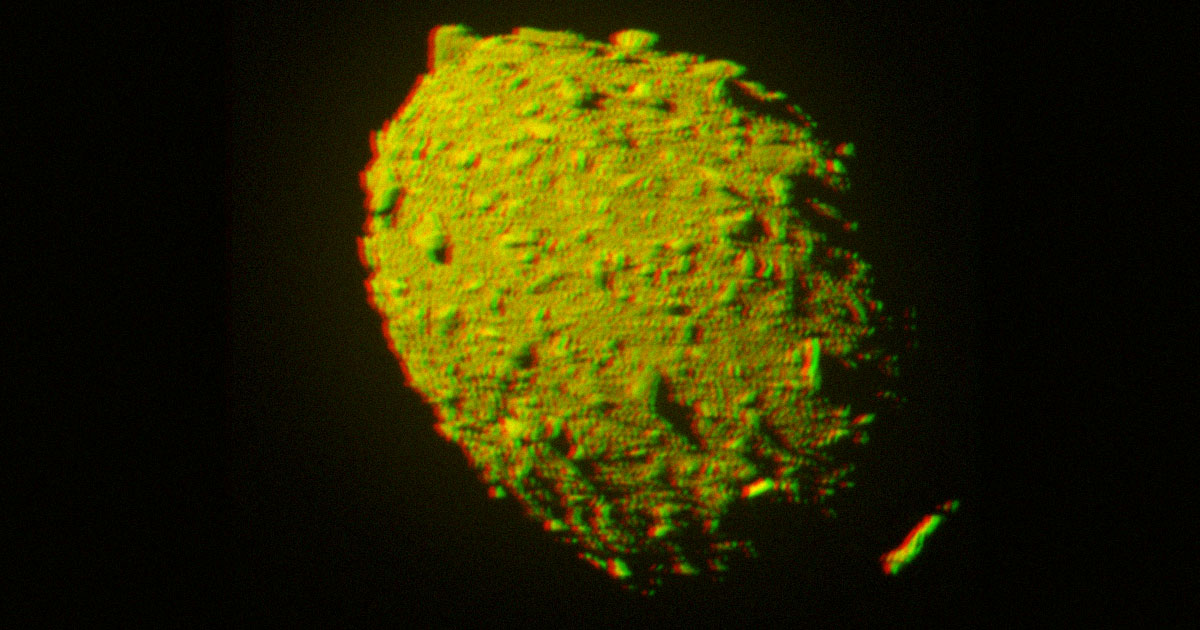
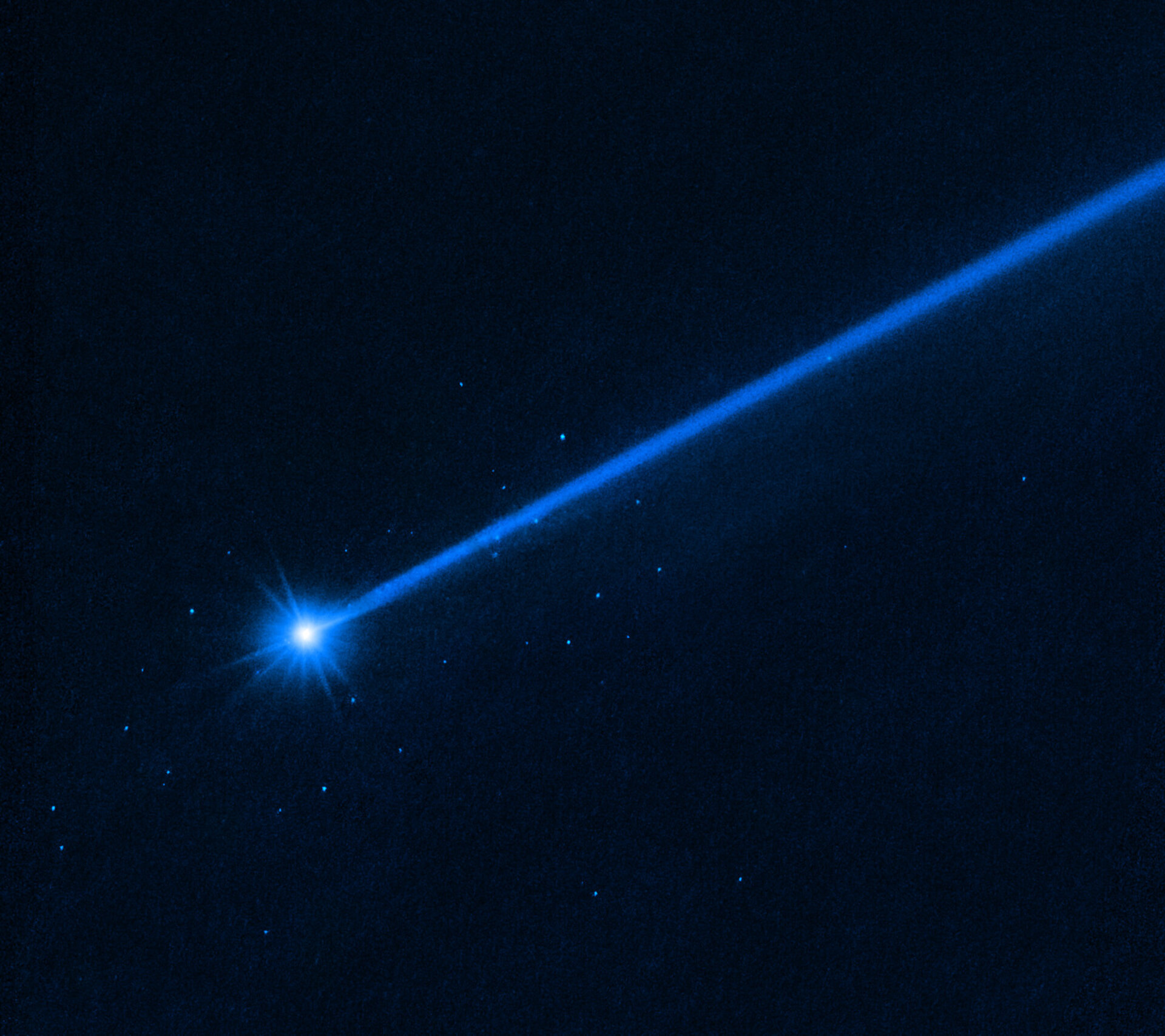
Astronomers using the Hubble Space Telescope have discovered a swarm of boulders drifting away from the asteroid Dimorphos, possibly shaken off when NASA's DART impactor spacecraft intentionally collided with the asteroid. The boulders range in size from 1 m to 6.7 m and are some of the faintest objects ever imaged in the Solar System. This finding opens up new opportunities for studying the aftermath of the impact using ESA's upcoming Hera mission. The boulders are not shattered pieces caused by the impact but were already scattered across the asteroid's surface. The impact is estimated to have shaken off 2% of the boulders, and Hera will determine the actual crater size. Dimorphos may have formed from material shed by the larger asteroid Didymos, making it a rubble pile held together by weak gravity. The origin of the lifted boulders is still unclear, but they could be part of an ejecta plume or shaken loose by a seismic wave from the impact.
The European Space Agency's Hera mission, which will complete the first post-impact survey of the asteroid that NASA's Double Asteroid Redirection Test collided with in September 2022, is closer to launch after the gravimeter for small solar system objects (GRASS) completed its ground tests. GRASS is a tiny instrument that can measure the gravity levels of an asteroid and will be carried by Hera to measure the minuscule gravity levels of Dimorphos, the orbiting moonlet of the 65803 Didymos binary system. GRASS is designed to measure the expected gravity levels and the precise mass of the Dimorphos asteroid.
The European Space Agency (ESA) has completed vacuum and vibration tests for its Gravimeter for Small Solar System Objects (GRASS) asteroid probe, which is designed to measure surface gravity on the Dimorphos asteroid. GRASS, which is the size of a mobile phone, will be hitching a ride to Dimorphos aboard a cubesat named Juventas, which is part of ESA's Hera mission for planetary defense. GRASS will launch about the Hera mission in October 2024, if all goes according to plan.
The asteroid Didymos, which is being studied for NASA's DART and the European Space Agency's Hera mission, has been found to be spinning very quickly, completing one full rotation every 2 hours and 16 minutes. This causes rocks and dust to lift off the surface and move into orbit, making Didymos a spinning asteroid that is spewing out constant materials in its vicinity and beyond. The elements ejected by Didymos either reach orbit or are deposited onto its moon Dimorphos, and some may even escape the system.