Four Dallas suburbs are considering leaving the Dallas Area Rapid Transit (DART) system due to dissatisfaction with service and funding issues, which could significantly impact regional mobility, especially for low-income and non-driving residents, amid ongoing debates about transit funding, service quality, and regional growth challenges.
The New York Giants secured a rare victory with strong performances from Jaxson Dart, Dexter Lawrence, and the defense, despite setbacks like Malik Nabers' injury and offensive line challenges, highlighting a promising turnaround and coaching success. However, the season's optimism is tempered by Nabers' likely season-ending injury.
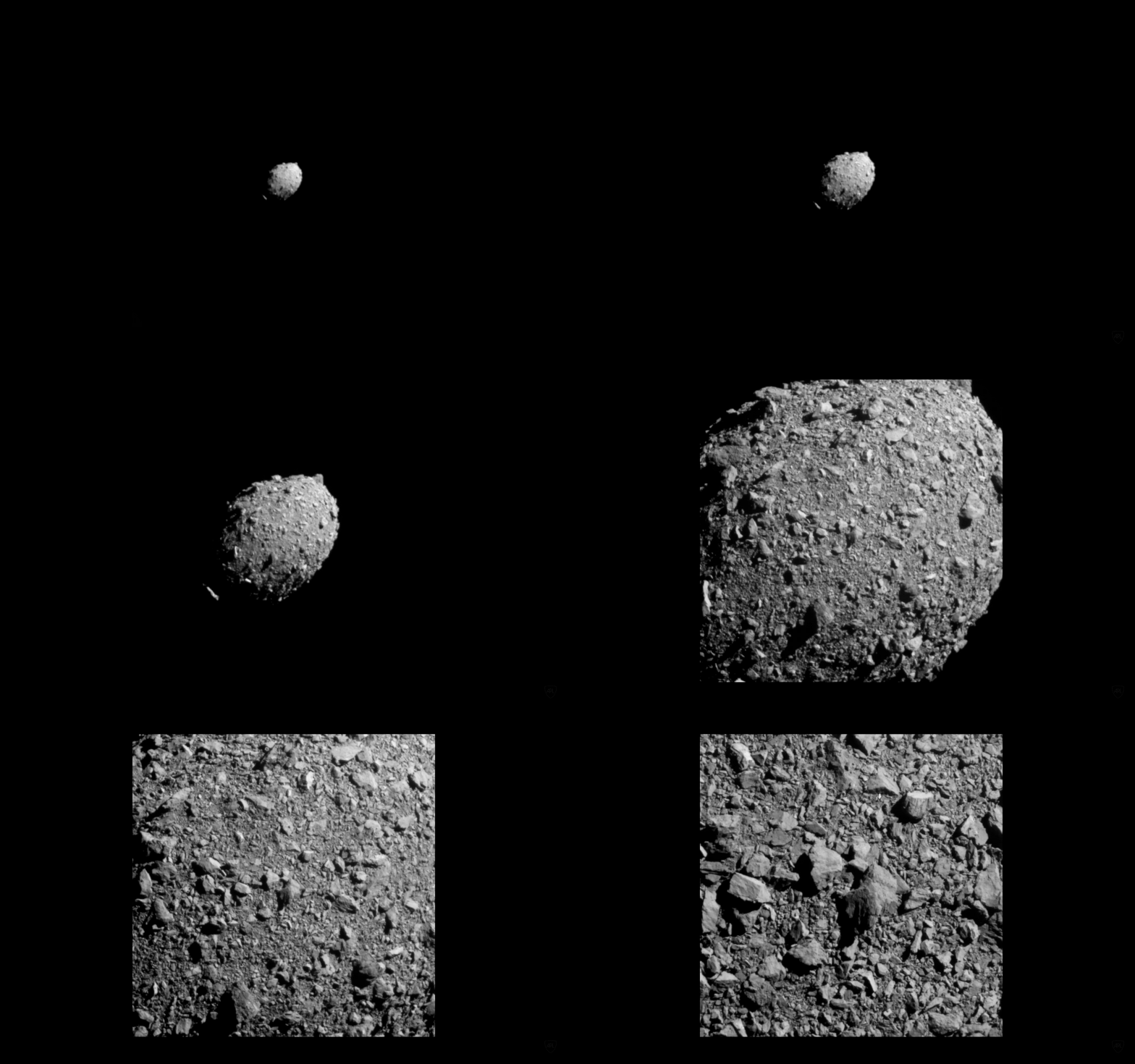
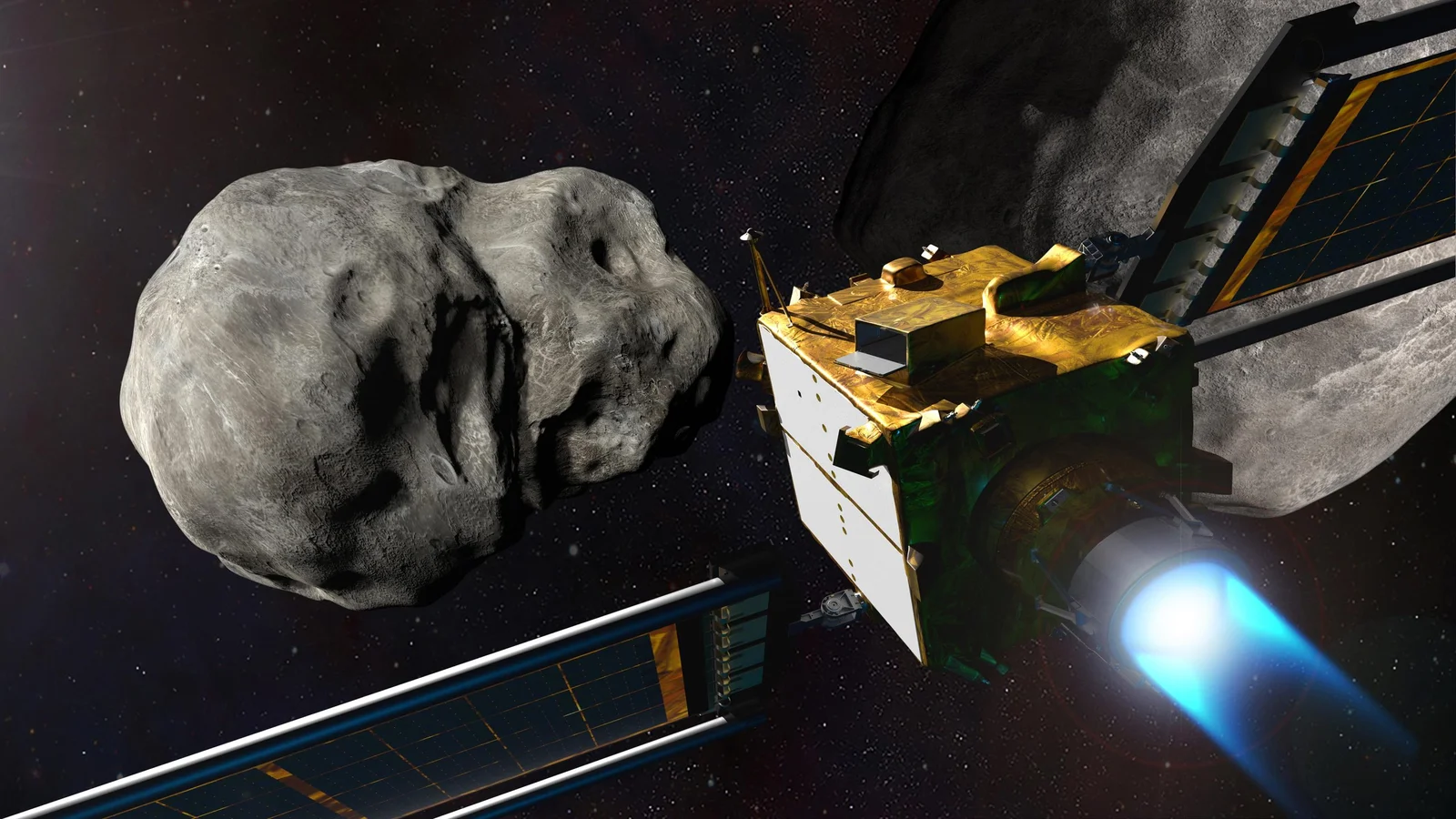
NASA's DART mission successfully collided with asteroid Dimorphos in 2022, demonstrating the kinetic impactor method for asteroid deflection, and providing valuable data for planetary defense strategies, while highlighting the complexities and potential unintended consequences of asteroid mitigation efforts.
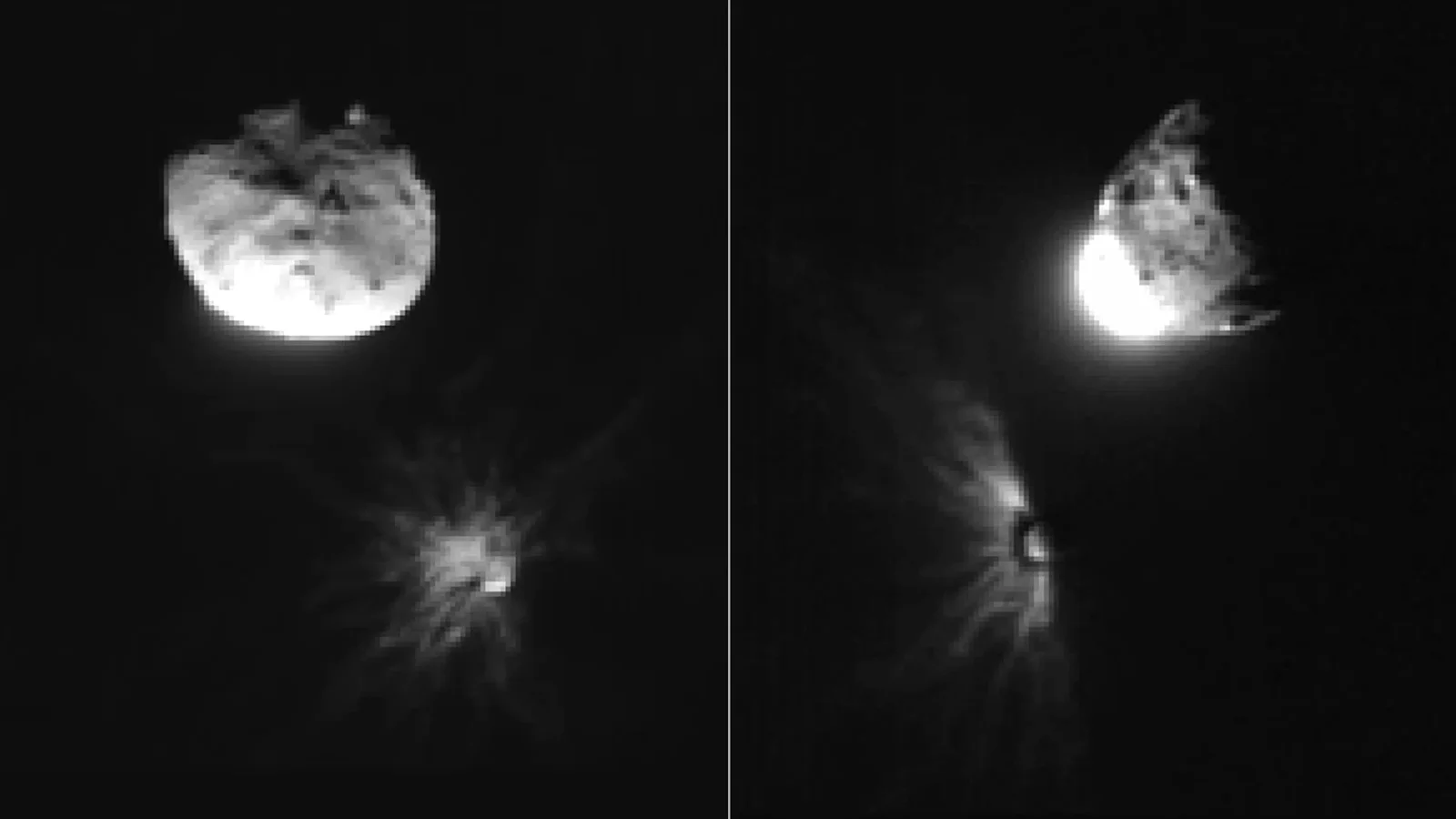
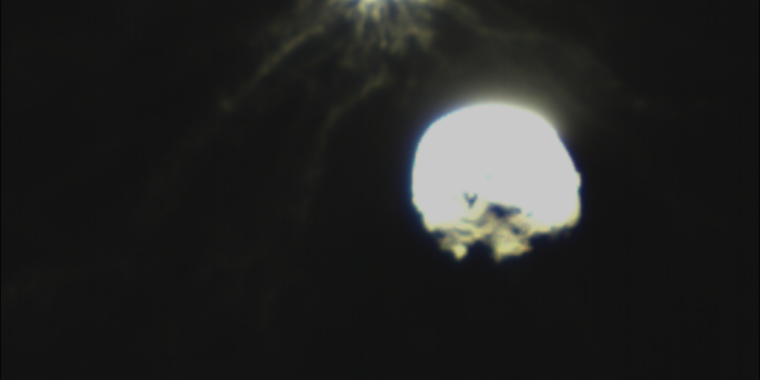
NASA's DART mission successfully demonstrated asteroid deflection by crashing into Dimorphos, a moonlet of a binary asteroid system, and capturing detailed images of the resulting debris, revealing that the impact significantly altered the asteroid's trajectory and providing valuable insights for planetary defense strategies.
NASA's DART mission successfully demonstrated asteroid deflection by crashing into Dimorphos, a moonlet of a binary asteroid system, and capturing detailed images of the resulting debris, which provided new insights into asteroid impact effects and planetary defense strategies.
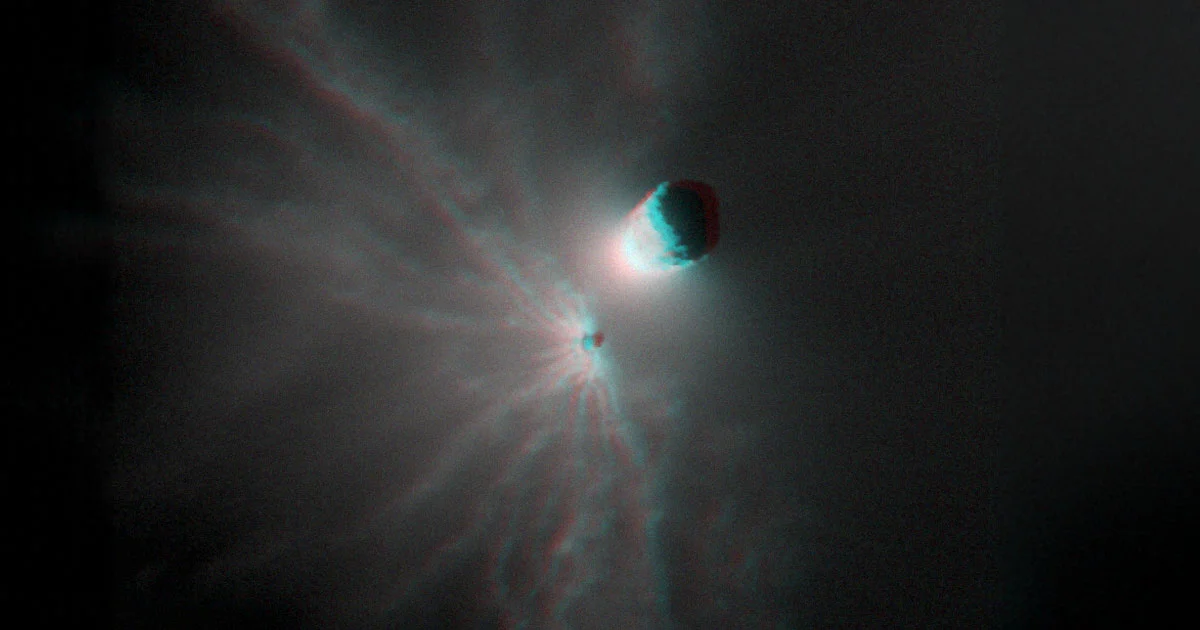
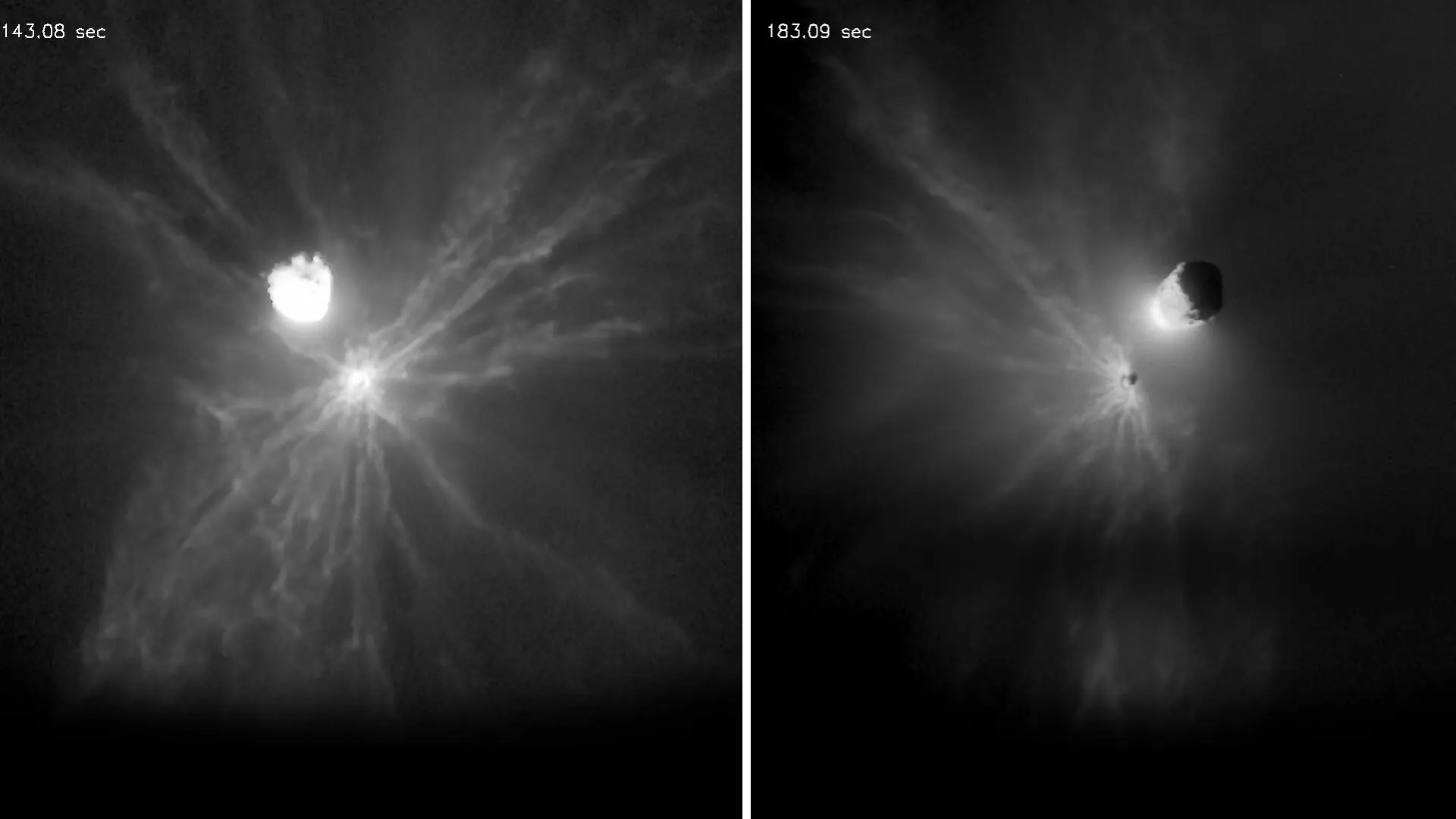
NASA's DART mission successfully deflected an asteroid but also released a swarm of space boulders carrying three times more momentum than the spacecraft, complicating future planetary defense strategies. The debris, tracked by LICIACube, showed unexpected patterns and directions, highlighting the need to consider such variables in future impact mitigation missions.
NASA's asteroid deflection test in 2022 successfully changed the asteroid's orbit, but recent research reveals it also ejected large boulders with significant energy, complicating future planetary defense efforts and highlighting the need to consider these effects in mission planning.
NASA's DART mission successfully deflected an asteroid, but the impact caused large boulders to be ejected, imparting additional momentum and complicating asteroid deflection strategies. The ejected debris, especially from boulders, could influence future planetary defense missions, highlighting the need to consider surface properties and debris behavior in impact planning.
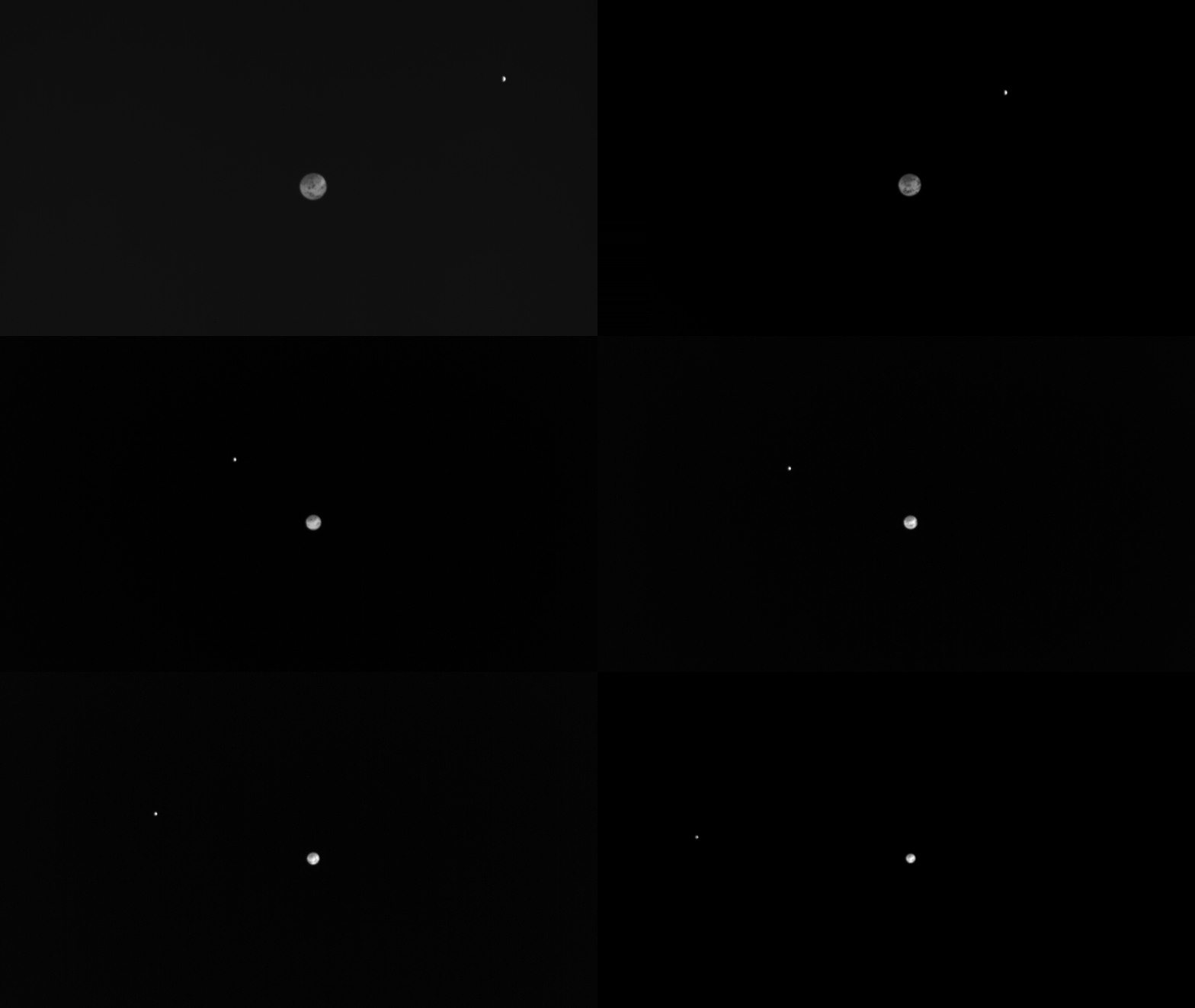
The European Space Agency's Hera spacecraft, en route to study a binary asteroid system, captured thermal images of Earth and the moon from 2.3 million miles away. These images were taken during the initial testing of Hera's Thermal Infrared Imager, provided by the Japan Aerospace Exploration Agency. Launched on October 7, Hera aims to reach the site of NASA's 2022 Double Asteroid Redirect Mission (DART) by 2026, where it will study the aftermath of DART's collision with the asteroid moonlet Dimorphos, providing insights into planetary defense strategies.
NASA's DART spacecraft successfully deflected the asteroid Dimorphos, altering its orbit and shape. A new study led by NASA's Jet Propulsion Laboratory revealed that the impact changed Dimorphos from a symmetrical object to a "triaxial ellipsoid" and shortened its orbital period by 33 minutes and 15 seconds. The study utilized data from DART's impact, including images, radar measurements, and light curve observations. The findings provide valuable insights into asteroid behavior and will inform future asteroid deflection strategies.
NASA's DART mission impacted the asteroid Dimorphos, causing changes to its orbit and shape. The impact altered Dimorphos' motion, transforming its orbit from circular to slightly elongated and shortening its orbital period by 33 minutes and 15 seconds. Observations from ground telescopes and radar measurements revealed that the asteroid's shape changed from a symmetrical object to a "triaxial ellipsoid." These findings provide new insights into asteroid behavior and will inform future missions, such as ESA's Hera mission, which aims to survey and confirm the impact's effects on Dimorphos.
Close-up images from a CubeSat accompanying NASA's DART asteroid impactor reveal a complex field of debris, including filaments and clumps of ejecta moving at different speeds. The debris analysis provides insights into the composition and history of the asteroid Dimorphos, indicating a weak, fragmented structure similar to rubble pile asteroids. The impact's effectiveness and the internal properties of Dimorphos are being studied using the debris data, with implications for planetary defense technology and our understanding of asteroid formation. Future observations by the ESA's Hera probe in 2024 are expected to provide further detailed data on the collision's aftermath.
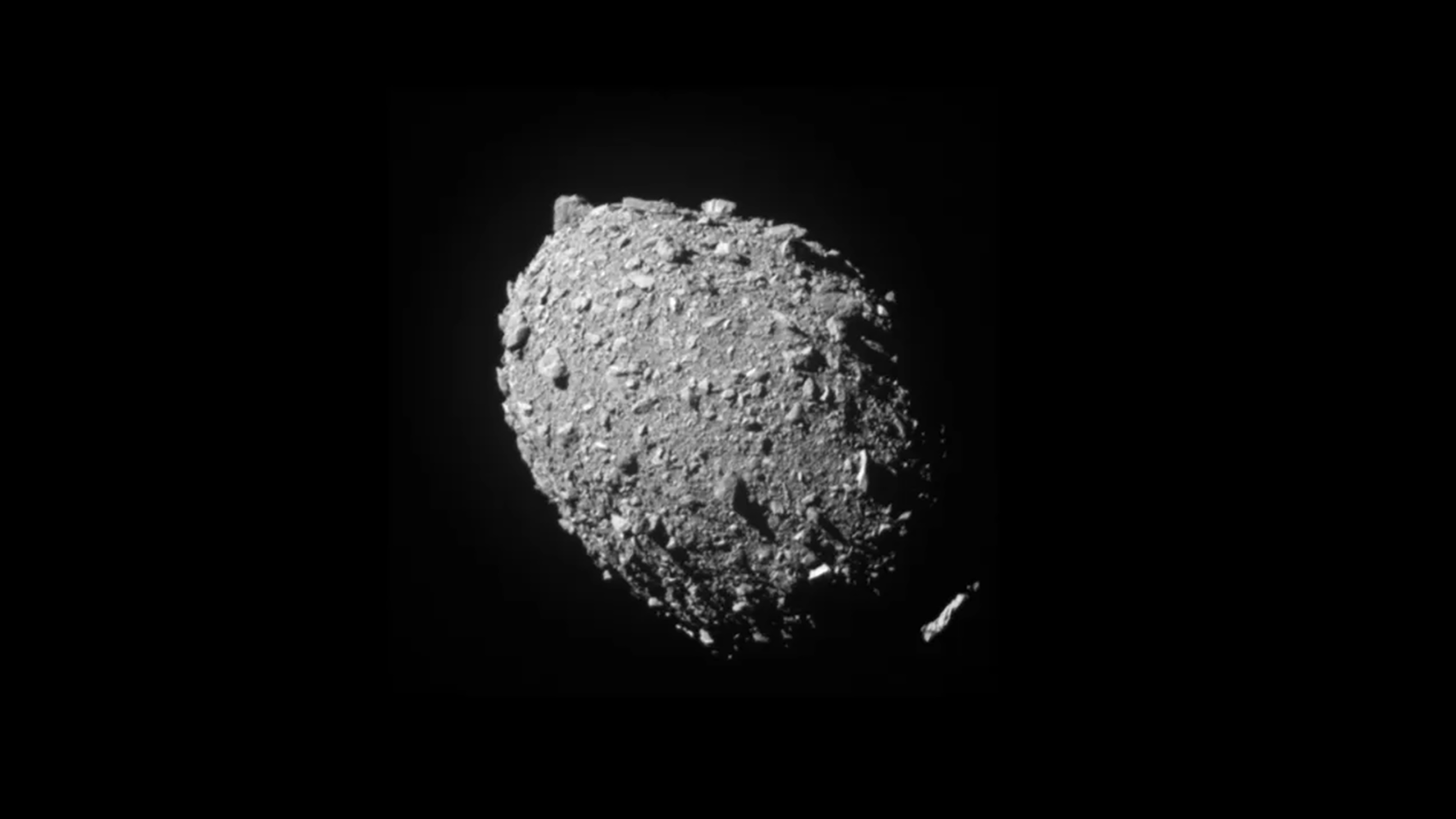
Scientists suggest that the asteroid Dimorphos, which was intentionally impacted by NASA's DART spacecraft, may be "healing" and changing shape after the collision, potentially reshaping rather than creating a crater. Simulations indicate that the impact caused global deformation and resurfacing of the asteroid, revealing it to be a "weak" pile of "rubble" formed from loose rocks shed by its larger twin. These findings could have significant implications for future asteroid redirection efforts and provide valuable insights into the formation and characteristics of binary asteroids.
NASA has revealed its plans for dealing with an asteroid hurtling towards Earth, including efforts to prevent a collision through deflection missions like the Double Asteroid Redirection Test (DART) and a warning system coordinated by the International Asteroid Warning Network (IAWN). The agency's Planetary Defense Coordination Office constantly monitors the skies for potentially hazardous objects and would alert the White House and the public in the event of an impending strike, with international coordination through the United Nations Office of Outer Space Affairs if the threat is global.
NASA astronaut Peggy Whitson and the Double Asteroid Redirection Test (DART) team have been awarded the Michael Collins Trophy for their achievements in space. Whitson, the first woman commander of the International Space Station, received the Lifetime Achievement Award for her record-breaking spaceflights and distinguished career. The DART mission, which successfully impacted the asteroid moonlet Dimorphos, earned the Current Achievement Award for its contribution to planetary defense. The trophy, given by the Smithsonian's National Air and Space Museum, recognizes outstanding accomplishments in aerospace science and technology.