The article discusses how the GOP's proposed tax bill aims to cut costs for Medicaid and health insurance marketplace programs, potentially affecting coverage and provider access for millions of Americans, as the legislation moves through Congress.
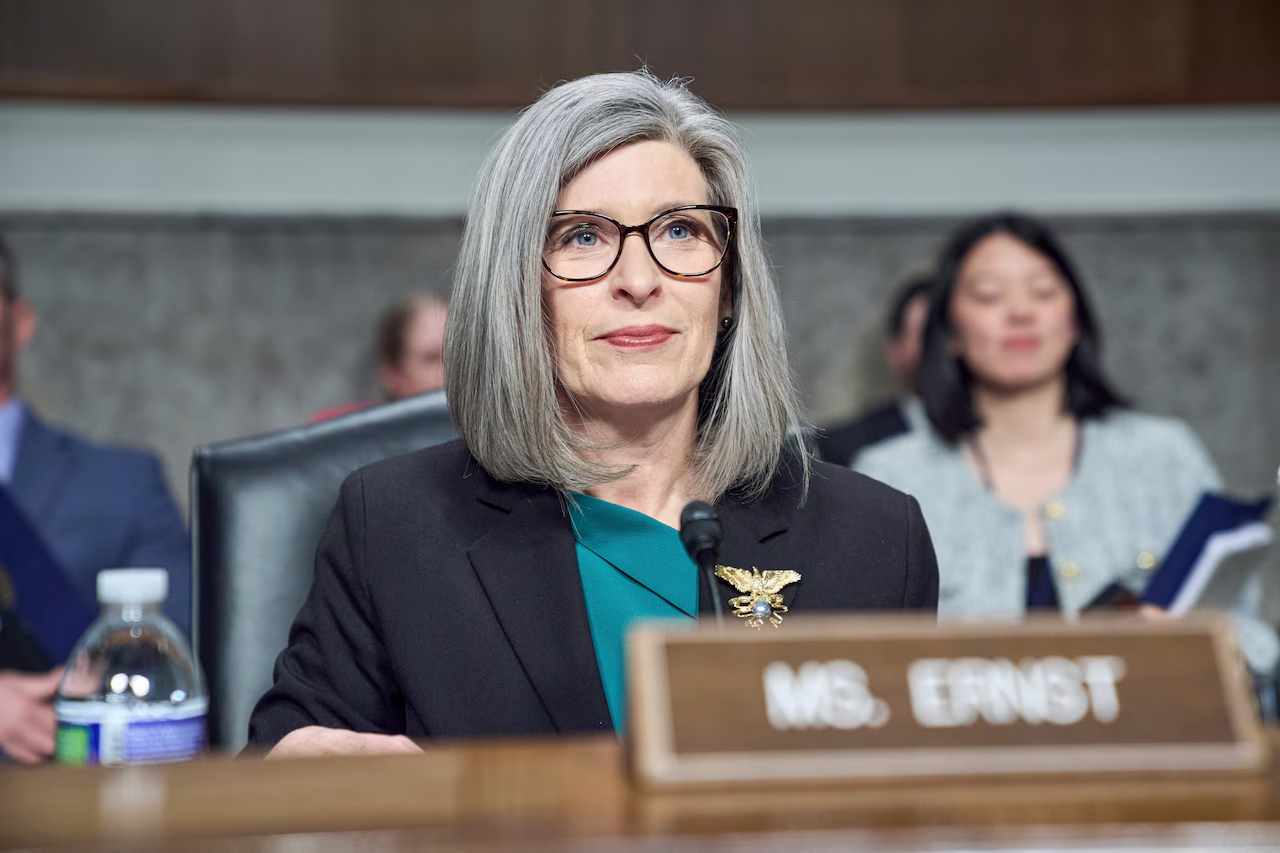
Senator Joni Ernst defended proposed Medicaid eligibility changes at a contentious town hall, controversially stating 'we all are going to die' when discussing potential coverage reductions, which drew criticism from Democrats who warn millions could lose healthcare coverage as a result.
Due to the requirement for states to check Medicaid eligibility, many individuals, including homeless people in Montana, have lost coverage due to technicalities like paperwork errors. This has left them without access to vital healthcare services, making it particularly dangerous for those with chronic health conditions. The bureaucratic process to regain coverage is challenging for unhoused individuals, leading to delays and potential health risks.
Medicare does not cover annual physical exams, but it does provide preventive services such as the "Welcome to Medicare" visit and the annual wellness visit, which include measurements, screenings, counseling, and referrals for preventive care. While these visits are not traditional physical exams, they are designed to help beneficiaries stay healthy. It's important to be aware of the coverage and potential costs associated with medical issues addressed during these visits, and to verify coverage details with healthcare providers and insurance plans.
Medicare and Medicaid will now cover weight-loss drugs like Wegovy for patients at risk of heart disease, providing benefits for those seeking to manage their weight and reduce their risk of heart-related issues.
Mount Sinai and UnitedHealthcare have reached a new contract agreement, restoring coverage for thousands of patients after a monthslong dispute. All Mount Sinai facilities are back in network with UnitedHealthcare, ensuring uninterrupted coverage for affiliated doctors. Meanwhile, a separate contract dispute between Aetna and New York-Presbyterian health system could potentially jeopardize coverage for tens of thousands of New Yorkers if a deal is not reached by the end of the month.
Republican-dominated states in the South, including Georgia, are facing increasing pressure to expand Medicaid despite initial resistance. North Carolina's successful expansion has prompted GOP power brokers in Mississippi, Alabama, and Georgia to consider following suit. Georgia lawmakers are exploring alternative models, such as using Medicaid expansion dollars to fund private insurance plans, but Governor Brian Kemp remains skeptical and has only implemented a limited expansion with a work requirement. Despite leaving billions of federal dollars on the table and concerns about economic competitiveness, the future of Medicaid expansion in Georgia remains uncertain.
Blue Cross Blue Shield of Massachusetts has decided to delay a controversial change in insurance coverage for endoscopic procedures, including colonoscopies, following opposition from leading healthcare organizations. The change would have limited coverage for full sedation during procedures, with doctors needing to determine its medical necessity. Some healthcare providers argued that this change would restrict access to colonoscopies and potentially compromise patient safety, while others suggested it was a cost-cutting measure. Blue Cross cited confusion about the policy as the reason for the delay and stated that they are working to ensure members understand all their options for colon cancer screening and sedation.
With COVID-19 cases rising, at-home tests may take longer to show positive results due to accumulated immunity from vaccinations or previous infections. The CDC recommends testing immediately if symptomatic, and retesting if initially negative. Asymptomatic individuals exposed to the virus should test five days after exposure and follow up with additional tests. A more contagious subvariant, JN.1, is contributing to the spread of COVID-19. Free at-home tests are available through various government programs, and healthcare coverage may impact the cost of testing.
UnitedHealthcare, the largest health insurance provider in the US, is facing a lawsuit alleging that its AI algorithm, nH Predict, is wrong 90 percent of the time and is being used to deny coverage to severely ill patients. The lawsuit claims that UnitedHealth breached its contract by using the inaccurate AI, which resulted in patients being denied extended care. An investigation found that the AI algorithm's projections on patient care were unquestioningly followed by employees, leading to questionable decisions. The AI's inaccuracies are believed to be due to inheriting errors and cost-cutting from previous decisions, failing to account for clinical and practical factors. UnitedHealth denies the allegations, stating that coverage decisions are made by medical directors based on Medicare criteria.
Up to 30 million Americans could lose their Medicaid coverage due to error-ridden state reviews, with problems including long phone wait times, confusing forms, and wrongful terminations. Advocates fear that systemic issues are being ignored, and the Biden administration is not doing enough to address the problem. Many of those dropped from Medicaid may still qualify for coverage but have been removed for procedural reasons. The Centers for Medicare and Medicaid Services (CMS) has not disclosed which states were paused or the reasons for the pause, and little information has been shared about the problems uncovered.
Scripps Health is ending its participation in the Medicare Advantage program, leaving thousands of seniors in San Diego County without coverage for their current primary care doctors. This move will have a significant financial impact on patients who have been using Scripps Health services for years. The decision is due to financial pressures faced by Scripps and other health systems. Patients have the option to switch to a Medicare supplement plan or choose different healthcare coverage, but these options come with additional costs that many seniors on fixed incomes cannot afford.
The federal government has warned five states, including Montana, that they are making it too difficult for residents to maintain Medicaid coverage. During the pandemic, the federal government suspended the requirement for income verification, leading to a surge in Medicaid enrollment. However, now that the rule has expired, some states may be denying benefits to eligible individuals. Montana, in particular, has long wait times and a high rate of abandoned calls at its Medicaid call center. The state also ranks poorly in reenrolling eligible individuals. Advocates hope that the federal intervention will prompt these states to address the issues and ensure that eligible individuals can maintain their healthcare coverage.
Texas has reported disenrolling 82% of its Medicaid recipients since April, while Wyoming only shed 8% of its rolls, according to an analysis by KFF. At least 3.7 million people have lost Medicaid coverage, with 74% losing it for paperwork reasons. Medicaid enrollment grew dramatically during the pandemic, but now every state is winnowing its rolls. The wide variation in state-to-state handling of Medicaid disenrollment is not fully understood. Communication hurdles and translation issues may contribute to some people being wrongly kicked off Medicaid. KFF estimates that up to 24 million people may lose Medicaid coverage over the next year.
A dozen states have temporarily paused terminating residents from Medicaid and are restoring coverage for tens of thousands of people after a pandemic-era ban on ending Medicaid coverage expired on April 1. Concerns have been raised as the majority of disenrollments were due to procedural reasons, indicating that enrollees may still be eligible for Medicaid. The Centers for Medicare and Medicaid Services (CMS) is closely monitoring states' compliance with federal requirements and is working with the 12 states to address issues related to renewal requirements. The length of the pauses varies by state, and states risk losing federal Medicaid matching funds if they fail to comply. Estimates suggest that millions of people could lose their coverage during the redetermination process.