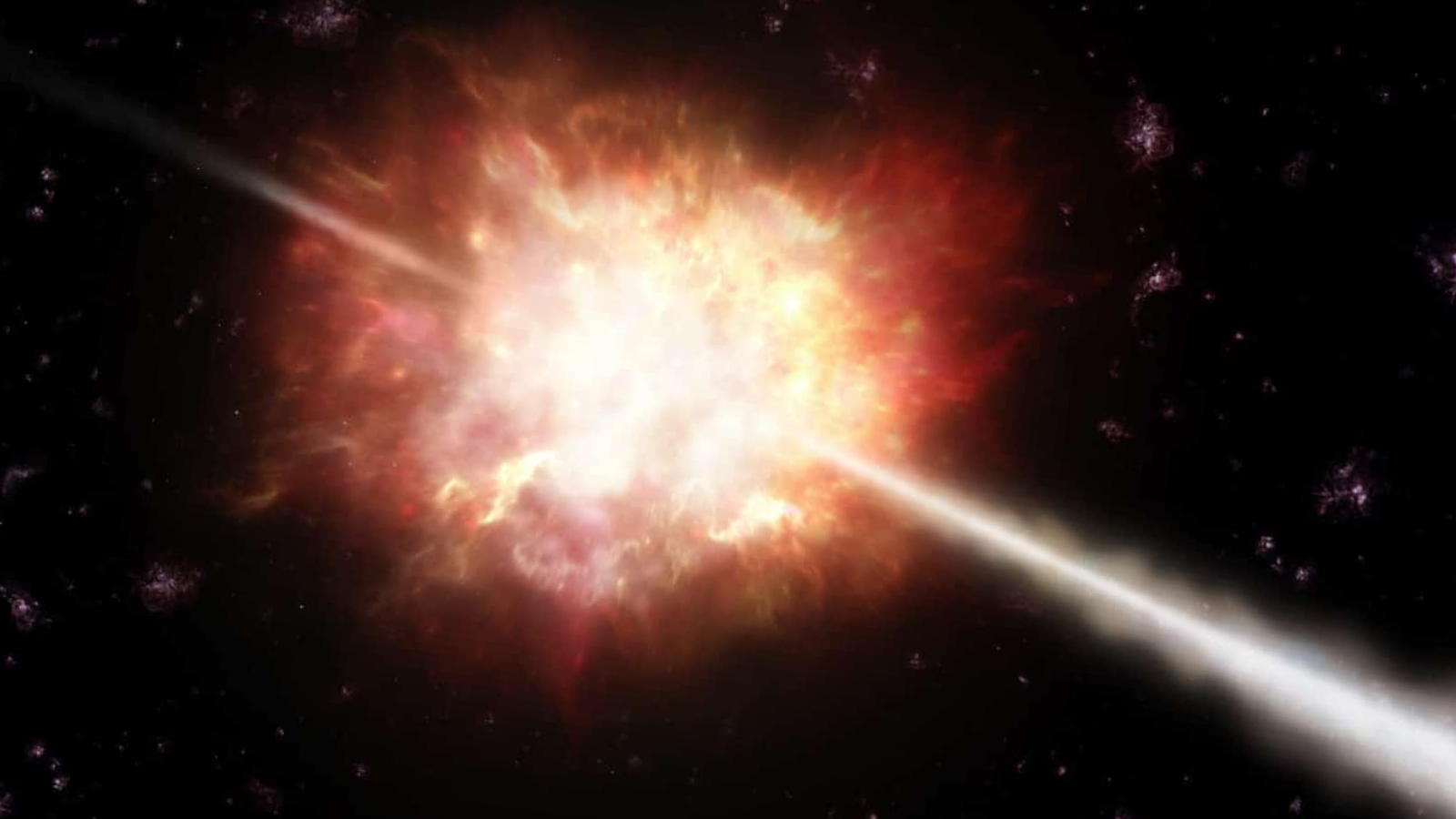
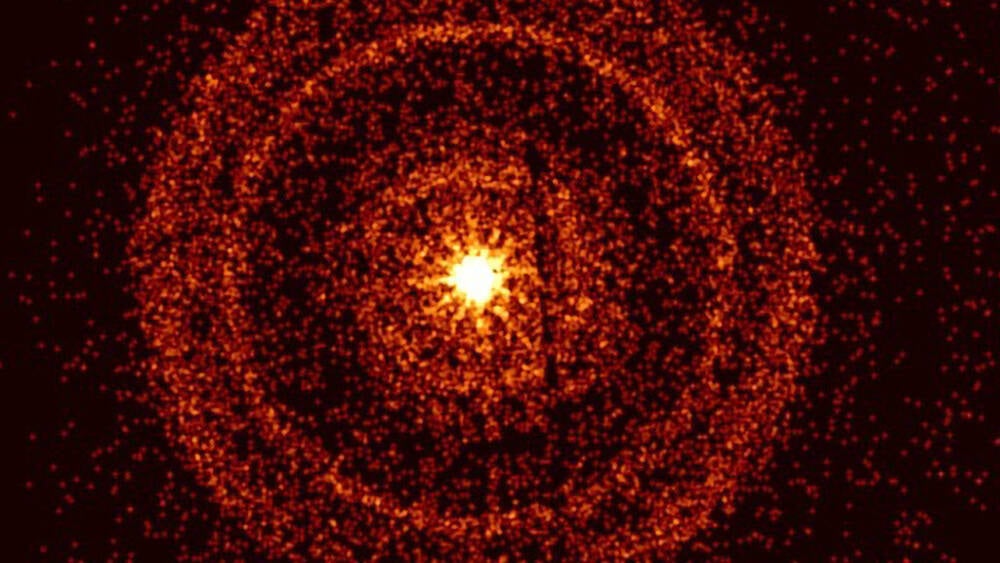
Astronomers have studied the most powerful gamma-ray burst ever detected, called BOAT, which originated from a supernova in a star 2.4 million light-years away, providing new insights into the structure of jets in such explosions and demonstrating the capabilities of advanced telescopes like LST-1.
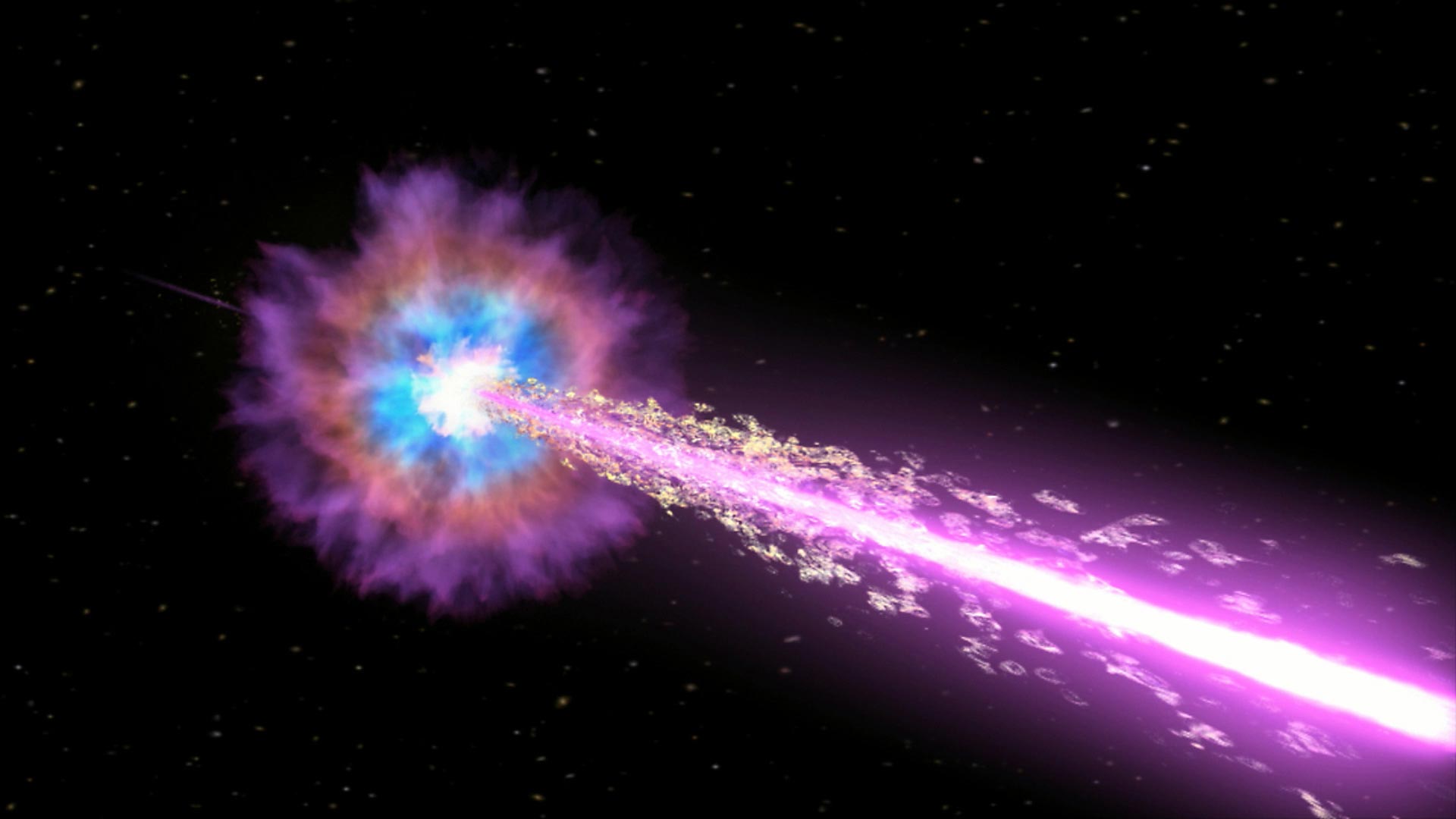
Astronomers studying the Brightest of All Time (BOAT) gamma-ray burst, GRB 221009A, have discovered an unusual jet structure that may explain its extreme nature and prolonged visible afterglow. The jet exhibited a narrow core with wide sloping wings, different from other gamma-ray bursts. These findings challenge standard theories and will drive future studies of gamma-ray bursts, prompting the development of more complex models and simulations.
Scientists from the Large High Altitude Air Shower Observatory (LHAASO) have published a groundbreaking study on the gamma-ray burst (GRB) GRB 221009A, an astronomical event resulting from the explosion of a massive star two billion years ago. LHAASO observed the complete high-energy light curve that other experiments have yet to reach, providing a perfect data base for precise tests of theoretical models. The study challenges current theoretical models and provides invaluable data for understanding GRB mechanisms.
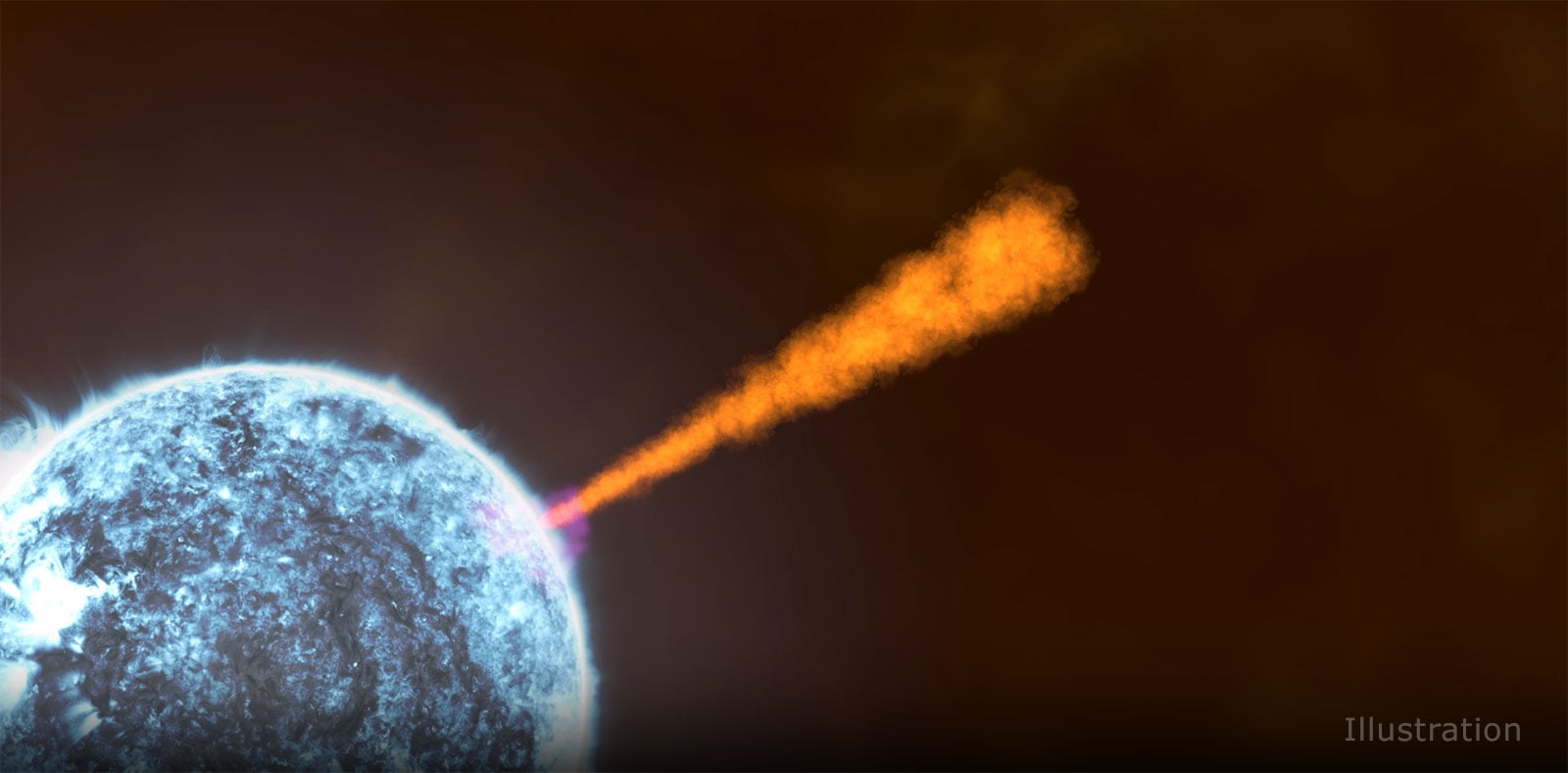
Scientists have used data from NASA's Nuclear Spectroscopic Telescope Array (NuSTAR) X-ray observatory to study the origins and characteristics of the brightest gamma-ray burst ever detected, named GRB 221009A. The burst was 70 times brighter than the previous record holder and far more energetic than any other gamma-ray burst ever detected. The team of scientists found that the jet of material in GRB 221009A was uniquely different than other gamma-ray burst jets, and the energy of the material within the jet varied as the distance from the jet’s core increased, a phenomenon never observed before. The physical characteristics of the progenitor star may have something to do with GRB 221009A’s unique characteristics.
The brightest gamma-ray burst ever detected, GRB 221009A, has an unusual structure with no clear edge and is 70 times brighter than any other gamma-ray burst discovered. The beams were directly pointed at Earth, making it much brighter. The energy and structure of GRB 221009A stem from the star that produced it, leaving behind a black hole estimated to be 30 times the mass of the Sun. Astronomers hope to continue studying it to learn more about the galaxy and star it was birthed from.