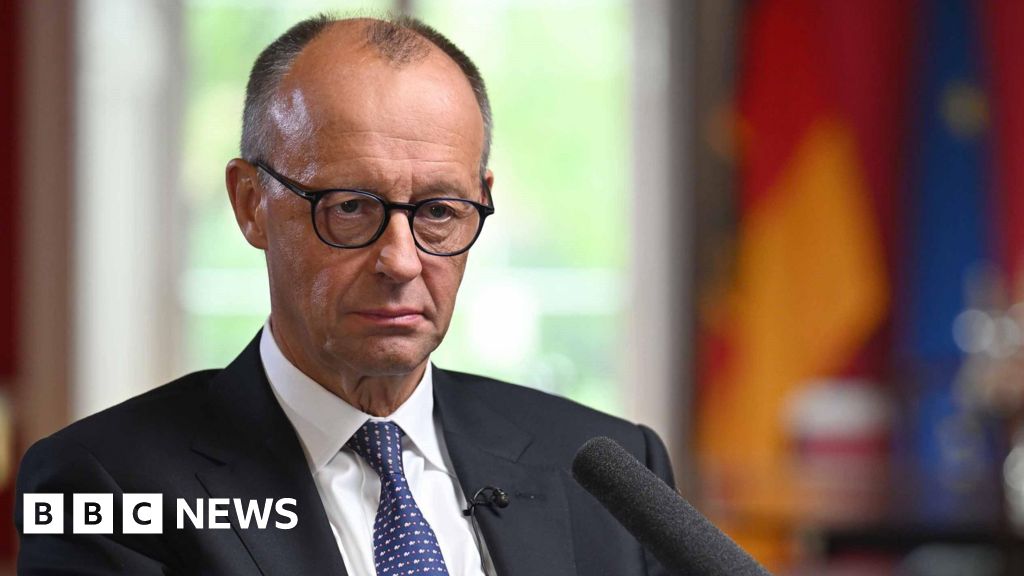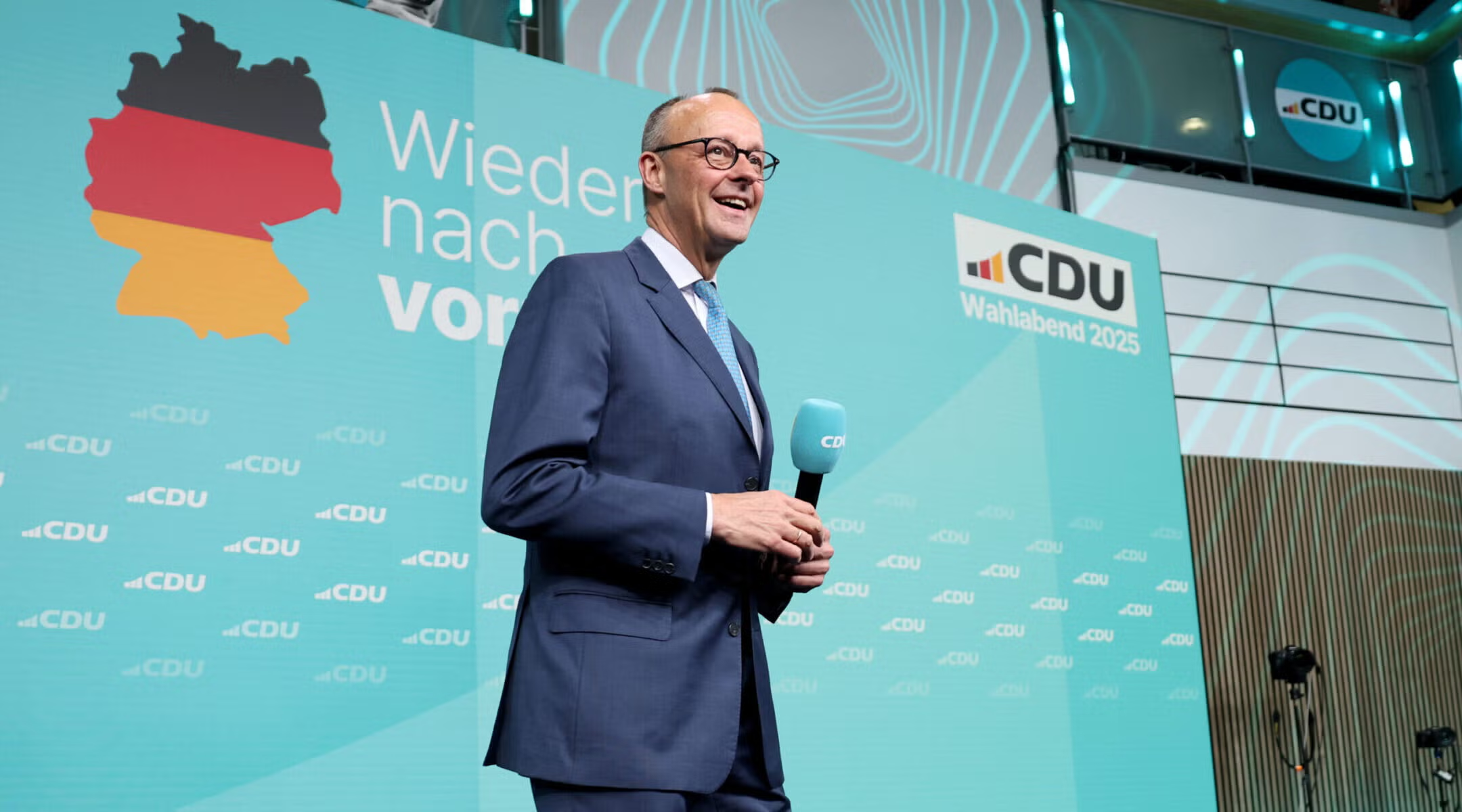
German Chancellor Friedrich Merz is navigating multiple crises, including US intervention in Venezuela, international tensions over Greenland, and ongoing support for Ukraine, while also facing domestic political challenges and cabinet reshuffles to address communication and economic issues.
German politician Friedrich Merz stated that Syrian refugees in Germany should return home now that the war in Syria is over, or face deportation, despite the limited prospects for safe return due to destroyed infrastructure. His comments reflect a hardline stance on migration and have sparked controversy within Germany.
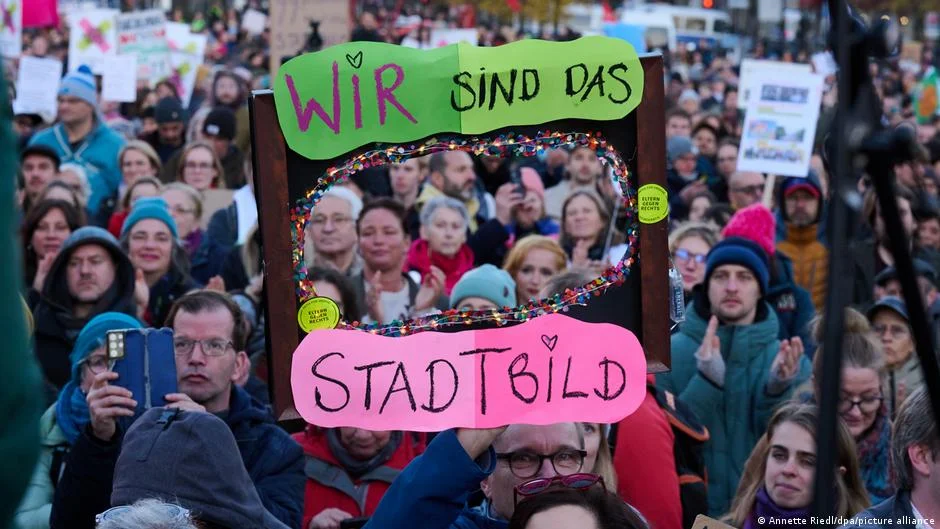
German Chancellor Friedrich Merz's comments linking migration to public safety fears have sparked widespread criticism and protests, with many accusing him of racist rhetoric and societal division, despite some polls suggesting limited public perception of xenophobia.
German Chancellor Friedrich Merz faces criticism for using anti-immigrant language linked to far-right rhetoric while discussing deportations to address the rise of the far-right AfD party, prompting calls for more responsible political discourse and problem-solving approaches.
German Chancellor Friedrich Merz acknowledged that Germany's economic challenges are more severe and complex than initially thought, citing a structural crisis, declining competitiveness, and external pressures like US tariffs, with government reforms and investments planned to address these issues.
German CDU leader Friedrich Merz stated that the US is willing to participate in security guarantees for Ukraine, emphasizing America's role alongside Europe, and highlighted upcoming meetings between Zelenskiy, Trump, and Putin aimed at reaching a peace agreement, with the US playing a decisive role in the conflict.
Germany has halted military exports to Israel that could be used in Gaza in response to Israel's expanded military operations, reflecting concerns over civilian casualties and humanitarian issues, while maintaining support for Israel's security.
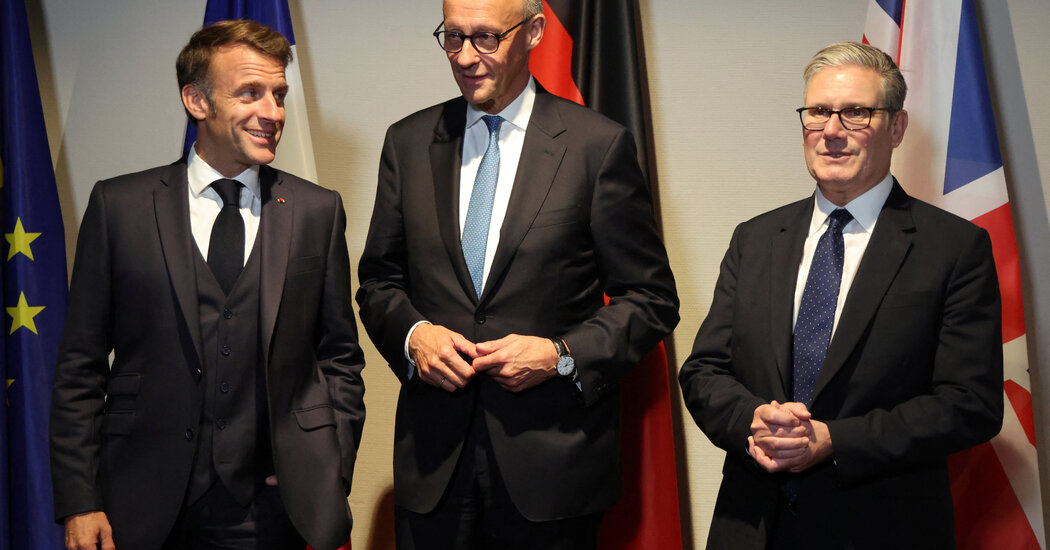
German Chancellor Friedrich Merz acknowledges Europe's past reliance on the US for defense, emphasizes increased European self-sufficiency, and strengthens Germany's alliances with the UK and France through a new friendship treaty, amid ongoing US trade tensions and support for Ukraine.
German Chancellor Friedrich Merz and UK Prime Minister Keir Starmer are strengthening ties through a new Anglo-German treaty on defense, energy, and economic cooperation, reflecting Europe's move towards greater independence in security amid shifting global alliances and the U.S. stepping back from European affairs.
EU officials dismiss German Chancellor Friedrich Merz's hopes that US tariffs will spare Germany's car industry, emphasizing that the US aims to reduce imports and that a special deal for cars is unlikely. Negotiations are complex, with the US threatening tariffs and the EU preparing retaliatory measures, impacting Germany's export-dependent economy.
German leader Friedrich Merz is urging the EU to quickly finalize a trade deal with the US to avoid unfavorable terms, amid concerns that the agreement may be imbalanced and heavily favor the US, especially on tariffs affecting key industries like automotive and manufacturing.
German Chancellor Friedrich Merz expressed support for Israel's actions against Iran, calling it 'the dirty work' Israel is doing for all of us, and praised Israel's efforts in weakening Iran's regime, while participating in the G7 summit advocating for de-escalation in the conflict.
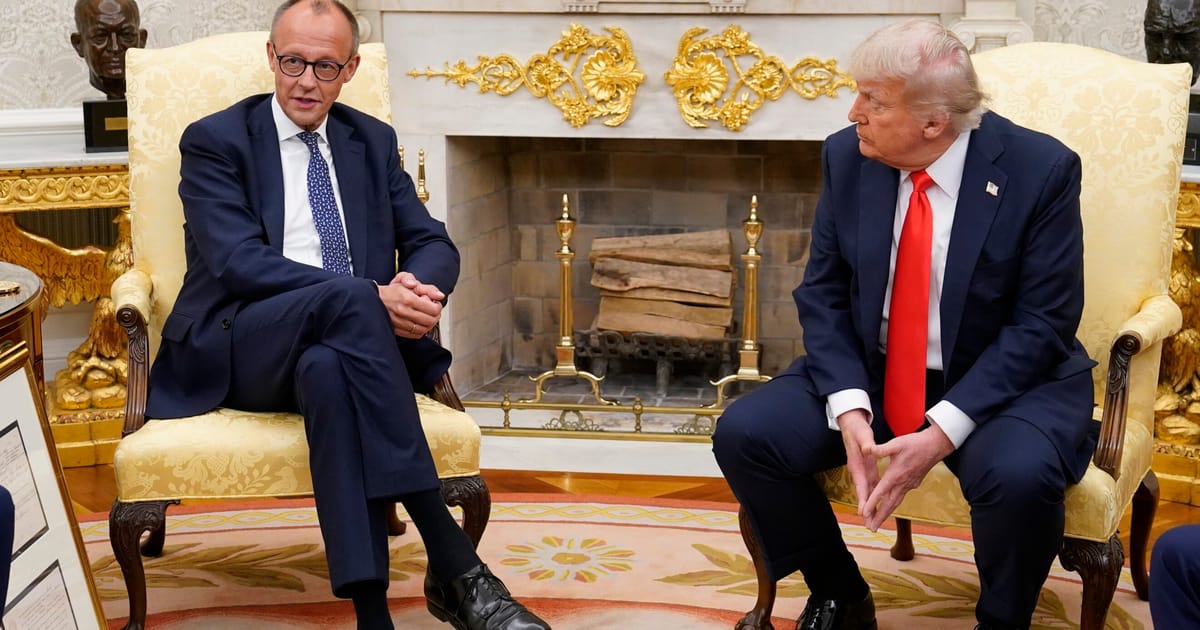
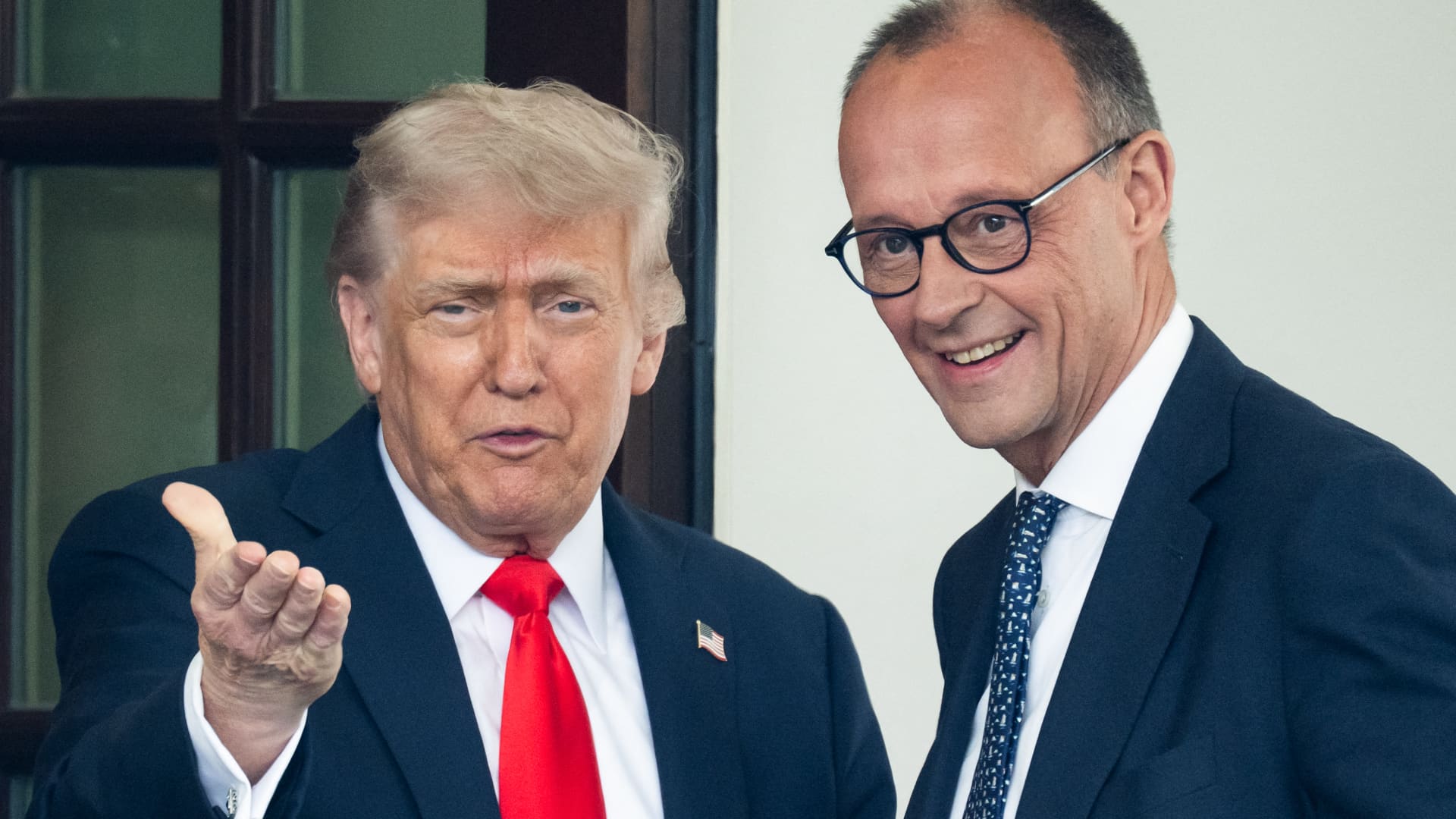
German Chancellor Friedrich Merz's visit to Washington was overshadowed by Trump's spat with Elon Musk but was still considered a success, strengthening US-Germany relations, discussing defense spending, Ukraine support, and avoiding controversy over the far-right AfD party, with prospects for future meetings.
German Chancellor Friedrich Merz is set to meet with President Trump in the Oval Office, amid a backdrop of complex diplomatic dynamics and Trump's controversial history with world leaders, highlighting tensions over US-Europe relations, NATO, Ukraine, and immigration policies.
Germany's new Chancellor Friedrich Merz is visiting the White House to strengthen ties with President Trump, focusing on defense spending, NATO commitments, and trade issues, amid efforts to reassert Germany's role on the global stage and navigate complex US-Germany relations.