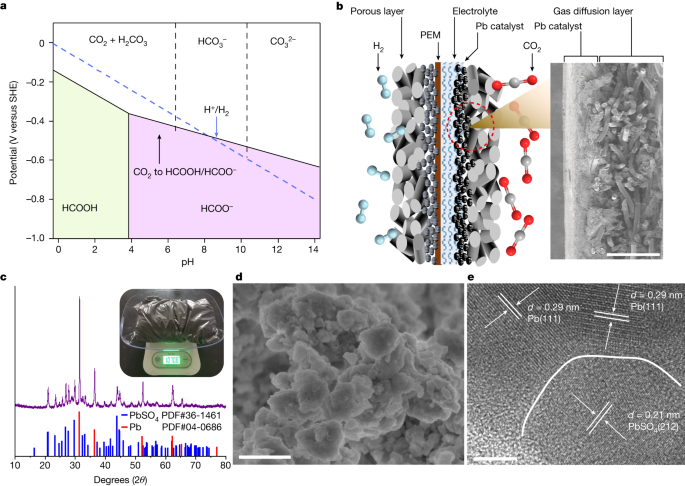
A Chinese-led team at Huazhong University of Science and Technology has developed an electrolysis system that can efficiently convert carbon dioxide into formic acid, a valuable chemical product, with a record-breaking stability of over 5,000 hours. This breakthrough, published in the journal Nature, is seen as a significant step towards industrial use and could have applications in various sectors including chemical, energy, and agriculture. The system utilizes components from lead-acid batteries and offers a greener and more sustainable approach to carbon dioxide conversion, potentially aiding in the decarbonization of carbon-intensive industries.
Researchers have developed a proton-exchange membrane system that efficiently reduces carbon dioxide (CO2) to formic acid using a catalyst derived from waste lead-acid batteries, achieving over 93% Faradaic efficiency when coupled with hydrogen oxidation. The system demonstrates nearly 91% single-pass conversion efficiency for CO2 at a current density of 600 mA cm−2 and cell voltage of 2.2 V, and has been shown to operate continuously for more than 5,200 h, offering a promising advancement in the development of carbon-neutral technologies.
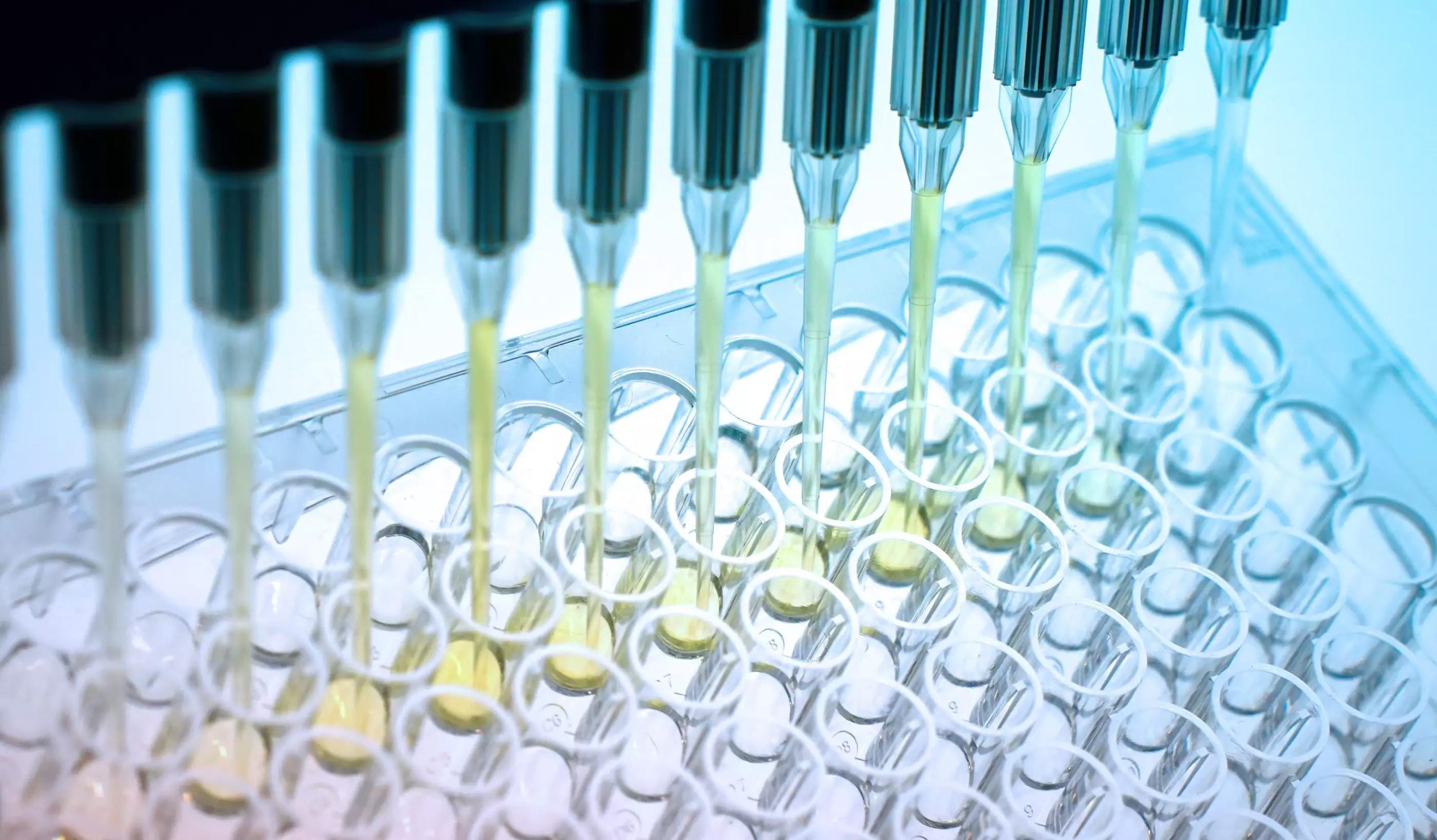
Scientists at the Max Planck Institute have developed a synthetic metabolic pathway that converts carbon dioxide into formaldehyde via formic acid, offering a carbon-neutral method for producing valuable materials. The researchers optimized enzymes using high-throughput methods to achieve a fourfold improvement in production. The long-term goal is an "all-in-one platform" from carbon dioxide via an electrobiochemical process to products like insulin or biodiesel.
Researchers at the Max Planck Institute for Terrestrial Microbiology have developed an artificial metabolic pathway that produces formaldehyde from formic acid, a possible intermediate product of artificial photosynthesis. Formaldehyde could be fed directly into several metabolic pathways to form other valuable substances without any toxic effects. The researchers used high-throughput methods to optimize enzymes and achieved a fourfold improvement in production. The long-term goal is an "all-in-one platform"—from carbon dioxide via an electrobiochemical process to products like insulin or biodiesel.