Professional forecasters have raised their expectations for the US economy in 2024, with the economy projected to grow 2.2% after adjusting for inflation, up from previous forecasts. Despite high interest rates aimed at controlling inflation, the job market and household spending have remained resilient, leading to increased optimism. Inflation has been cooling, and most forecasters expect interest rate cuts to begin by mid-June, which could provide a boost to the economy. However, concerns about high rates remain, with 41% of respondents citing it as the most significant risk to the economy.
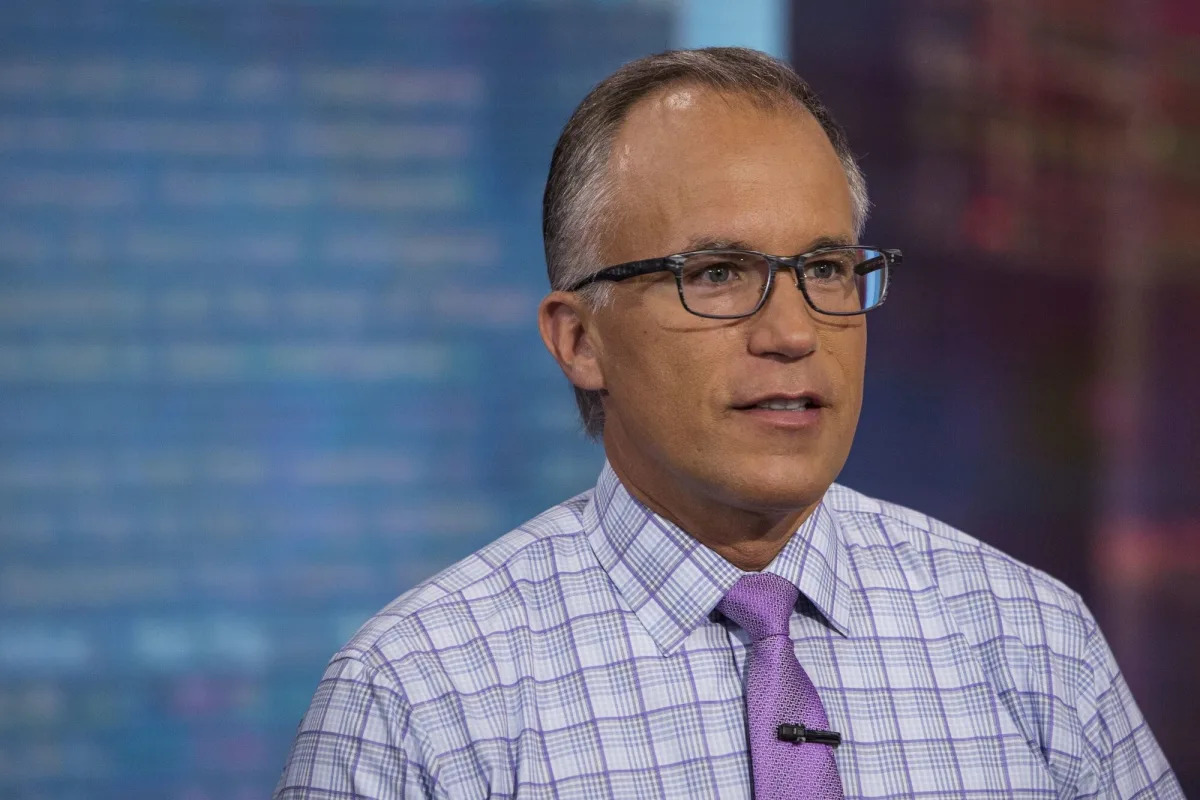
Wall Street forecasters who predicted a rebound in the stock market for 2023 are now looking ahead to 2024 with optimism. Tom Lee of Fundstrat, Brian Belski of BMO Capital Markets, John Stoltzfus of Oppenheimer, Savita Subramanian of Bank of America, and Ryan Detrick of Carson Group all projected a recovery in 2023, citing factors such as excessive pessimism, a resilient labor market, easing consumer-price pressures, and rate cuts. They now expect further strength in 2024, with targets ranging from 5,000 to 5,200 for the S&P 500.
Economic models are predicting a tight race for the 2024 election, despite a strong economy with high employment and easing inflation. Recent polls show President Joe Biden trailing behind former President Donald Trump on the economy, raising doubts about the Biden campaign's claim that the economy will be a significant asset. Yale economist Ray Fair and other economists forecast a close contest, citing inflation and a likely slowdown in growth as potential stumbling blocks for Biden. While the economy has remained resilient, experts caution that it's hard to forecast a year ahead from the election, and other factors beyond the economy also play a role in determining election outcomes.
Hurricane Otis has intensified into a dangerous Category 4 storm, with forecasters warning that it could potentially reach Category 5 strength before making landfall. The hurricane poses a significant threat as it approaches the coast.
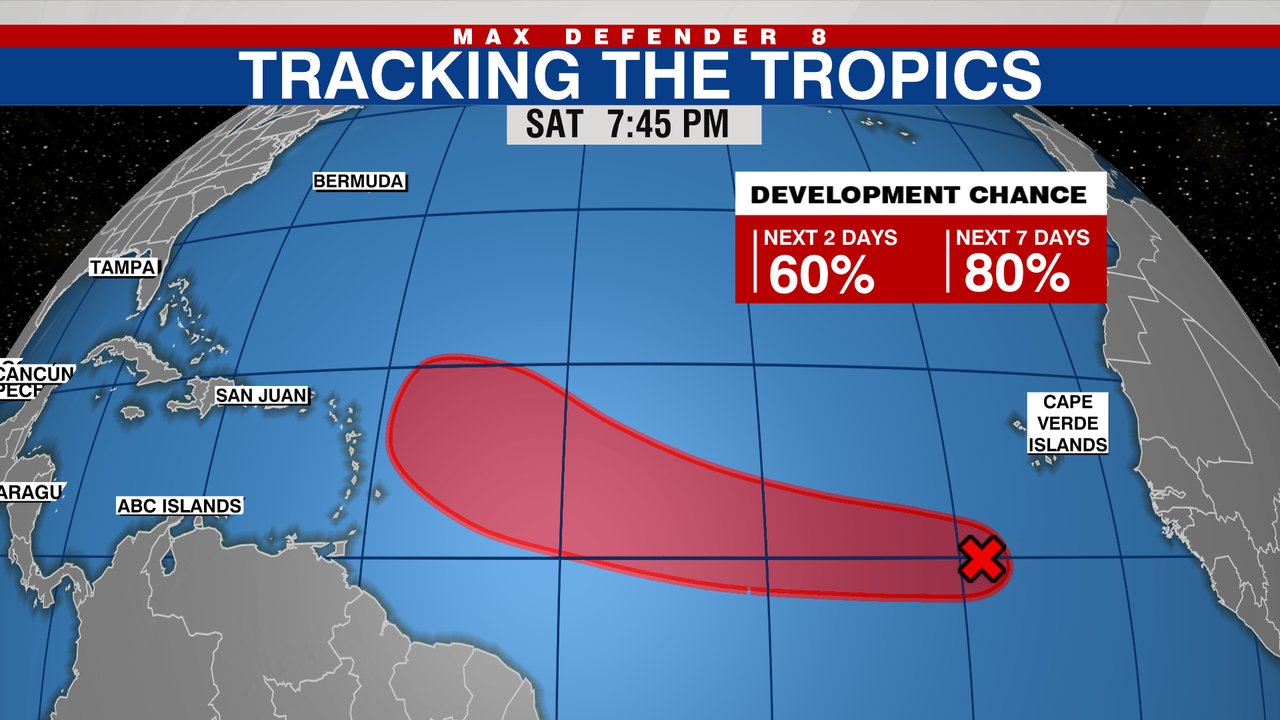
A tropical wave in the Atlantic is likely to strengthen into a tropical depression by next week, with a 60% chance of formation in the next 48 hours and an 80% chance in the next seven days, according to the National Hurricane Center. The wave is currently producing disorganized storms southwest of the Cabo Verde Islands and is expected to move westward over the Atlantic. Forecasters predict it will re-curve out to sea before approaching the Caribbean or the United States.
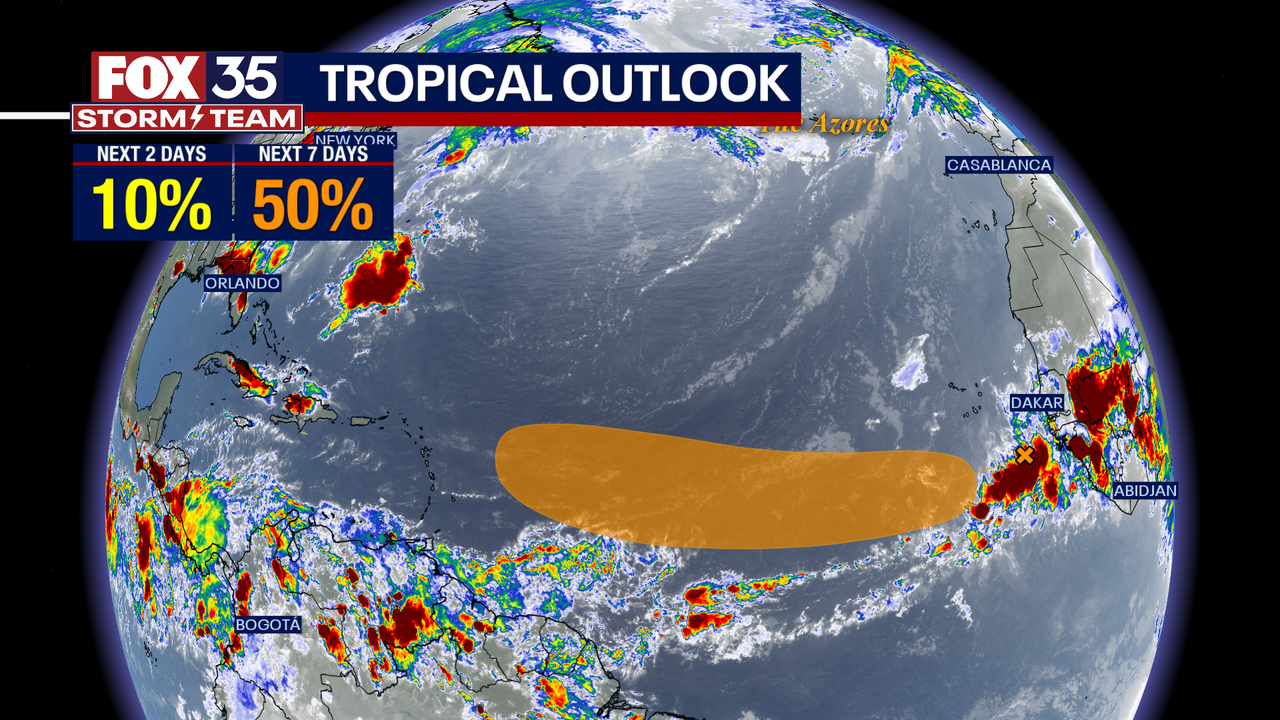
The National Hurricane Center is monitoring an eastern Atlantic tropical wave that could potentially become a tropical depression next week. The wave is currently producing disorganized showers and thunderstorms and has a 50% chance of formation over the next seven days. While there is a low chance of tropical cyclone development over the next 48 hours, forecasters say environmental conditions appear to be conducive for gradual development.
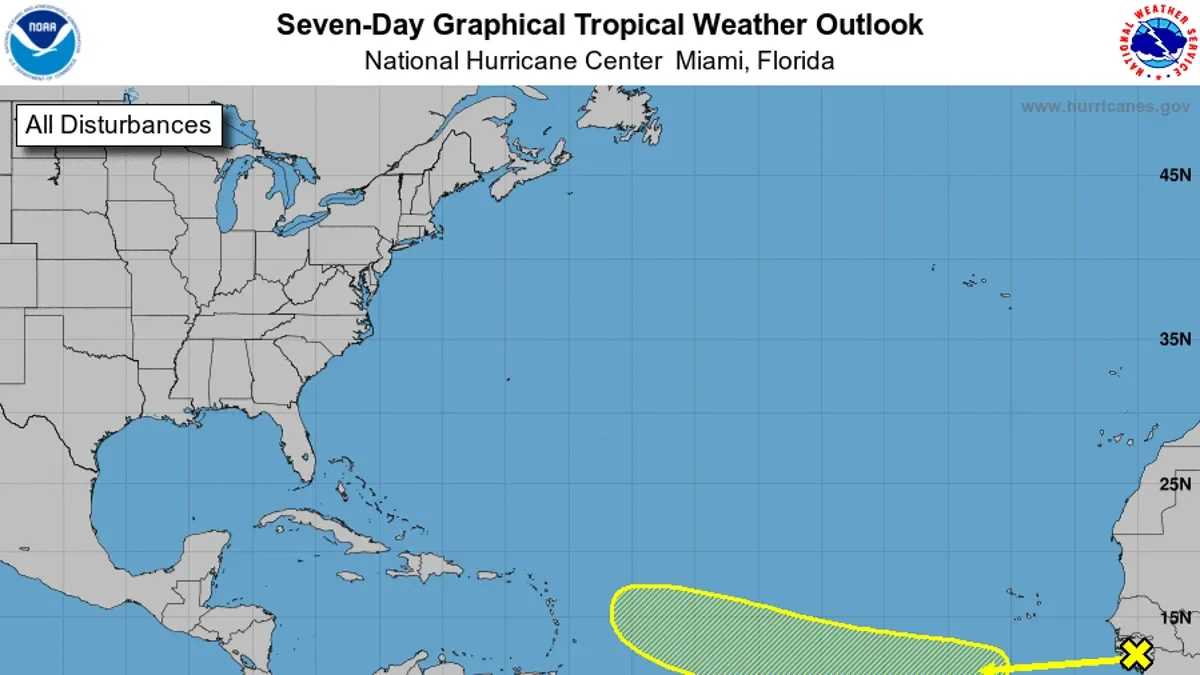
Forecasters are monitoring a tropical wave that is expected to move off the west coast of Africa into the tropical Atlantic, with environmental conditions conducive for gradual development. If it becomes a named storm, it would be an unusual event, as tropical development is rare this time of year in that part of the Atlantic. Forecasters are also monitoring four other tropical waves in the Atlantic basin, but none are currently forecast to develop further.
The National Oceanic and Atmospheric Administration (NOAA) has declared the beginning of an El Niño pattern, but its connection to Northern California's winter precipitation is relatively loose. Forecasters predict a 56% chance of a "strong" El Niño and an 86% chance of a "moderate" El Niño. Historical data shows that strong El Niño patterns have a 70% chance of resulting in at least average precipitation in Northern California. However, there are still many other factors that determine the region's winter precipitation.