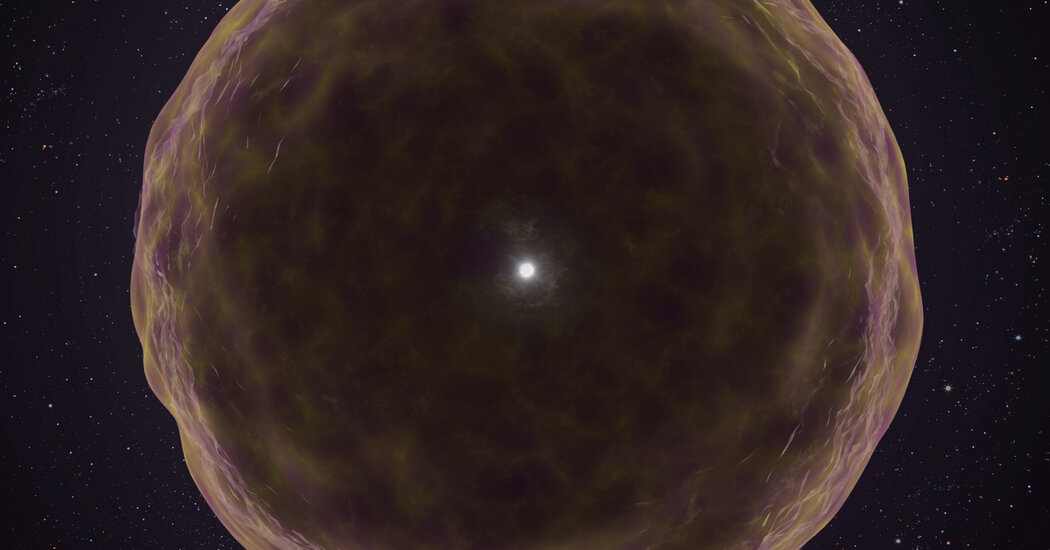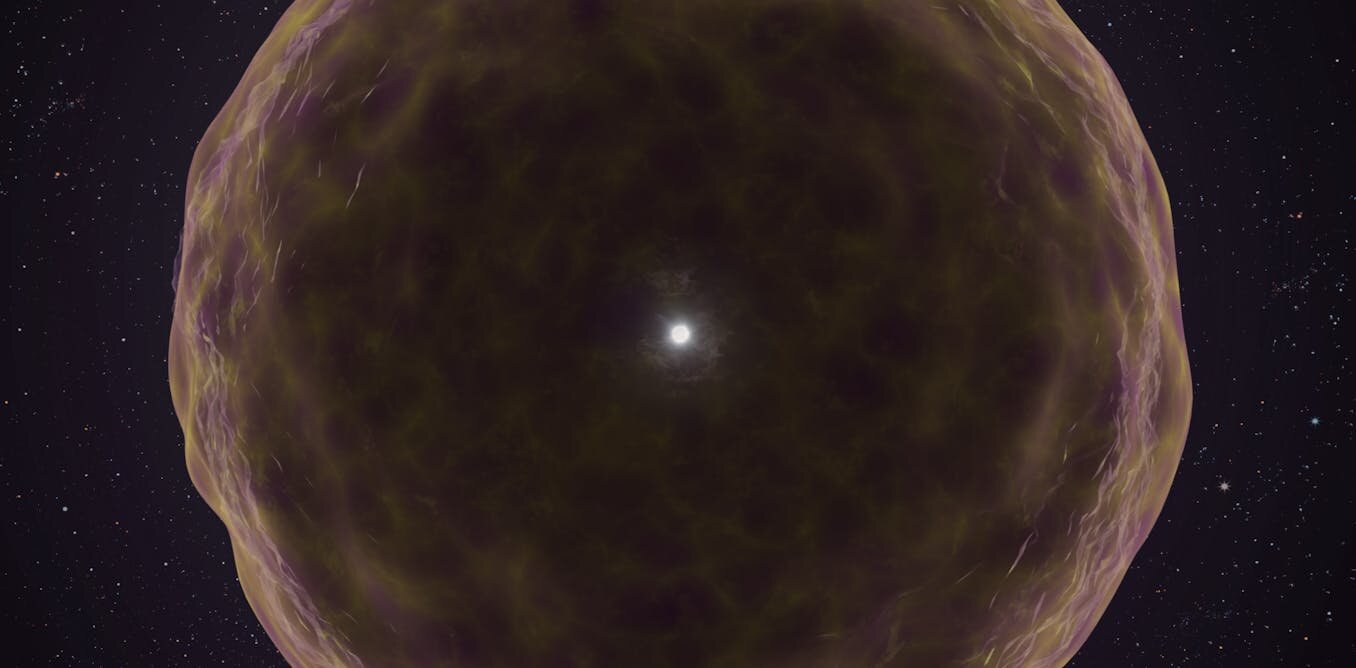
Astronomers observed the core of a rare supernova, SN2021yfj, confirming theories about how elements are formed inside massive stars and shedding light on the processes leading to star death and element creation in the universe.
Astronomers observed the core of a dying star in a rare supernova, confirming theories about how elements are formed inside massive stars through nuclear fusion and revealing new insights into the star's layered structure and explosion process, which are crucial for understanding the universe's chemical makeup.
Astronomers have discovered a rare type of supernova where a star was stripped down to its heaviest elements before exploding, providing new insights into how elements essential for life are formed in stars.
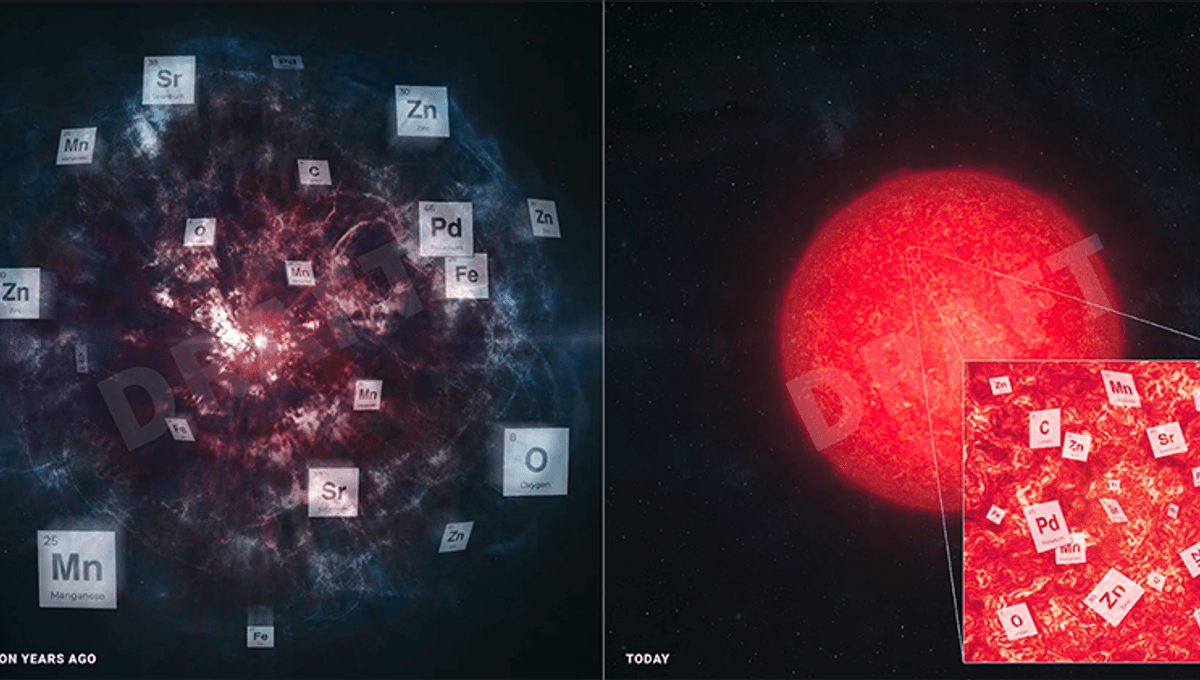
Astronomers have discovered an ancient red giant star, J0931+0038, with an unusual mix of heavy elements that suggests it was enriched by a supernova unlike any seen before. Dubbed the "Barbenheimer Star," its composition challenges current understanding of exploding stars and element formation. The star's extreme elemental ratios indicate an extraordinary explosion, possibly from a massive star falling into a mass gap. This discovery prompts the search for similar stars and the need for new models to explain this unique phenomenon.
Ancient stars have been found to produce elements with atomic masses greater than 260, heavier than any naturally occurring element on Earth. This discovery enhances our understanding of element formation in stars and suggests that heavy elements can be created through fission in well-studied old stars. The research provides insights into the conditions and processes involved in the creation of heavy elements, shedding light on the diversity of elements in the universe.
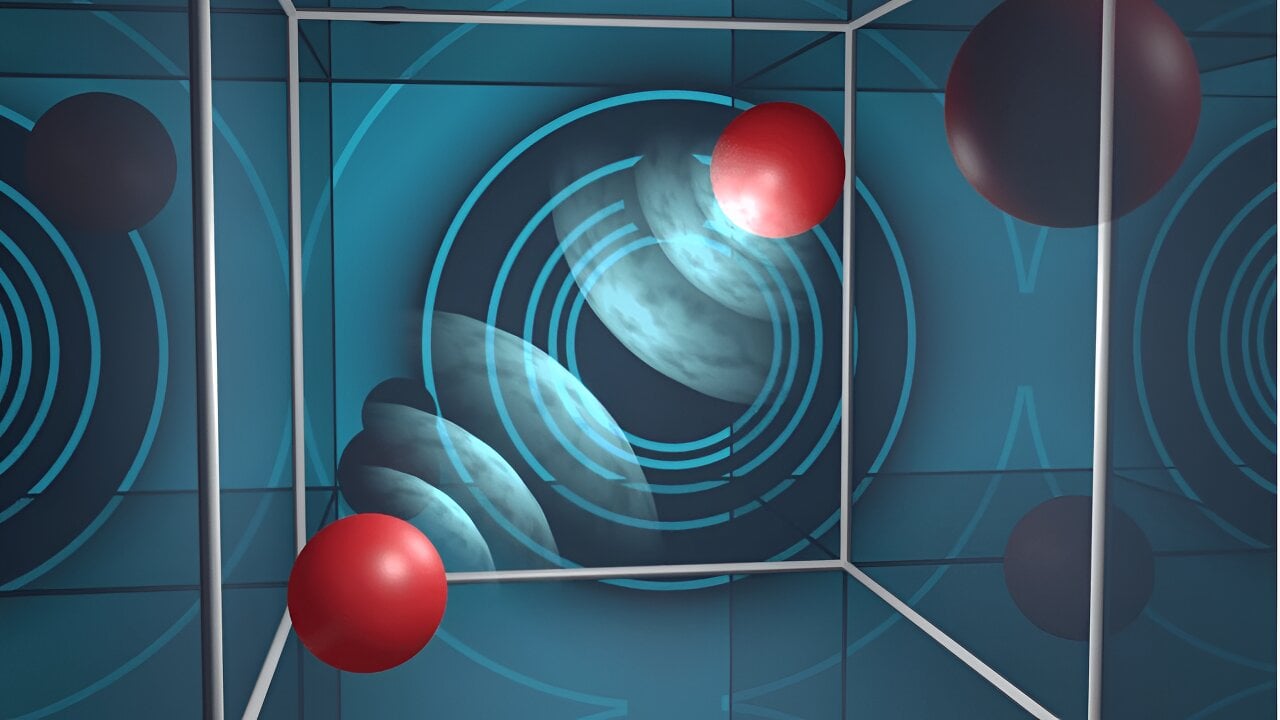
Researchers from North Carolina State University and Michigan State University have developed a new approach for modeling low-energy nuclear reactions, which are crucial for understanding the creation of elements in stars. By focusing on the properties and energies of compound nuclei formed in simulations, the team derived a formula to predict interactions involving charged clusters of protons. This work fills a gap in current simulations and provides a foundation for improving predictions of nuclear reactions, ultimately enhancing our understanding of the cosmos.