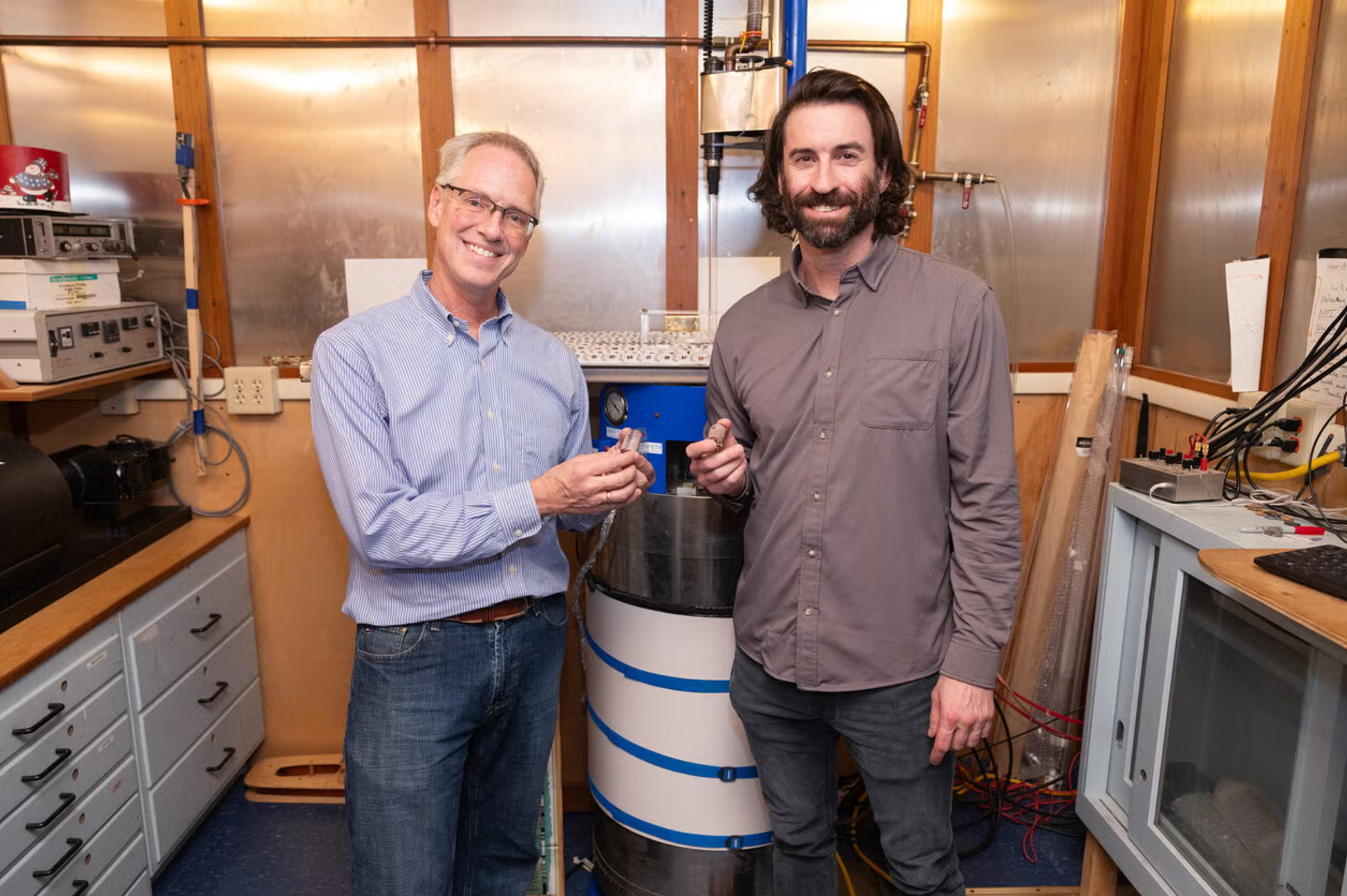
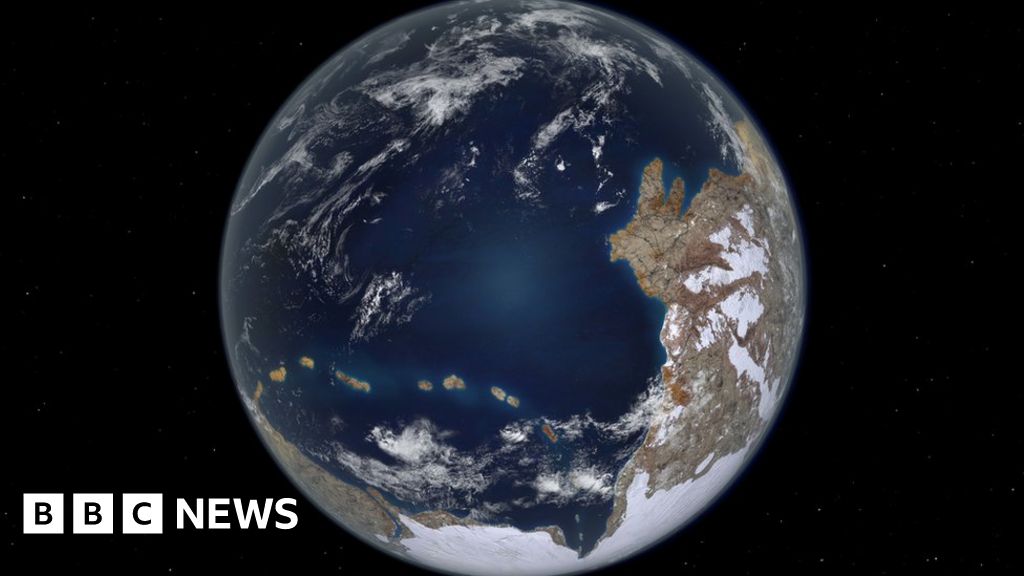
Scientists studied ancient rocks in Morocco to uncover a period around 565 million years ago when Earth's magnetic field was highly unstable and rapidly changing, which may have influenced the emergence of life and provides insights into the planet's magnetic behavior over deep time.
Researchers have uncovered a pattern in rocks from Morocco's Anti-Atlas Mountains indicating rapid and chaotic shifts in Earth's magnetic field during the Ediacaran Period, challenging previous assumptions and offering new insights into Earth's magnetic history and plate tectonics.
A new study analyzing rocks from the Ediacaran period suggests that the chaotic magnetic signatures from over 500 million years ago were caused by erratic Earth's magnetic field, not rapid continental movement, providing a clearer understanding of Earth's magnetic history and its impact on plate tectonics.
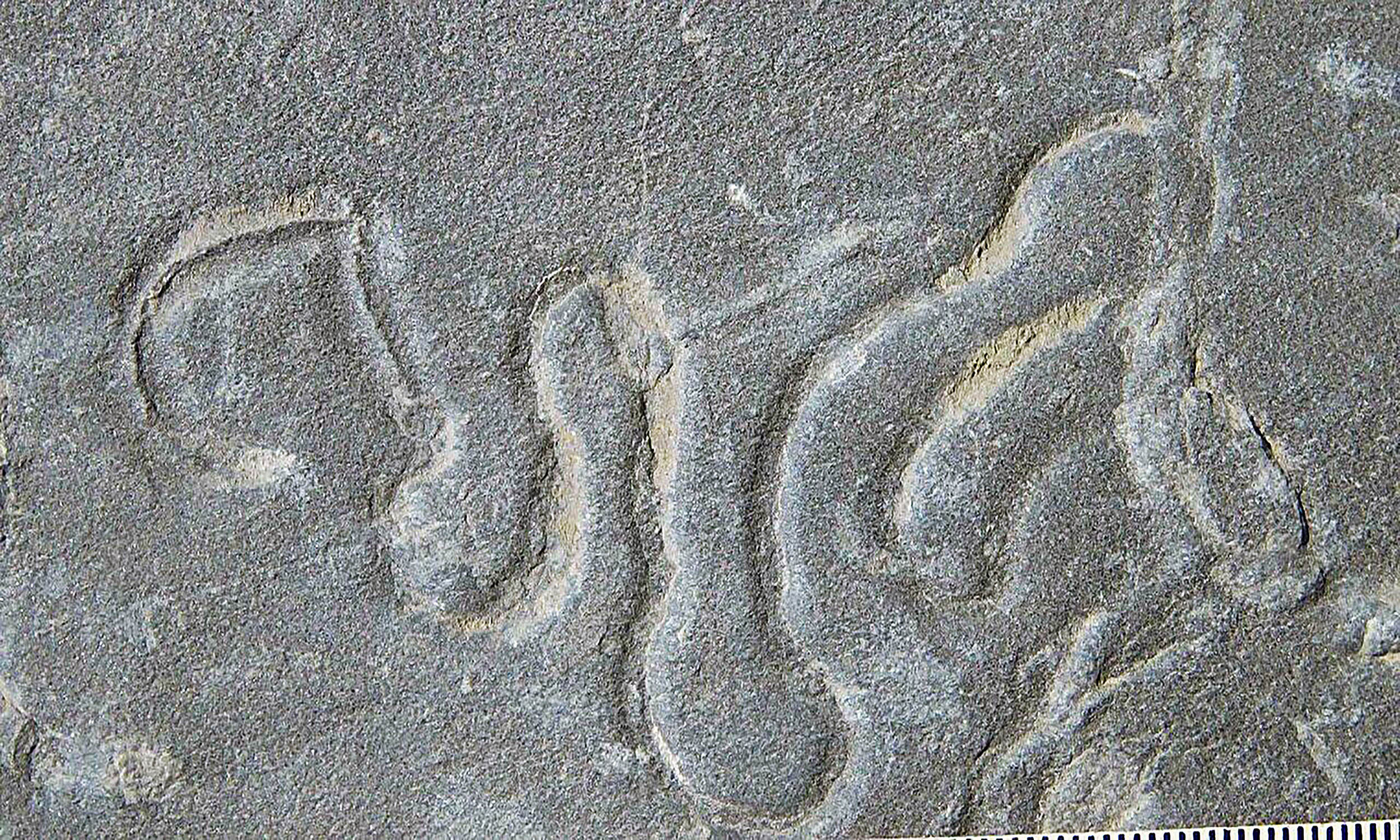
New research analyzing 170 trace fossils suggests that complex animal movements and body traits emerged gradually during the Ediacaran Period, about 10 million years before the Cambrian Explosion, challenging the idea of a sudden evolutionary burst and indicating a slow buildup of biological complexity.
New research suggests the Cambrian explosion, a major event in Earth's biological history, actually began around 545 million years ago, with evidence of complex, mobile organisms appearing much earlier than previously thought, reshaping our understanding of early animal evolution.
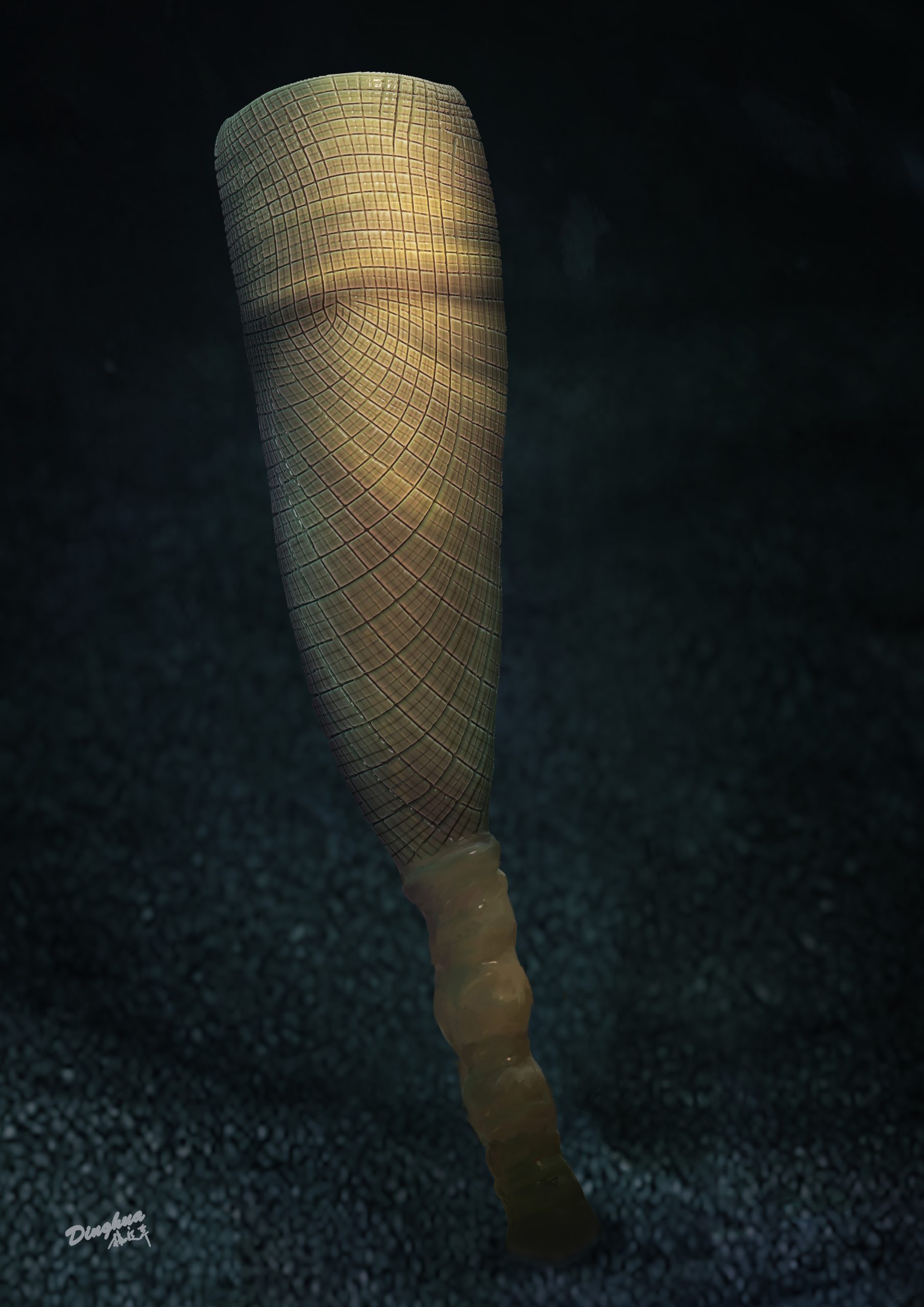
Researchers led by Shuhai Xiao at Virginia Tech have discovered a 550 million-year-old sea sponge fossil, filling a 160 million-year gap in the fossil record and providing new insights into early animal evolution. The fossil suggests that early sponges lacked mineral skeletons, which explains their absence in older rocks and guides future fossil searches. This discovery challenges previous assumptions about the appearance and size of early sponges and offers a new perspective on the evolution of one of the earliest animals.
Fossils discovered in Welsh rocks in the 1970s have been dated to 564 million years ago, revealing details about some of Earth's earliest creatures. The disc-shaped invertebrates, found in Carmarthenshire, likely lived in shallow waters along the coast of volcanic islands during the Ediacaran period. These ancient organisms, too primitive to be described as animals, are unlike any other forms of life and are considered the oldest in Wales. The breakthrough in dating the fossils was due to the work of a Pembrokeshire-born PhD student, Tony Clarke, who has been working on radiometric dating at Curtin University in Perth, Western Australia.
A recent study published in the Journal of the Geological Society revealed the discovery of some of the oldest known complex lifeforms, dating back to around 565 million years ago in Wales. These creatures, resembling modern marine species like jellyfish but with bizarre and unfamiliar features, are believed to be among the first multicellular lifeforms to evolve on Earth. The fossils provide insight into the response of life to the thaw out from a global glaciation, shedding light on the deep connection between geological processes and biology, and shaping our comprehension of life's evolution.