

Tag

Bea

All articles tagged with #bea

Trump’s ‘greatest economy’ claim meets the data
economy4 days ago

Trump’s ‘greatest economy’ claim meets the data

BEA data show 2025 real GDP rose 2.2% (Q4 at 1.4% annualized), a slowdown from 2024, with the Oct–Nov 2025 shutdown subtracting about 1 percentage point from Q4 growth. Job growth was weak in 2025 (~15,000 payrolls per month), though January 2026 added 130,000, and unemployment stood at 4.3%; federal employment fell 327,000 since Oct 2024. A Supreme Court ruling curtailed Trump’s tariffs, which now face exemptions and hinge on a new 10–15% rate; the average tariff is about 9.1%. Public opinion remains skeptical (about 39% approve the economy vs 59% disapprove), suggesting the data undercut the president’s boast about the economy.
economy8 days ago

US income and spending rise in December 2025, aided by transfers and services

In December 2025, U.S. personal income rose 0.3% to $86.2B, boosting disposable income (DPI) by 0.3% and personal consumption expenditures (PCE) by 0.4% (with services up more than goods). Real PCE grew 0.1%, while the PCE price index climbed 0.4% (0.4% ex-food-and-energy, 2.9% year over year). Saving reached $830.8B (3.6% of DPI). The income gains were driven by transfer receipts (including a Maui wildfire settlement) and higher compensation, and personal outlays rose 0.4% to $90.2B. BEA also noted upcoming changes to its data-release formats and schedules, with the next release on March 13, 2026.

economy1 month ago

US Q3 2025 GDP Revised Up to 4.4% on Strong Exports and Investment

BEA revises Q3 2025 GDP to +4.4% (SAAR), up from Q2’s +3.8%, driven by rises in consumer spending, exports, government spending, and investment, with imports higher; real final sales to private domestic purchasers up 2.9%. Industry: private services-producing +5.3%, private goods-producing +3.6%, government -0.3%. Real gross output +3.2% with services leading; PCE inflation at 2.8% (2.9% ex food and energy). Profits from current production rose by $175.6B. The update replaces the prior December release due to a government shutdown; next BEA release is February 20, 2026.

economy1 month ago

U.S. Current-Account Deficit Narrows in Q3 2025, BEA Reports

BEA data show the U.S. current‑account deficit narrowed to $226.4 billion in Q3 2025 (about 2.9% of GDP) as primary‑income moved into a surplus, the services surplus widened, and the goods deficit eased. Exports rose to about $1.30 trillion while imports reached $1.53 trillion. Net financial‑account transactions were −$409.9 billion, with sizable increases in assets and liabilities to foreign residents. BEA also announced a March 2026 switch to a single combined release for international transactions and investment position data, with tables accessible via an Interactive Data Application; next releases are scheduled for March 25, 2026 and later in 2026.

economy1 year ago

US Economy Maintains 2.8% Growth in Q3, Boosted by Consumer Spending

The U.S. Bureau of Economic Analysis reported that the real GDP grew at an annual rate of 2.8% in Q3 2024, consistent with the advance estimate, but down from 3.0% in Q2. The growth was driven by consumer spending, exports, and government spending, despite a downturn in private inventory investment. Current-dollar GDP rose by 4.7%, while corporate profits fell by $10.2 billion, contrasting with a significant increase in the previous quarter. Personal income and savings saw downward revisions, with the personal saving rate at 4.3%.

"Rising Consumer Spending Outpaces Income Amid Inflation Concerns"
financeeconomics1 year ago

"Rising Consumer Spending Outpaces Income Amid Inflation Concerns"

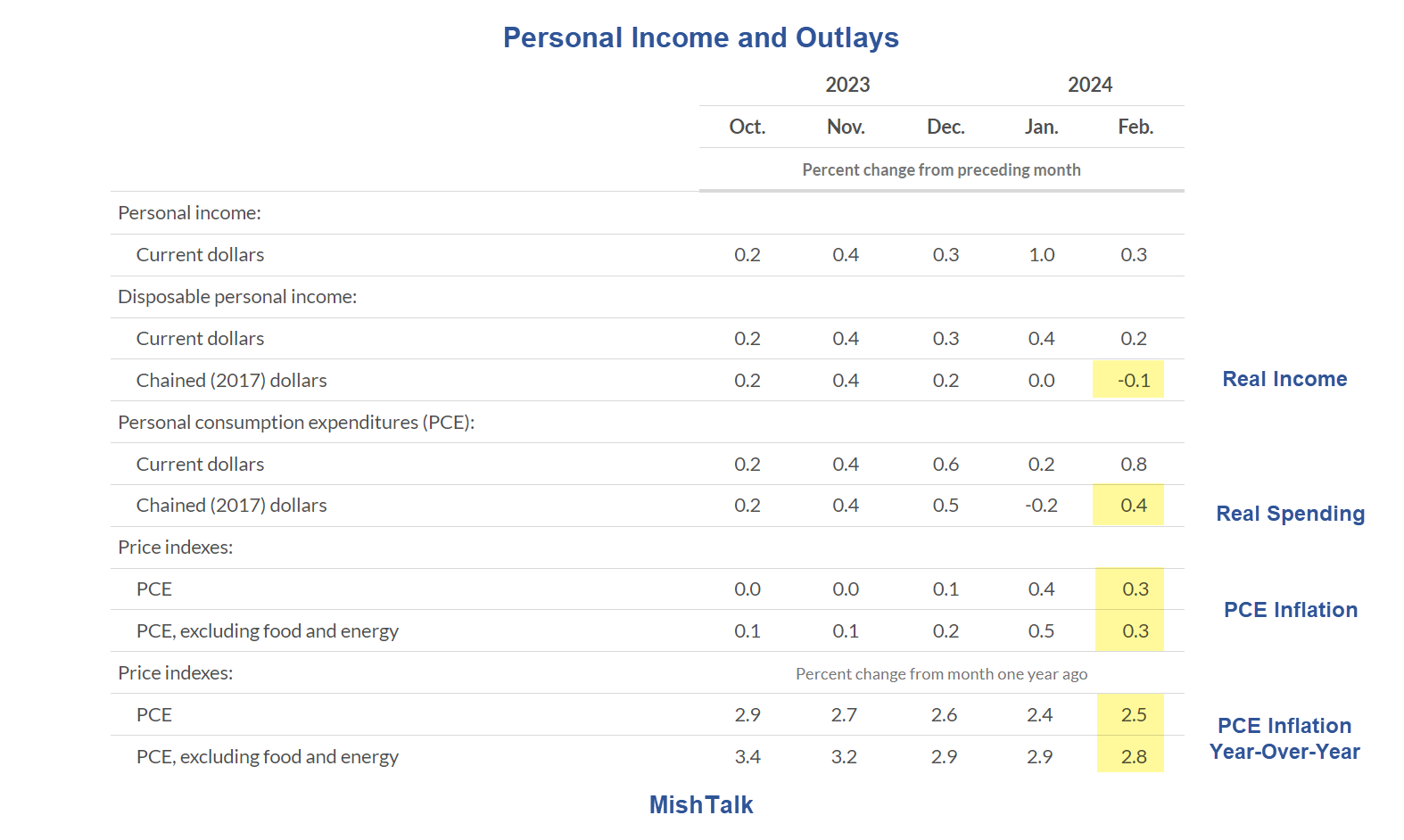
The BEA's report on personal income and spending for February 2024 does not support the need for Fed interest rate cuts, as real income decreased but personal spending surged, and inflation data, particularly the PCE price index, indicates higher inflation than the Fed's target. Additionally, Apartment List reports rent prices have increased for the second consecutive month, and the Case-Shiller National Home Price Index hit a new record high, contributing to the market's expectation of Fed rate cuts despite the data not fully supporting it.