US banks are lobbying to block interest on stablecoins due to concerns that it could lead to deposit flight from traditional banks, reflecting ongoing regulatory and financial stability debates.
Americans withdrew a record $472 billion from their bank accounts in the first quarter of 2021, according to the Federal Deposit Insurance Corporation (FDIC). The decline in deposits is the largest reported since data collection began in 1984, with the primary driver being uninsured deposits as people moved to protect capital above the $250,000 FDIC insured maximum. The mass exodus follows the failures of several banks triggered by the Federal Reserve's aggressive interest rate hikes. As depositors leave the banking system, money market funds have witnessed massive weekly cash inflows, with assets held by money market mutual funds surging to a record high of $5.6 trillion.
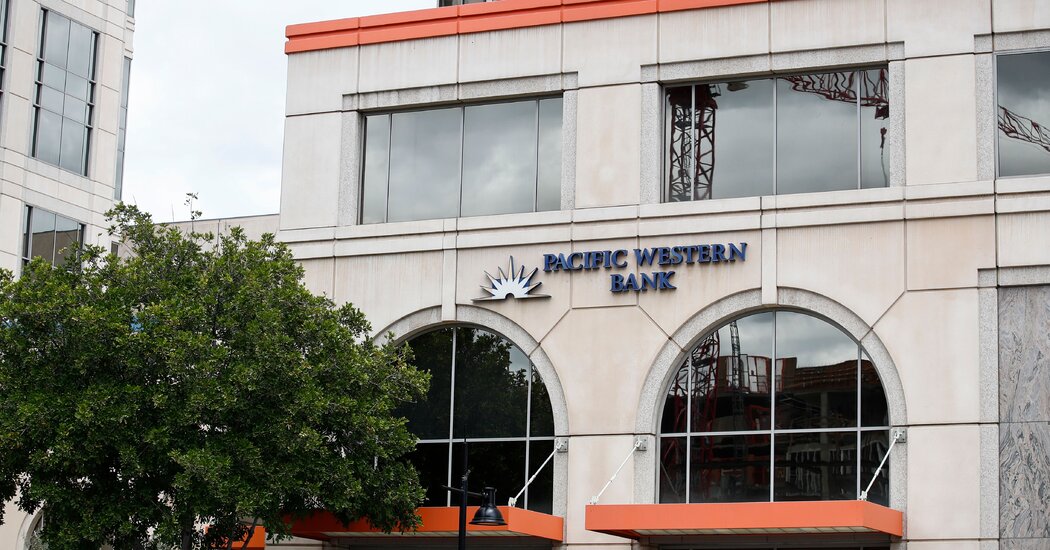
Pacific Western Bank has lost nearly 10% of its deposits over the last week, amounting to billions of dollars, due to customers' fears of the safety of their deposits. The Los Angeles-based lender confirmed that it was looking to sell itself or raise more money, sending its shares down sharply. PacWest now has about $25 billion in deposits, compared with just over $28 billion at the end of March. The new pressure on PacWest is a reminder that midsize lenders remain under pressure, largely because their battered share prices are leading to worries among customers.
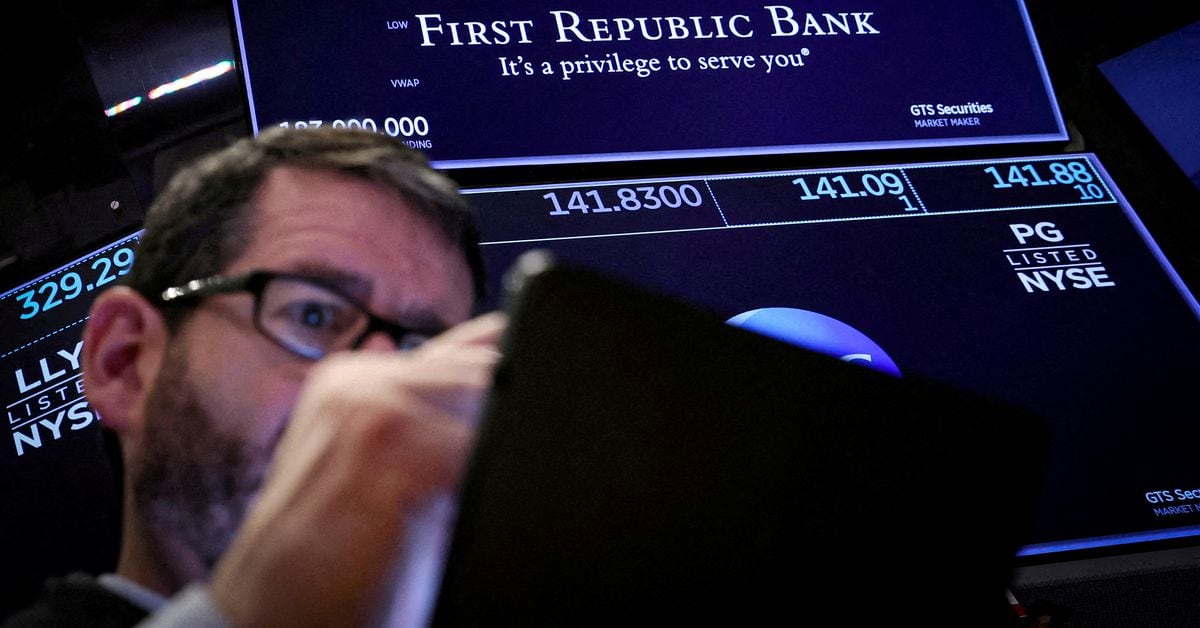
Shares of First Republic Bank dropped by nearly 50% on Friday amid reports that the US government may step in to help the troubled bank. Concerns over deposit flight have been mounting since the bank reported a significant contraction in its deposit base in its first-quarter earnings report. While the government ensured the deposits of Silicon Valley Bank customers during its collapse, it is unclear if First Republic customers will receive similar protections. The possibility of government intervention and murky protections for account balances over $250,000 may lead to further deposit flight, worsening the bank's situation.
First Republic Bank is exploring options such as asset sales and the creation of a 'bad bank' to turn around its business after reporting a more than $100 billion plunge in deposits in the aftermath of the biggest turmoil to hit the banking sector since 2008. The bank's mortgage loan book and securities portfolio could lead to big writedowns if someone were to acquire them, according to Christopher Wolfe, head of North American banks at Fitch Ratings. The bank has declined to comment on the specific options.
First Republic Bank faces a tough challenge to recover its business after losing over half of its deposits, with shares dropping 20% in premarket trading. The bank reported a more than $100 billion plunge in deposits in the first quarter, following the biggest crisis to hit the banking sector since 2008. Analysts expect challenges to extend through the year after two US bank failures last month created a liquidity crunch at a slew of regional lenders. The bank plans to shrink its balance sheet and cut expenses by cutting executive compensation, paring back office space, and laying off 20%-25% of employees in the second quarter.
Big US banks are expected to report a deposit flight in their upcoming earnings as customers have been withdrawing their money due to low interest rates and the pandemic-induced economic uncertainty. This trend is likely to impact the financial results of these banks and reflect a shift in customer behavior towards alternative investment options.
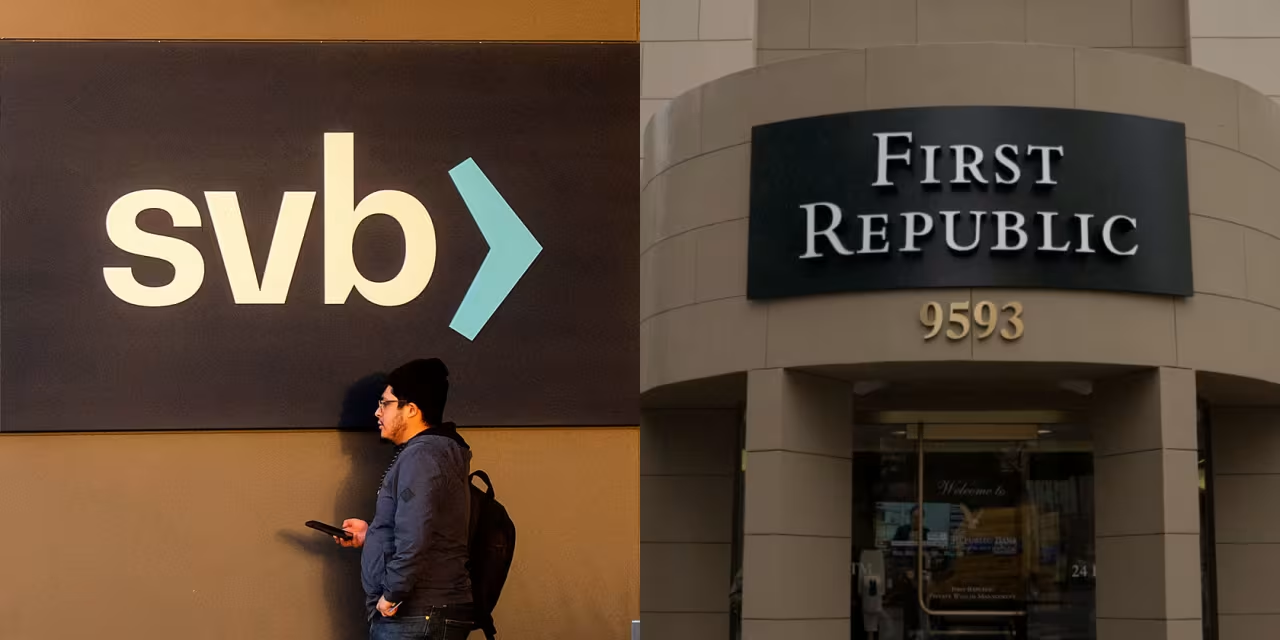
The failure of Silicon Valley Bank (SVB) has raised questions about the effectiveness of bank supervision. Regulators had identified problems with SVB's risk management and exposure to rising interest rates and deposit flight, but were unable to force changes until it was too late. The failure of SVB and Signature Bank prompted an extraordinary government response to back the entire banking system. Regulators have no good answers for why all the evidence of excessive risk remained confined to confidential reports among bank supervisors, their bosses, and SVB management. The real work of bank supervision may take place in the shadows, but it doesn't work if policymakers don't act on what those supervisors learn.
First Republic Bank's stock has lost 90% of its value in less than two weeks due to its overlap with Silicon Valley Bank, which officially failed on March 10. Both banks cater to high-end clients and have exposure to long-dated securities, which have been falling in value as interest rates rise. First Republic's emphasis on these securities has been a liability in the current environment, and many of them are in the mortgage business, which has been ailing. Efforts to inject $30 billion into the company's deposits and a backstop from the U.S. Federal Reserve have not helped, and the bank's total deposits have dropped by up to $89 billion. The challenges facing First Republic, as well as the demise of Silicon Valley Bank and Signature Bank, will be the focus of hearings on Capitol Hill next week.
First Republic Bank has been downgraded to 'junk' status by S&P Global Ratings due to concerns over further deposit flight that could hurt its profitability. The bank's deposit base is more concentrated than most large regional banks, with a portion above the FDIC's $250,000 threshold at risk of withdrawal. Fitch also downgraded the bank's debt rating.