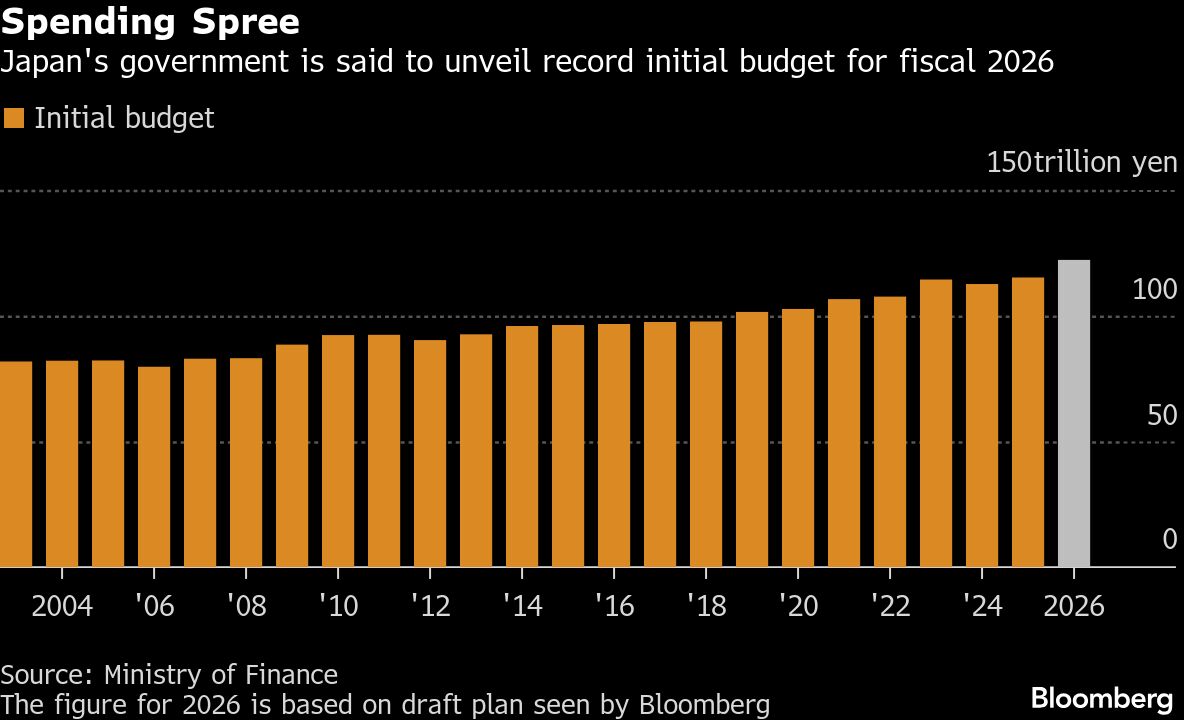
Japan's government plans to unveil a record ¥122.3 trillion budget for FY26, increasing spending by 6.3% to address social security, defense, and economic needs, while managing debt issuance carefully amid concerns over fiscal sustainability and rising long-term yields.
Oracle launched an $18 billion bond sale to fund its AI-related cloud infrastructure expansion, with strong demand reaching $88 billion, as the company ramps up investments following major cloud deals and aims to support its growth in the competitive tech market.
The US Treasury plans to issue more short-term debt, such as Treasury bills, to fund a growing budget deficit, continuing a strategy that increases borrowing without raising long-term interest rates, despite previous disapproval from Treasury officials. This approach, driven by technical needs and debt management strategies, carries risks if interest rates rise, potentially increasing the government's debt burden.
The U.S. Treasury is expected to maintain its current debt issuance strategy, with no immediate increase in long-term bonds, but Wall Street remains divided on whether this approach will continue or shift in the coming years, influenced by market conditions and government borrowing needs.
The U.S. Treasury market faces volatility due to uncertainties in debt issuance strategies, potential tariff increases, and Federal Reserve rate policies, with investors bracing for fluctuations in yields influenced by these factors.
GameStop plans to raise $1.75 billion through a bond deal, hinting at another potential bitcoin purchase, as its stock tumbles over 18% following the announcement and recent earnings, despite its strategic move to include bitcoin as a treasury asset.
Michael Saylor, executive chairman of MicroStrategy, is facing criticism for his aggressive Bitcoin investment strategy, which involves issuing debt to purchase Bitcoin. Investment expert Gavin Baker warns that this approach could become unsustainable if the company's debt grows too large relative to its size, potentially breaking down what he calls the "magic money creation machine." As of late 2024, MicroStrategy holds 386,700 Bitcoins, purchased at a significant cost, while its stock has seen substantial gains amid Bitcoin's bull run.
Nikola Corp. faced a significant drop in its stock price as investors reacted negatively to the company's plans to sell 133.3 million new shares and issue $175 million in new debt. The new stock sale would increase the number of outstanding shares to nearly 1 billion, diluting the value of existing shareholders' holdings. Nikola already has a notice of going concern on file with the SEC, stating that it may run out of money within the next year. The company needs funds for a battery pack recall and to scale its hydrogen fuel cell electric truck business. Shares tumbled 22% following the announcement, with investors expressing little hope for Nikola's survival.
US and European companies are rushing to issue debt before upcoming rate decisions, taking advantage of the current market conditions. With expectations of interest rate hikes, companies are eager to secure financing at lower rates before borrowing costs potentially increase. This trend reflects the cautious approach of businesses in anticipation of potential changes in monetary policy.
U.S. banking regulators, including the Federal Deposit Insurance Corporation (FDIC), the Federal Reserve, and the Office of the Comptroller of the Currency, have proposed a new rule that would require large regional banks with over $100 billion in assets to issue approximately $70 billion in fresh debt. This move aims to enhance the resilience of the banking sector following the failures of three lenders earlier this year. The proposal would bring regional banks in line with Wall Street giants, which already have their own debt requirements. The rule, subject to industry feedback, would give banks three years to meet the new standard. Critics argue that the proposal should consider the complete costs and benefits and avoid damaging the institutions it seeks to strengthen. Additionally, regulators have proposed overhauling "living will" plans to ensure banks can be safely wound down after failing.
Regulators have proposed new rules requiring regional banks with at least $100 billion in assets to issue long-term debt to cover potential losses in the event of failure, aiming to prevent systemic risks. This comes after the collapse of several mid-sized lenders earlier this year, which resulted in estimated losses of over $30 billion to the FDIC's Deposit Insurance Fund. The proposal also includes the strengthening of resolution plans for these banks. However, concerns have been raised about the potential increase in funding costs and the demand for the additional bank debt in the market.
U.S. banking regulators have announced plans to require regional banks with at least $100 billion in assets to issue long-term debt to protect depositors in the event of failures. The move comes after the collapse of Silicon Valley Bank earlier this year highlighted emerging risks in the banking system. The proposal aims to bring measures that apply to the largest institutions down to the level of midsized banks, including raising levels of long-term debt, removing loopholes, and strengthening resolution plans. The FDIC's move could force some lenders to issue more corporate bonds or replace existing funding sources with more expensive forms of long-term debt, potentially squeezing margins. Analysts estimate that five banks may need to raise around $12 billion in fresh debt. The requirement aims to calm depositors during times of distress and reduce costs to the FDIC's Deposit Insurance Fund.