Tag

Cryovolcanic

All articles tagged with #cryovolcanic

science1 year ago

City-Size Comet Brightens Dramatically After Rare Eruption

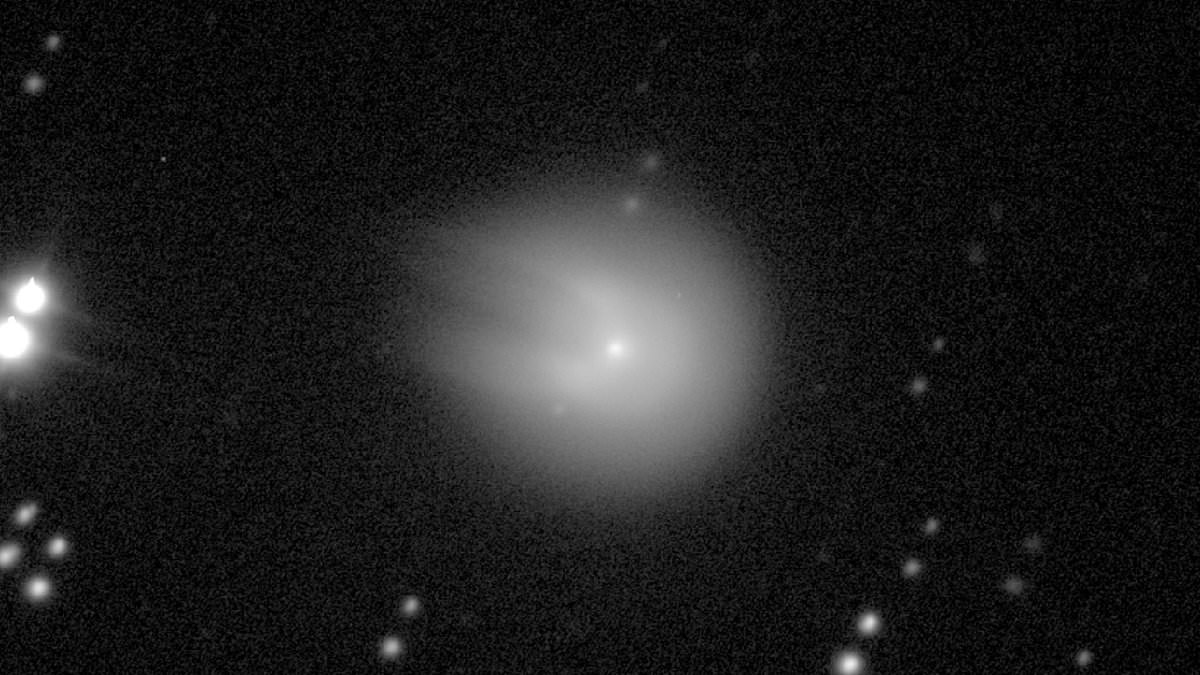
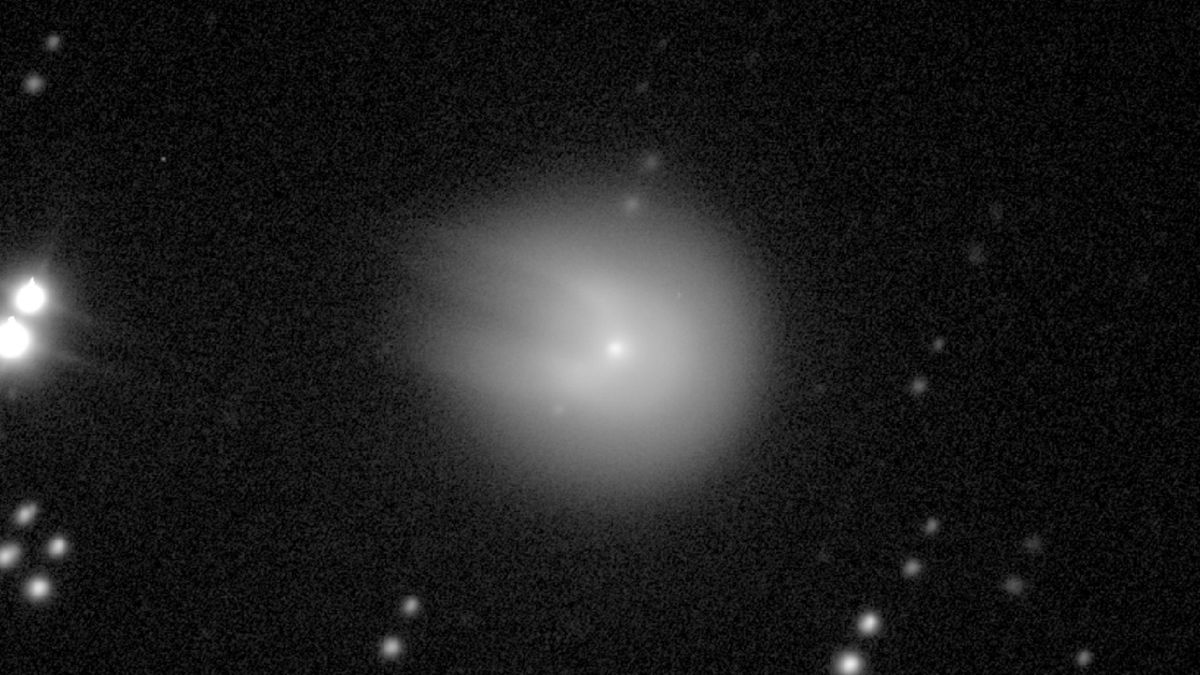
Comet 29P/Schwassmann-Wachmann, a cryovolcanic comet, recently experienced four major eruptions in under 48 hours, making it 300 times brighter. This city-sized comet, part of a rare group known as centaurs, has a circular orbit around the sun similar to Jupiter's distance. Despite its consistent solar exposure, its eruptions are unpredictable, challenging scientists' understanding of its behavior. The recent outbursts are the largest in over three years, adding to the mystery of this comet's sporadic activity.
astronomy1 year ago

"Rare 'Mother of Dragons' Comet and Other Astronomical Events in April"

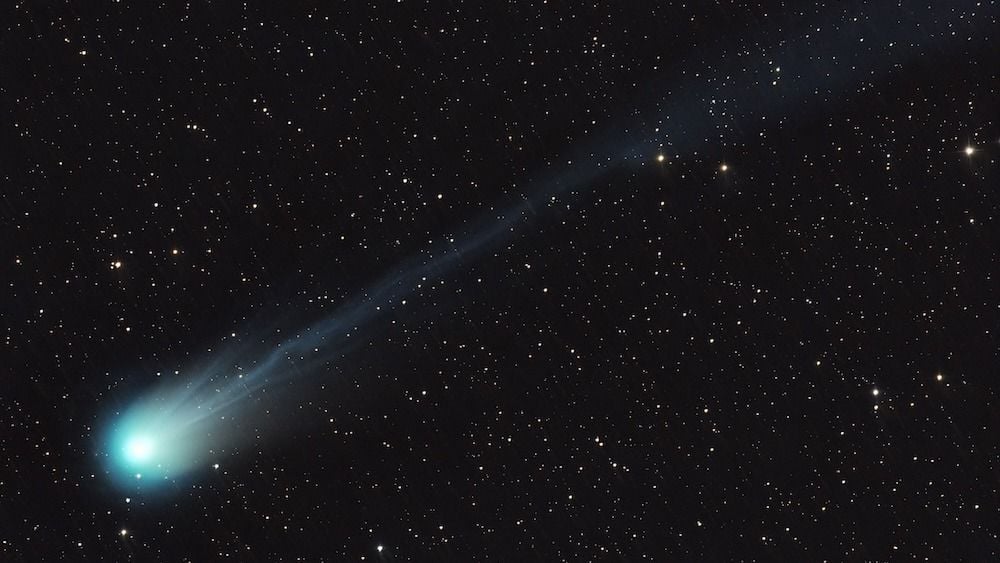
The "Mother of Dragons" comet, officially known as Comet 12P/Pons-Brooks, is currently visible in the night sky for observers in the Northern Hemisphere. This rare, cryovolcanic comet, which erupts regularly, is expected to make its closest approach to the sun on April 21, resulting in its brightest appearance. It has a nucleus measuring 10.5 miles wide and is known for its spectacular outbursts of gas and dust. The comet is expected to reach its closest point to Earth in June, but it will no longer be visible in the Northern Hemisphere at that time. Skywatchers are advised to use binoculars for the best chance of spotting it.

astronomy1 year ago

"Photo Trickery Reveals Hidden Spiral Swirling Around Icy Heart of Explosive 'Devil Comet'"

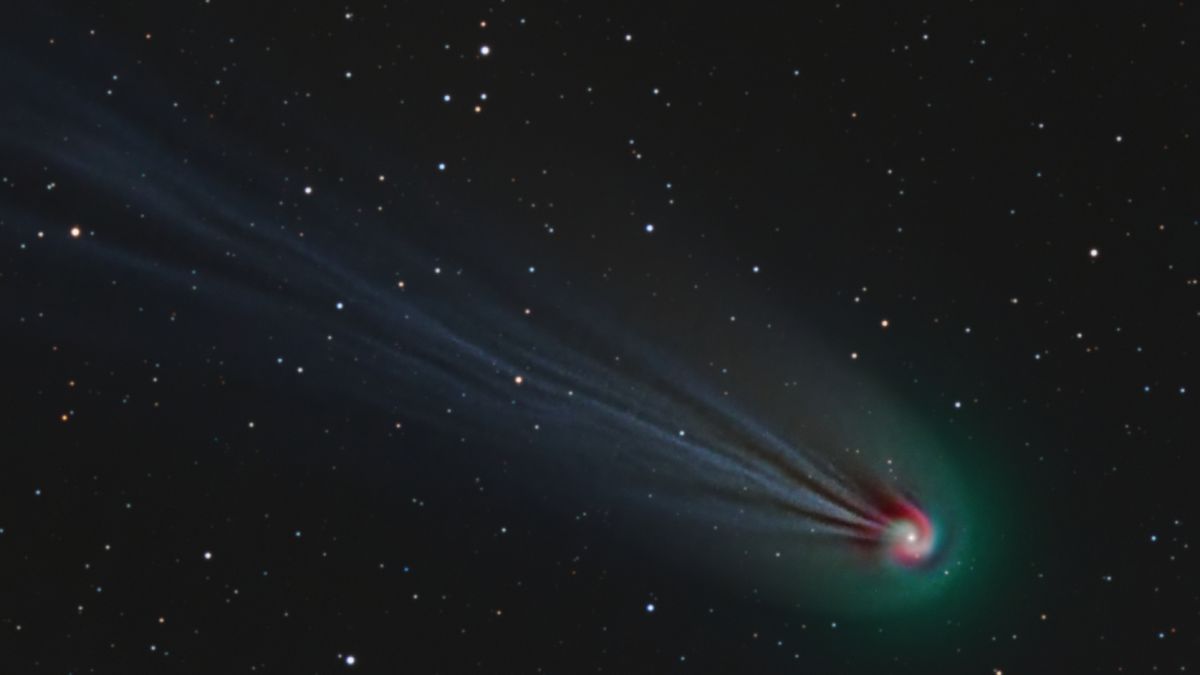
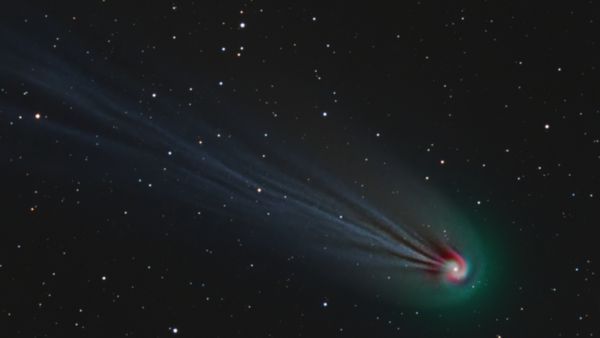
New images of Comet 12P reveal a hidden spiral of light surrounding its icy heart, likely caused by small geysers pumping out streams of cryomagma. The comet, known as the "devil comet," is cryovolcanic and frequently erupts, causing its coma to expand and appear brighter. As it approaches the sun, its green-hued coma and sizable tail have become more visible, making it a subject of interest for astrophotographers. The comet is expected to make its closest approach to Earth on June 2 and may be visible to the naked eye in the night sky.

astronomy1 year ago

"Rare 'Devil Comet' Unveils Hidden Spiral in Explosive Display"

New images of Comet 12P reveal a hidden spiral of light surrounding its icy nucleus, likely caused by small geysers pumping out streams of cryomagma. The comet, known as the "devil comet," is cryovolcanic and has been erupting frequently as it approaches the sun, making its green-hued coma and sizable tail more visible. Astrophotographers have captured stunning shots of the comet, and it is expected to make its closest approach to Earth on June 2, potentially being visible to the naked eye. There is hope that the comet may be visible during the total solar eclipse on April 8, but it will likely require another large cryomagma eruption for it to be seen during totality.

astronomy2 years ago

"Explosion Alters Devil Comet's Appearance, Turning it Green and Hornless"

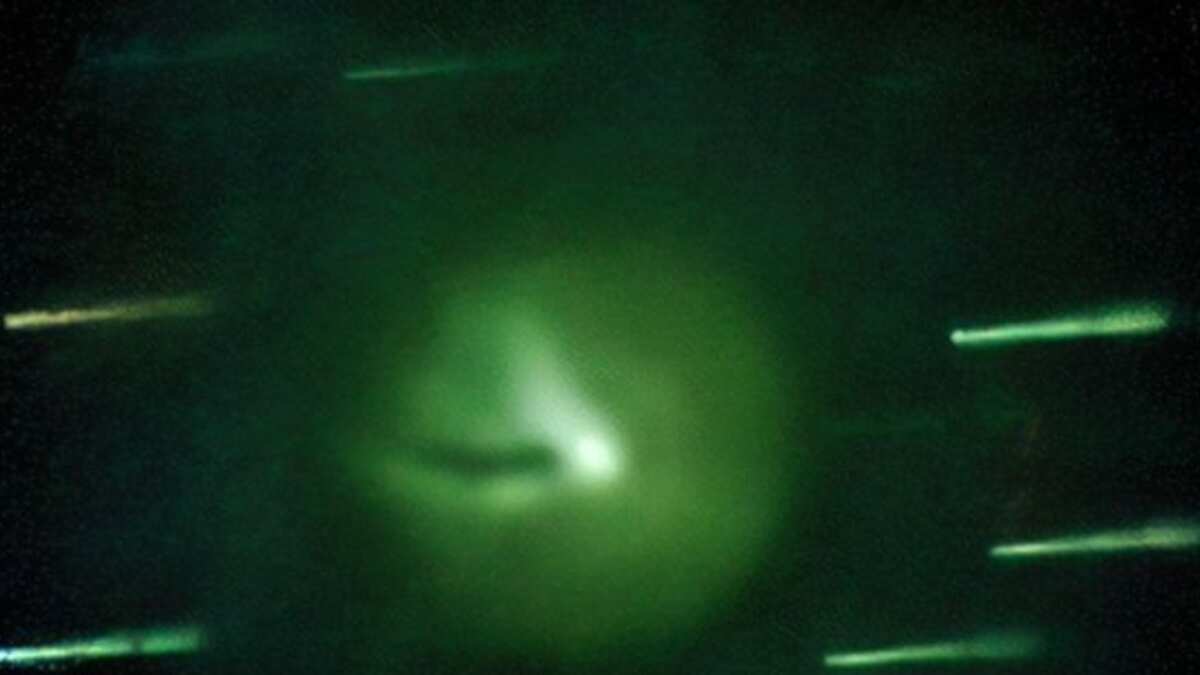
The 'Devil Comet', also known as 12P/Pons-Brooks, has lost its iconic horns after a massive volcanic eruption. Astronomers have observed new characteristics in the comet, including a mysterious shadow and a rare green hue. The comet, which is cryovolcanic and has an icy shell, will make its closest approach to Earth in over 70 years next summer. The recent eruption caused the comet's coma to expand, but the distinctive horns were not visible. It remains uncertain if the horns will reappear in the future.

science-and-astronomy2 years ago

Apocalyptic 'Devil Comet' Unleashes Record-Breaking Explosions on Collision Course with Earth

The "Devil Comet," officially known as 12P/Pons-Brooks, erupted for the fourth time as it races towards Earth. The comet, which is roughly three times the size of Mount Everest, violently released ice and gas, creating a glowing halo resembling devil horns. Amateur astronomer Eliot Herman spotted the major outburst, witnessing a 100-fold increase in brightness. The comet's cryovolcanic nature allows for explosive outbursts, with the ejected material forming a halo-like coma and creating its distinctive horn-like appearance. The Devil Comet will make a close approach to the sun on April 24, 2024, and its closest distance to Earth on June 2, 2024.

astronomy2 years ago

"Apocalyptic 'Devil Comet' Unleashes Massive Eruption on Collision Course with Earth"

The "Devil Comet," officially known as 12P/Pons-Brooks, erupted for the fourth time as it approaches Earth. The icy volcanic comet, roughly three times the size of Mount Everest, violently released ice and gas, creating a glowing halo resembling devil horns. Amateur astronomer Eliot Herman spotted the major outburst, witnessing a 100-fold increase in brightness. The comet's cryovolcanic nature allows for explosive sublimation, resulting in powerful outbursts and the formation of a halo-like coma. The Devil Comet will make its closest approach to Earth on June 2, 2024, providing a unique opportunity for observation.

astronomy2 years ago

"Massive Exploding Comet Hurtling Towards Earth, Scientists Warn"

A cryovolcanic comet named 12P/Pons-Brooks, three times the size of Mount Everest, has exploded in space and is now heading towards Earth. Although it won't collide with our planet, it may be visible to the naked eye on April 21, 2024. The comet, with a solid nucleus of about 18.6 miles (30 km) in diameter, is composed of ice, dust, and gases that erupt when heated by the sun. This is the second explosion in four months, creating a horn-like shape. After its closest approach, the comet will be flung back to the outer solar system and won't return until 2095.

astronomy2 years ago

"Apocalyptic Threat: Massive Volcanic Eruption Triggers Regrowth of 'Horns' on City-Size Comet Racing Towards Earth"

The comet 12P/Pons-Brooks, a cryovolcanic comet the size of a small city, has experienced a second violent eruption as it approaches the sun. The eruption produced a cloud of ice and gas that resembled a pair of horns. The comet's coma, or fuzzy cloud of gas, expanded and developed its peculiar shape due to an irregularity in the comet's nucleus. Astronomers predict that more major eruptions may occur as the comet continues its journey towards the sun. Another volcanic comet, 29P/Schwassmann-Wachmann, has also experienced noticeable eruptions in the past year.

space2 years ago

"Unprecedented: Ice volcano eruption transforms comet into horned giant"

Comet 12P/Pons-Brooks, a cryovolcanic comet, has developed horn-like emissions of light after a bright and cold volcanic eruption. The comet, known for its irregular shape, is around 34 kilometers in diameter and passes by the Sun every 71 years. The horn-like patterns, resembling the Millennium Falcon or the USS Enterprise, are believed to be caused by the comet's irregular shape, which partially blocked the gas and redirected its release.