Tag

12ppons Brooks

All articles tagged with #12ppons brooks

astronomy1 year ago

"Rare 'Horned' Comet Larger Than Everest Visible Soon"

A massive comet, 12P/Pons-Brooks, the size of Mount Everest and visible in the early evening sky until the end of March, is making a close approach to Earth. It is a cryovolcanic comet, erupting with dust, gases, and ice, and will reach perihelion on April 21 before fading rapidly. Astronomers recommend using basic instruments like small telescopes or binoculars to increase visibility, as it will be decades before the comet makes another appearance.
astronomy1 year ago

"Devil Comet to Make Spectacular Appearance During April Total Solar Eclipse"

On April 8, a rare total solar eclipse may coincide with the appearance of the "devil comet," 12P/Pons-Brooks, known for its distinctive horn-shaped gas and dust spew. Skygazers may have the chance to witness both the eclipse and the comet, which is set to make its closest approach to the sun, potentially becoming visible to the naked eye. The comet's unpredictable brightness surges could make it a magnificent sight alongside the eclipse, offering a unique celestial event for observers in North America.

astronomy1 year ago

"2024 Total Solar Eclipse: Green Devil Comet's Spectacular Appearance"

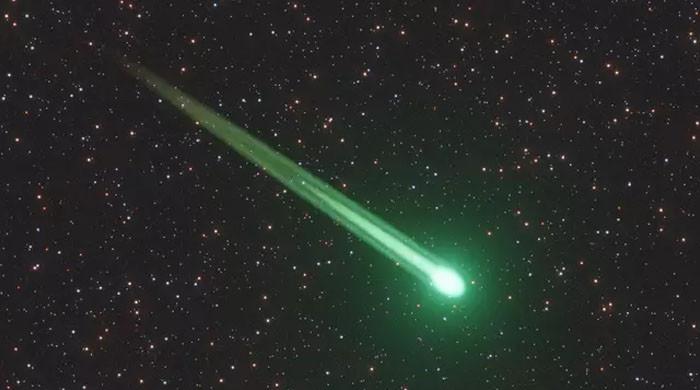
The "devil comet" 12P/Pons-Brooks, known for its greenish glow and periodic eruptions, is expected to approach near Earth during the total solar eclipse on April 8. The city-sized comet, with a width of 10.5 miles, may be visible to the naked eye if it erupts before totality. Its green light is caused by high concentrations of dicarbon in its coma and tail. Observers are advised to use protective eyewear when viewing the eclipse to avoid irreversible eye damage.

astronomy2 years ago

"Earth's Encounter with a Transforming 'Devil Comet' Sparks Alarm"

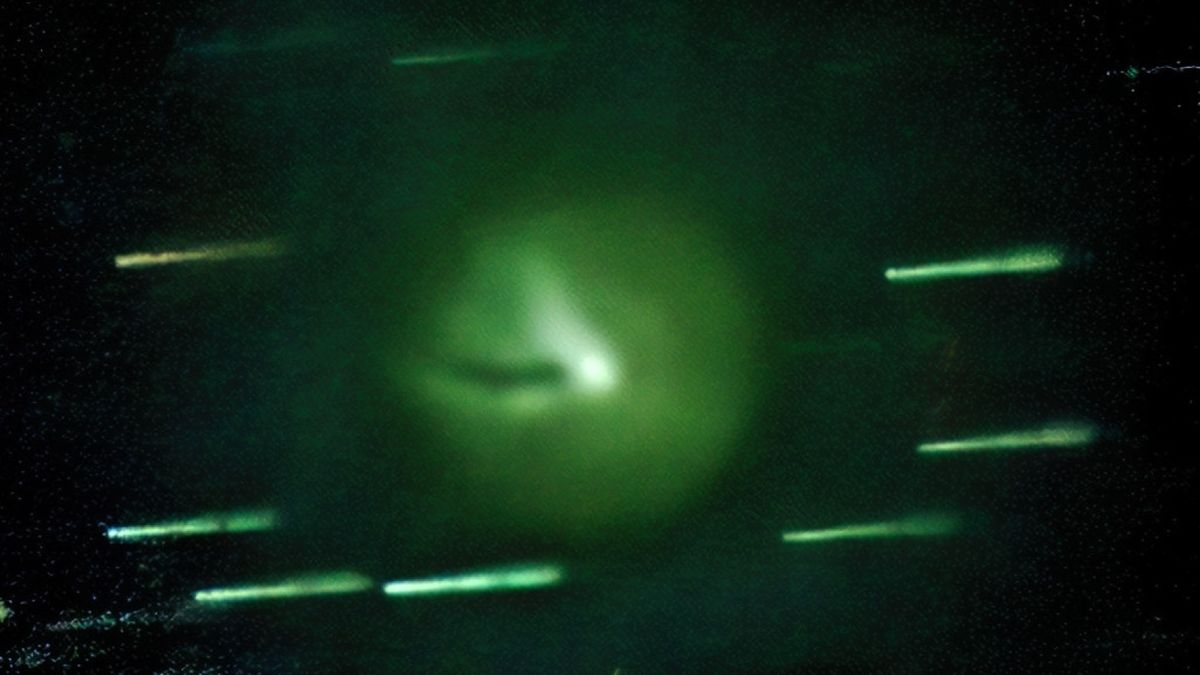
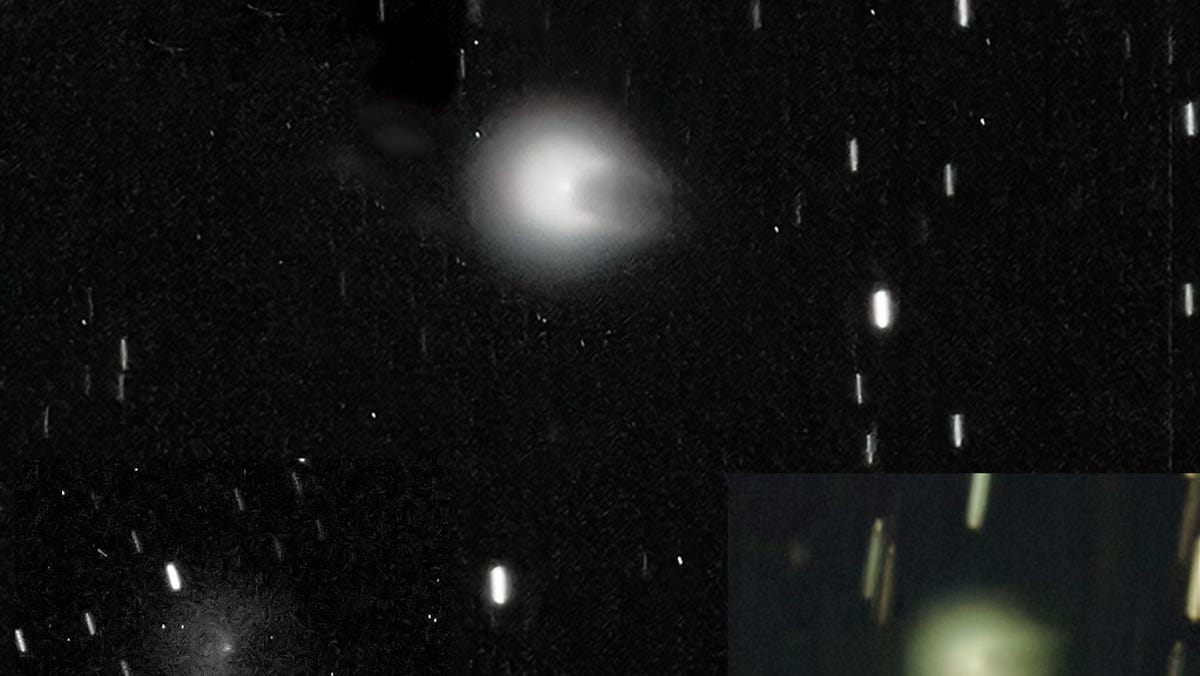
The cryovolcanic comet 12P/Pons-Brooks, nicknamed the "devil" comet due to its distinctive horns, is hurtling towards Earth and has undergone a major change in shape. The comet, three times bigger than Everest, has lost its horns and now has a mysterious shadow. It has also turned green, possibly due to high levels of dicarbon. The comet is expected to keep exploding as it gets closer to Earth but will not return until 2095.

astronomy2 years ago

"Volcanic Eruption Transforms 'Devil Comet' Approaching Earth into Green Spectacle"

The "devil comet" 12P/Pons-Brooks, known for its distinctive horns, has lost its iconic feature after its latest eruption. However, astronomers have observed new characteristics, including a rare green hue and a mysterious shadow. The comet, a cryovolcanic comet with an icy nucleus, has had three major eruptions, each causing its coma to expand and appear brighter. The recent eruption was the most extreme, but the horns were absent this time. It is unclear why they have disappeared, but it is speculated that the frequent eruptions may have damaged the obstruction causing the horns. The comet will make its closest approach to Earth in June 2022.

space2 years ago

"Earth's Impending Encounter: Explosive Cryovolcanic Comet Returns"

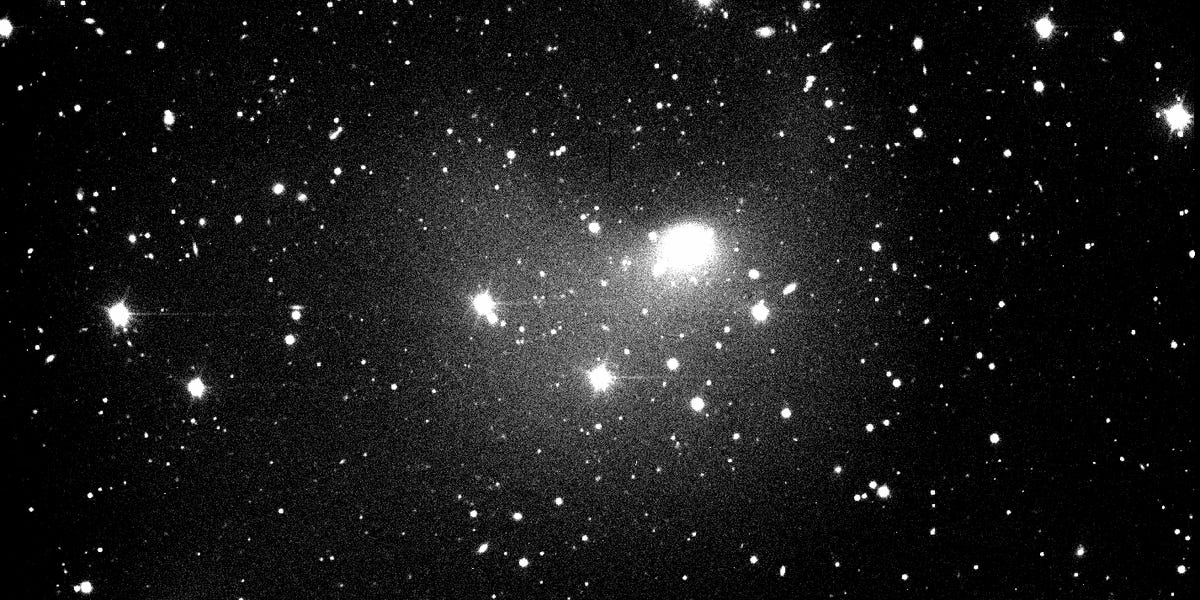
The colossal cryovolcanic comet, 12P/Pons-Brooks, has experienced its fourth explosive outburst, becoming as bright as the Elliptical Galaxy. This comet, known for its devil-like horns, is approximately 18 miles in diameter and exhibits volcanic behavior by releasing gas and ice instead of molten rock. It is on a trajectory to make its closest approach to Earth in June 2024, posing no threat. Comets like 12P/Pons-Brooks offer insights into the early solar system and the origins of life, as they consist of frozen gases, rock, and dust.

space2 years ago

'Devil Comet' with Horns Hurtling Towards Earth

The colossal comet 12P/Pons-Brooks, known for its explosive cryovolcanic activity, has experienced another outburst as it approaches Earth. This "devil comet," three times larger than Mount Everest, will be visible as a faint object with a tail in June 2024. It poses no threat to our planet. Comets like 12P/Pons-Brooks exhibit cryovolcanism, releasing gas and ice instead of molten rock. The recent outburst observed by an amateur astronomer is the second in a month and the third since July. Cryovolcanic comets, such as 12P/Pons-Brooks, provide insights into the composition and behavior of these celestial objects.

science2 years ago

"Scientists Excited as 'Devil Comet' Approaches Earth, Potential Devastation Discussed"

The "Devil Comet" known as 12P/Pons-Brooks is passing by Earth, captivating scientists with its unusual size and appearance. Despite its menacing name, the comet poses no threat to Earth. Estimated to be about 12.4 miles across, roughly twice the size of Mount Everest, the comet is larger than typical comets. It is expected to be most visible next spring but will still be far from Earth. The comet's explosive outbursts, which have occurred frequently and far from the sun, have puzzled scientists. The energy source behind these outbursts remains a mystery. Astronomers are eagerly anticipating the comet's peak brightness in mid-April 2024.

science-and-astronomy2 years ago

"Debunking the Myth: No, an Everest-sized 'Devil Comet' isn't on a collision course with Earth"

Contrary to misleading headlines, the comet 12P/Pons-Brooks is not on a collision course with Earth. It will pass by at a safe distance of 224 million km, closer to Earth than it is now but still far from any danger. This periodic comet, known for its cryovolcanoes that erupt water, offers valuable insights into the primordial state of the solar system. Researchers study comets like 12P/Pons-Brooks to understand the building blocks of the solar system and their potential role in delivering water and organic compounds to Earth. While astronomers keep an eye on potentially hazardous objects, this comet is not one of them.

astronomy2 years ago

"Massive Exploding Comet Hurtling Towards Earth, Scientists Warn"

A cryovolcanic comet named 12P/Pons-Brooks, three times the size of Mount Everest, has exploded in space and is now heading towards Earth. Although it won't collide with our planet, it may be visible to the naked eye on April 21, 2024. The comet, with a solid nucleus of about 18.6 miles (30 km) in diameter, is composed of ice, dust, and gases that erupt when heated by the sun. This is the second explosion in four months, creating a horn-like shape. After its closest approach, the comet will be flung back to the outer solar system and won't return until 2095.