The credit market is turning cautious as rising capital expenditures and declining free cash flow, especially for Oracle, Meta, and Amazon, lead to wider credit default swaps spreads, indicating increased risk and potential impacts on equity markets if AI-driven investments do not soon improve cash flows.
Financial markets predict that a U.S. debt default most likely won’t happen, but suggest that a catastrophe is still all too possible, with the probabilities adjusting swiftly as the news shifts. The pricing of short-term Treasury securities reveals that traders believe there is a reasonable possibility that the United States Treasury will miss a payment of interest or principal on securities that come due in early June. Credit default swaps imply that investors should worry about a default, but probably don’t need to worry too much, at least not quite yet. A prediction market gives a higher probability of a default, of about 10 percent.
The debt ceiling crisis is causing short-term costs for insuring U.S. bonds to skyrocket, and repeated flirtations with debt default are already having subtle negative long-term effects in global markets. The $30 trillion market for credit default swaps is indicating that the debt ceiling standoff is truly serious. The cost of insurance for U.S. bonds over the next 12 months is about 50 times the price for Germany and about three to seven times that of countries like Bulgaria, Croatia, Greece, Mexico, and the Philippines. The United States is the core of world finance, but its periodic flirtations with debt default are putting it at a long-term competitive disadvantage.
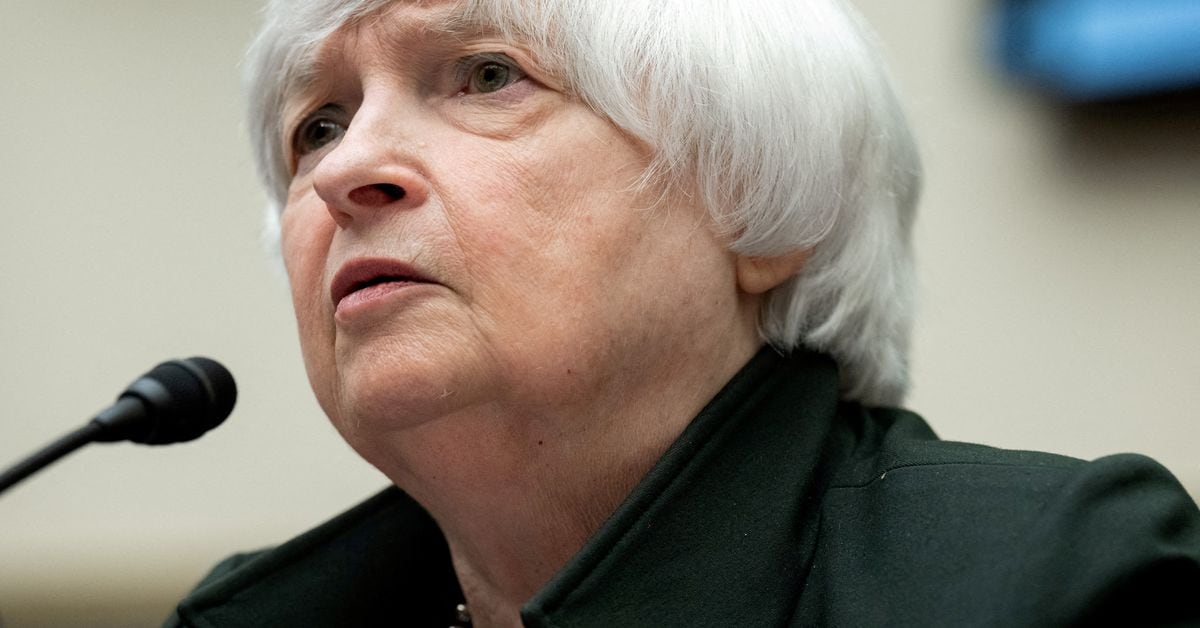
The cost of insuring exposure to US government debt rose to fresh highs on Wednesday, as President Joe Biden and top lawmakers remained deadlocked in talks over raising the $31.4tn federal borrowing limit. The cost of insuring US debt against default for five years stood at 73 basis points, touching the highest level since 2009. A protracted legislative fight around the US debt ceiling could lure panicky buyers of insurance against a government default in coming weeks, as Treasury Secretary Janet Yellen said the government may be unable to meet all payment obligations as soon as June 1.
The cost of insuring US Treasuries against default has surpassed that of some emerging markets and even junk-rated nations, as investors grow increasingly anxious about the prospect of a first-ever US default. Credit-default swaps on one-year Treasuries have hit a record high, making it more expensive to insure Treasuries than the bonds of countries like Greece, Mexico, and Brazil, which have defaulted multiple times and have lower credit ratings than the US's AAA. With politicians running out of time to lift the borrowing limit before the government runs out of money, the situation remains uncertain.
The stalemate in Washington over raising the US debt limit has raised the risk of a default as early as June, which threatens a fresh rout in financial markets. While analysts reckon a crisis will be averted, just an increased probability of default would send shock waves across markets. Here are five ways to position yourself: play T-bills, buy credit default swaps, buy the yen, invest in companies exposed to government spending, and buy gold against the dollar.
Investors are demanding historically high yields for US Treasury notes that mature in July, which by some estimates is when the United States will default on its debt, absent any legislative action. Yields for three-month Treasury notes closed at 5.1% Thursday, exceeding yields for longer-term Treasury notes. Investors’ anxieties are also evident in spreads on US five-year credit default swaps, which have widened to 50 basis points, according to S&P Global Market Intelligence data. If lawmakers don’t raise the nation’s borrowing limit by June, the federal government runs the risk of defaulting on its debt obligations, which would be catastrophic for the economy and put millions of jobs in jeopardy.
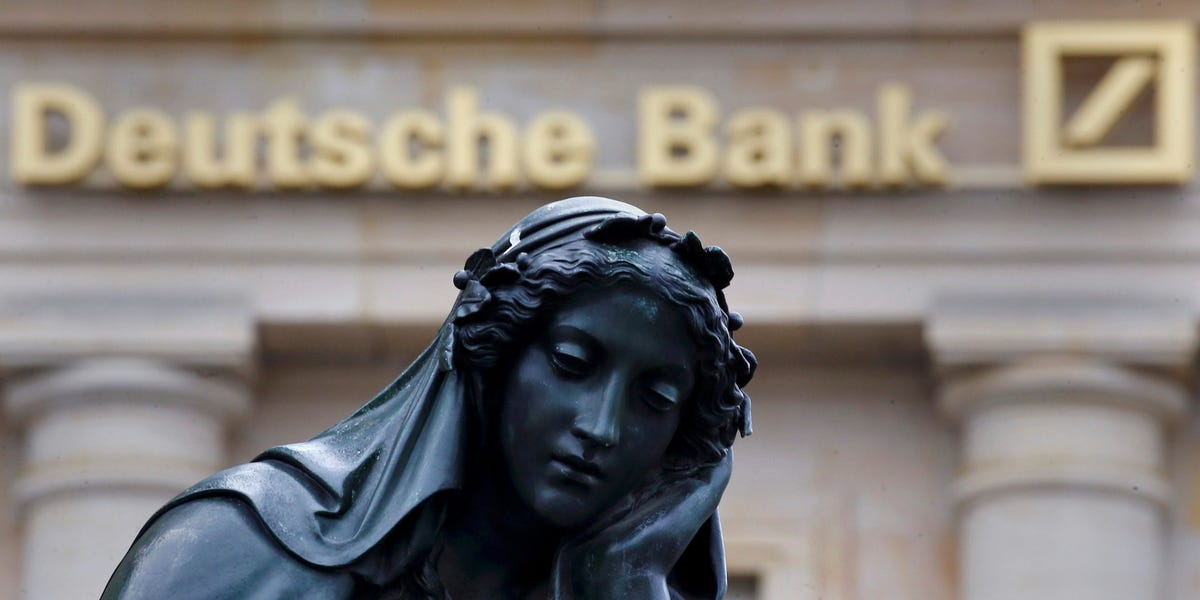
The recent selloff in Deutsche Bank's shares and bonds has raised concerns among regulators about the role of credit-default swaps in causing market stress. While some argue that the surge in the cost of insuring Deutsche Bank's debt against default through these derivatives reflected investor unease, others believe it contributed to the loss of confidence in the bank. The episode has drawn parallels to a similar situation with Credit Suisse last fall.
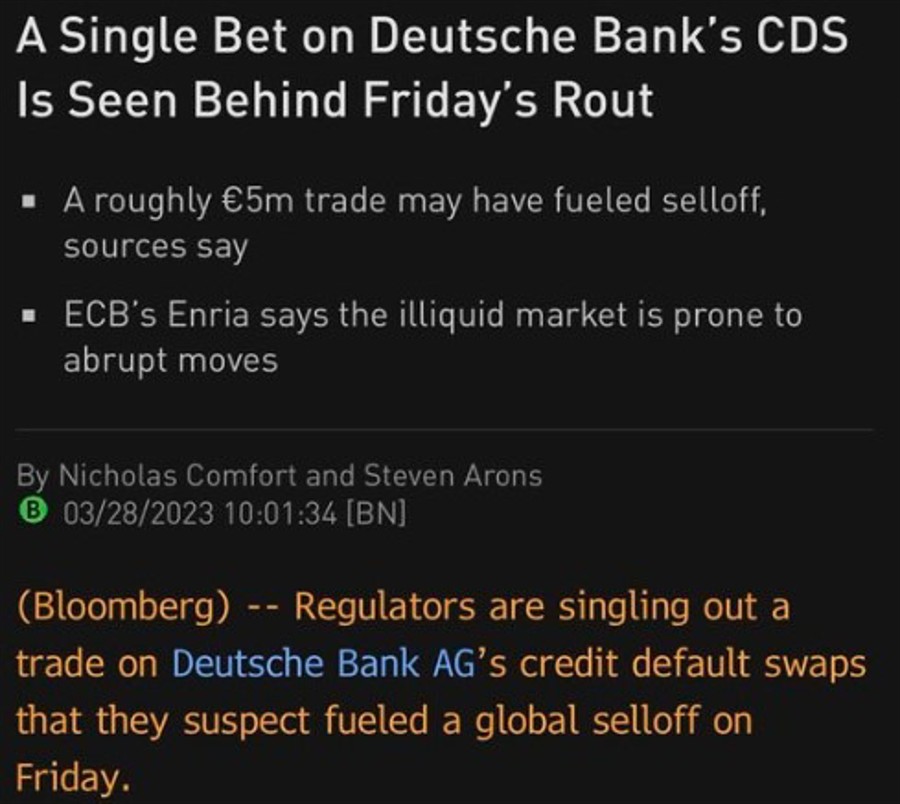
Regulators are investigating a €5 million bet on Deutsche Bank's credit default swaps that may have triggered a global sell-off on Friday. The illiquidity of the contracts means that a single bet can cause significant market moves. The suspected knock-on effect was a rout that sent banking stocks tumbling, government bonds higher, and CDS prices for lenders soaring, trimming about €1.6 billion off Deutsche Bank’s market value and more than €30 billion off an index that tracks European banking stocks.
Credit default swaps (CDS) are derivatives that offer insurance against the risk of a bond issuer not paying their creditors. The CDS market is worth around $3.8 trillion, but the market is well below the $33 trillion of its heyday in 2008. The biggest CDS market is for governments. CDSs were one of the financial instruments at the centre of the 2008 financial crisis. The current turmoil does not reflect a steep drop in the value of the securities that underlie the CDS.
Money is flowing out of smaller banks towards bigger banks and money market funds, with deposits at small banks falling by $120 billion in the week to March 15. European banks face similar strains, with Deutsche Bank's five-year CDS hitting 222 bps on Friday, the highest since late 2018, while UBS CDS shot up to 139 bps. Unless banks jack up their deposit rates to prevent the flight, they will eventually have to rein in the size of their loan portfolios, with the resulting squeeze on economic activity another reason to expect a recession is coming soon.
Asian shares struggled while US and European stock futures edged higher on hopes authorities were working to ring fence stress in the global banking system, even as the cost of insuring against default neared dangerous levels. The mood remained jittery after shares in Deutsche Bank fell 8.5% on Friday and the cost of insuring its bonds against the risk of default jumped sharply, along with the credit default swaps of many other banks. Depositors have been fleeing smaller banks for their larger cousins or to money market funds. Flows to money market funds have risen by more than $300 billion in the past month to a record atop $5.1 trillion.
Deutsche Bank experienced its biggest drop in three years and saw the cost of insuring its debt against default rise in a selloff that Citigroup analysts described as irrational. The bank's announcement to repurchase debt, normally seen as a sign of strength, failed to shore up confidence. The selloff prompted German Chancellor Olaf Scholz to publicly back the lender. The widespread declines undermine hopes among authorities that the government-brokered rescue of Credit Suisse last weekend would stabilize the broader sector.
Shares of Deutsche Bank and UBS Group fell sharply due to concerns that the worst problems in the banking sector since the 2008 financial crisis have not yet been contained. Deutsche Bank's shares have lost a fifth of their value so far this month, and the cost of its credit default swaps jumped to a four-year high. UBS was rushed into taking over Swiss peer Credit Suisse after the troubled lender lost the confidence of investors. The global banking sector has been rocked since the sudden collapse this month of two U.S. regional banks.
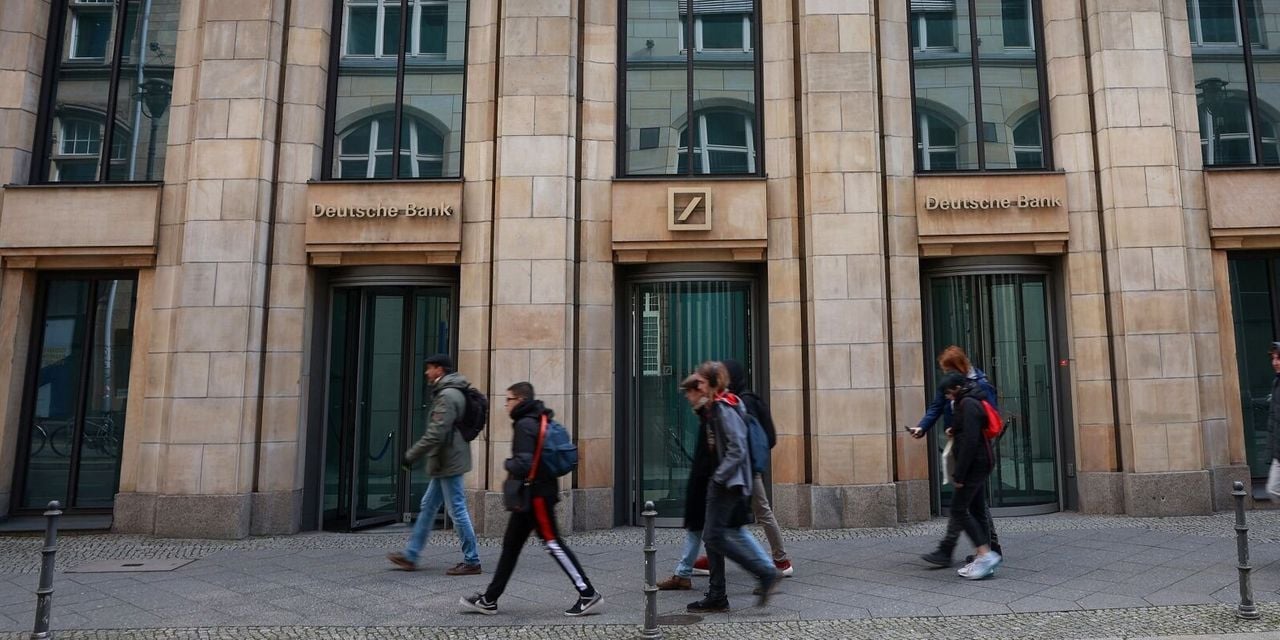
Deutsche Bank's shares fell by 10% in Frankfurt as investors worry about the health of Europe's banks after Credit Suisse's rescue by UBS last week. Credit default swaps linked to the German bank's bonds spiked to 173 basis points on Thursday, their largest one-day rise on record, according to data from Refinitiv. Other European bank stocks also fell on Friday. Deutsche Bank shares have shed over a quarter of their value in March alone.