The credit market is turning cautious as rising capital expenditures and declining free cash flow, especially for Oracle, Meta, and Amazon, lead to wider credit default swaps spreads, indicating increased risk and potential impacts on equity markets if AI-driven investments do not soon improve cash flows.
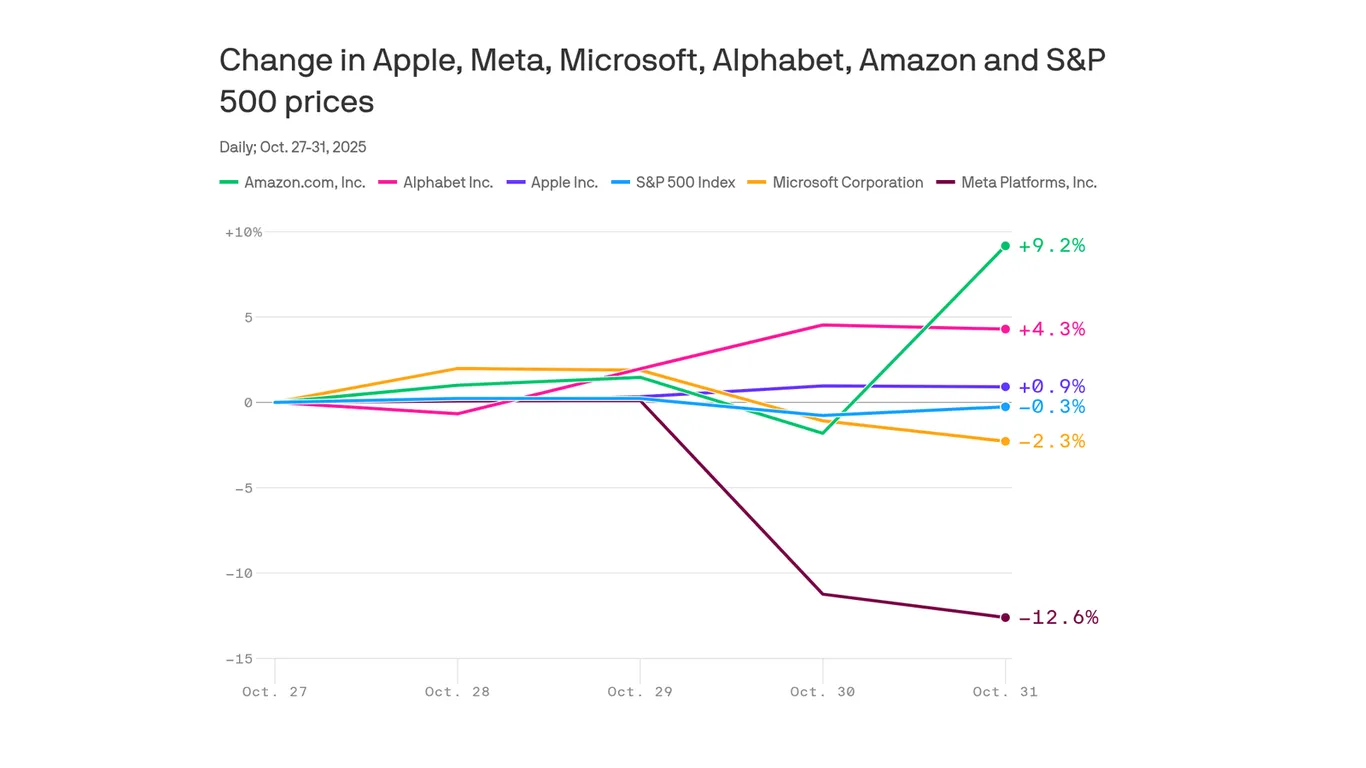
Big Tech stocks, especially the Magnificent 7, are heavily investing in AI, with demand outstripping supply and projected AI capital expenditure reaching 94% of operating cash flow by 2026. While companies like Meta, Google, Microsoft, and Apple are expanding AI capabilities, Meta faces scrutiny for its high spending relative to revenue, highlighting the risks of overinvestment and potential debt reliance if demand doesn't meet expectations.
Intel's stock rose after reporting better-than-expected revenue of $12.9 billion for Q2, despite a loss of 10 cents per share, and provided optimistic guidance for the current quarter. The company has completed most of its layoffs, reducing its workforce by about 15%, and CFO David Zinsner expects capital expenditure to decrease next year from the previously forecasted $18 billion. The positive results were partly due to lower tariffs and a favorable economic environment, with Intel's stock up 13% this year.
Micron is expected to report strong Q1 earnings for Fiscal 2025, driven by robust demand for its memory solutions, particularly from AI applications. Despite impressive growth in Fiscal 2024, including a 61.5% revenue increase, the stock has underperformed due to concerns over its high capital expenditures and debt levels. Investors are keenly watching Micron's guidance and CapEx plans, as these will significantly influence market reactions. Analysts remain optimistic, rating the stock a strong buy, with expectations of substantial upside potential.