A ransomware attack on Collins Aerospace's passenger processing system caused widespread airport disruptions across Europe, including delays and cancellations, with the EU's cybersecurity agency ENISA confirming the incident but not revealing further details.
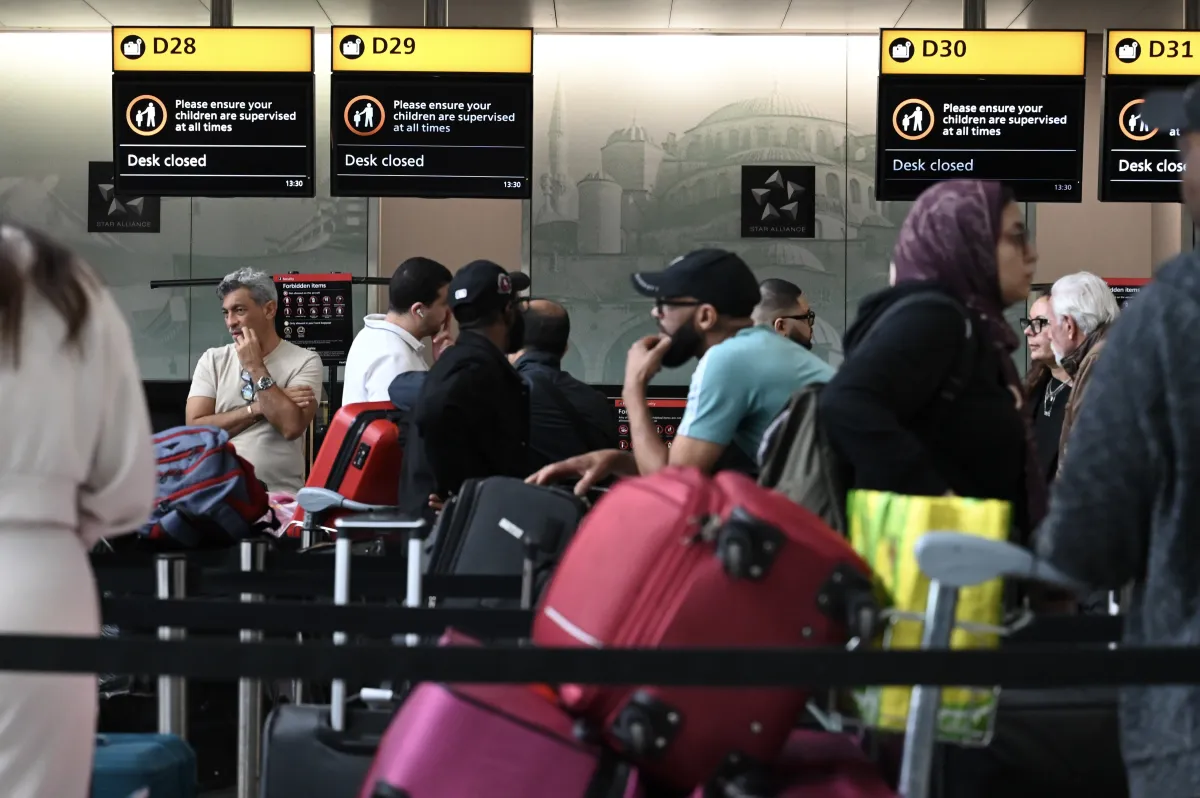
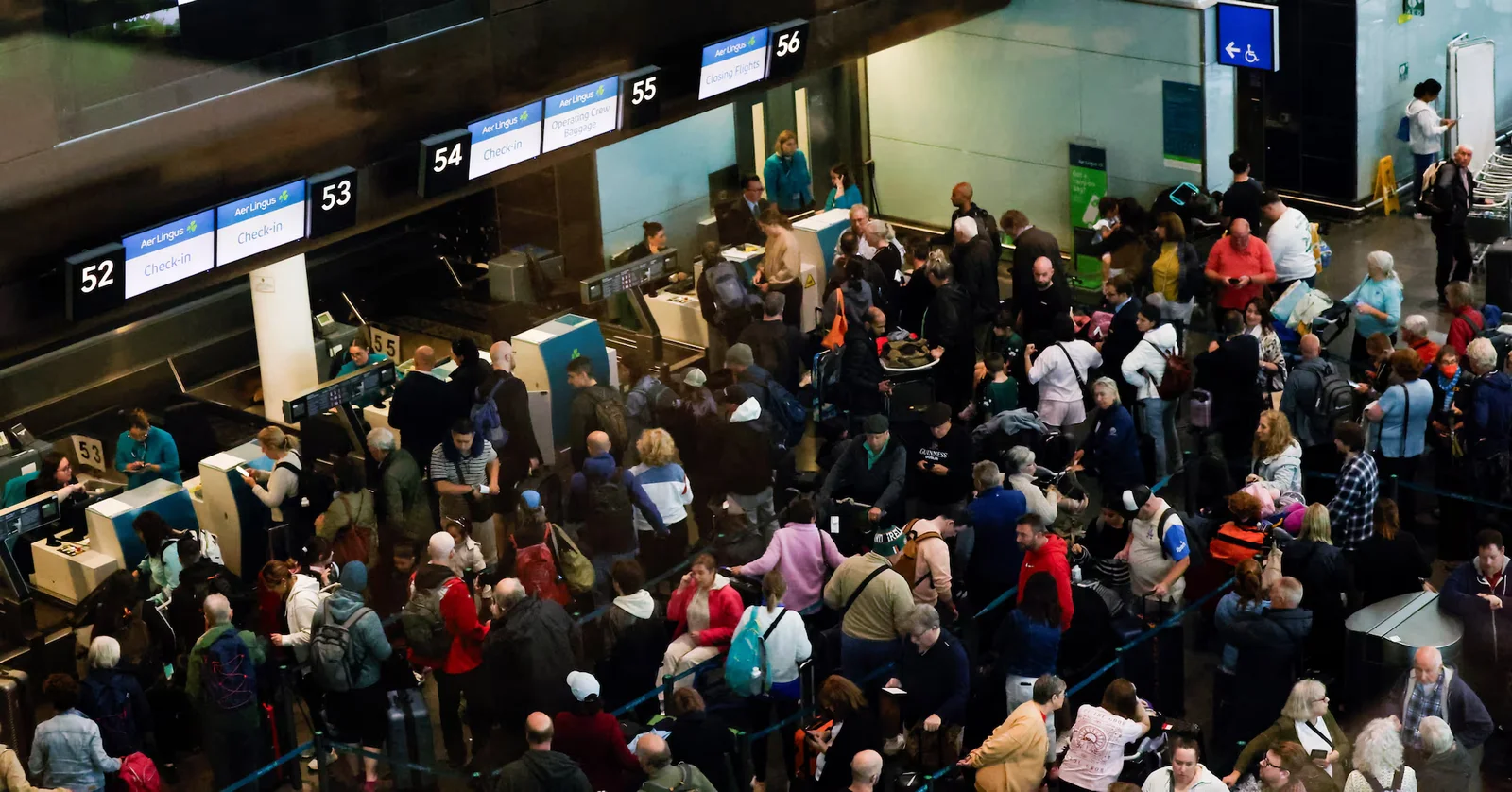
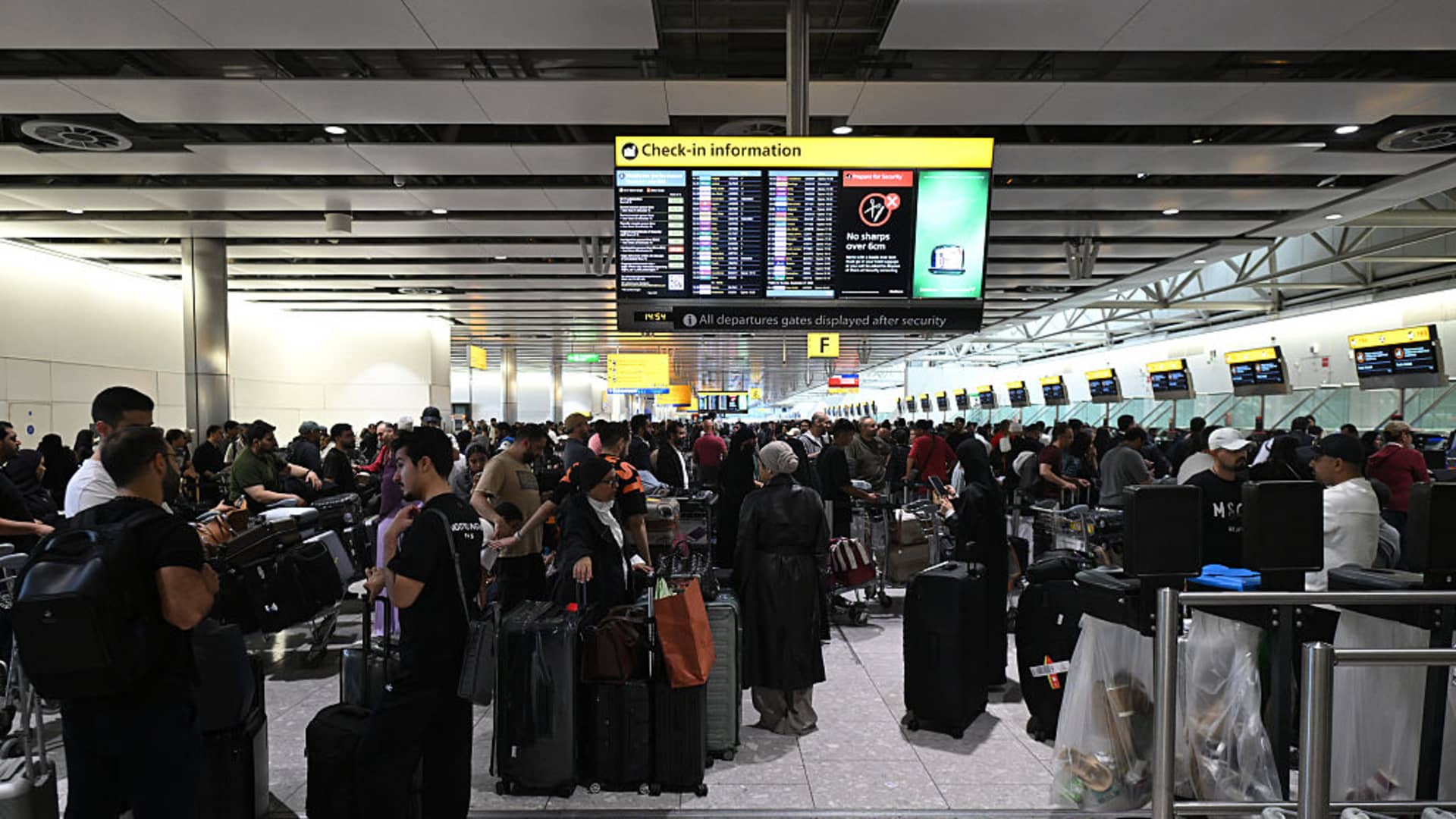
The EU's cybersecurity agency confirmed that ransomware caused ongoing disruptions at major European airports, including Heathrow, Berlin Brandenburg, Brussels, Dublin, and Cork, due to a cyberattack on Collins Aerospace's check-in systems. Airports are operating manually and advising passengers to check flight statuses, with some flights canceled or delayed. The attack has led to significant travel chaos across Europe and North America.
Several major European airports experienced significant disruptions due to a cyberattack on Collins Aerospace's check-in systems, affecting dozens of flights and thousands of passengers, with ongoing investigations and efforts to restore full functionality.
Several major European airports experienced disruptions due to a cyberattack on Collins Aerospace's check-in systems, affecting dozens of flights and thousands of passengers, with ongoing efforts to restore full functionality amid increased cybersecurity concerns.
A cyberattack on Collins Aerospace's check-in systems caused widespread disruptions at major European airports including Heathrow, Brussels, and Berlin, leading to flight cancellations and delays. The attack, part of a series of recent cybersecurity breaches affecting various industries, highlights the vulnerability of shared digital systems in aviation and the need for improved cybersecurity measures and cooperation among stakeholders.
Collins Aerospace is developing a next-generation spacesuit for International Space Station (ISS) spacewalks, aiming to replace the current extravehicular mobility units (EMUs). The company's chief test astronaut, retired NASA astronaut John "Danny" Olivas, discussed the development and testing of the new suit, which is also being considered for moon exploration as part of NASA's Artemis program. The suit is designed to be lighter, more flexible, and intuitive for astronauts, with features such as increased mobility and improved safety. Olivas emphasized the importance of his past spacewalking experience in contributing to the development of the new spacesuit.
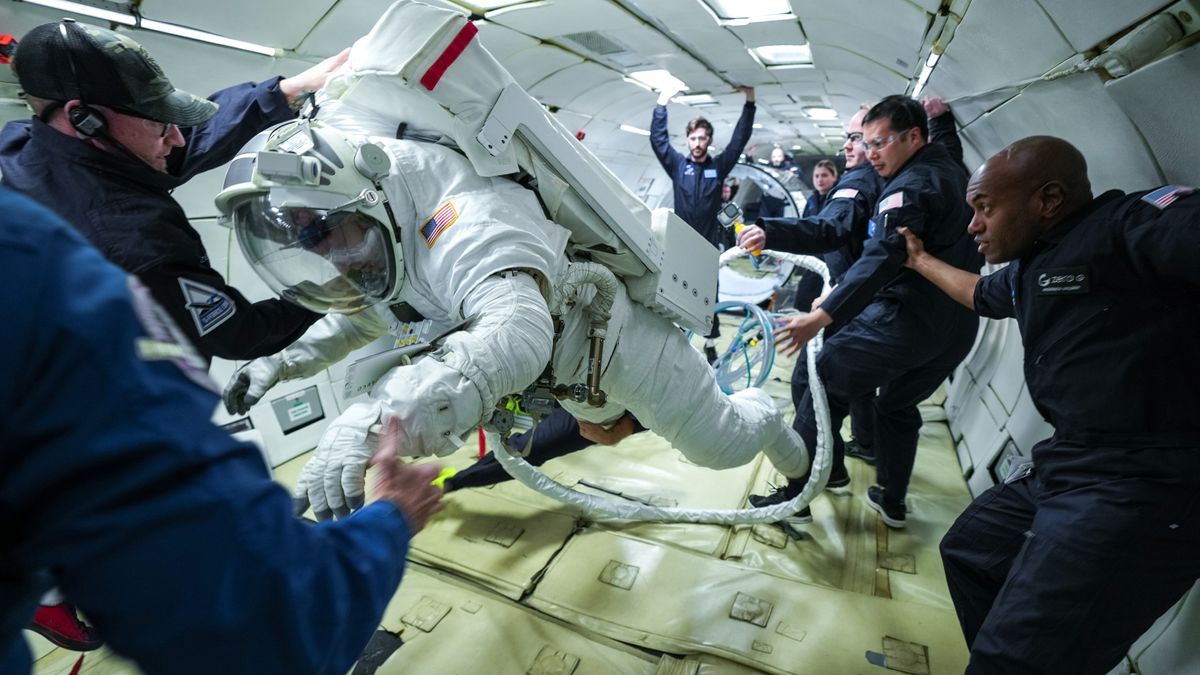
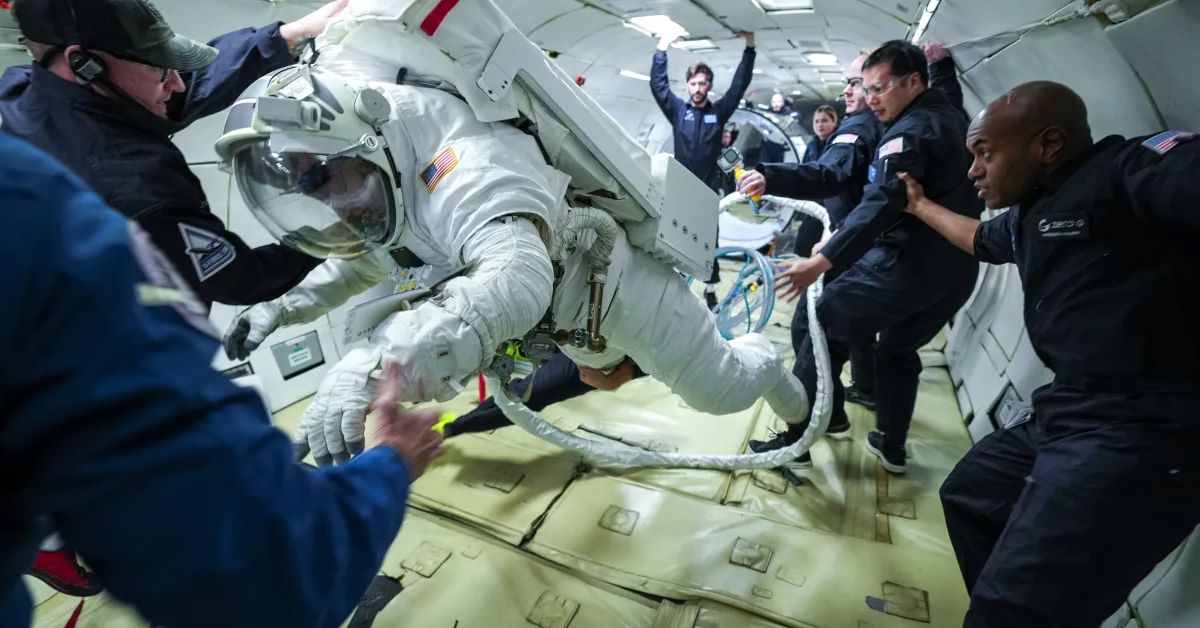
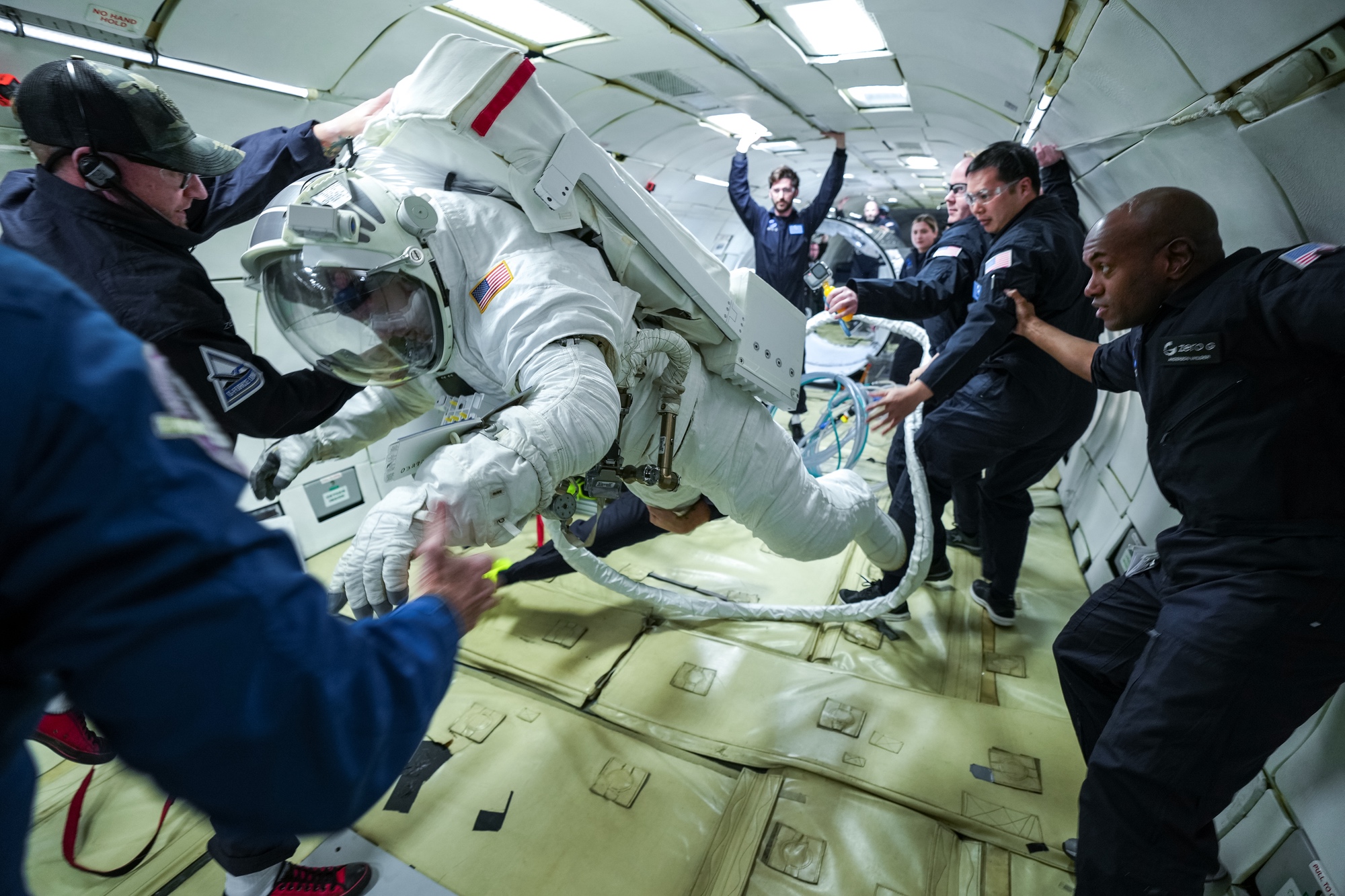
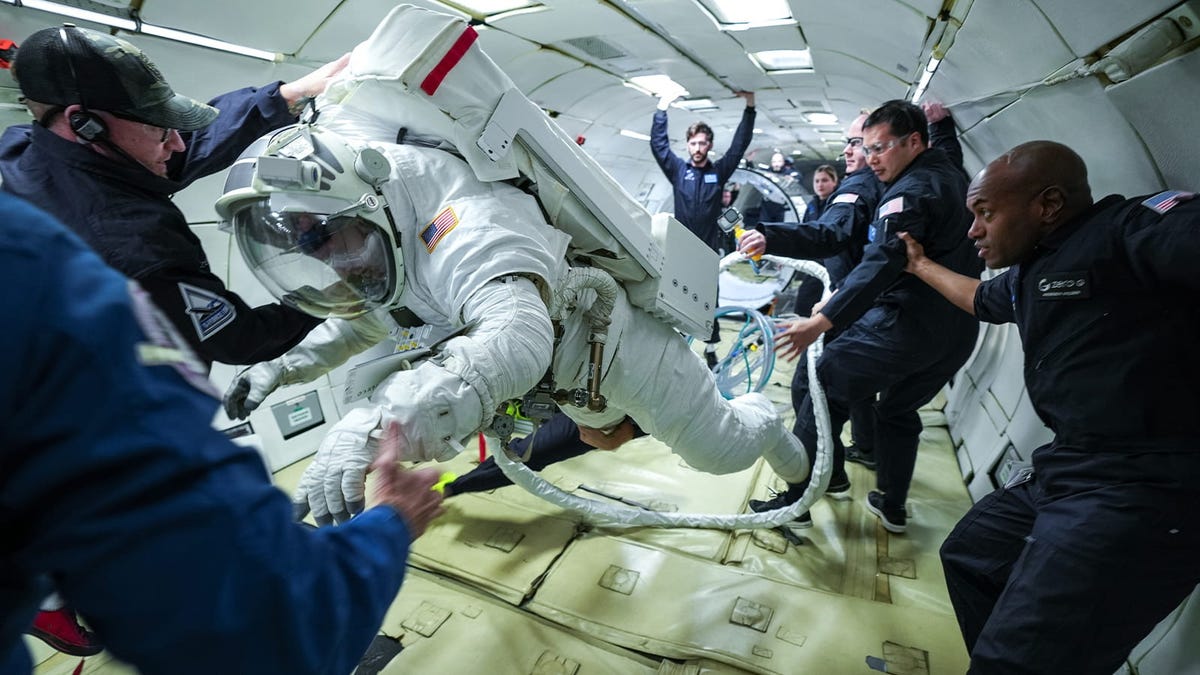
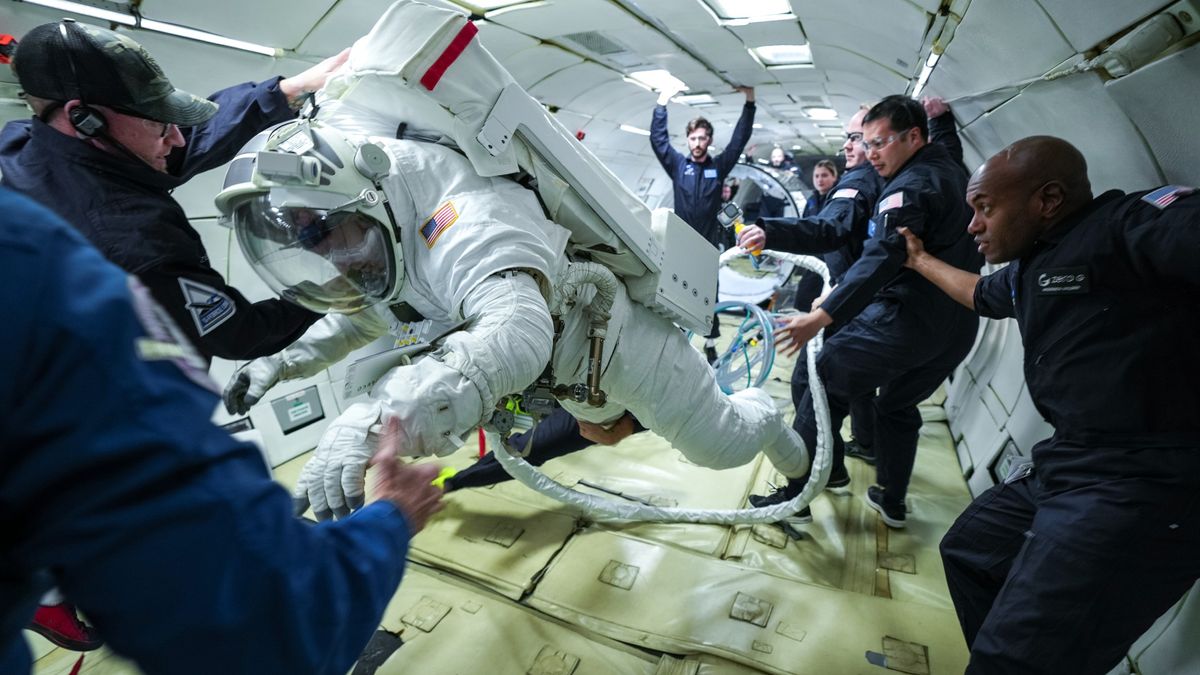
Collins Aerospace's new spacesuit, designed for use outside the International Space Station, passed a microgravity test aboard a commercial flight, marking a milestone towards critical design review. The suit is lighter and more adaptable than current NASA suits, and upcoming tests will assess its performance in a vacuum chamber and under simulated microgravity conditions.
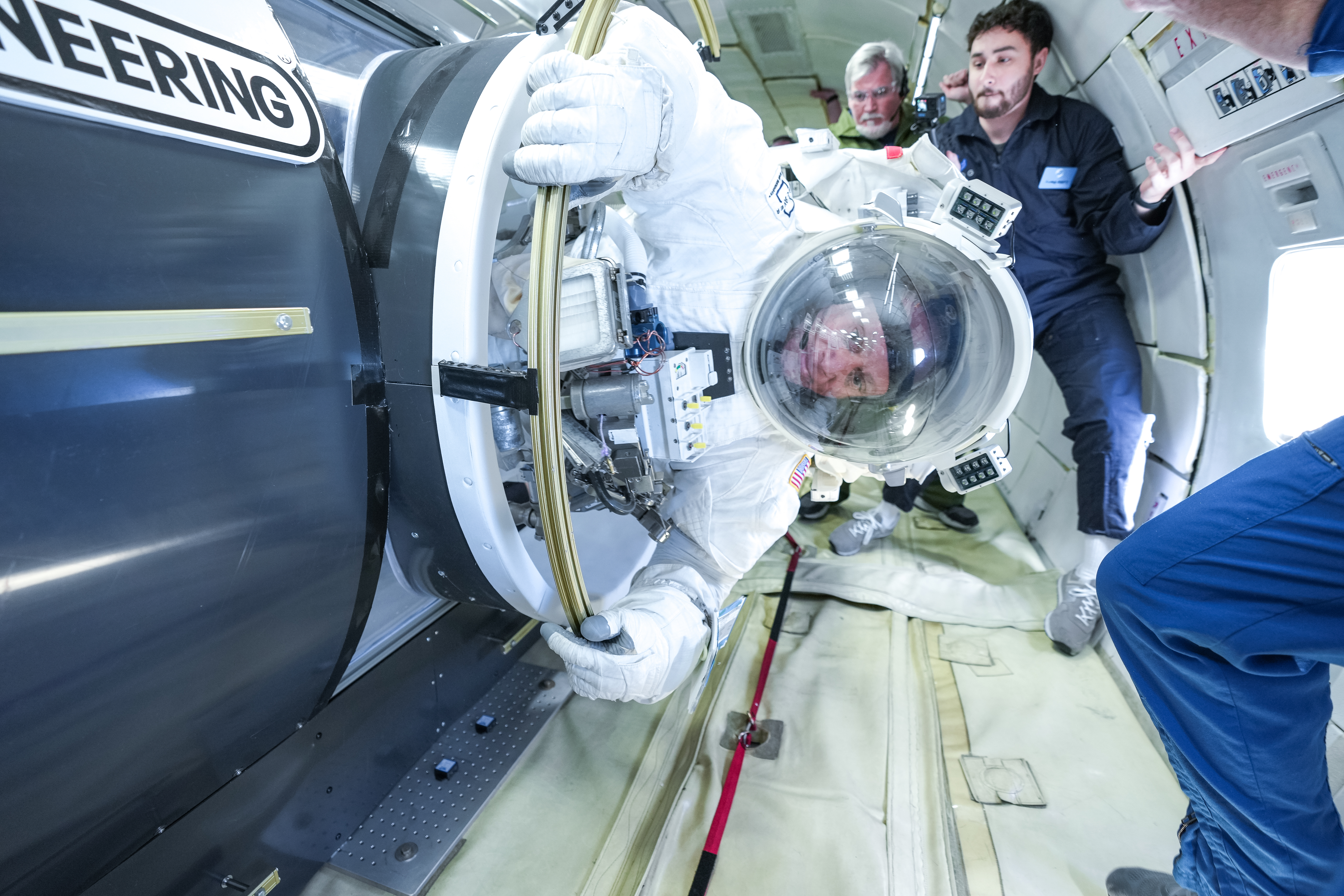
Collins Aerospace completes a milestone in testing a next-generation spacesuit for NASA's use on the International Space Station, conducting a pressure garment system fit and functionality test in a microgravity-like environment aboard a commercial microgravity aircraft. This marks an important step toward developing a suit that can replace the current space station spacesuit and advance spacewalking capabilities in low Earth orbit for station maintenance, operations, and scientific research. The next steps include testing the spacesuit in a vacuum chamber and at NASA's Neutral Buoyancy Laboratory to simulate a space-like atmosphere and microgravity environment for astronaut spacewalk training.
Collins Aerospace has completed microgravity tests of a new spacesuit design intended to replace the current Extravehicular Mobility Unit (EMU) spacesuits used on the International Space Station. The tests, conducted on an aircraft flying parabolic arcs, evaluated the suit's performance in tasks such as entering and exiting an airlock hatch and manipulating connectors. The company's design aims to be less bulky than the EMU and support a wider range of body types. Collins is also considering potential applications for the suit on future commercial space stations and lunar missions.
NASA's current batch of ISS spacesuits, in service for over four decades, are being replaced by a new generation spacesuit developed by Collins Aerospace, ILC Dover, and Oceaneering under the xEVAS contract. The recent zero-gravity test, known as the Crew Capability Assessment, involved the suit's use in a simulated space environment on Earth, marking a significant milestone. The updated suits aim to address issues with the current Extravehicular Mobility Units (EMUs), such as water leakage and limited mobility, and are designed to meet the diverse needs of space explorers. Collins Aerospace plans additional evaluations, including an underwater test and a thermal vacuum test, to ensure the suit's functionality in various space-like conditions.
Collins Aerospace completed a key milestone in testing its next generation spacesuit for astronauts working on the U.S. side of the International Space Station. The testing, part of NASA’s Exploration Extravehicular Activity Services contract, involved former NASA astronauts performing tasks in a Zero Gravity plane to simulate microgravity. The successful test brings them closer to sustaining human life in space with the most advanced spacesuit yet, and Collins is also developing a version for the Moon's surface to support missions for the Artemis program.
Collins Aerospace has conducted microgravity testing of a new spacesuit design for International Space Station (ISS) spacewalks on 40 parabolic flights with Zero G. The new spacesuit aims to be more flexible, lighter, and accommodate a wider range of body sizes, addressing the limitations of the current generation of spacesuits designed in the 1970s. The testing included evaluating reach, workspace access, comfort, and injury reduction measures for astronauts, with plans for further testing in simulated vacuum environments and underwater. The updated spacesuit design is intended for ISS missions and NASA's Artemis program, with Collins and Axiom Space receiving a combined $10 million task order for modifications related to lunar surface activities.
RTX reported better-than-expected quarterly earnings, driven by strong performance at its Collins Aerospace unit, which offset the impact of a quality crisis at engine-making unit Pratt and Whitney. The company also approved a $10 billion share repurchase program funded through debt. Despite the engine recalls and compensations, RTX raised its outlook for 2023 and expects free cash flow of $4.8 billion. RTX is also accelerating inspections and manufacturing replacements for potentially contaminated engine parts. The company has entered into an agreement to sell its Cybersecurity, Intelligence and Services business for around $1.3 billion to private equity firm Blackstone.
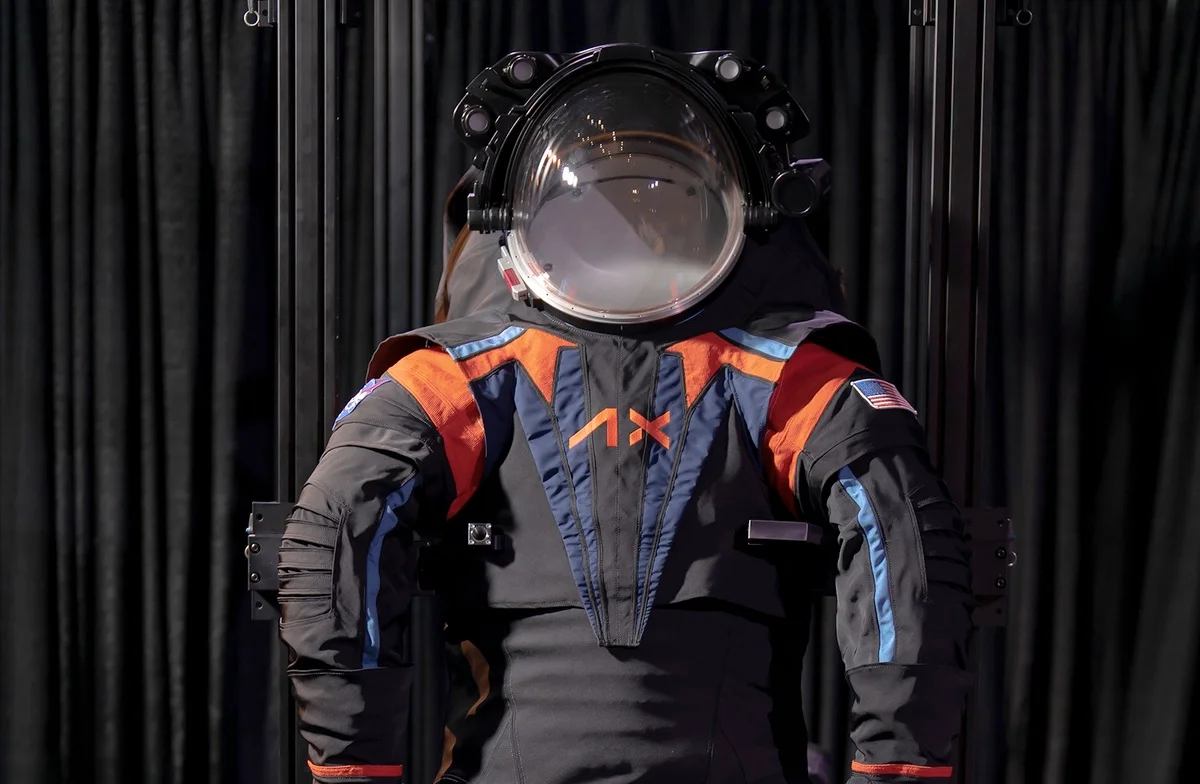
NASA has expanded the contracts of Axiom Space and Collins Aerospace, giving them $5 million each to design and develop new spacesuits not included in their original orders. Axiom Space will develop a spacesuit for use in Low Earth Orbit, while Collins Aerospace will develop a spacesuit for use on the lunar surface. The new task orders are for design modifications, and if NASA decides to proceed with the development, the full order will cost $142 million over four years. This redundancy in spacesuit development ensures astronauts will have backup options in case of failure.
NASA has awarded task orders worth $5 million each to Axiom Space and Collins Aerospace to develop alternative versions of their spacesuits for the International Space Station (ISS) and Artemis missions. The task orders will allow the companies to adapt their existing suits for different applications, providing redundancy and expanding future capabilities. Axiom is also developing a commercial space station, while Collins had previously emphasized its work on lunar spacesuit designs. The full value of Axiom's task order is $142 million over four years, while Collins did not disclose the full value of its task order.