Scientists from the US and Japan have combined data from large-scale experiments to study neutrinos, elusive particles that might explain why matter exists over antimatter in the universe. While the study doesn't definitively solve the mystery, it demonstrates the power of international collaboration in advancing particle physics research.
Scientists from Indiana University and international collaborations have made significant progress in understanding why the universe is dominated by matter rather than antimatter, by studying neutrino behavior and their oscillations, which may violate CP symmetry and explain the cosmic imbalance. This breakthrough was achieved through joint analysis of data from the NOvA and T2K neutrino experiments, highlighting the importance of global scientific cooperation.
A large international study confirmed that individuals vary significantly in their ability to detect background sounds, influenced by preceding noise, with potential implications for hearing diagnostics and therapies.
Childhood leukemia, once nearly always fatal before the 1970s, has become highly treatable with survival rates in North America and Europe now exceeding 85%, thanks to advances in chemotherapy, targeted drugs, immunotherapy, supportive care, and international collaboration in research.
A collaboration between the University of Oklahoma School of Community Medicine and Oklahoma State University Center for Health Sciences has published the first evidence showing that semaglutide, a drug used for diabetes and weight loss, is associated with significant reductions in symptoms of Alcohol Use Disorder (AUD). The study outlines the outcomes of six patients who received semaglutide during weight loss treatment and experienced a noteworthy decrease in their Alcohol Use Disorders Identification Test (AUDIT) scores. This research opens up new possibilities for the use of semaglutide in addiction medicine, but further investigation through larger, controlled studies is needed to validate and expand upon these initial findings.
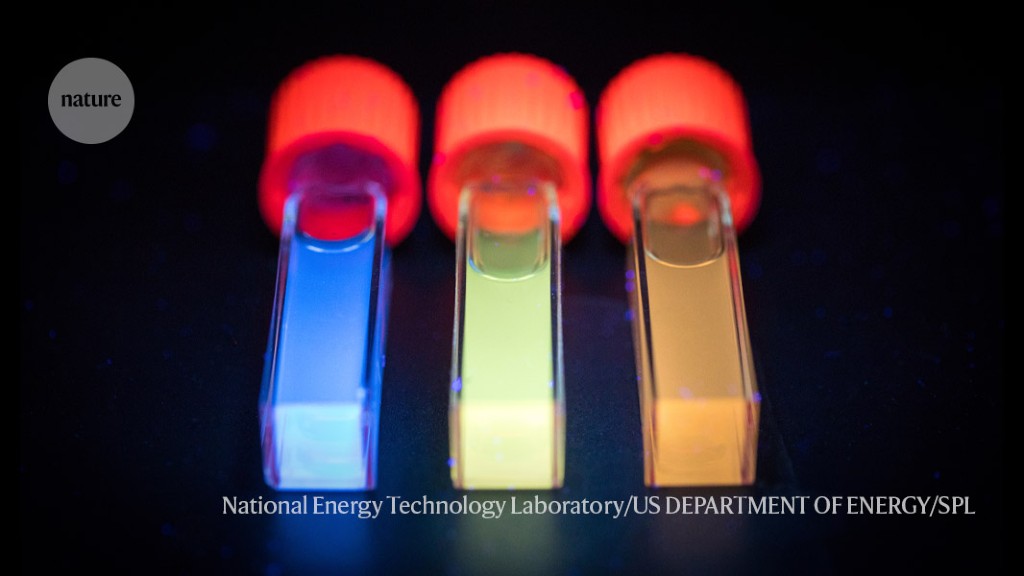
The unsung scientists behind the Nobel Prize in Chemistry for quantum dots, Moungi Bawendi, Louis Brus, and Alexei Ekimov, share their experiences and contributions to the groundbreaking research. Collaborators, postdoctoral fellows, and graduate students played a crucial role in realizing the vision of the Nobel laureates. The researchers developed a strategy to synthesize quantum dots in a controlled manner, leading to the understanding of their behavior and applications. Quantum dots have since found commercial use in various fields, including television displays, lighting, and medical diagnostics. Many of the scientists involved have gone on to connect their expertise with industry applications, while others continue to explore the quantum nature of optical excitations for potential advancements in quantum computing, sensing, and communication.