
Tag

Carbon Dioxide Removal

All articles tagged with #carbon dioxide removal

environment7 months ago

Carbon Removal Techniques May Cause Ocean Oxygen Shortage

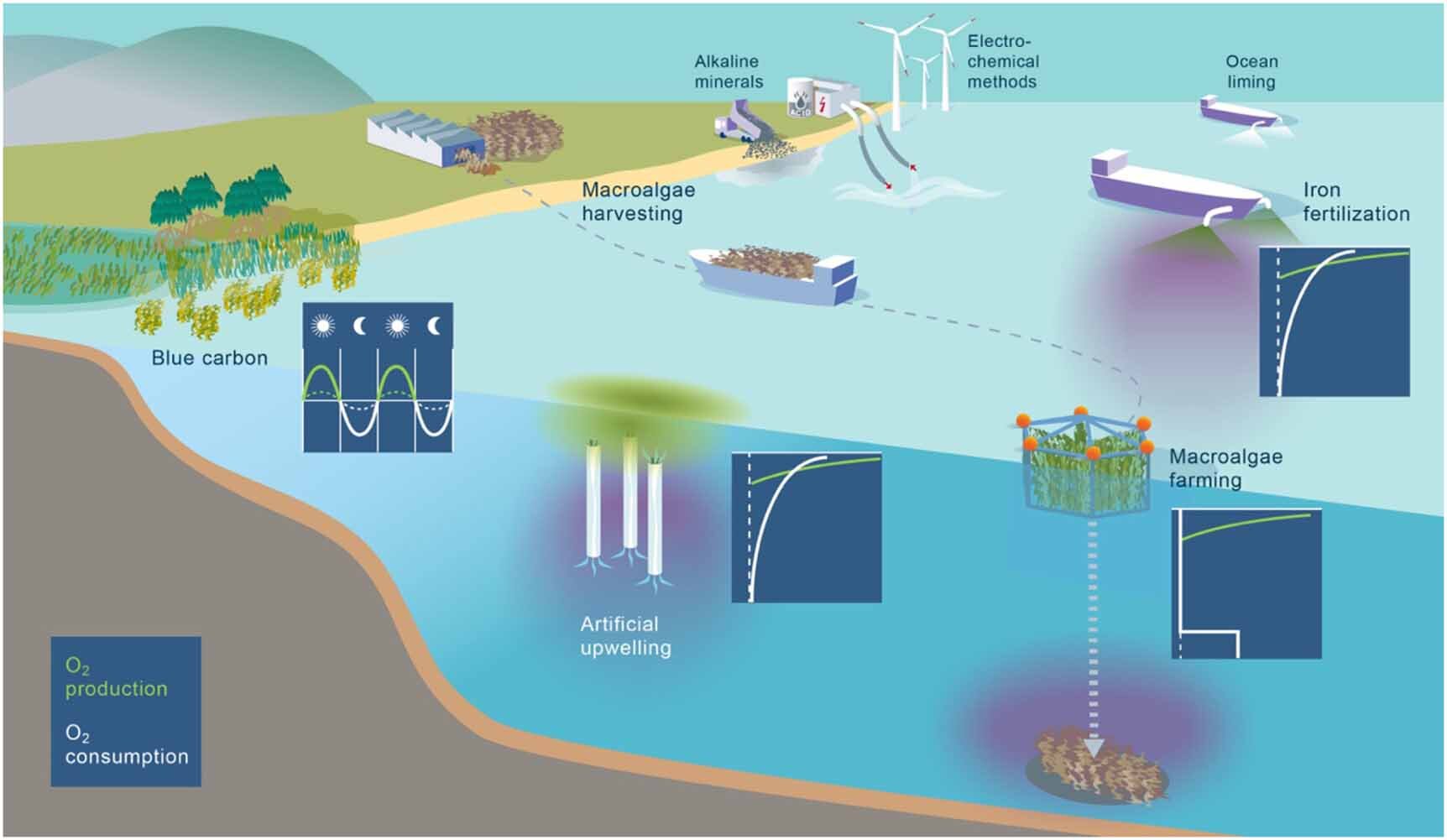
A study warns that some marine carbon dioxide removal methods, especially biological approaches like ocean fertilization and macroalgae farming, could worsen ocean oxygen depletion, potentially harming marine ecosystems, while geochemical methods may be safer alternatives. Careful assessment of these techniques is essential to avoid unintended environmental consequences.

science7 months ago

Carbon Removal Techniques May Exacerbate Marine Oxygen Depletion, Study Finds

A recent study warns that some marine carbon dioxide removal methods, especially biological ones like ocean fertilization and macroalgae sinking, could significantly worsen ocean deoxygenation, potentially causing oxygen loss 4 to 40 times greater than current levels, highlighting the need for careful assessment and monitoring of these approaches.

climate-change1 year ago

"The Growing Market for Carbon Removal Solutions in the US"

A new report suggests that the US needs to spend roughly $100 billion annually on carbon dioxide removal (CDR) technologies to meet its climate goals, but this approach is risky, astronomically expensive, and may not be effective. The US is already investing in CDR, but experts argue that the focus should be on reducing greenhouse gas emissions and stopping deforestation first. The report highlights the challenges and limitations of CDR tactics, such as tree planting and carbon-capturing machines, and questions the wisdom of investing in these technologies without addressing the root causes of climate change.

science-and-environment1 year ago

"Breakthrough: Oregon State Scientists Uncover Carbon-Capturing Metal"

Scientists at Oregon State University have discovered that the metal vanadium, when bound with oxygen molecules as peroxide, can effectively pull carbon dioxide from the air. This process could potentially aid in capturing carbon dioxide from the atmosphere to mitigate the impacts of global climate change. The discovery, funded by the U.S. Department of Energy, offers a new approach to filtering greenhouse gases and could complement efforts in rapid decarbonization and the preservation of natural ecosystems.

environment2 years ago

"Scientists urge rigorous testing of oceans in the battle against climate change"

Over 200 scientists have called for responsible research into ocean-based carbon dioxide removal strategies to combat the climate crisis. While oceans already absorb and hold significant amounts of carbon dioxide, scientists want to understand the risks and potential side effects of enhancing this ability. Startups are developing technologies to sequester more CO2 in the sea, but there is a lack of information about their effectiveness and impacts. The letter emphasizes the need for controlled field trials, third-party reviews, safeguards against unintended consequences, and inclusive policies. Some experts warn of potential harm to marine life and stress the urgency of taking action to protect ocean health and address the climate crisis.

climate-change2 years ago

The Limitations of Carbon Dioxide Removal in Reversing Climate Change

Sucking carbon dioxide out of the atmosphere, known as carbon dioxide removal, cannot fully reverse the effects of climate change, according to a study published in Science Advances. The research focuses on the Hadley cell, an atmospheric circulation pattern that influences global weather. The study shows that even if carbon dioxide is successfully trapped, the consequences of pollution cannot be completely reversed on a reasonable timeline. The expansion of the Hadley cell due to greenhouse gas emissions intensifies droughts in subtropical regions, leading to food and water shortages and displacing people. To mitigate climate change, reducing emissions and transitioning to clean energy are crucial.

environment2 years ago

"Ocean Alkalinity Enhancement: A Promising Solution for Carbon Dioxide Removal and Marine Life"

A study published in Science Advances explores the impact of ocean alkalinity enhancement on marine biota and its potential for carbon dioxide removal. The research focused on two important phytoplankton species, Emiliania huxleyi and Chaetoceros sp., and found that limestone-inspired alkalinity had a neutral effect on their growth rate and elemental ratios. However, high-alkalinity additions resulted in mineral precipitation that removed nutrients from the system, reducing the overall effectiveness of carbon removal. While the initial findings are promising, further research is needed to understand the long-term effects and potential risks of ocean alkalinity enhancement on marine ecosystems.

climate-change2 years ago

JPMorgan Chase invests heavily in carbon removal technology.

JPMorgan Chase has agreed to purchase carbon dioxide removal (CDR) services from Climeworks, a global leader in direct air capture and storage, for over $20m. The agreement is one of the largest purchases of CDR services from a corporate buyer to date and demonstrates the bank's support for Climeworks' high-quality and high-integrity approach to removing CO2. The agreement sets a new standard for the voluntary carbon market and is essential for CDR companies to bring economies of scale needed by 2050.