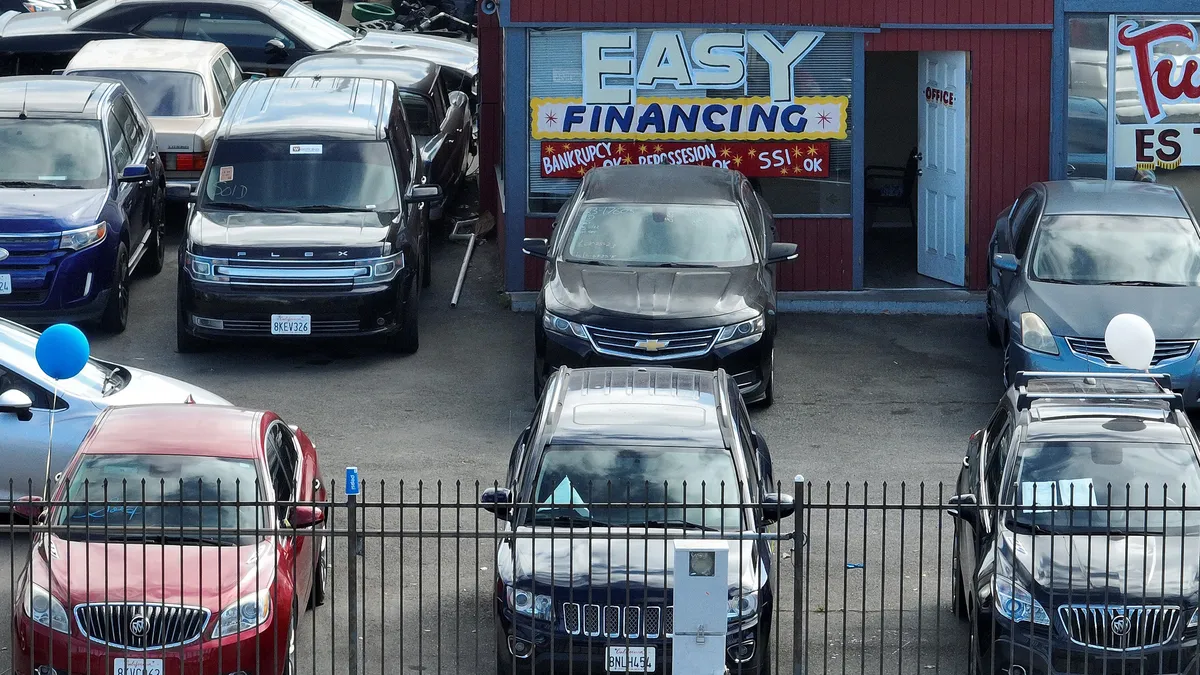
The share of risky subprime borrowers at least 60 days behind on auto loans has reached a record high of 6.65% in October, driven by inflation, rising interest rates, and economic pressures, signaling economic weakness and increasing financial strain on consumers.
The resumption of student loan payments after a pandemic-related pause is contributing to increased delinquencies on car loans, especially among subprime borrowers, as many are struggling to manage their debt and prioritize payments amid financial strain.
The collapse of a car lender highlights underlying issues in the private credit sector, raising concerns about financial stability and the health of the credit market.
Surging car prices have led buyers to opt for longer auto loans, such as seven or even eight years, to manage monthly payments, despite the increased total interest paid and potential financial downsides. Shorter loans are now mostly used by wealthier buyers, while leasing remains an alternative. Lenders are also pushing for even longer terms, risking repeat of past financial pitfalls.
Rising car prices have led to the normalization of seven-year auto loans, which are now common but can lead to higher interest costs and financial risks for buyers, as exemplified by a North Carolina couple who paid off their seven-year loan early after realizing the long-term costs.
The FCA announced a consultation on a compensation scheme for motor finance customers affected by non-compliance with disclosure rules regarding dealer commissions, following a Supreme Court ruling that certain undisclosed commissions could be unlawful. The scheme aims to fairly compensate affected customers, with payments possibly starting in 2026 and an estimated total cost between £9 billion and £18 billion.
The UK's Financial Conduct Authority (FCA) plans to consult on a redress scheme for missold car loans, estimating potential costs for lenders at at least £9 billion, possibly up to £18 billion, though recent court rulings have reduced the worst-case payouts. Major banks like Lloyds and Santander have already accounted for about £2 billion in potential losses, and the scheme aims to compensate affected customers, mostly with payouts under £950. The final costs and scheme details will be clarified after the consultation, expected early next year.
The US law now allows Americans to deduct interest on new car loans up to $10,000, primarily benefiting high-income buyers of luxury vehicles and potentially encouraging larger, more expensive car purchases, which may worsen transportation costs and environmental impacts, while offering limited benefits to average consumers.
The new temporary tax deduction for interest on car loans, applicable for purchases from 2025 to 2028, is limited to new, US-assembled vehicles for personal use, with a cap of $10,000 on interest deductions and income-based restrictions that may limit benefits for higher earners. The deduction excludes loans from family, leasing, or used vehicles, and is unlikely to benefit those with higher tax rates or low tax liabilities. The actual benefit may be modest, especially considering potential vehicle price increases due to tariffs.
A North Carolina woman's viral TikTok video reveals that despite making $50,000 in car payments over three years, she still owes $74,000 on an $84,000 car loan, highlighting the potential pitfalls of high-interest auto loans. Rising interest rates and depreciation contribute to the challenge of paying off car loans, but options for relief include paying cash for a car, increasing payments, consolidating loans, and negotiating rates with lenders in person.
Don Hankey, the chairman of Knight Specialty Insurance and a major player in the subprime auto loan industry, underwrote a $175m bond for Donald Trump to delay a $454m civil fraud judgment, stating that he was "happy to do it" and that it was a quick and easy transaction. Hankey, who is worth over $7.4bn, confirmed his support for Trump's past political campaigns and indicated a willingness to support future ones. His company, known for high-interest car loans, has faced scrutiny for deceptive collection tactics, and some financial analysts have expressed concerns about the subprime auto loan industry.
As used car prices continue to fall, more people are finding themselves underwater on their car loans, with the value of their trade-ins not covering the remaining debt. This trend is particularly affecting newer vehicles, as the depreciation is hitting them the hardest. While there are significant discounts available for luxury and large mainstream vehicles, those seeking more affordable transportation may struggle to find similar savings due to restricted supply. Overall, the current market conditions are making it challenging for many consumers to find good deals on both new and used cars.
A young Texan, Daniel Rivera, found himself stuck with two mega car loans with interest rates of 13% and 25%, totaling $30,638. Rivera's struggle is a common one faced by many Americans who are drowning in expensive car debt. With car prices soaring and interest rates on the rise, borrowers are finding it difficult to make their monthly payments. Rivera plans to refinance his loans to get a lower interest rate, but with over 80% of his annual income going towards debts and living expenses, it's a challenging task. Experts advise following the Money Guy 20/3/8 car buying rule, which suggests paying 20% upfront, paying off the car in three years or less, and keeping the monthly car payment below 8% of income. Paying off car loans quickly is beneficial in the long run, as longer loan terms result in more interest paid and potential negative equity.
Car buyers in the US are being forced to take out car loans with interest rates ranging from 17% to 22%, due to the need for transportation and the country's credit rating system. The high borrowing costs increase the risk of late payments, defaults, and car repossessions. However, investors in the subprime auto sector have not been deterred, with nearly $30 billion of new bond deals already cleared this year. The resilience of the economy, despite the Federal Reserve's efforts to combat inflation, has kept borrowers making their payments and bondholders satisfied.
Car ownership in the U.S. has become increasingly expensive due to factors such as the Covid-19 pandemic, supply chain issues, inflation, and interest rate hikes. With over 100 million Americans having car loans, auto loan debt has reached a record high of $1.5 trillion. The average monthly loan payment for a new vehicle is projected to be $725 in 2023, up from $650 in 2022. Lenders determine interest rates and terms based on factors like credit score, income, and expenses. Some buyers have had negative experiences with car purchases, leading to lawsuits and complaints against lenders. Consumers are advised to be cautious and protect themselves when taking out auto loans.