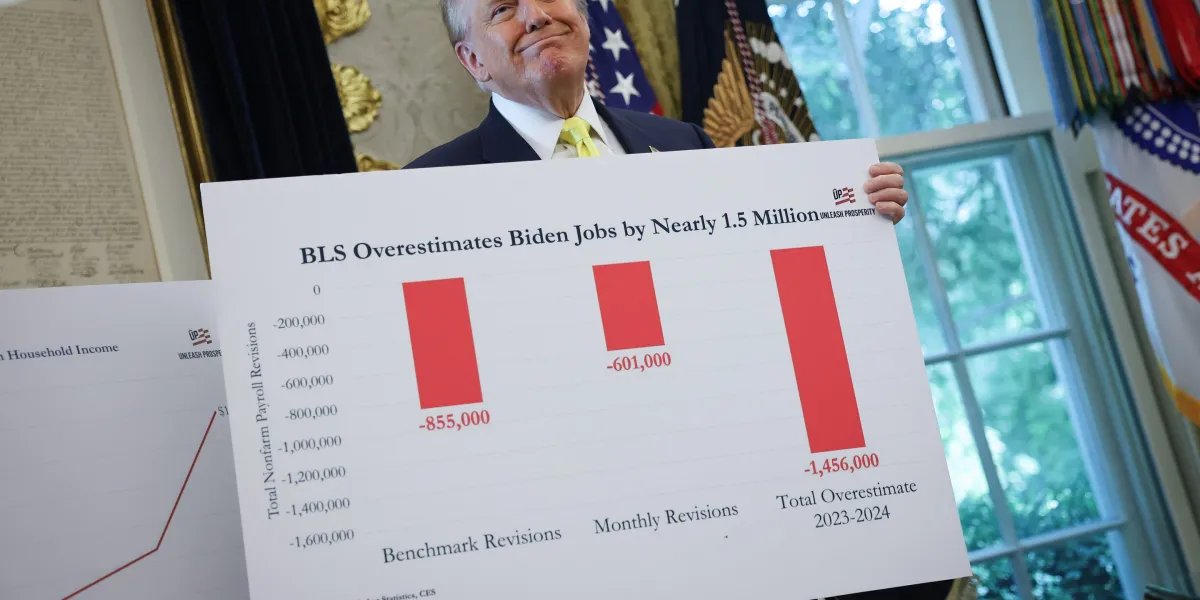
Amid doubts about the reliability of official U.S. economic data, the article highlights 13 warning signs of economic trouble, including labor market shifts, consumer spending declines, business closures, and alternative indicators like private payroll data and social metrics, emphasizing the importance of observing real-world signals beyond official statistics.
U.S. business activity surged to its highest level in over two years in May, driven by the services sector, according to S&P Global's flash U.S. Composite PMI Output Index. However, manufacturers reported rising input prices, indicating potential future inflation. Despite increased business confidence, companies remain cautious due to uncertainties over inflation, interest rates, geopolitical issues, and the upcoming presidential election.
U.S. Treasury yields rose after the Thanksgiving holiday, with the benchmark 10-year yield increasing by over 5 basis points to 4.47%. Investors are evaluating the outlook for interest rates and the economy following the Federal Reserve's recent meeting minutes, which did not suggest any imminent rate cuts. Markets are currently pricing in a 99.5% chance of rates being held steady at the December Fed meeting. Additionally, the release of S&P Global flash purchasing managers' index figures on Friday will provide insight into U.S. business activity across services and manufacturing.
China's services sector experienced a decline in business activity in August, reaching its lowest level in eight months, despite the implementation of economic stimulus measures. The Caixin China general services purchasing managers index (PMI) dropped to 51.8, indicating contraction, with weaker foreign demand for Chinese services being a contributing factor. This aligns with the official August PMI data, which also showed a slowdown in demand for services. Concerns about slower growth have arisen as economic growth in China has stalled since April, prompting the government to introduce initiatives to restore confidence in the economy.
Germany's economy is showing signs of weakness, with the steepest decline in business activity in over three years, raising concerns of a potential recession. The country's Purchasing Managers' Index (PMI) fell to its lowest level since May 2020, indicating a contraction. The manufacturing sector experienced a deepening downturn, while the service sector saw its first decline in eight months. Germany's economic struggles are also impacting the wider eurozone, with the region at risk of slipping into recession. Rising inflation in services, particularly in Germany, poses challenges for the European Central Bank. Economists predict that Germany will be the worst performer in the euro area, potentially leading to a recession in the second half of the year.
European business activity contracted in August, reaching its lowest level since November 2020, according to the euro zone's flash composite Purchasing Managers' Index. The service sector and manufacturing both showed signs of decline, with Germany reporting the deepest contraction. The data suggests that the euro zone's economy may shrink by 0.2% in the third quarter. The European Central Bank's upcoming decision on interest rates will depend on new data, with some economists expecting a pause in rate hikes while others anticipate a continuation.
Asia-Pacific markets are on the rise ahead of the release of business activity data and inflation reports from countries in the region. China is set to release its July purchasing managers index (PMI) for both the manufacturing and non-manufacturing sectors, with expectations of the manufacturing PMI remaining in contraction territory for a fourth straight month. Japan's industrial production in June was lower than expected, while the electric car market in China is facing challenges with cash flow and deliveries. Additionally, there are cheaper stocks available in the market, and technology stocks have rallied, lifting the Nasdaq Composite.
Hong Kong markets, including the Hang Seng index, slid over 2% as investors digested private surveys on economic activity. Mainland Chinese markets also experienced losses, with the Shanghai Composite recording its fifth day of losses in six days. South Korea's Kospi saw gains for the third straight day, while the Kosdaq snapped a nine-day winning streak. Japan's Nikkei 225 and Topix both ended the day in positive territory. Meanwhile, Chinese property stocks, including Country Garden, tumbled on renewed debt concerns. Singapore's inflation rate slowed to its lowest point since February 2022, while Malaysia's inflation rate hit a 16-month low. Japan's business activity expanded for the seventh straight month, while Australia's private sector saw a contraction for the first time since March. New Zealand's trade surplus narrowed in June, and Bank of America believes Europe's oil majors are close to bottoming out. Credit Suisse urges caution beyond three months as recession risks remain, and the early returns for this earnings season are slightly below average.
Business activity appears to be stalling again as soft readings from flash business surveys for June show that in the euro zone at least overall factory and service sector growth almost ground to a halt during the month, with another big contraction in manufacturing. The dollar surged into the weekend against Asia and European currencies, while European stocks are on course for their worst week in three months. Central bankers around the world are still focused on squeezing the last vestiges of inflation from the system, with the Bank of England and Norway's central bank both executing stiff half-point rate rises on Thursday, and the Swiss National Bank hiking rates too.
Sales of new US single-family homes rose to a 13-month high in April, boosted by a persistent shortage of previously owned houses on the market and a sharp decline in prices from last year's lofty levels. Business activity also rose to a 13-month high in May, indicating that the economy regained momentum early in the second quarter. Despite a recent tightening in credit conditions, there are no signs yet that the housing market is being weighed down.
Business activity in the US and Europe rose in April, driven by demand for services, which is a boost for the global economy. However, this could complicate the efforts of central banks to reduce high inflation in regions where it reached its highest level in decades. Surveys suggest that the European Central Bank is on course to raise its key interest rate in May.