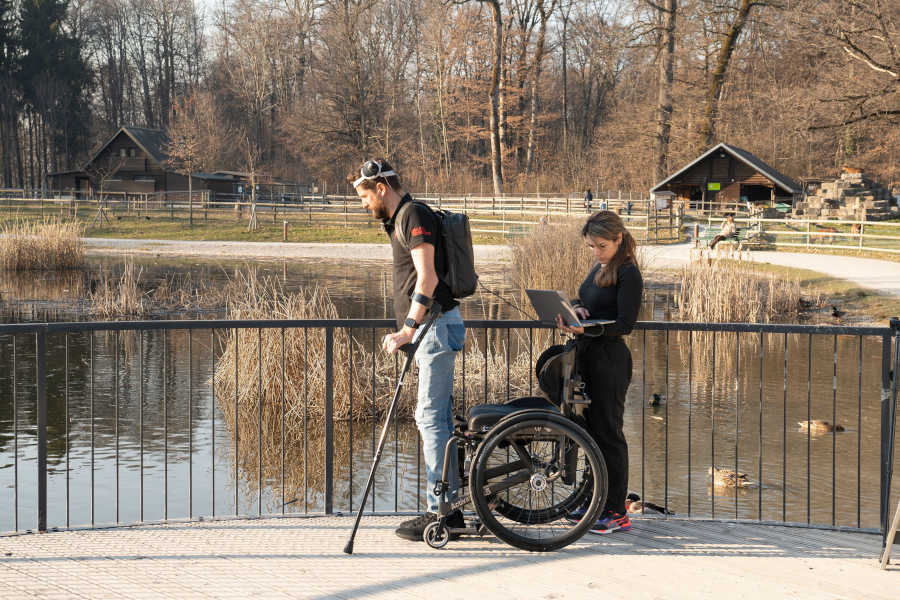
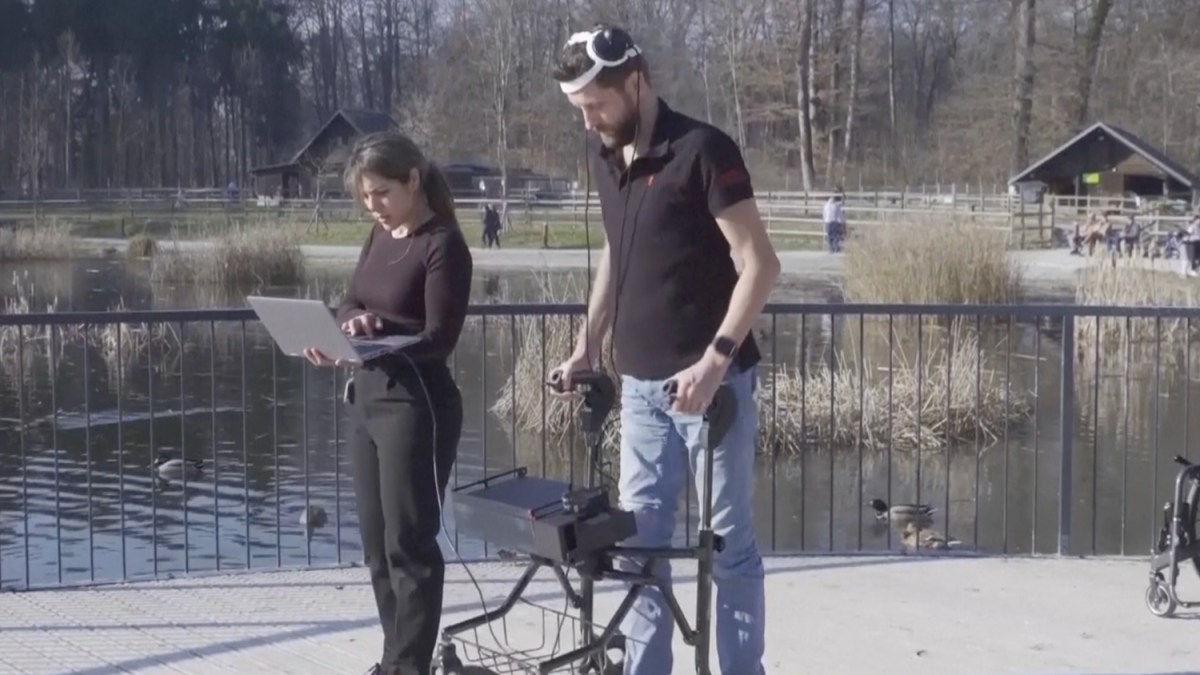
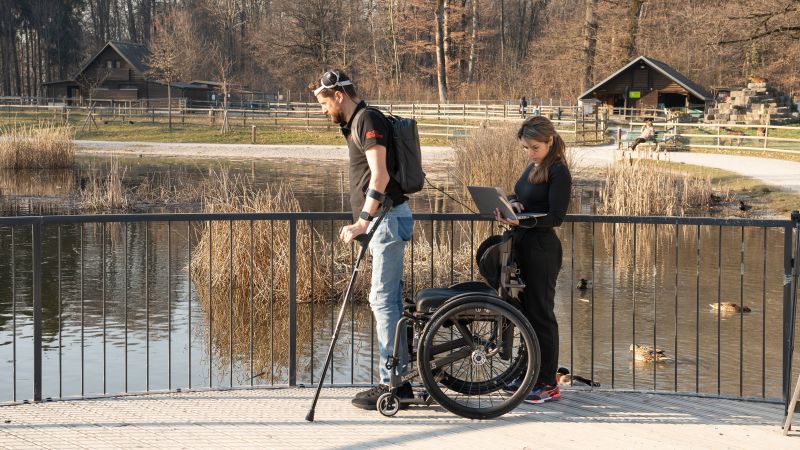
A man with paralysis has been able to walk naturally again after a medical device was implanted in his brain and spine, creating a direct neurological link between the two. The device tracks intentions for movement, which are wirelessly transferred to a processing unit that a person wears externally, like a backpack. The intentions are translated into commands that the processing unit sends back through the second implant to stimulate muscles. The technology allows for smoother movements and better adaptations to changing terrain, reconnecting two regions of the central nervous system that were interrupted because of a spinal cord injury. The researchers hope to expand the scope of the connection to help people with arm and hand paralysis or who have had a stroke.
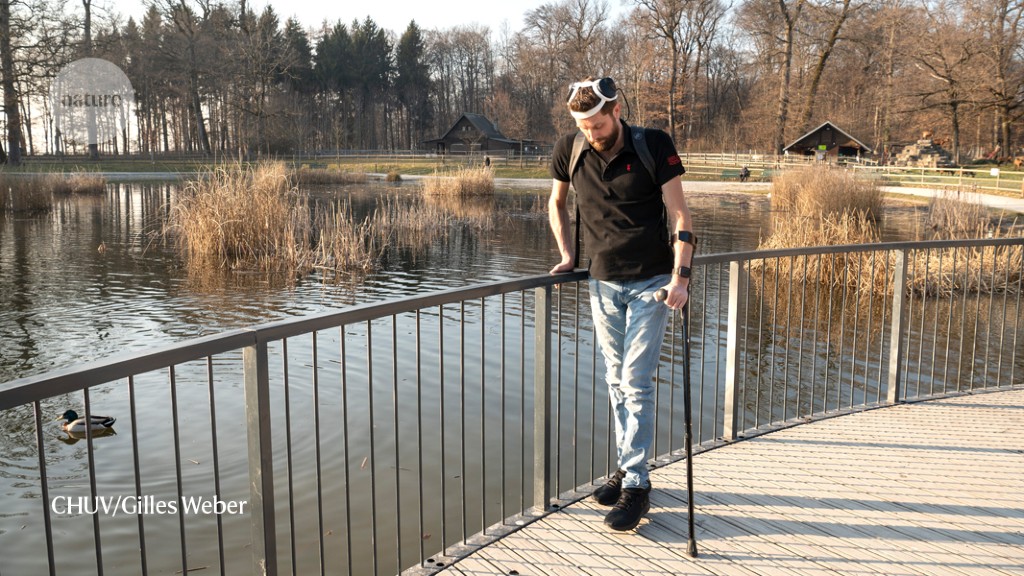
A paralysed man has regained the ability to walk smoothly using only his thoughts, thanks to a new device that connects his brain and his spinal cord, bypassing an injury he suffered 12 years ago. When he thinks about walking, electrodes on his brain relay the message to electrodes on his spinal cord, stimulating the spine. After about 40 rehabilitation sessions using the brain-spine interface, the man regained the ability to voluntarily move his legs and feet, and even walk short distances without the device if he uses crutches.
A man with paralysis has been able to walk naturally again after more than a decade, thanks to a "brain-spine interface" developed by researchers from the Swiss Federal Institute of Technology. The device creates a direct neurological link between the brain and spinal cord, allowing for smoother movements and better adaptations to changing terrain. The technology could also help people with arm and hand paralysis or who have had a stroke.
A brain-spine interface device has enabled a man with a spinal cord injury to walk again. The device creates a "digital bridge" between the brain and nerves below the injury, allowing the patient to control the stimulation of the lower spine with electrical pulses. The system makes use of a spinal implant and two disc-shaped implants inserted into the skull. The skull implants detect electrical activity in the cortex, which is wirelessly transmitted and decoded by a computer that the patient wears in a backpack. After around 40 rehabilitation sessions, the patient regained the ability to voluntarily move his legs and feet.