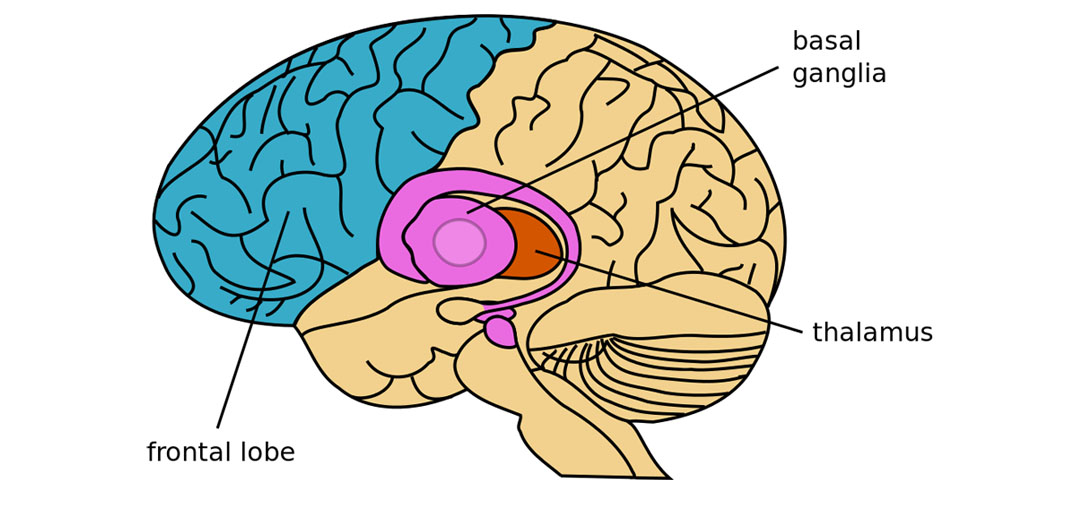
Researchers have identified specific brain wave patterns in the basal ganglia that correlate with Parkinson's symptoms, potentially enabling more precise and dynamic deep brain stimulation therapies to improve motor control.
New research shows that neurons in the basal ganglia act like traffic lights, dynamically switching between activating and inhibiting movements with high precision, which could lead to improved treatments for movement disorders like Parkinson's disease.
Neuroscientists have discovered a new group of neurons in the brainstem that control left-right movements, shedding light on the intricate brain mechanisms involved in movement control. This finding could have implications for Parkinson's disease treatment, as it reveals the connection between the brainstem and basal ganglia in regulating voluntary movements. The study, conducted in mice, suggests that stimulating these neurons could potentially alleviate turning difficulties associated with Parkinson's disease, offering hope for future therapeutic interventions.
Researchers have identified a new group of neurons in the brainstem that receives signals from the basal ganglia to control left-right movements, shedding light on the brain's complex navigation system and potentially offering therapeutic strategies for movement disorders like Parkinson's disease. By studying mice, the team anticipates similar mechanisms in humans, potentially revolutionizing treatments for movement disorders.
Researchers have discovered a direct connection between the cerebellum and the basal ganglia, altering our understanding of movement and reward processing in the brain. This finding has implications for addiction, Parkinson’s disease, and other neurodegenerative disorders, potentially leading to new therapeutic interventions. The cerebellum's role in modulating dopamine levels in the basal ganglia affects both movement initiation and reward-based behavior learning, offering new insights into the neural mechanisms underlying these conditions.
A neuroimaging study conducted in China found that individuals with cocaine use disorder showed signs of atrophy in various brain regions, particularly in the basal ganglia. The study revealed that these alterations were more pronounced in individuals who started using cocaine before the age of 18. The basal ganglia are involved in motor control, learning, cognition, and emotional regulation. The findings provide insights into the neural changes associated with cocaine use and may contribute to the development of effective interventions for treating cocaine use disorder. However, the study design does not establish causation, and healthy individuals included in the study had a history of tobacco use and some experience with cocaine.