Tag

Dscovr

All articles tagged with #dscovr

science-and-technology1 year ago

NASA Captures Stunning Moon Transit from a Million Miles Away

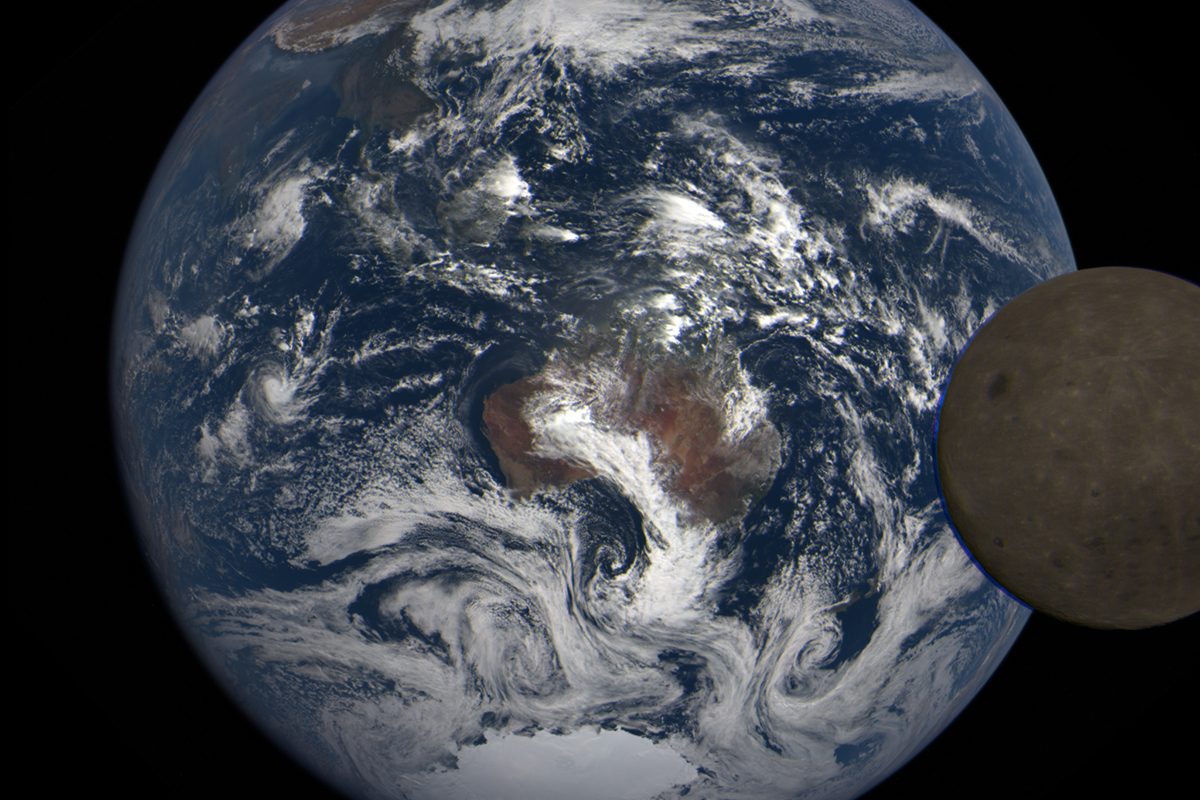
NASA's Deep Space Climate Observatory (DSCOVR) satellite, located at the Lagrange point L1, has captured stunning images of the Moon passing in front of and behind Earth. These images, taken from about a million miles away, offer a unique perspective of our planet and its natural satellite. The satellite's EPIC instrument recently captured the Moon's shadow on Earth during the October 14, 2023, annular solar eclipse. DSCOVR, which has been operational since 2015, is expected to remain in service until 2026.
space2 years ago

Stunning Views: NASA Captures 'Ring of Fire' Eclipse from Space

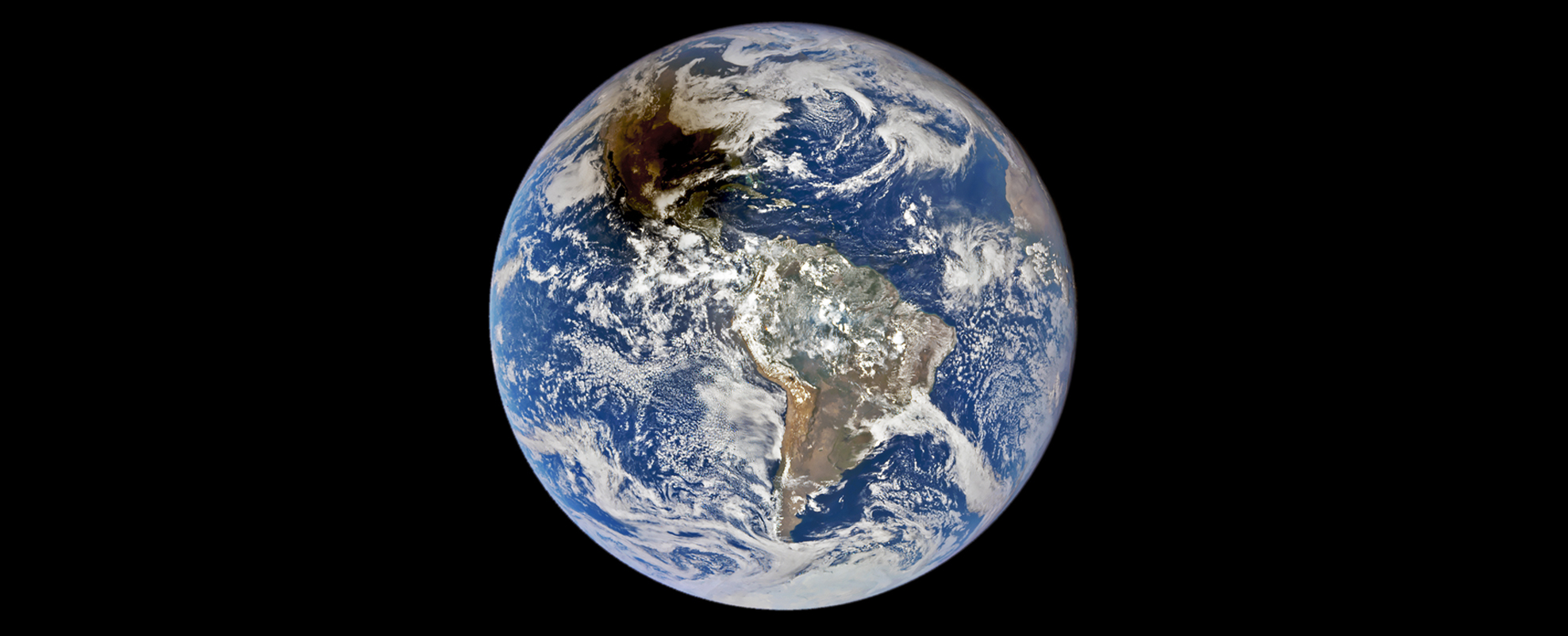
NASA's Deep Space Climate Observatory (DSCOVR) captured a unique view of the recent annular eclipse from Earth's orbit. Unlike a total solar eclipse, an annular eclipse occurs when the Moon is at its maximum distance from Earth, resulting in a "ring of fire" effect where the Sun's outer limb is still visible. The DSCOVR mission's Earth Polychromatic Imaging Camera (EPIC) captured the shadow sweeping across the United States, providing a different perspective of the event. More eclipses are expected in the coming months, including a lunar eclipse on October 28th and a major solar eclipse on April 8th.

science-and-technology2 years ago

"Unveiling Earth's Beauty: A Stunning New Perspective from 2015"

On this day in 2015, NASA's Deep Space Climate Observatory (DSCOVR) captured its first view of the entire sunlit side of Earth from its stable orbit at the L1 Lagrange Point, about 1.6 million kilometers away. The image, taken by the Earth Polychromatic Imaging Camera (EPIC), shows the bluish tint caused by sunlight scattered by air molecules. EPIC will provide daily images of Earth, which will be used to measure ozone and aerosol levels, cloud height, vegetation properties, and more. The data will be used for various Earth science applications, highlighting the importance of Earth observation from space.

science-and-technology2 years ago

Impending Solar Storm Threatens Earth with Auroras and Blackouts

A coronal mass ejection (CME) cloud released during a solar flare eruption over the weekend is expected to hit Earth today, May 11, sparking a powerful solar storm. The National Oceanic and Atmospheric Administration (NOAA) has predicted that the storm will hit our planet between 5:30 PM and 11:30 PM IST. Such storms can damage small satellites, impact mobile networks, GPS, and even pose a threat to ground-based electronics and power grids by increasing the magnetic potential by huge amounts. NOAA has predicted aurora show can be seen as far as Oregon, Nebraska, and Virginia. NOAA's DSCOVR satellite tracks different measurements of the Sun and its atmosphere including temperature, speed, density, degree of orientation, and frequency of the solar particles.

science-and-technology2 years ago

Beware of Intense Solar Storms and Their Impact on Earth and Aviation.

Two coronal mass ejection (CME) clouds are expected to hit the Earth today, potentially creating a more powerful solar storm. The addition of a flare eruption or solar winds can further complicate matters, making it difficult to predict the strength of the incoming storm. A powerful solar storm can potentially damage satellites, break down mobile networks and internet services, cause power grid failures, and corrupt sensitive ground-based electronics. NOAA's DSCOVR satellite monitors solar storms and the Sun's behavior to prepare the final analysis.

science-and-technology2 years ago

Solar Storms Threaten Earth with Intensifying CME Strikes and Flares.

A coronal mass ejection (CME) from the Sun has hit Earth, sparking a G1-class solar storm which could intensify to G2-class in the coming hours. While G1-class storms are generally harmless, G2-class storms can disrupt wireless communications and GPS services, causing trouble for airlines, mariners, ham radio controllers and drone operators. NOAA's DSCOVR satellite is monitoring the solar storm and its impact on Earth.