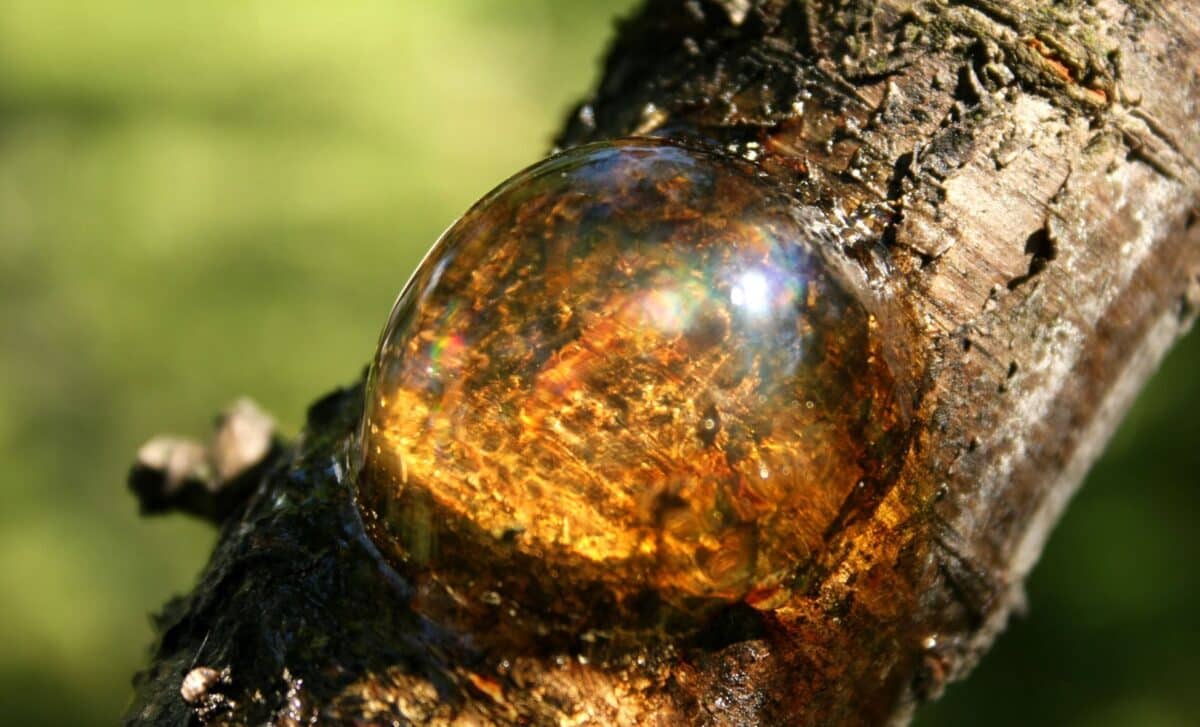
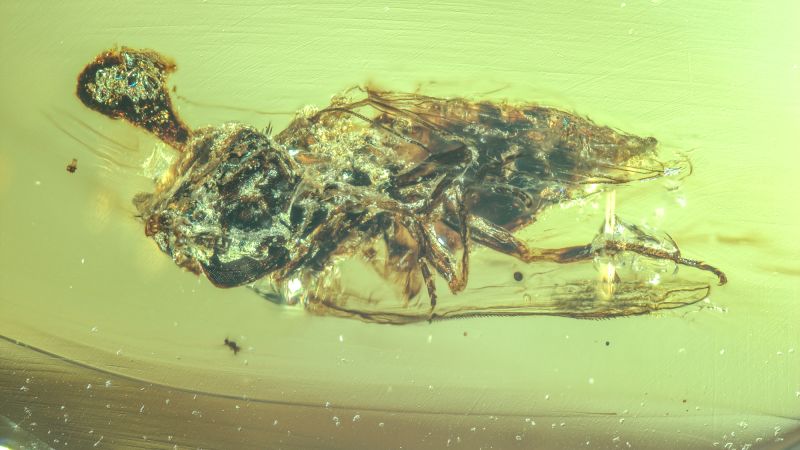
Scientists discovered 99-million-year-old amber fossils of an ant and fly infected by parasitic fungi, providing evidence that such fungi, similar to modern zombie-ant fungi, existed during the Cretaceous period and played a significant role in prehistoric ecosystems.
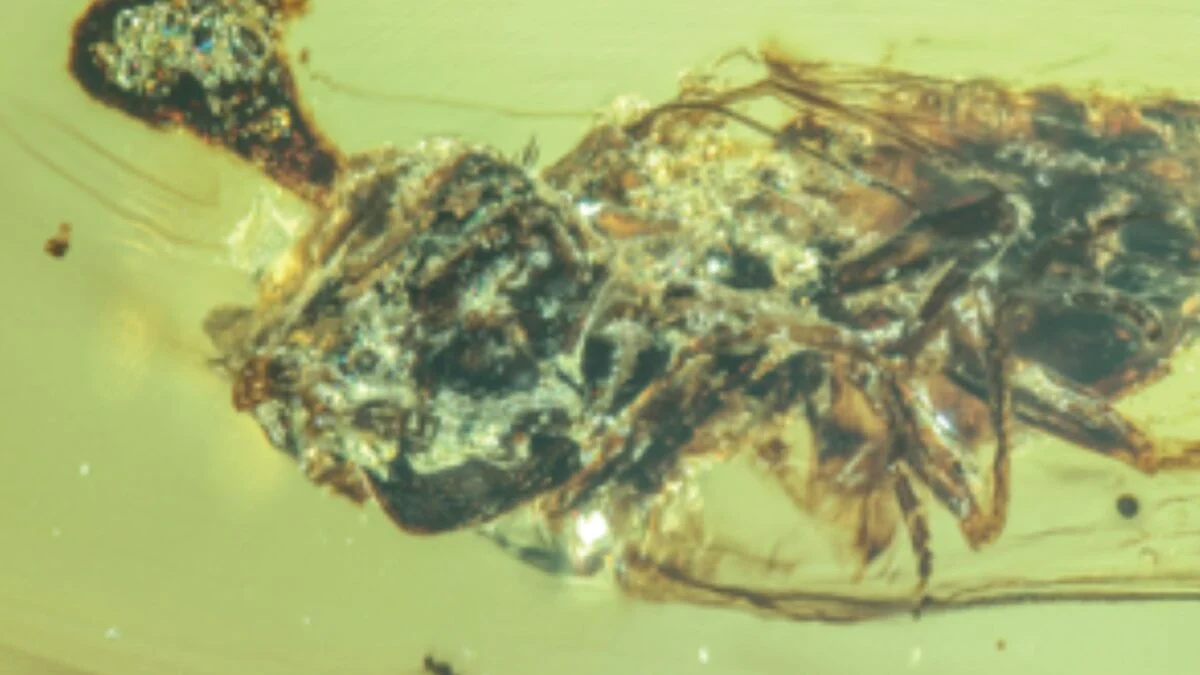
A 99-million-year-old amber fossil reveals a fly infected by a zombie fungus, likely living alongside dinosaurs, providing insights into ancient parasitic relationships and ecosystems.
Scientists discovered 99-million-year-old amber fossils of insects infected with new species of parasitic fungi related to cordyceps, revealing that such zombie-like fungi existed during the age of dinosaurs and have a complex evolutionary history.
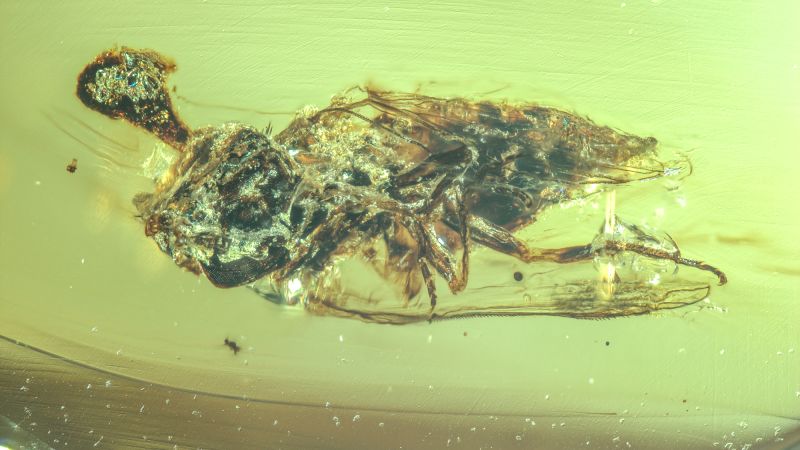
A 99-million-year-old amber fossil reveals an ancient fly infected by a zombie fungus similar to those that manipulate insect behavior today, suggesting such parasitic relationships existed alongside dinosaurs and played a role in ancient ecosystems.
A 312-million-year-old fossil has provided new insights into the behavior and evolution of ancient insects. The fossil, found on a Carboniferous seed-fern leaf, represents the earliest evidence of internal feeding within a leaf, known as leaf mining. This discovery pushes back the estimated origin of leaf mining by 70 million years and sheds light on the behavior of larvae, which are rarely preserved in the fossil record. The exceptional preservation of the fossil also reveals patterns consistent with modern leaf mining behavior, suggesting that full metamorphosis, known as holometabolism, existed during this time period.
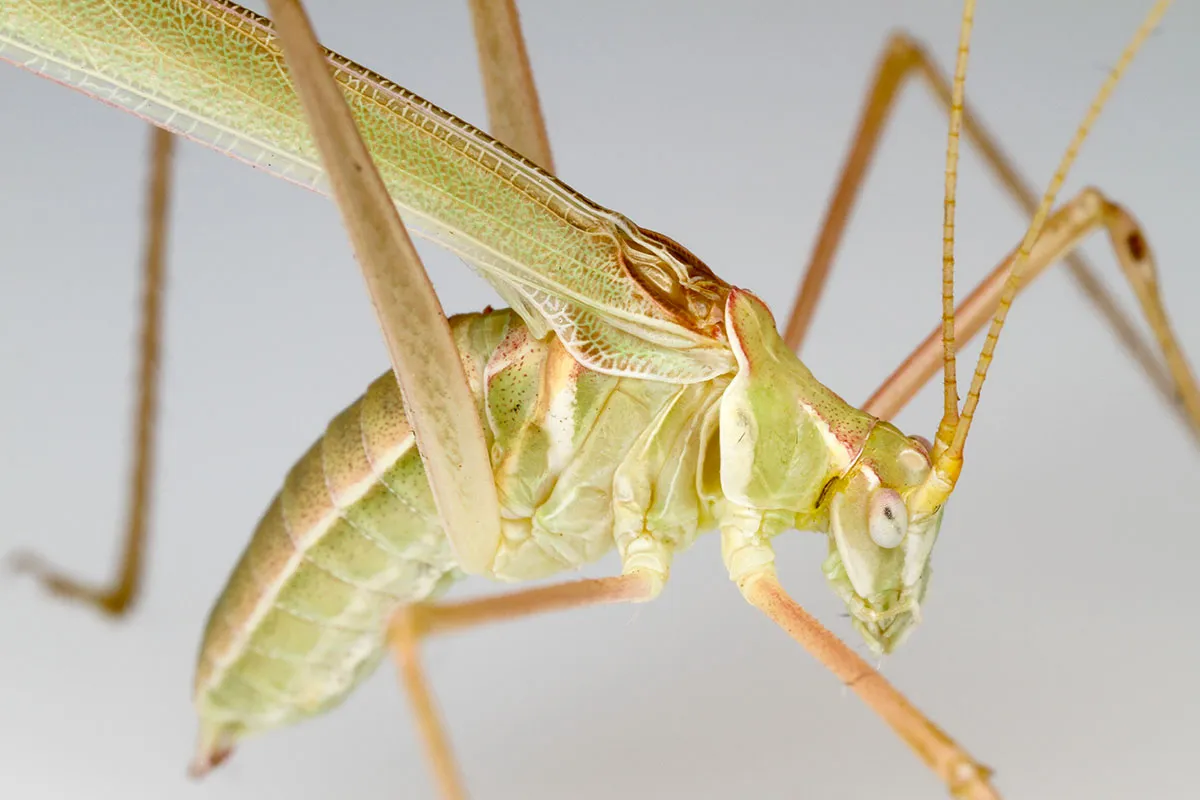
Researchers have discovered a 50-million-year-old fossil katydid with remarkably preserved soft tissues, including a testicle. The fossil, named Arethaea solterae, was found in northwestern Colorado and is the first known preserved testicle in a fossil insect. The discovery sheds light on the internal anatomy of ancient insects and suggests that there may be more well-preserved soft tissues waiting to be found in other fossils.