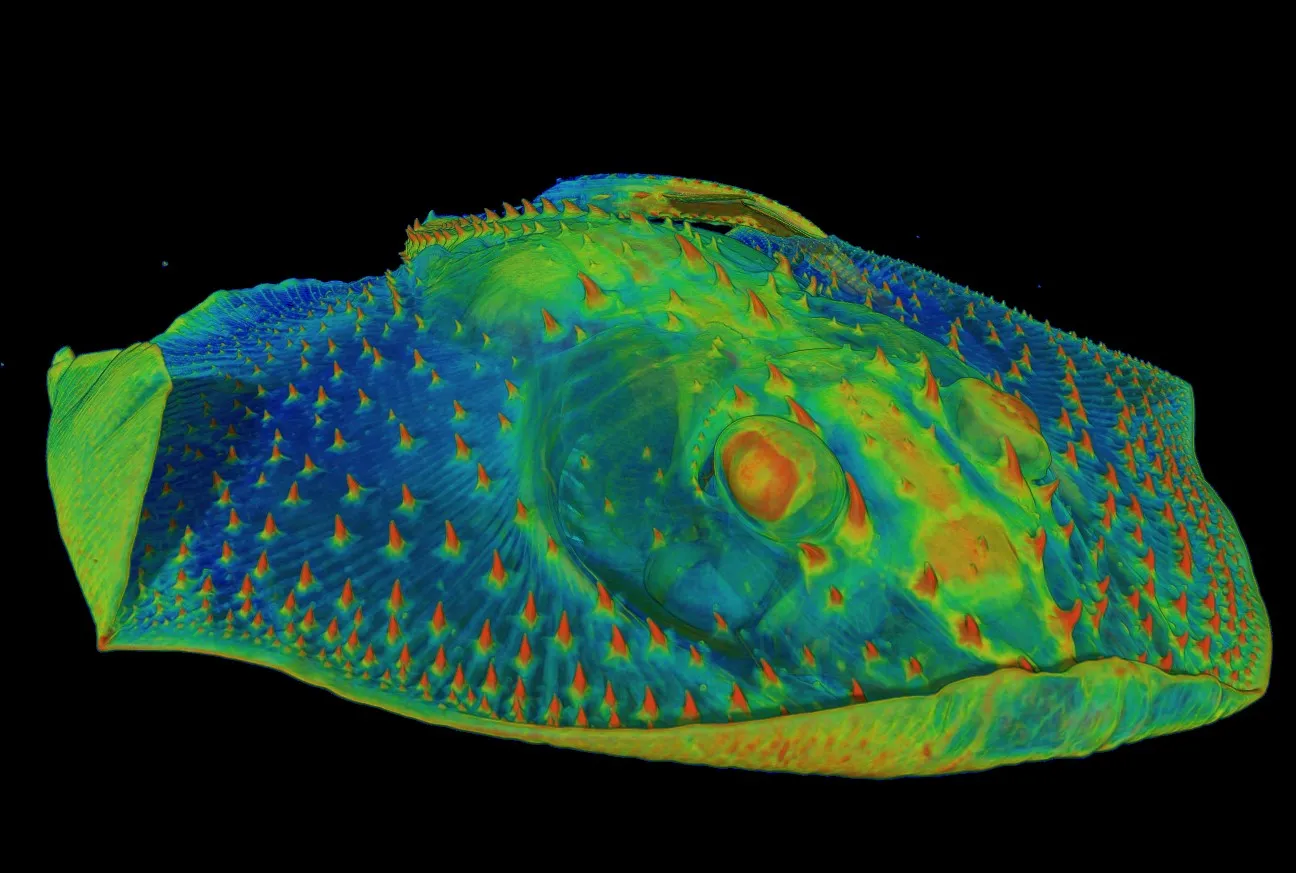
Yara Haridy's research on tiny fossils called fish flakes has revealed that early vertebrate teeth evolved from sensory exoskeletons of armored fish, supporting the 'outside-in' theory of tooth development and shedding light on the evolutionary transition from soft-bodied to skeletonized vertebrates.
Scientists discovered that the inner layer of teeth, dentine, originally evolved in ancient fish as sensory armor to detect water movements, not for chewing, and this trait was independently developed in invertebrates and vertebrates, shedding new light on the origins of teeth and sensory structures.
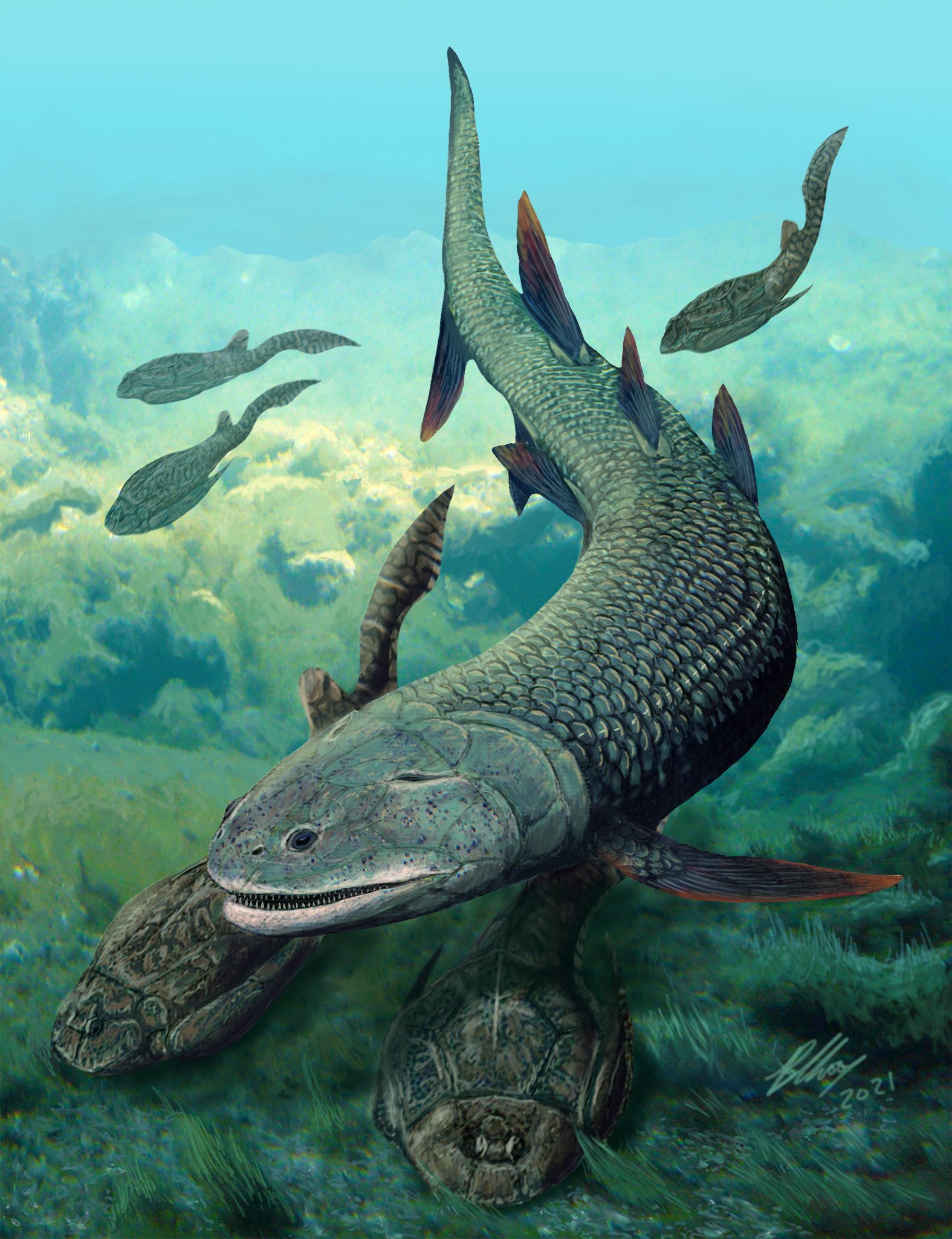
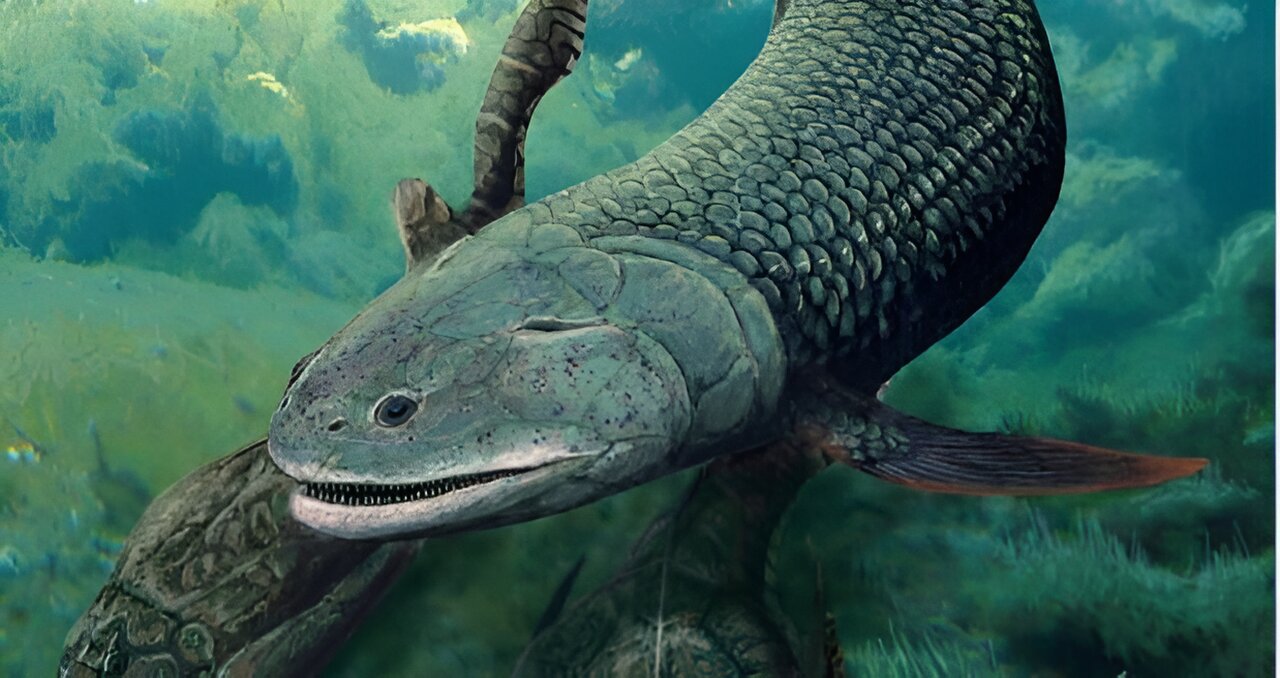
Scientists have discovered a 380 million-year-old lobe-finned fish named Harajicadectes zhumini in remote fossil fields west of Alice Springs, Australia. This ancient fish, related to the earliest limbed tetrapods, had large fangs and bony scales and is notable for its large openings on the top of its skull, which facilitated surface air-breathing. The synchronized appearance of this air-breathing adaptation may have coincided with a time of decreased atmospheric oxygen during the mid-Devonian. The discovery is the culmination of 50 years of exploration and research and sheds light on the evolutionary context of ancient fish.
Researchers have discovered a new species of ancient lobe-finned fish, named Harajicadectes zhumini, in Australia's Red Center, dating back 380 million years. This fish, with large fangs and bony scales, is not too distantly related to the fishes that gave rise to the earliest limbed tetrapods and is distinctive for its large openings on the top of its skull, thought to facilitate surface air-breathing. The synchronized appearance of this air-breathing adaptation may have coincided with a time of decreased atmospheric oxygen during the mid-Devonian. This discovery is the culmination of 50 years of exploration and research, with the most complete specimen found in 2016 and transferred to the Museum and Art Galleries of the Northern Territory in Darwin.
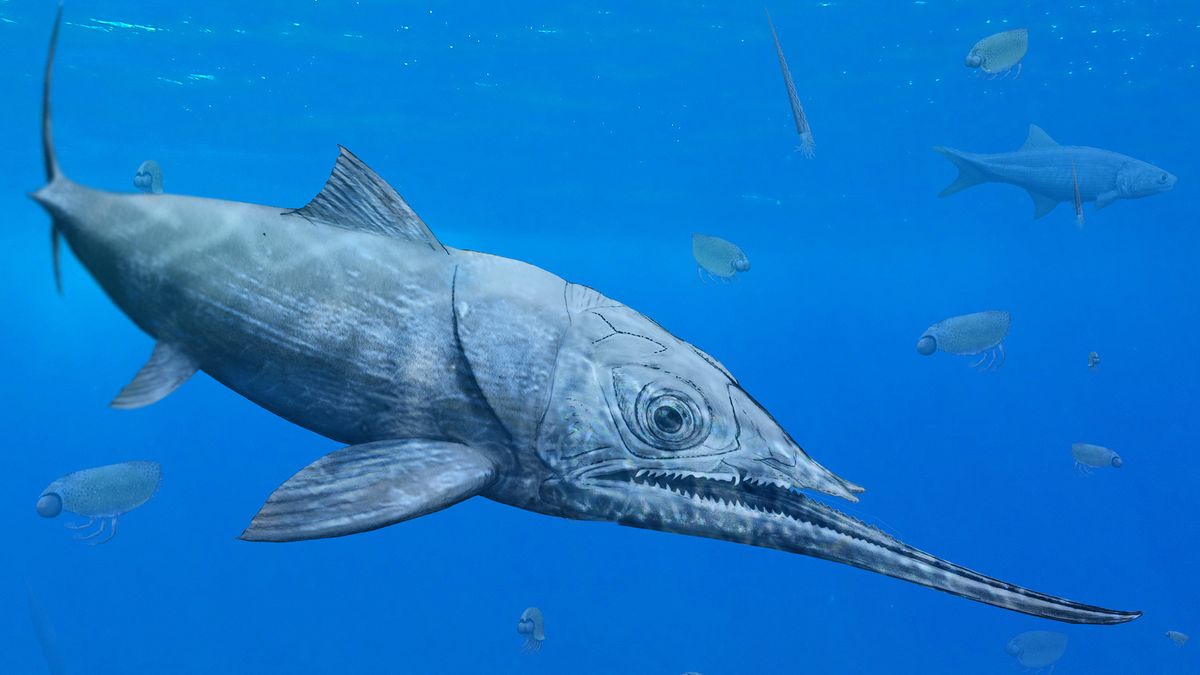
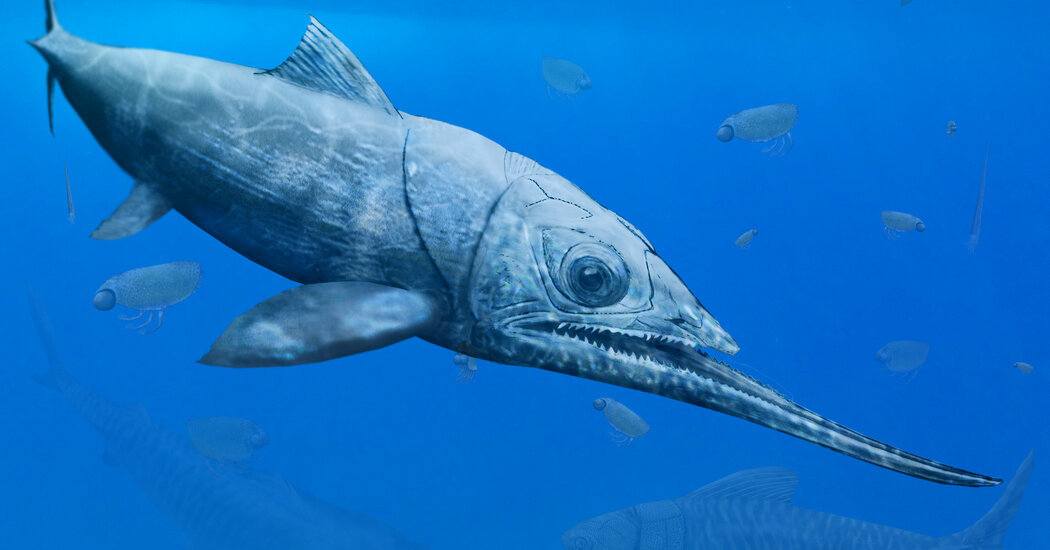
Scientists have discovered that the ancient fish Alienacanthus had one of the most extreme underbites ever recorded, with an immensely elongated lower jaw studded with teeth. This placoderm fish from the Devonian period had a unique jaw mechanism that allowed its upper jaws to move independently of the skull to accommodate its lengthy lower jaw. Researchers believe that Alienacanthus may have used its underbite to trap live prey, and its discovery sheds light on the diverse jaw forms and proportions that evolved during the Late Devonian period.
The recent discovery of a fossilized Alienacanthus skull in Poland has revealed that what was long believed to be large, bony spines on the fish were actually an elongated lower jaw, giving it nature's most extreme underbite. This Devonian Period fish, which lived 375 million years ago, was an oddity among the armored fishes of its time. The discovery sheds new light on the appearance and behavior of this ancient creature, providing valuable insights into the underwater world of the past.
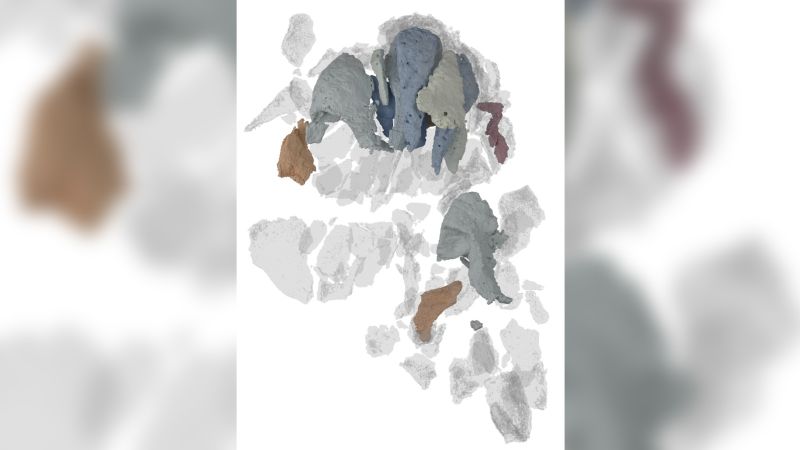
A 455-million-year-old fossil of the jawless fish Eriptychius americanus has provided new insights into the evolution of vertebrate skulls. The fossil, discovered in Colorado, is the oldest 3D evidence of cranial anatomy in an early vertebrate. The skull arrangement of E. americanus is unlike anything seen in living vertebrates or its extinct relatives, with unfused cartilage sections surrounding the mouth, olfactory organs, and eyes. CT scans allowed researchers to visualize the cartilage and reconstruct a digital model of the fish's cranium. The fossil fills a gap in our understanding of vertebrate head evolution and provides valuable insights into the ancient jawless fish's anatomy.
Researchers have found that the size of ancient armored fish from the late Devonian period cannot be judged based on the size of modern-day sharks. A new analysis of data from previous studies suggests that previous estimates of the size of the Dunkleosteus species were probably wide of the mark. The new research suggests that the Dunkleosteus species actually had shorter bodies compared to their gaping mouths, with proportions between head size and body size that don't match what we see with the sharks of today. The largest Dunkleosteus only grew to about 4 meters, or 13 feet, in length.