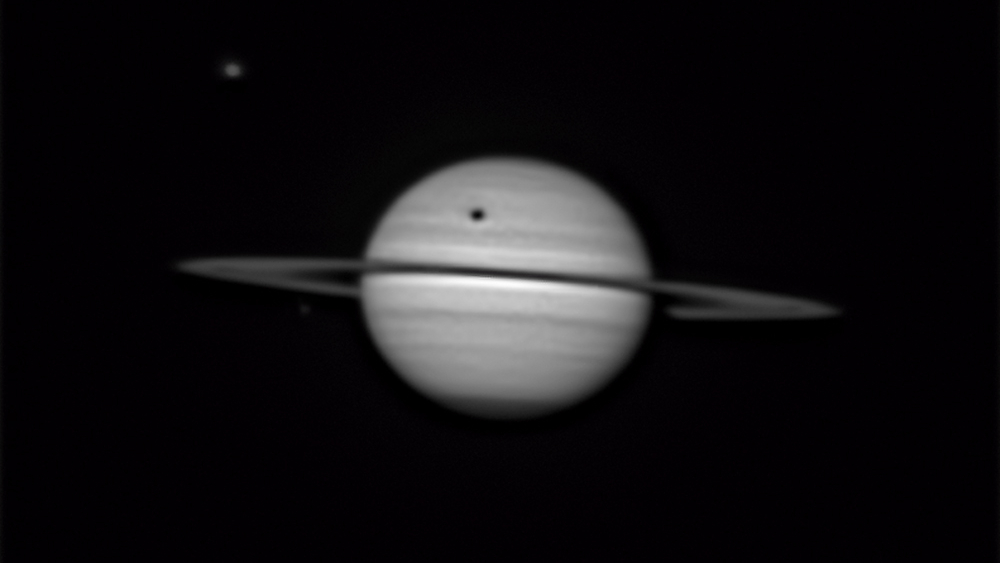
Amateur astronomer Efrain Morales captured a stunning image of Titan's shadow crossing Saturn during a rare transit event on July 18, 2025, an event visible with telescopes and occurring roughly every 15 years, with upcoming transits scheduled through October. Larger telescopes provide clearer views, and space enthusiasts are encouraged to observe or photograph these celestial phenomena.
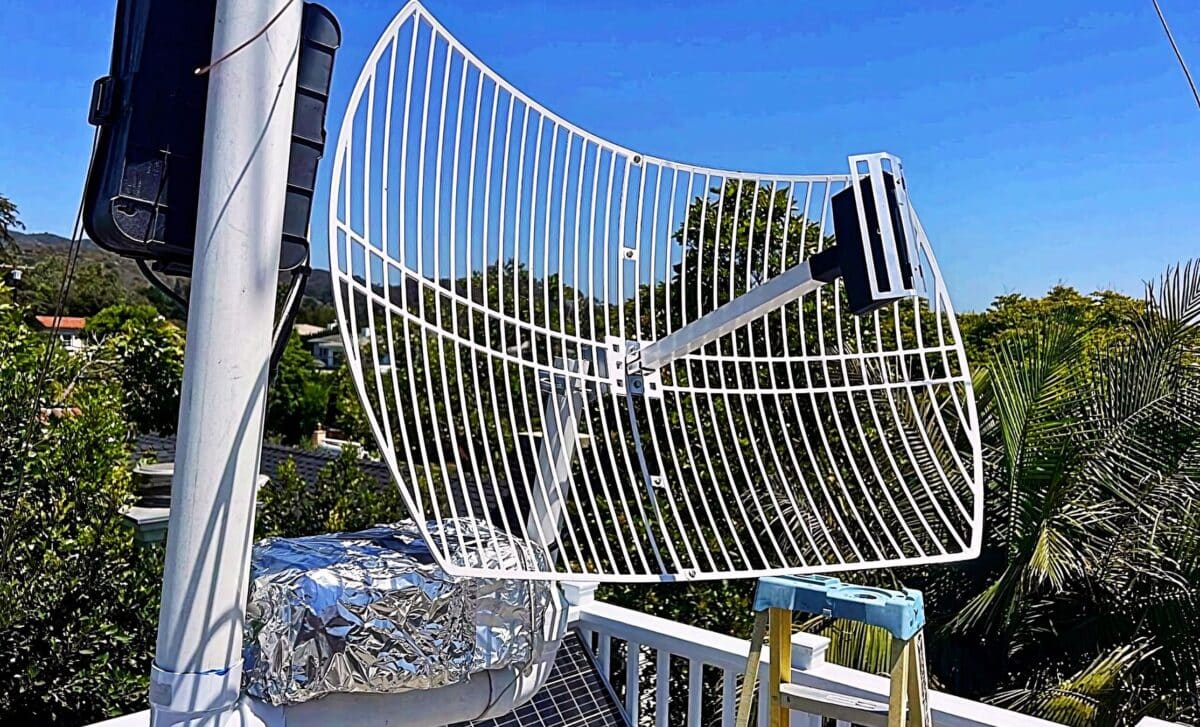
A new DIY radio telescope design allows amateur astronomers to observe cosmic phenomena using accessible components like a 1-meter satellite dish and a Raspberry Pi. Detailed in a paper by Jack Phelps, this setup focuses on the 21-cm hydrogen line, crucial for studying galactic structures and dark matter. The project is affordable and opens up the possibility of observing not just hydrogen clouds, but also the sun, Jupiter, and other celestial phenomena, making radio astronomy more accessible to hobbyists.
A massive explosion is expected to occur in a binary star system 3,000 light years from Earth, making it visible to amateur astronomers between now and September. The event, known as a recurrent nova, occurs every 80 years when a white dwarf and a red giant in the system trigger a runaway nuclear explosion, creating a temporary bright spot in the night sky. Astronomers are eagerly anticipating this rare event, which will provide valuable insights into the dynamics of these binary star systems.
Researchers are asking the public to take pictures of the unusual tailless comet C/2021 S3 Pannstars as it passes by Earth, in order to study its movement and changes and help predict and forecast solar wind activity. Solar wind can cause geomagnetic storms that affect Earth's infrastructure and technology, and accurate forecasting is crucial to prevent damage. Images of the comet may provide valuable insights into solar weather and aid in preparing for potential impacts.
Amateur radio enthusiasts in the UK have set up the UK Meteor Beacon project, which uses radio signals to observe meteors as they pass through a section of sky over England and Wales. The system captures over 100 meteors per hour and can be observed in any weather conditions, allowing for the discovery of new meteor showers and potential tracking of previously unknown comets. The project has gained funding and attention from various organizations and scientists, and the team plans to distribute echo receivers throughout the country. The low cost of the receivers encourages schools to participate in STEM-related projects. The team also aims to calculate the location and trajectory of meteors and study samples for a better understanding of the universe.
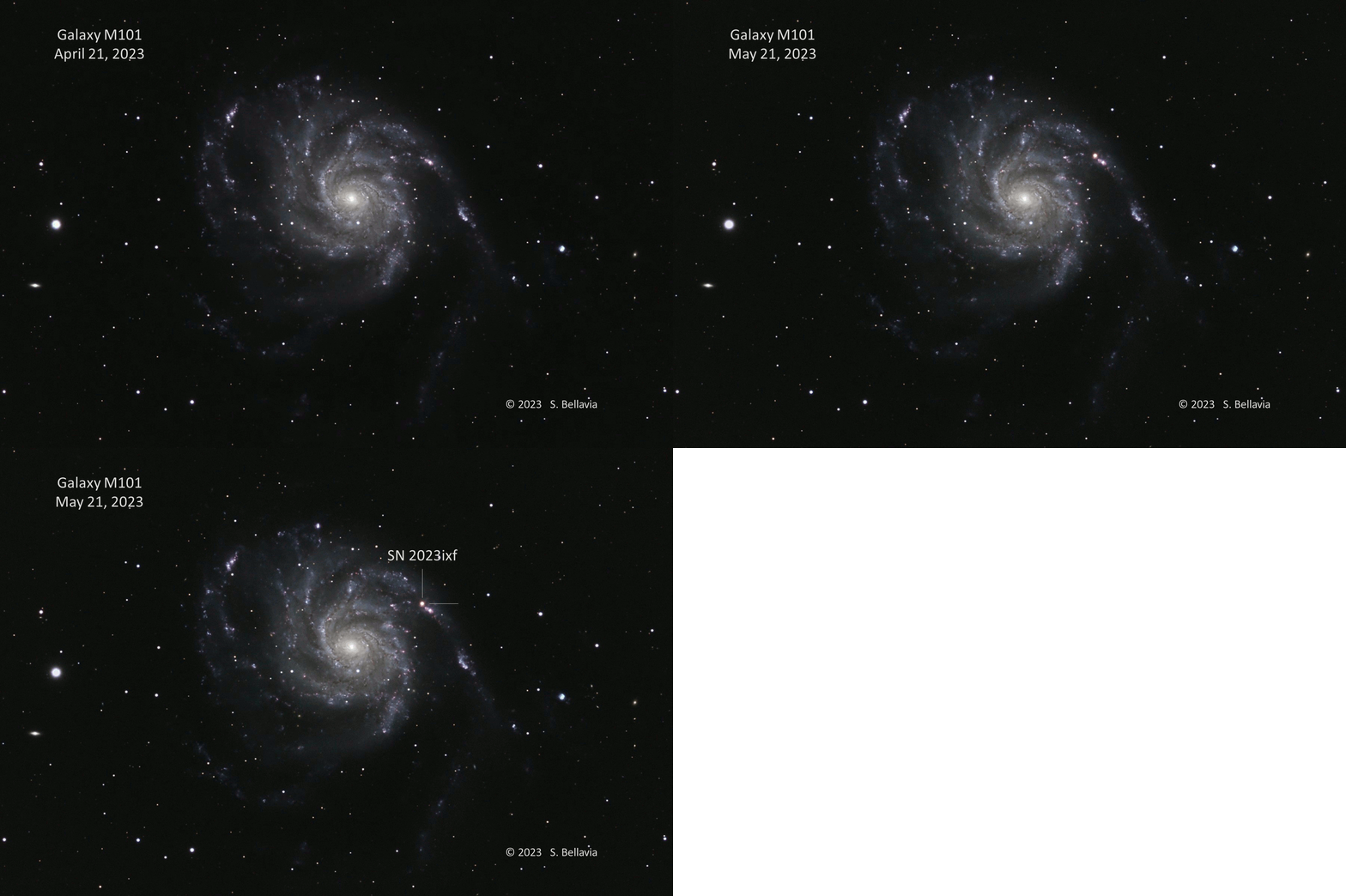
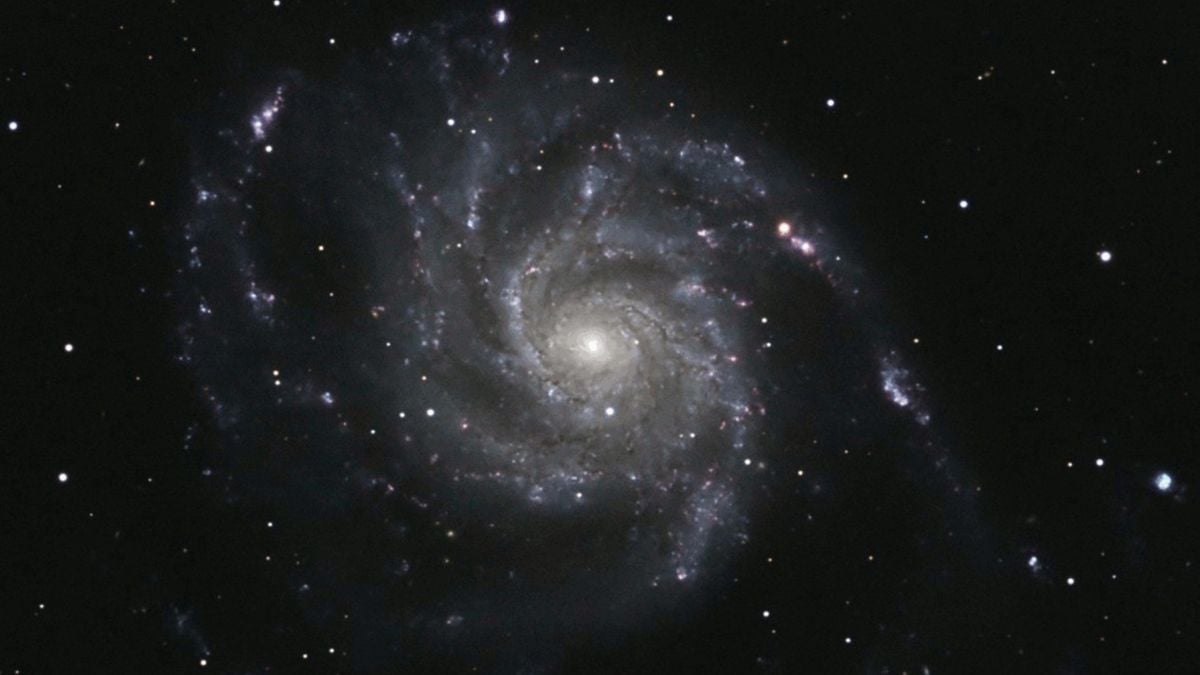
The Pinwheel Galaxy, also known as M101, has a visible Type II supernova named SN 2023ixf, which can be seen with a small telescope. This supernova is expected to brighten a bit more over the next couple of months before gradually fading. The observations of this supernova will help astronomers better understand the evolution of core-collapse supernovae and how they enrich the universe with heavy elements.
A star in the nearby pinwheel galaxy M101 has gone supernova, and the blast is so bright that it can be viewed from an amateur telescope. The supernova recently found in M101, dubbed SN 2023ixf, is the closest one to take place in the past five years, and it was caught early enough that astronomers will be able to observe the death of a star in new levels of detail. The supernova will remain bright in the night sky through the entire summer and will offer new insight into the death cycle of massive stars.
A new supernova, designated as SN2023ixf, has been discovered in the Pinwheel Galaxy, also known as Messier 101. The explosion was first spotted by Japanese supernova hunter Koichi Itagaki on May 19 and confirmed the following day by telescopes of the Zwicky Transient Facility in California. The supernova is visible in small telescopes under dark-sky conditions and is easily visible in amateur telescopes. Astrophotographers and professional astronomers have shared their excitement and data about the rare event.
The Virtual Telescope Project will livestream the newly discovered supernova, SN 2023ixf, as it develops via its robotic telescopes based in Rome, Italy. The supernova is located in the Pinwheel Galaxy, also known as Messier 101, and is one of the largest and brightest seen for a decade. The online event will kick off at 6:00 p.m. EDT (2200 GMT) on Thursday, May 25. The supernova can be difficult to view in the night sky without the right conditions or telescope, but amateur astronomers with backyard telescopes can see it as a small speck of light.