Micron Technology exceeded analyst expectations with a strong fiscal first quarter, reporting record revenue, significant profit growth, and optimistic guidance, leading to a stock surge in after-hours trading.
The article examines past AI winters caused by overhyped expectations and subsequent disillusionment, drawing parallels with current AI developments. Historically, AI hype cycles, fueled by ambitious claims and limited technological progress, led to funding cuts and skepticism. Today, despite massive private investment and widespread deployment, challenges such as unreliable models and high costs suggest a potential new AI winter, echoing past cycles. The future of AI remains uncertain, hinging on whether current enthusiasm can be sustained or if similar setbacks will occur.
OpenAI has acquired product testing startup Statsig for $1.1 billion to enhance its Applications division, appointing Statsig's CEO Vijaye Raji as CTO of Applications, and making leadership changes to support its growth in AI-powered products. The deal aims to accelerate product development, with Statsig operating independently out of Seattle pending regulatory approval.
Two Chinese nationals, one of whom is an illegal alien, were arrested for allegedly exporting sensitive AI microchips from the U.S. to China without proper licenses through their company ALX Solutions Inc., involving multiple shipments and transshipment points to conceal the exports, with potential penalties up to 20 years in prison.
Amazon CEO Andy Jassy highlights the company's extensive use and investment in Generative AI across various services, emphasizing its potential to revolutionize customer experiences, improve operational efficiency, and transform the workforce, while encouraging employees to embrace AI and participate in its development.
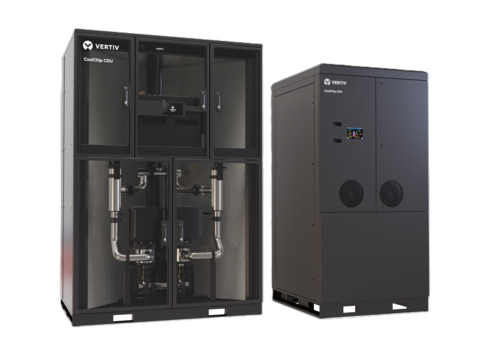
Vertiv has expanded its liquid cooling portfolio with the introduction of two new CoolChip CDU systems designed to support AI applications in data centers. The CoolChip CDU 2300kW is a liquid-to-liquid system offering high capacity and compact design, while the CoolChip CDU 350kW is a liquid-to-air system suitable for retrofitting existing facilities. These solutions aim to enhance the efficiency and scalability of high-density computing environments, addressing the growing demand for AI deployments.
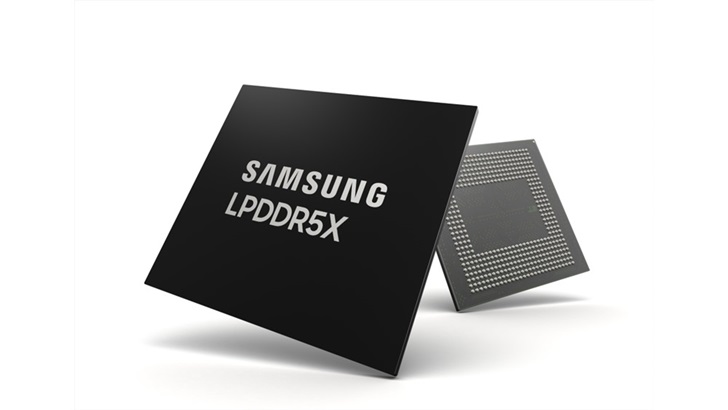
Samsung has developed the industry's fastest LPDDR5X DRAM, offering 10.7Gbps performance, 30% more capacity, and 25% higher power efficiency. This innovation is optimized for AI applications and is expected to expand into various sectors including PCs, accelerators, servers, and automobiles. The LPDDR5X is designed to meet the increasing demand for low-power, high-performance memory in the on-device AI era, with mass production scheduled to begin in the second half of the year.
Google's Gemini 1.5 Pro has been updated to include audio processing capabilities, allowing it to analyze audio files without the need for written transcripts. The model will be available to the public through Google's Vertex AI platform and outperforms the larger Gemini Ultra model. Additionally, Imagen 2, a text-to-image generation model, will introduce new features such as inpainting and outpainting, along with digital watermarking. Google is also previewing a feature to ground AI responses with up-to-date information from Google Search.
ESA, in collaboration with technology partners, is developing AI applications to revolutionize information retrieval in Earth observation by creating a ChatGPT-style text-based enquiry tool. These applications, supported by the ESA InCubed programme, use AI to monitor events like earthquakes and create flood maps for disaster response teams. ESA is also working on foundation models dedicated to Earth observation-related tasks, such as the PhilEO model, which recognizes features without human supervision. Separate initiatives are focused on creating a digital assistant that can process natural language questions and provide answers based on Earth observation data, with the goal of yielding game-changing results in the near future.
A study of physicians in the UK's National Health Service revealed their resistance to using algorithm-based tools, including AI applications, citing four reasons for their reluctance. The research, based on interviews with 32 physicians, suggests ways to overcome their resistance and highlights the potential benefits of algorithm-based technologies in healthcare.
Shares in Taiwan Semiconductor surged 11.4% in the week ending Friday, driven by positive news indicating an upswing in the semiconductor industry, particularly in demand for high-performance computing for AI applications. The company's sales data for February showed an 11.3% increase from the previous year, confirming a recovery in the industry, supported by global industry sales rising 15.2% in January. With ongoing recovery and the CHIPS Act supporting investment, Taiwan Semiconductor is on track to hit its revenue growth target in 2024.
Intel has announced its new Edge Platform at MWC 2024, a modular, open software platform designed to simplify the development, deployment, and management of edge and AI applications at scale with cloud-like simplicity. The platform aims to address the growing need for edge computing and AI applications, offering capabilities such as infrastructure management, AI application development, and deep hardware awareness. Intel's Edge Platform has garnered support from industry leaders and aims to empower enterprises to build and manage edge-native AI applications across various industries.
Super Micro Computer's stock surged 6.6% following a bullish note from Barclays, which raised its one-year price target to $961 per share. The company's high-performance rack servers have seen increased demand due to the rise of new AI applications, leading to an 828% rise in its stock price over the last year. Additionally, bullish coverage on Nvidia's strong fourth-quarter results and AI-driven demand in the data-center segment suggests potential further upside for Super Micro Computer.
Taiwan Semiconductor Manufacturing Company (TSMC) exceeded profit and revenue expectations in the fourth quarter despite a 1.5% revenue dip and a 19.3% net income drop from a year ago. The company's CEO acknowledged the challenging year for the global semiconductor industry due to macroeconomic conditions and an inventory adjustment cycle, but expressed optimism for 2024, citing strong ramp-up of industry-leading technologies and robust AI-related demand. TSMC expects first-quarter revenue to range between $18 billion and $18.8 billion, while also preparing for the mass production of 2-nanometer chips by 2025.
AMD's stock is approaching its record high as it surged over 7% on Tuesday, driven by growing optimism about its prospects in artificial intelligence. Analysts are bullish on AMD's server business and expect increased demand for its MI300X accelerator for AI applications, with potential customers including Microsoft, Meta Platforms, and Oracle. KeyBanc Capital Markets analyst John Vinh raised his price target for AMD shares, citing a 24% upside potential, while chip stocks like Nvidia and Micron Technology also saw gains amidst a broader rally in the semiconductor industry.