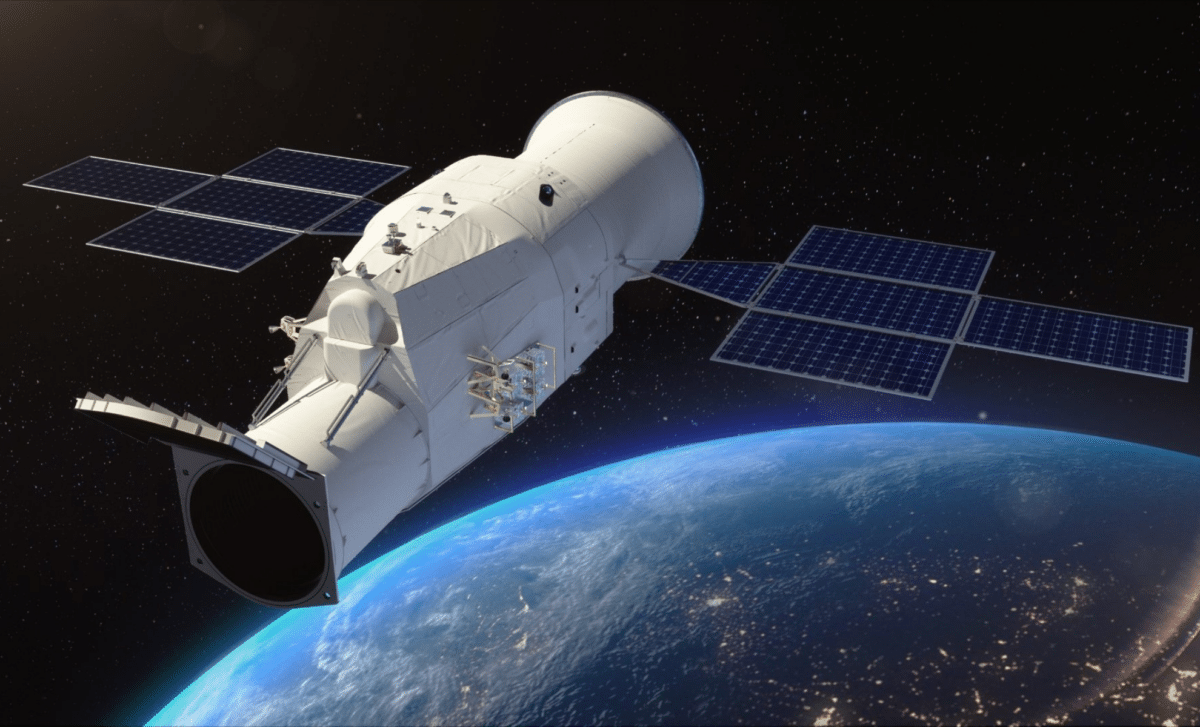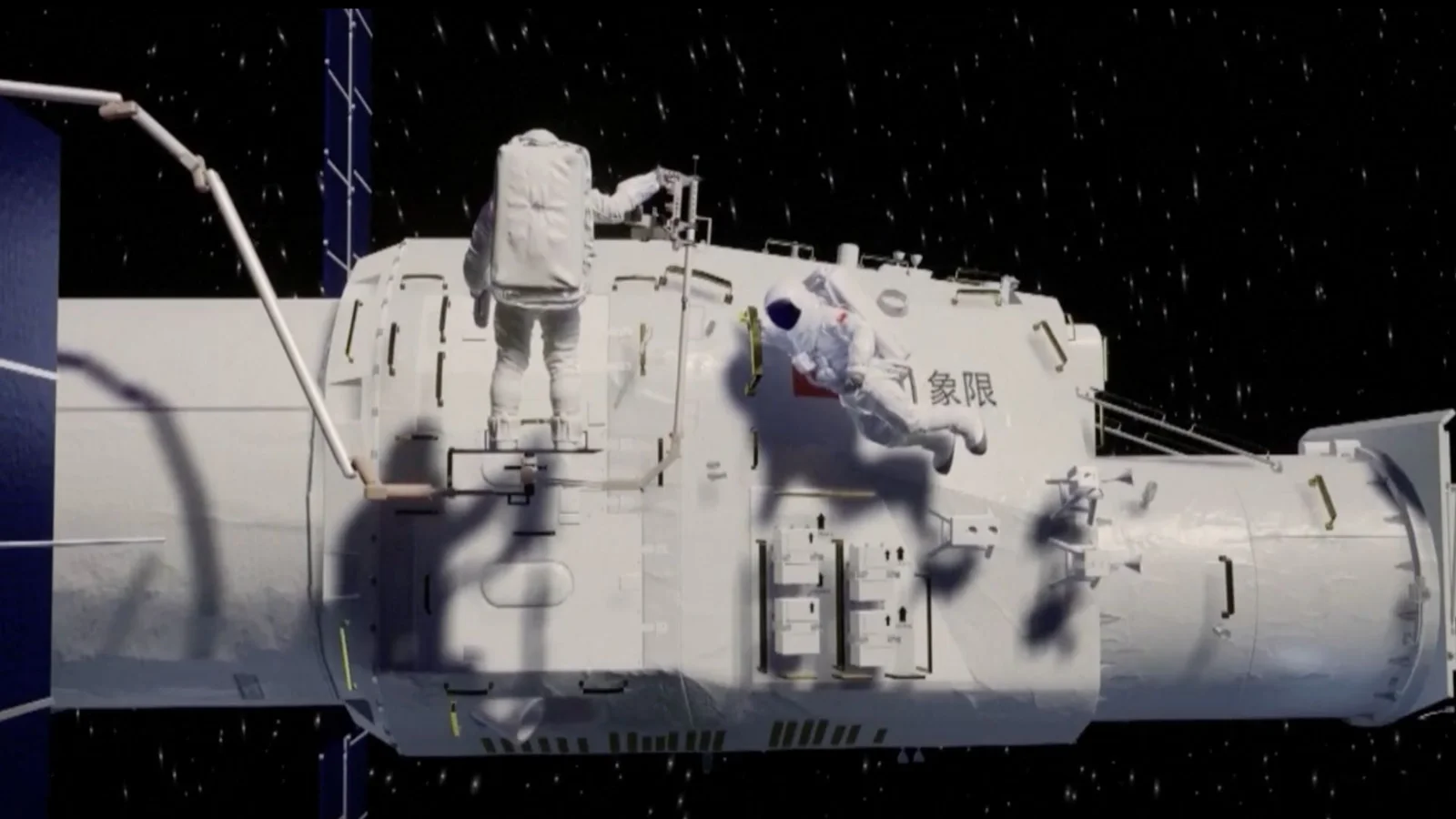
China's Chinese Space Station Telescope (CSST), also known as Xuntian, has completed a high-quality scientific data simulation, marking a key step toward its 2026 launch. The telescope features advanced optical systems with a 2-meter aperture, designed for wide-field, multi-color imaging to study galaxies, stars, and exoplanets, promising significant contributions to astrophysics and cosmology. It will operate independently and dock with China's space station for maintenance, supporting long-term space-based scientific exploration.
China is preparing to launch the Xuntian, also known as the Chinese Survey Space Telescope or the Chinese Space Station Telescope (CSST), next year. The CSST, which will co-orbit with China's Tiangong space station, is designed to outperform NASA's Hubble Space Telescope. With a two-meter diameter primary mirror and a field of view over 300 times larger than Hubble, the CSST aims to make breakthroughs in cosmology, dark matter, dark energy, the Milky Way galaxy, star formation, evolution, and exoplanets. The telescope will stay in the same orbit as the space station for long-term independent flight and observations, while also being able to dock with the station for maintenance and upgrades. However, some researchers have raised questions about the specific capabilities and performance of the CSST compared to Hubble.
China is preparing to launch the Xuntian space telescope, also known as the Chinese Space Station Telescope (CSST), next year. The CSST, which will co-orbit with China's Tiangong space station, is designed to outperform NASA's Hubble Space Telescope. With a larger field of view and similar spatial resolution, the CSST aims to make breakthroughs in cosmology, dark matter, star formation, and exoplanets. However, there are still open questions regarding its capabilities and maintenance in a space station environment.