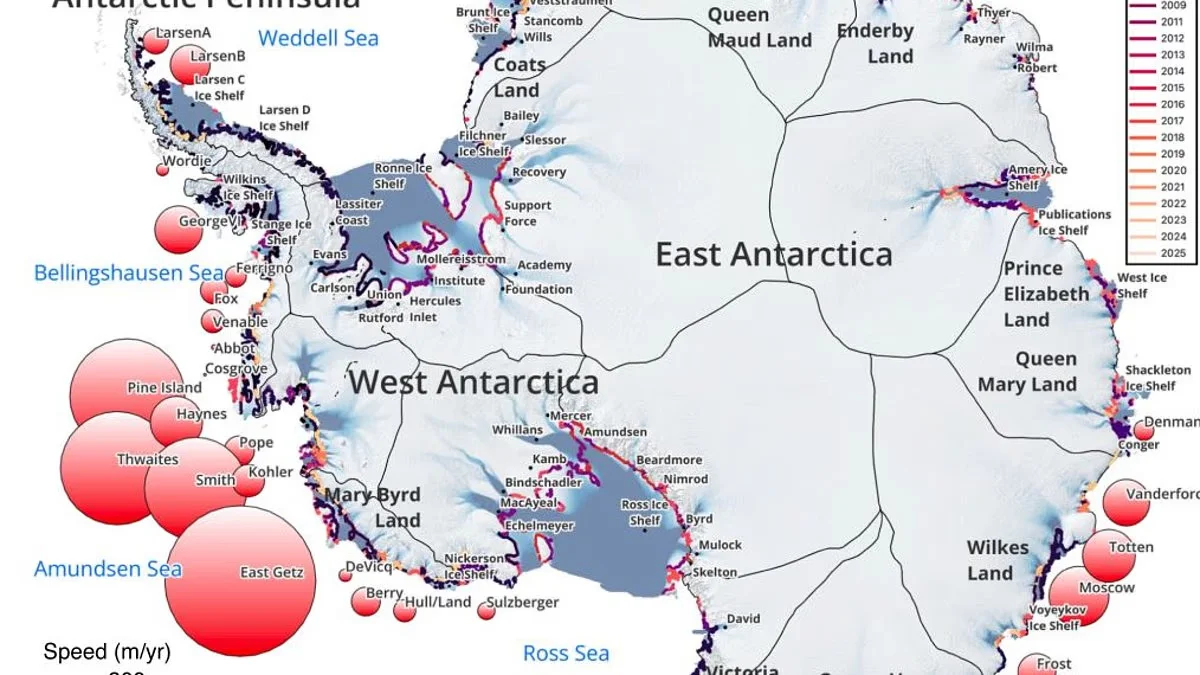
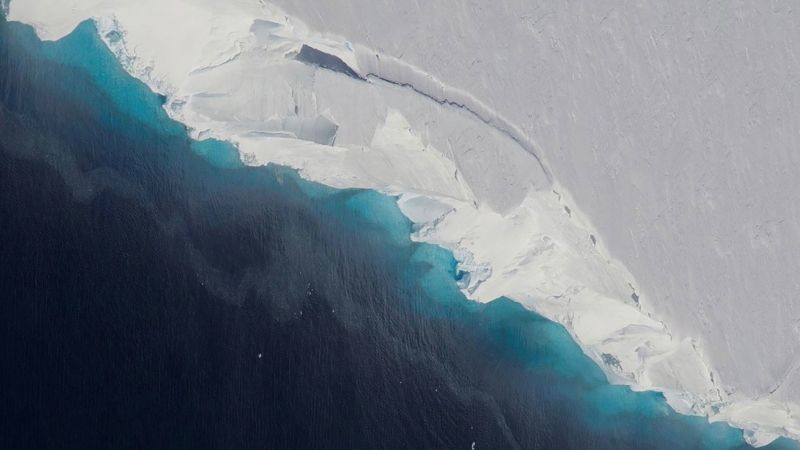
A satellite-based study shows Antarctica has lost ice covering an area eight times the size of Greater London in 30 years, driven by grounding-line migration concentrated in Western Antarctica and select East Antarctic regions. While 77% of the coast shows no grounding-line change since 1996, major glaciers such as Pine Island, Smith, and Thwaites have retreated by tens of kilometres, contributing to sea-level rise and underscoring the uneven nature of ice loss amid warming oceans.
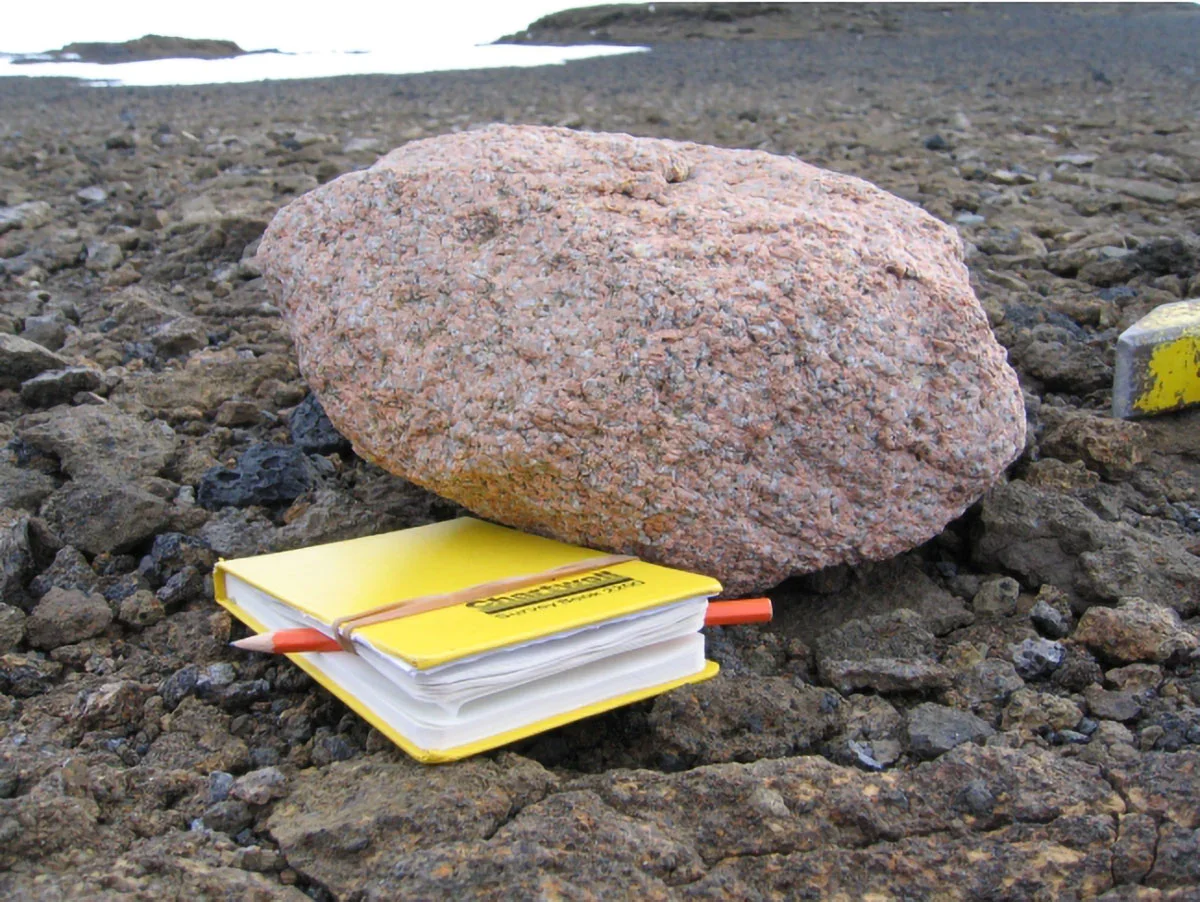
Pink granite boulders high in the Hudson Mountains point to a massive buried granite body beneath Pine Island Glacier. Airborne gravity data map a ~100 km by 7 km subglacial mass dating to ~175 million years ago, offering new insight into past ice flow and helping refine models of Antarctic ice dynamics and sea-level rise.
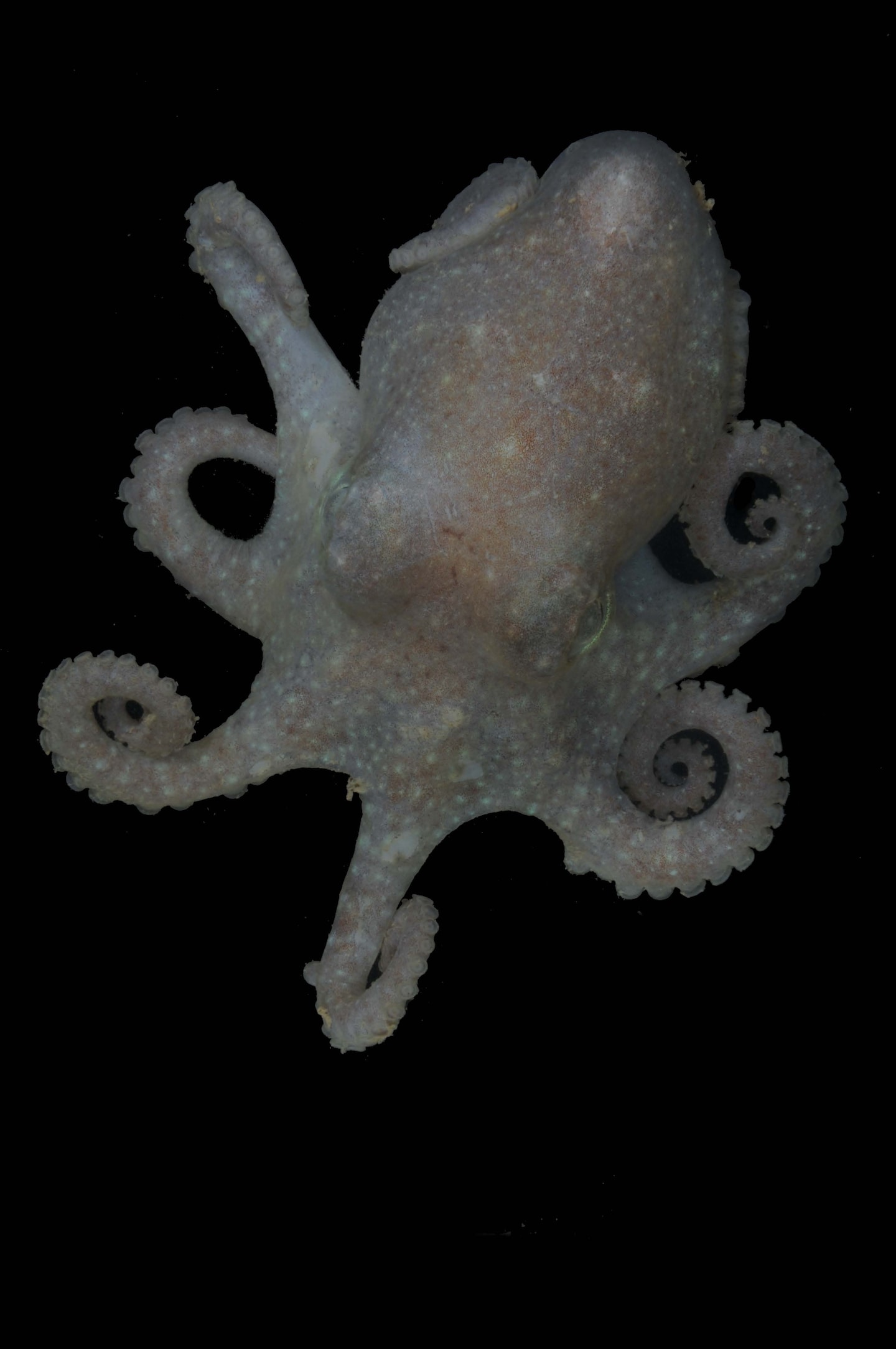
Turquet's octopuses, a species found in the Southern Ocean, have provided new insights into the collapse of the West Antarctic Ice Sheet. Genetic analysis of octopuses from different regions revealed that they were genetically similar despite being physically separated by the ice sheet. This suggests that the octopuses migrated between the seas after the ice sheet melted during the Last Interglacial period, which occurred about 125,000 years ago. The findings raise concerns about the stability of the West Antarctic Ice Sheet in the face of current global warming, as temperatures today are already similar to those during the Last Interglacial period. If the ice sheet were to collapse, it could lead to a significant rise in global sea levels.
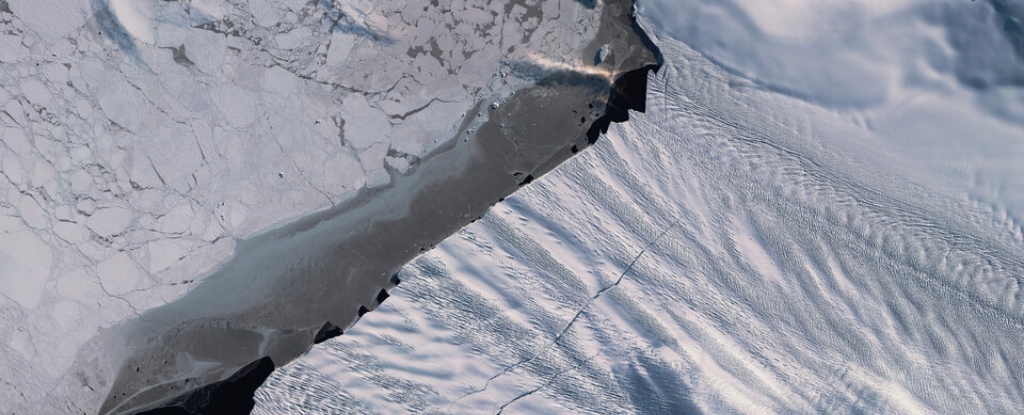
A new study reveals that Pine Island Glacier in West Antarctica experienced irreversible mass loss and retreat starting in the 1940s, triggered by a temporary increase in melting under its floating ice shelf. This accelerated retreat continued until the 1990s when the grounding line reached a shallow section of bedrock. The study suggests that if there is a significant increase in melting at the base of a glacier's floating ice shelf, it can retreat past a tipping point, making the loss of ice mass irreversible. The findings highlight the potential future collapse of West Antarctica and its implications for global sea level rise.
Rapid melting of West Antarctica's ice shelves is now considered unavoidable due to human-caused global warming, according to a new study. Even if ambitious climate targets are met, substantial ocean warming and ice shelf melting will occur. Ice shelves act as a defense against sea level rise, and their loss could have devastating consequences. The study found that even limiting temperature rise to 1.5 degrees Celsius would still result in three times the historical rate of ocean warming. The collapse of the West Antarctic ice sheet could raise sea levels by over 17 feet, impacting coastal communities worldwide. While the study focused on ice shelf melting, it is expected to contribute to increased sea level rise. The only way to halt rapid ice melting would be to reduce planet-heating pollution and remove existing emissions, which poses a significant challenge. While some caution is advised, the study's conclusions align with previous research and should be considered by policymakers. Despite the dire outlook, efforts to reduce fossil fuel emissions remain crucial to mitigate the impacts of climate change.
Scientists are studying the effects of climate change on the melting of ice in West Antarctica to determine how fast sea levels will rise, which is a major concern for cities like Galveston, Texas, that are experiencing some of the fastest sea level rise in the world.