Tag

Water Splitting

All articles tagged with #water splitting

science-and-technology1 year ago

"Nano-Confinement: A Breakthrough in Hydrogen Production"

Researchers at Lawrence Livermore National Laboratory have discovered that nano-confinement can significantly enhance hydrogen production efficiency by altering water reactivity and proton transfer mechanisms. Using advanced molecular dynamics simulations, they found that confining water in nanopores smaller than 0.5 nanometers reduces activation energy for proton transport, suggesting new strategies for improving electrocatalyst performance and durability.
science-and-technology1 year ago

"Solar-Powered Hydrogen Production from Water: A Breakthrough in Renewable Energy"

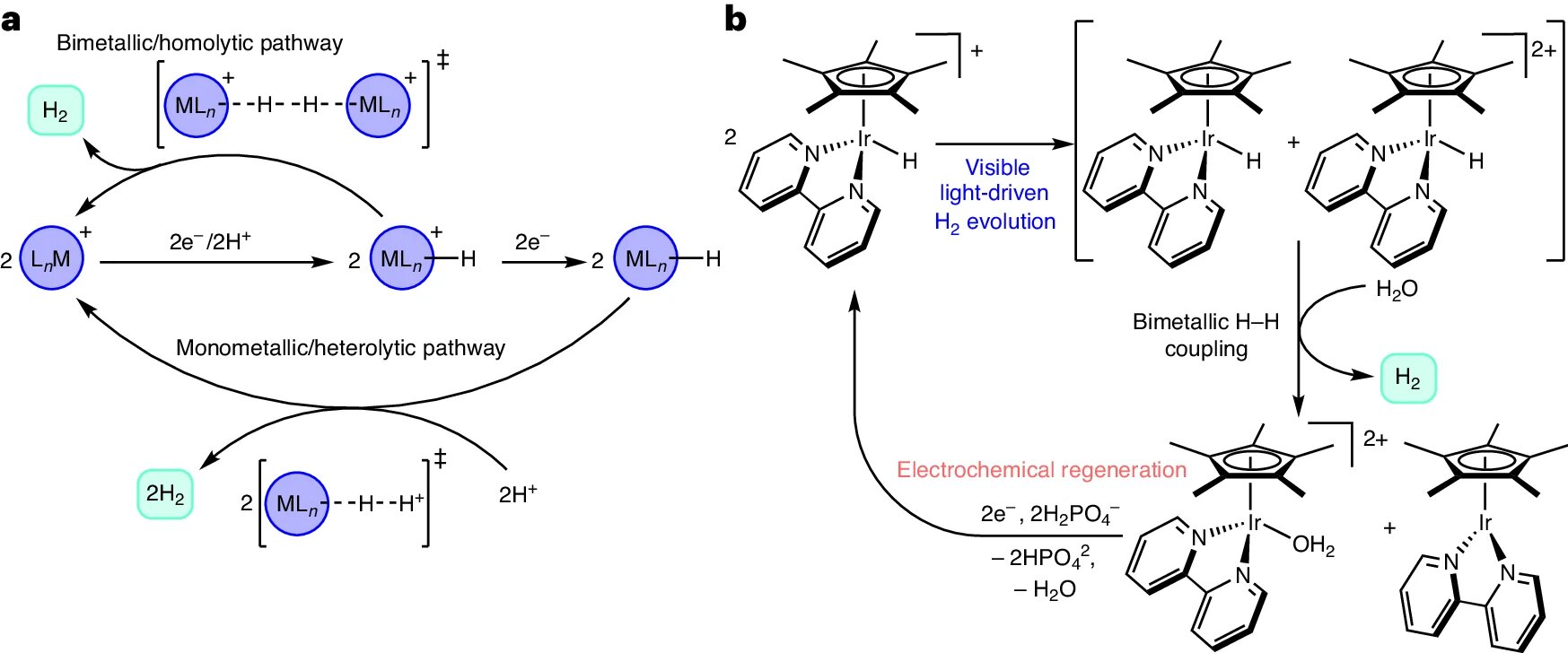
Researchers at the University of North Carolina at Chapel Hill have developed a method to use sunlight and electricity to split water into hydrogen and oxygen, potentially providing a clean energy source. The study, published in Nature Chemistry, explores a system that induces catalysts to self-assemble into globules, improving their ability to absorb light and produce hydrogen. This research could lead to the development of efficient and sustainable energy technologies, addressing the intermittent nature of solar power generation.

science-and-technology2 years ago

Efficient and Affordable Electrocatalyst Produces Clean Hydrogen and Oxygen from Water

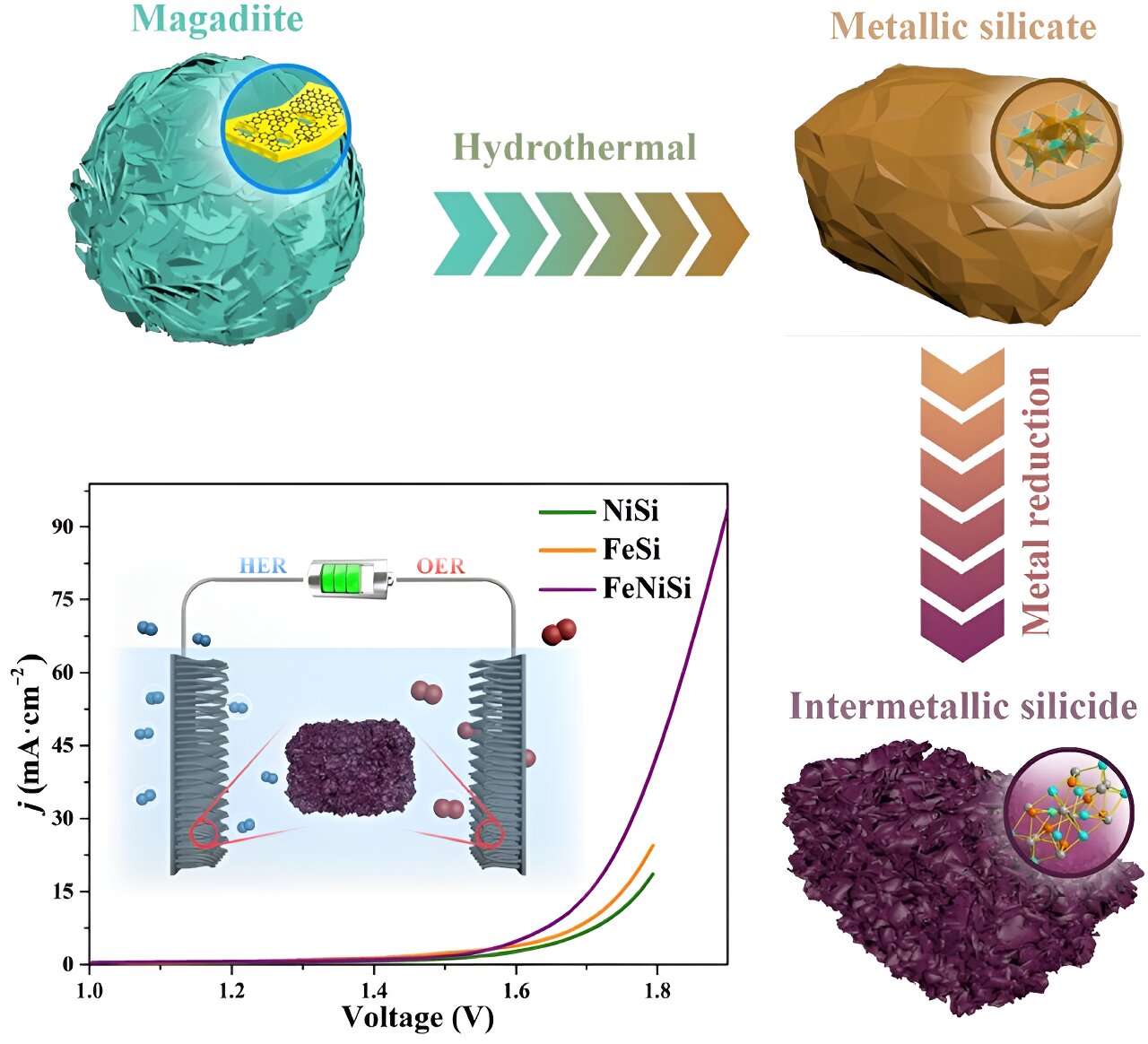
Researchers from Dalian University of Technology in China have developed a durable and inexpensive electrocatalyst made of nickel, iron, and silicon that significantly reduces the energy required to generate clean hydrogen and oxygen from water. The catalyst, known as ferric-nickel silicide (FeNiSi) alloy, is bifunctional, meaning it can efficiently produce both hydrogen and oxygen gas. The manufacturing process involves heating natural clay magadiite with iron chloride and nickel chloride to create a metallic silicate, which is then reduced using magnesium and salt to form the FeNiSi alloy. The electrocatalyst demonstrated promising performance and durability, offering new opportunities for renewable energy conversion.

science-and-technology2 years ago

"Revolutionary Electrolysis Catalyst Unleashes Clean Energy Potential"

Researchers at City University of Hong Kong have developed a highly efficient electrocatalyst using transition-metal dichalcogenide (TMD) nanosheets with unconventional crystal phases as supports. The electrocatalyst enhances the generation of hydrogen through electrochemical water splitting, offering great potential for the clean energy industry. The team's findings, published in the journal Nature, demonstrate the superior activity and stability of the electrocatalyst in acidic media, making it a promising candidate for replacing fossil fuels and reducing environmental pollution.

science2 years ago

"Revolutionary Breakthrough: Chemists Unveil Game-Changing Method to Effortlessly Split Water for Hydrogen Production"

German chemists from Münster University have developed a new photocatalytic method to split water using light energy, simplifying the production of hydrogen. This breakthrough could have significant implications for various fields, including chemistry and the synthesis of compounds from simpler materials.

science-and-technology2 years ago

"Breakthrough Catalyst Lowers Energy for Hydrogen Gas Extraction from Water"

A team of chemical engineers has developed a new catalyst, carbon compound nickel-iron-molybdenum-phosphide anchored on nickel foam (NiFeMo-P-C), that significantly reduces the energy required for the electrolysis of water to produce hydrogen and oxygen. The catalyst, which is cost-efficient and easily manufactured, lowers the activation energy of both the hydrogen evolution reaction (HER) and oxygen evolution reaction (OER), making clean hydrogen production more commercially viable. The NiFeMo-P-C catalyst demonstrates excellent catalytic performance and durability, making it a promising candidate for large-scale hydrogen production.

science-and-technology2 years ago

Revolutionary Water Splitting Method Simplifies Hydrogen Production

German chemists have discovered a new process of water splitting that allows for easier production of hydrogen. The breakthrough method involves a photocatalytic process using triaryl phosphines, which activate water in a reaction accelerated by light energy. This discovery could lead to advancements in chemistry, including the synthesis of compounds using hydrogen atoms. The ease of hydrogen production is significant as it is considered a potential energy solution for the future and plays an active role in the formation of essential compounds. The research findings open up possibilities for applications in material sciences, agriculture, and pharmaceutical research.

science-and-technology2 years ago

Advancements in Water Splitting: Efficient Catalysts and Spectral Microscopy

Chemists from Münster University have developed a new photocatalytic process using triaryl phosphines to activate water, making hydrogen production easier. This innovative approach utilizes light energy to drive the reaction and shows potential for exploring new chemical processes using hydrogen atoms in synthesis. The process involves the activation of water through a phosphine-water radical cation, allowing for the easy splitting of hydrogen atoms and their transfer to other compounds. This research opens up possibilities for investigating unresearched chemical processes and has implications for pharmaceutical research, the agrochemical industry, and materials sciences.

science-and-technology2 years ago

"Unlocking the Potential: Advancements in Chemical Cages for Enhanced Hydrogen Fuel Cells"

A new membrane material has been developed that can efficiently transport protons, generating electricity in hydrogen-powered fuel cells, while also catalyzing the production of hydrogen by splitting water. This material holds promise for advancing the use of hydrogen as a clean energy source in various applications, including trams and vehicles.