A new column features conversations over drinks with influential figures, starting with Joe Nocera and Andrew Ross Sorkin discussing Sorkin's book on the 1929 Wall Street crash, with their meeting location changing from the Plaza Hotel to the Sherry-Netherland for a more dramatic setting.

Major U.S. banks like JPMorgan Chase, Goldman Sachs, and Wells Fargo reported strong quarterly earnings, driven by resilient economic conditions despite trade uncertainties, with JPMorgan Chase's profits up 12% year-over-year to $14.4 billion.
Bitcoin's derivatives market is experiencing unprecedented activity, indicating market maturity with increased institutional involvement and potentially steadier price movements. Despite lower volatility, historical patterns suggest a possible rally in 2025, driven by veteran holders and cyclical trends following halving events.
Wendell Potter, a former VP of corporate communications at Cigna, critiques the health insurance industry's focus on profit over patient care, highlighting how companies like UnitedHealth and Cigna prioritize shareholder returns through lobbying and deceptive PR. He argues that the industry's practices, including the promotion of high-deductible health plans, have created barriers to care and contributed to public dissatisfaction. Potter, now a whistleblower, emphasizes the detrimental impact of Wall Street's profit demands on healthcare, urging reform as public outrage grows.
Social Security advocates are raising concerns after former President Donald Trump appointed a Wall Street executive to lead the Social Security Administration (SSA). Critics argue that this move could undermine the agency's mission to serve the public, fearing that a leader with a Wall Street background may prioritize financial interests over the needs of beneficiaries.
Wall Street firms are spending substantial amounts on security for their CEOs, in addition to their high compensation packages. For instance, JPMorgan Chase spent $523,271 on Jamie Dimon's security, while BlackRock spent $780,350 on Larry Fink's security. Blackstone's security expenses for Stephen Schwarzman reached $4,579,444. These costs are justified by the firms as necessary due to the high-profile nature of the CEOs' roles and associated risks.
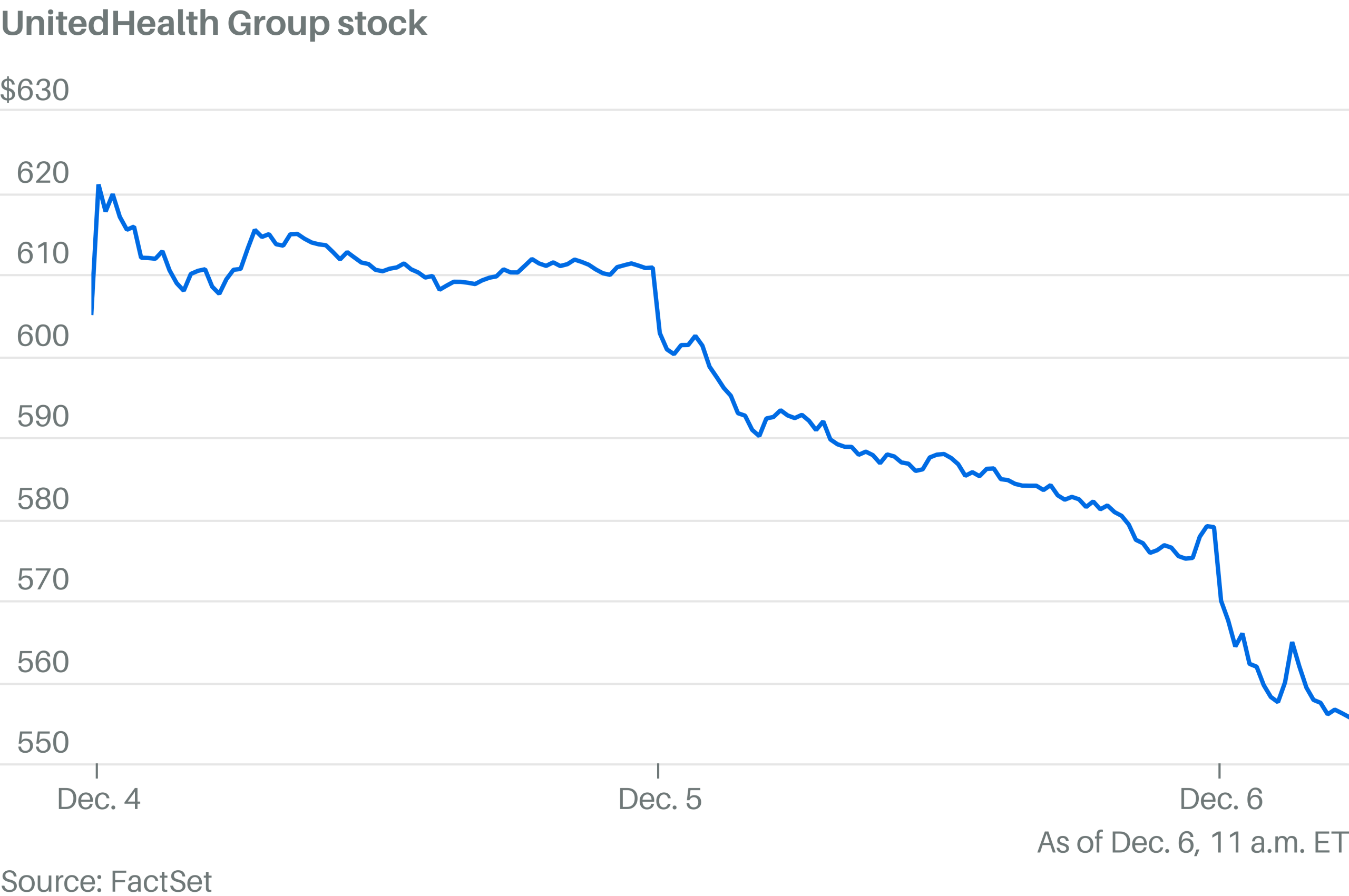
The Dow Jones Industrial Average is falling while the S&P 500 and Nasdaq Composite are rising, primarily due to a significant drop in UnitedHealth Group shares. UnitedHealth's stock, which is heavily weighted in the Dow due to its high price, fell 5% following the murder of its insurance unit CEO, Brian Thompson. This incident has sparked social media backlash over claims denial practices, contributing to the stock's decline and impacting the Dow's performance.
The SEC has approved 24X National Exchange to operate nearly 24-hour trading sessions, five days a week, marking the first US stock exchange to offer such extended hours. Backed by Steve Cohen's Point72 Ventures, the exchange aims to provide more flexibility for investors to respond to news outside traditional market hours. However, the move has sparked debate, with critics like Better Markets warning that lower trading volumes during overnight sessions could lead to more volatile and less favorable pricing for retail investors.
Snowflake and Elastic received upgrades from Wedbush analyst Daniel Ives, who highlighted the growing importance of software in the AI sector. Ives raised his ratings for both companies to outperform, citing their potential to capitalize on AI use cases. Snowflake is expected to benefit significantly over the next 12 to 18 months, while Elastic is poised to leverage its platform approach amid rising AI demand. The upgrades reflect a broader shift in focus from hardware to software in the AI industry, with new price targets set for both companies.
Stock futures fell slightly on Thursday evening, but Wall Street is on track for a positive week, with the Nasdaq Composite leading gains. The Dow Jones rose 1.06% on Thursday, while the S&P 500 and Nasdaq saw smaller increases. Nvidia's strong earnings contributed to market optimism, while Gap's shares surged after beating earnings estimates. Texas Pacific Land is set to join the S&P 500, replacing Marathon Oil. Investors are also watching bitcoin's approach to the $100,000 milestone.
Netflix's stock price targets were raised by several Wall Street analysts following the success of its live streaming of the Jake Paul vs. Mike Tyson boxing match, which attracted over 60 million viewers. Analysts see this as a significant step in Netflix's live events strategy, potentially drawing advertising revenue away from traditional TV. Netflix plans to expand its live content offerings, including NFL games and WWE events, which are expected to drive ad revenue growth by 2026.
Wall Street is closely watching the battle for Treasury Secretary in Trump's administration, as it may signal whether Trump's aggressive tariff plans will be implemented. While some view his tariff threats as a negotiation tactic, the selection of a Treasury Secretary committed to these tariffs could impact the stock market. Elon Musk's endorsement of Howard Lutnick over Scott Bessent for the role has shifted prediction markets, with Lutnick's odds rising. Higher tariffs could lead to a significant stock selloff, raising concerns among investors.
With Donald Trump set to return to the White House in 2025, Wall Street anticipates a pro-growth, deregulation-focused agenda that could benefit tech and software companies. KeyBanc highlights three tech stocks poised for growth: Workday, Atlassian Corporation, and Aspen Technology. These companies are expected to thrive due to potential lower corporate taxes and reduced regulatory barriers, making them attractive investment opportunities. Workday and Atlassian have shown strong financial performance, while Aspen Technology is focusing on long-term revenue growth despite recent earnings misses.
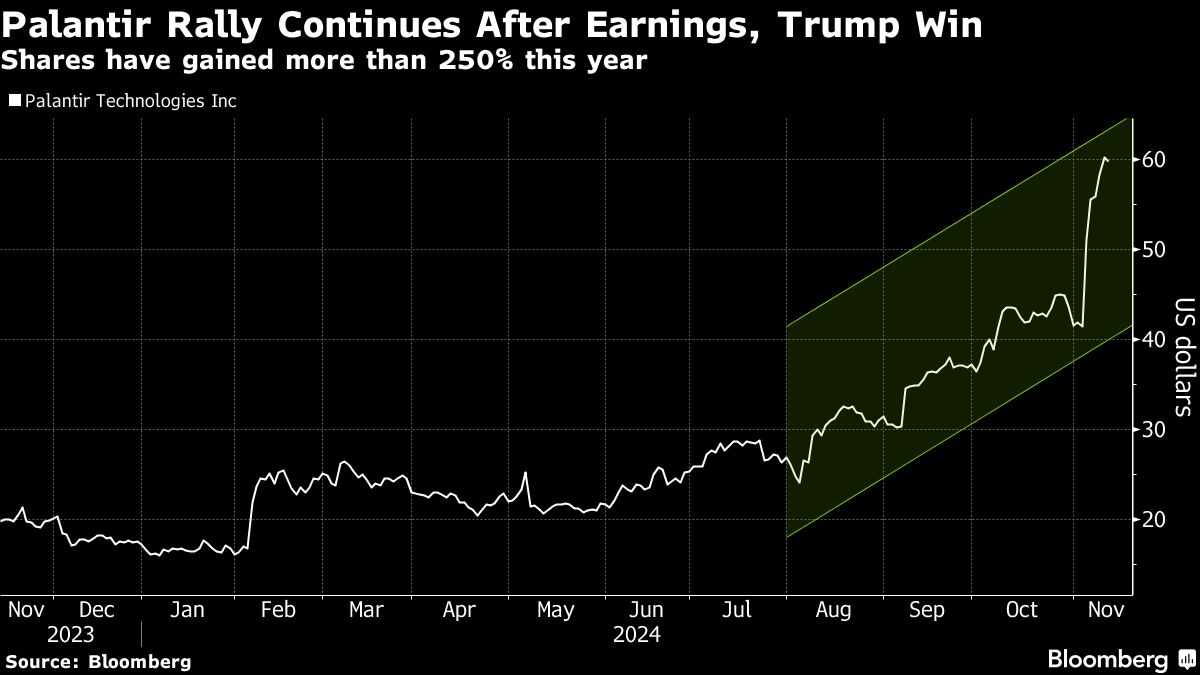
Palantir Technologies' stock has surged over 250% this year, defying skeptical analysts who question its high valuation and revenue growth sustainability. Despite recent earnings beats and potential boosts from a Trump administration AI push, the stock's valuation is seen as unsustainable by some analysts, leading to downgrades. Palantir's shares trade at a significant premium compared to other tech stocks, and analysts warn that its growth expectations may not align with its current market price.
Palantir Technologies, a data analytics software company, has seen a 488% increase in its stock price since its IPO in 2020, driven by its AI platform and strategic partnerships. Despite past challenges, analysts Dan Ives and Mariana Perez Mora are optimistic about its future, setting high price targets. Palantir's unique lead generation strategy and growing presence in both the private sector and U.S. military AI efforts suggest continued growth potential, although its stock is currently considered expensive.