The article promotes a daily vocabulary quiz hosted by Slate, encouraging readers to test their wits, compare scores, and compete with friends, with no specific mention of winklepickers or related body parts.
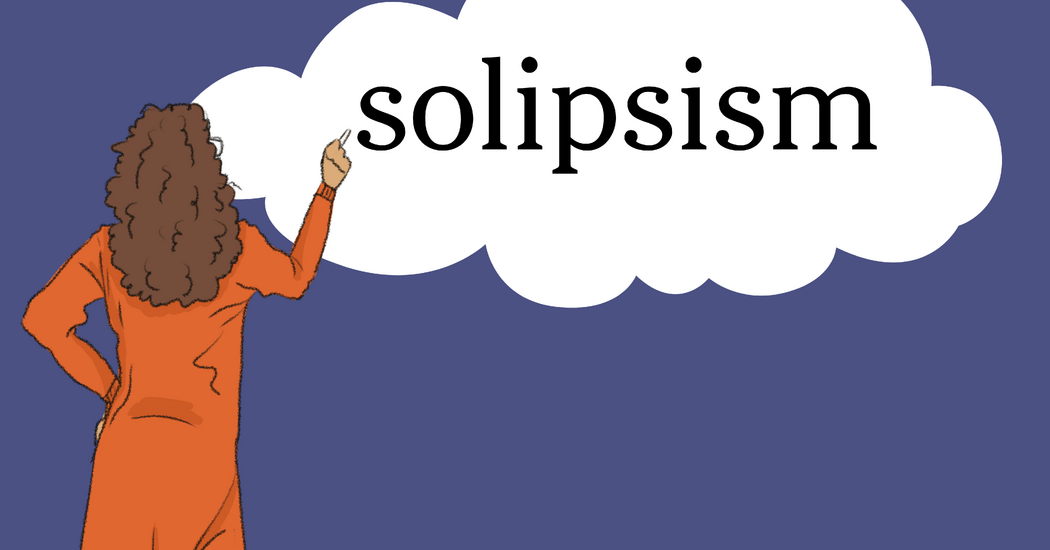
The article explains the meaning of 'solipsism,' a philosophical concept that suggests only one's own mind is sure to exist, and highlights its usage in recent NYTimes articles, encouraging readers to use the word creatively in sentences.
The New York Times' Spelling Bee forum provides hints and discussions for the January 6, 2024 puzzle. The puzzle features a grid with the center letter 'r' and surrounding letters 'b', 'c', 'i', 'o', 'p', and 't'. There are 39 words to find, totaling 147 points, including one pangram. The forum also includes a glossary for common terms used in Spelling Bee discussions, assisting players who might feel stuck on today's challenge.
Lake Superior State University has released its 2024 Banished Words List, a tradition that targets overused, misused, or meaningless words and phrases. This year's list includes terms like "pivot," "hack," "impact," "at the end of the day," "rizz," "slay," "iconic," "cringe-worthy," "obsessed," "side hustle," and "wait for it." The list, which began in 1975, is meant to encourage reflection on language use and provide a humorous take on the evolving English lexicon.
As we age, our ability to retrieve words may slow down, but it doesn't necessarily indicate Alzheimer's. Tips to combat this include going through the alphabet, using word games, and incorporating less frequently used words in daily conversation. In terms of sex life in long-married couples in their 40s/50s, it varies, with some having sex once or twice a week, others two or three times a month, and some in a "sexless" marriage. Ultimately, what is satisfying for both partners defines a normal sex life.
The Oxford Word of the Year for 2023 is "rizz," derived from "charisma," and refers to a person's ability to attract a romantic partner through style, charm, or attractiveness. The word gained popularity after Spider-Man actor Tom Holland mentioned it in an interview. The other finalists for the word of the year were "prompt," "situationship," and "Swiftie."
Former Attorney General Bill Barr criticized Donald Trump's limited verbal skills, mocking his repetitive use of the word "very." Barr stated that Trump's adjectives are unfamiliar to him and often spill out uncontrollably, making him undisciplined in his speech. Barr also referred to Trump as a "very petty man" and suggested that he is running for president again out of retribution.
Slate has introduced a daily quiz where participants can test their knowledge and compare their scores with others. Today's topic is vocabulary, and players can compete to see who is the brainiest.
The Spelling Bee puzzle for Wednesday, June 7, 2023, has been released, with a total of 66 words and two pangrams. The center letter is "m," and the highest-scoring word is worth 11 points. A glossary of Spelling Bee terms is available for those who need it, and readers can check out Deb Amlen's weekly column for more Spelling Bee conversation.
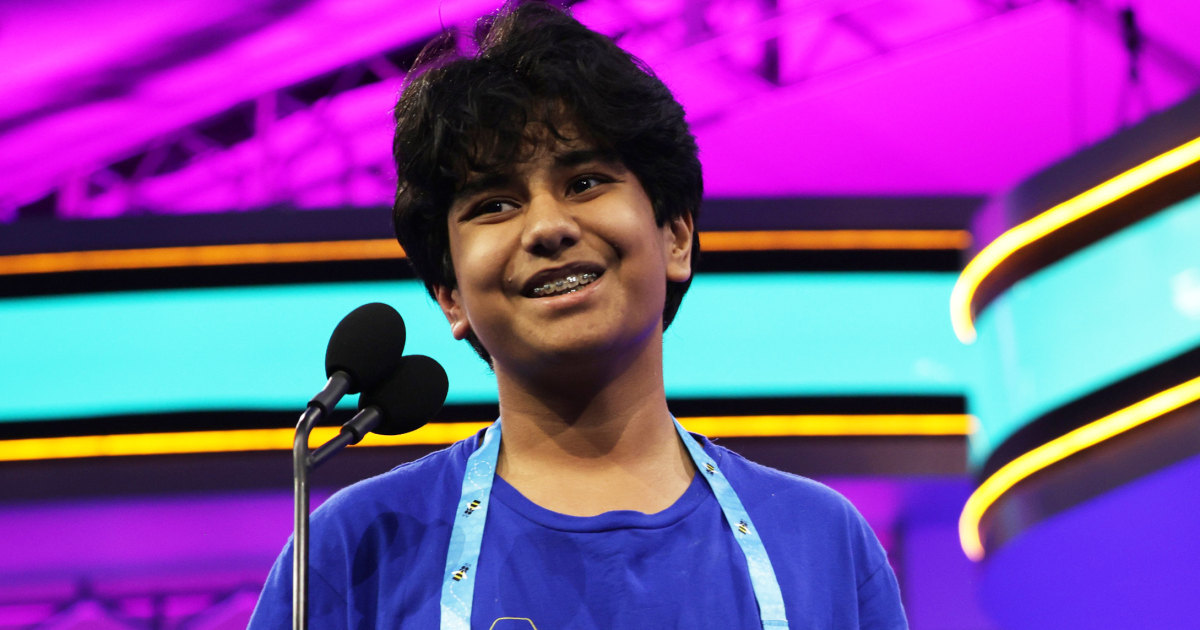
Dev Shah, an eighth-grader from Florida, won the Scripps National Spelling Bee and $50,000 after correctly spelling "psammophile," a plant or animal that prefers or thrives in sandy areas. He outlasted 228 other competitors, including 10 finalists, and studied 10 hours each day for the past year. The competition has become more difficult in the last two years, as its organizers have added new rules to challenge the spellers and to avoid a repeat of 2019, which ended with an eight-way tie after four hours that exhausted the bee’s list of challenging words.
Dev Shah, a 14-year-old from Largo, Florida, won the Scripps National Spelling Bee with the word "psammophile." Dev, who first competed in the national bee in 2019, is the 22nd champion in the past 24 years with South Asian heritage. He won more than $50,000 in cash and prizes. The bee, which began in 1925 and is open to students through the eighth grade, had 229 kids onstage as it began. The finalists demonstrated an impressive depth of knowledge as they worked their way through a sometimes diabolical word list chosen by Scripps' 21-person word panel.
The Scripps National Spelling Bee's word selection panel, consisting of 21 panelists, spends a year assembling a word list that will challenge but not embarrass the 230 middle- and elementary-school-aged competitors and preferably produce a champion within the two-hour broadcast window for Thursday night's finals. The panelists' work has changed over the decades, and they now use Merriam-Webster's Unabridged dictionary to pick words. The panel also began pulling words avoided in the past, and as long as a word isn't archaic or obsolete, it's fair game. The panel's chief goal is to make the competition as fair as possible.
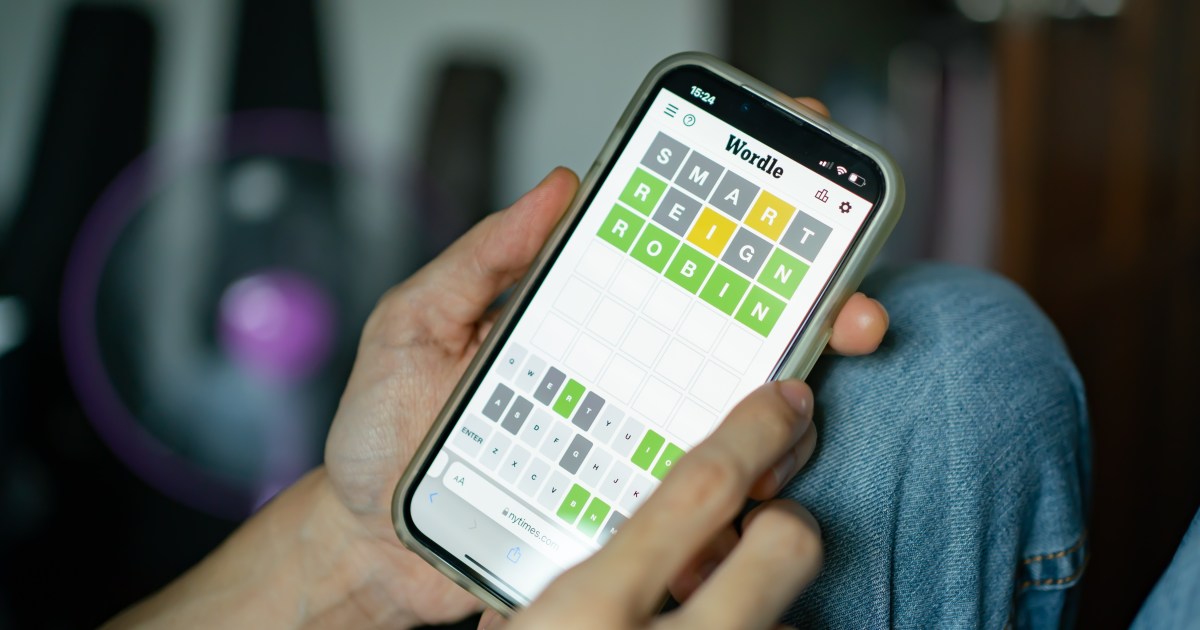
Digital Trends provides the answer and hints for Wordle #674, a popular vocabulary puzzle game where players have six tries to guess a five-letter word. Today's answer is "DITTO," which means the same as or a repetition of what has just been mentioned or written. The hints for today's Wordle include that it ends with a vowel, uses the same consonant twice, and is often used instead of "same." The article also provides tips for playing Wordle and suggests similar games to try.
The Spelling Bee forum provides assistance to those who are stuck on the puzzle. The grid generator shows that there are 60 words, 1 pangram, and a bingo. The forum also includes a glossary of terms related to the Spelling Bee and a weekly humor column called "Diary of a Spelling Bee Fanatic" by Deb Amlen.
Children with larger vocabularies look directly and quickly toward an object when learning new words, while those with smaller vocabularies look back and forth between objects and have a slower response time. Researchers say that their findings could help identify children with delays in language development at an earlier stage, allowing for earlier support to build their vocabulary before starting school. The study involved 66 children aged between 17 and 31 months and found that children who can say more words quickly looked towards objects that were the same shape as a named object.