Tag

Visible Light

All articles tagged with #visible light

science-and-technology1 year ago

"Advancements in Femtosecond Fiber Oscillators: Unlocking Laser Science"

Researchers at Xiamen University have developed a visible-light mode-locked femtosecond fiber oscillator and amplifier, representing a significant advancement in laser science. The oscillator emits red light at 635 nm and achieves femtosecond mode-locking using a visible-wavelength phase-biased nonlinear amplifying loop mirror (PB-NALM). This innovation is expected to pave the way for high-power femtosecond fiber lasers in the visible spectral region, with potential applications in industrial processing, biomedicine, and scientific research.

space2 years ago

Hubble vs. Webb: A Galaxy in Dual Perspectives

Astronomers use multiple space telescopes like Hubble and the James Webb Space Telescope for different purposes. Hubble operates in visible light, while Webb operates in infrared, allowing them to see different aspects of the same objects. A comparison of images from both telescopes shows the galaxy NGC 3256 in different wavelengths. Webb's infrared view reveals the tendrils of dust and gas forming the galaxy's arms, as well as hotbeds of star formation. In contrast, Hubble's visible light image shows the galaxy's two centers resulting from a merger of two galaxies.

astronomy2 years ago

BlackGEM Telescopes and LIGO Join Forces in Gravitational Wave Hunt

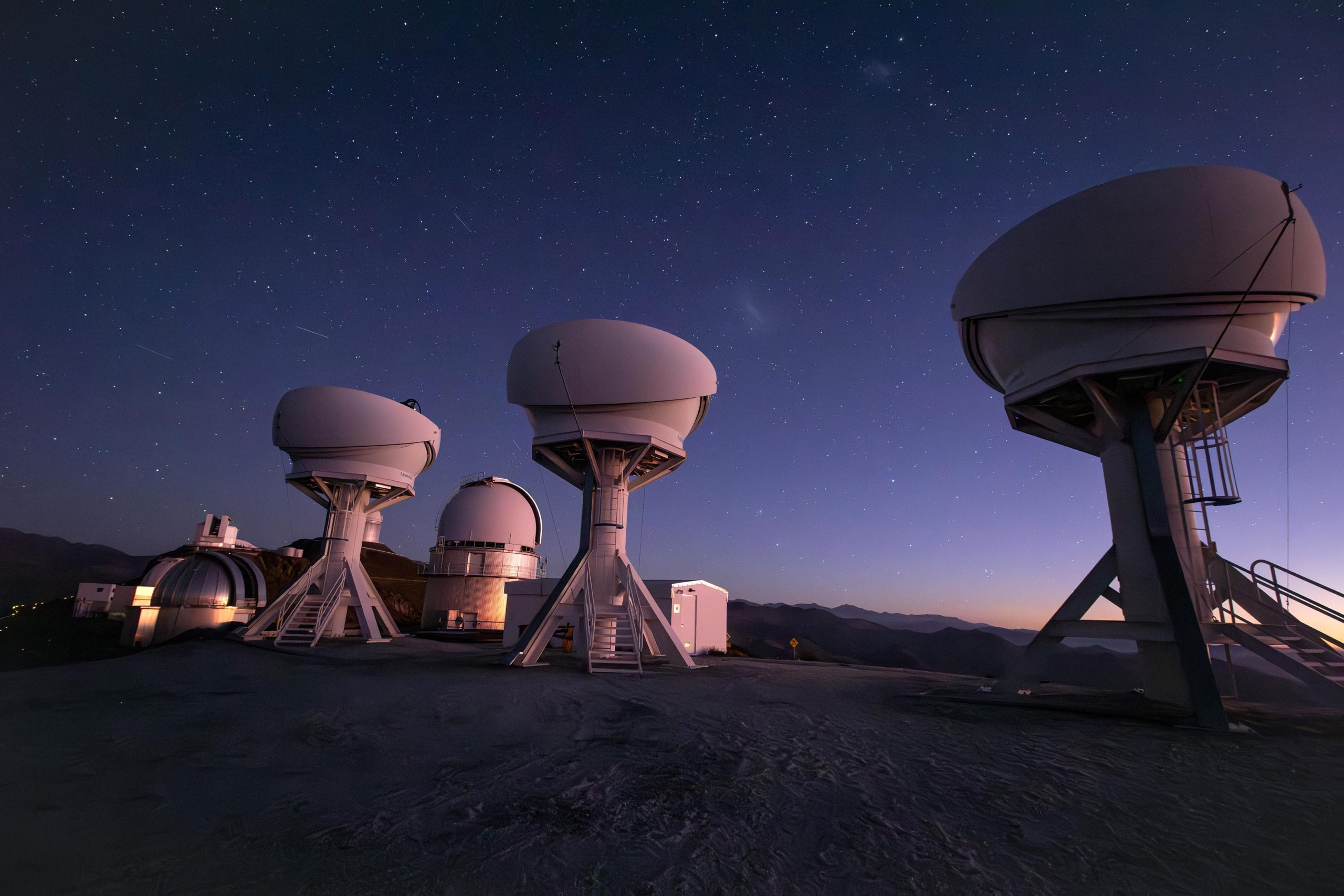
The BlackGEM array, consisting of three new telescopes located at the European Southern Observatory’s (ESO) La Silla Observatory, has begun operations to detect gravitational waves caused by cosmic events like black hole and neutron star mergers. Unlike detectors such as LIGO and the Virgo Interferometer, BlackGEM can precisely locate these astronomical phenomena using visible light, enhancing our understanding of their processes, including the formation of heavy elements like gold and platinum.

science-and-technology2 years ago

Visible Light and AI: Identifying Organic Molecules

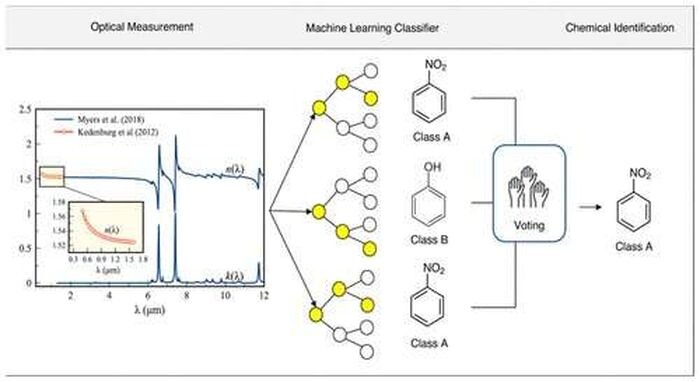
Researchers have developed a method to identify organic compounds using machine learning and the refractive index at a single optical wavelength. The technique could have applications for automated chemical analysis that is cheaper, safer and requires less expertise to operate. The machine learning was trained on a publicly available database of past optical experiments with published data from scientific literature dating back to 1940. The researchers achieved molecular classification testing accuracies in the visible regions better than 98%.