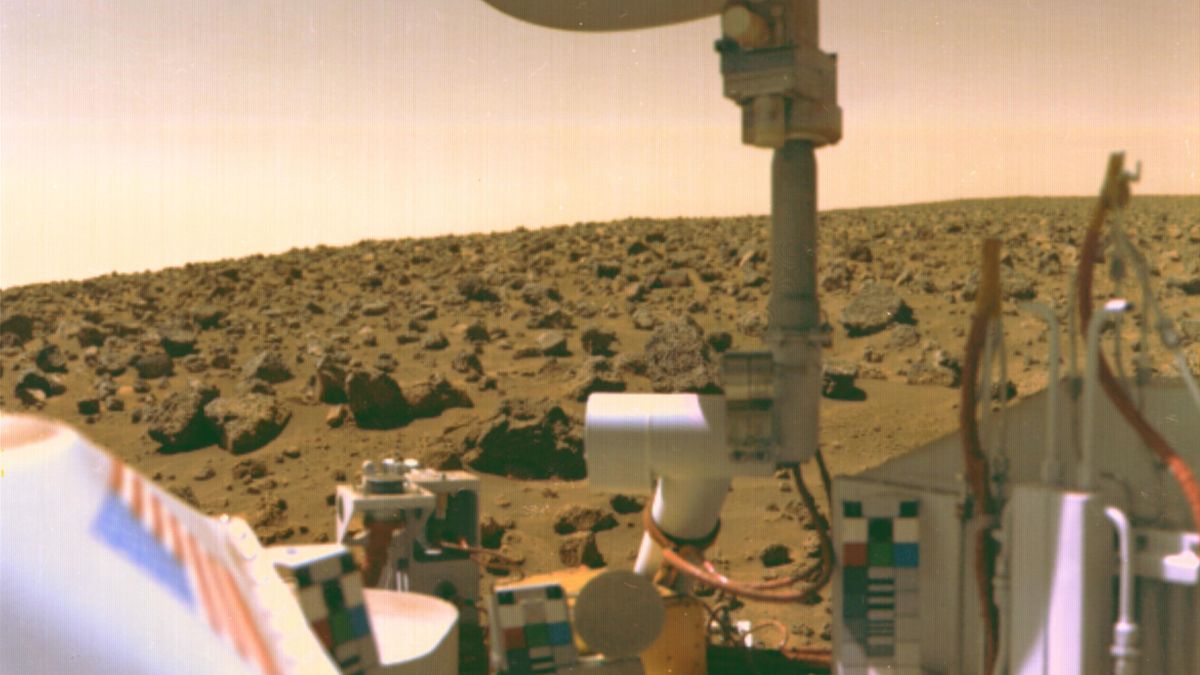
Astrobiologist Dirk Schulze-Makuch suggests that NASA's Viking landers, which conducted experiments on Mars in 1976, may have inadvertently destroyed Martian microbes by adding water to soil samples, potentially overwhelming life forms adapted to Mars's arid conditions. This theory raises the possibility that life on Mars was present but eradicated before detection, prompting calls for more cautious future missions to avoid harming potential extraterrestrial life.
Astrobiologist Dirk Schulze-Makuch suggests that experiments conducted by NASA's Viking landers in the 1970s may have inadvertently destroyed potential evidence of life on Mars. The methods used, such as heating samples and adding water, could have been harmful to any dry-adapted Martian microbes. Schulze-Makuch advocates for future missions to consider Mars' unique ecology and to focus on detecting life that thrives in dry conditions, potentially using hydrated and hygroscopic compounds as indicators.
Astrobiologist Dirk Schulze-Makuch suggests that NASA's Viking landers may have inadvertently killed potential Martian life by using water-based experiments, which could have been harmful to any life forms adapted to Mars' hyperarid conditions. He proposes that future missions should adopt a "follow the salts" strategy instead of the traditional "follow the water" approach, as Martian organisms might extract moisture from the atmosphere through salts, similar to extremophiles in Earth's Atacama Desert.
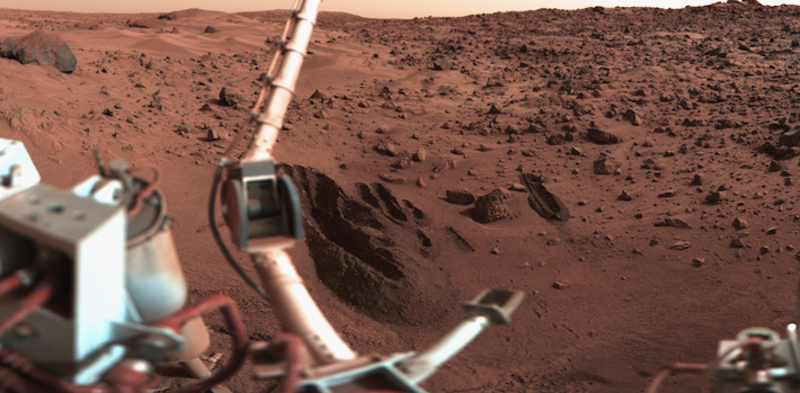
Astrobiologist Dirk Schulze-Makuch suggests that NASA's Viking landers may have inadvertently destroyed microbial life on Mars during their missions in 1976. His hypothesis has sparked controversy and reignited debates about the scientific process of searching for extraterrestrial life. The Viking landers conducted several experiments to investigate the Martian landscape for signs of life, including gas chromatography, labeled release, pyrolytic release, and gas exchange experiments.
The Viking 1 and 2 landers, which analyzed Martian soil for microbial life in the 1970s and 1980s, yielded inconclusive results. While some experiments suggested the presence of microorganisms, the lack of abundant organic material in the soil led scientists to dismiss the positive results as erroneous. However, a new theory suggests that the soil tests may have accidentally destroyed the microbes. Recent missions, such as Curiosity and Perseverance, have confirmed the presence of organics on Mars, which were previously thought to be contaminants. The addition of water to the soil samples may have drowned the dormant microbes, and it is speculated that Martian microbes could use hygroscopicity to absorb water directly from the atmosphere. Another possibility is that Martian microbes contain hydrogen peroxide, which could explain the puzzling Viking results. The intense heat from the analysis process may have killed the microbes, and the hydrogen peroxide could have reacted with organic compounds, producing carbon dioxide. The debate over whether the Viking landers found life on Mars continues, but the results provide valuable insights for future life-detection missions.