
"Uncovering the Mystery: The Potential Existence of Life on Mars and its Mysterious Disappearance"
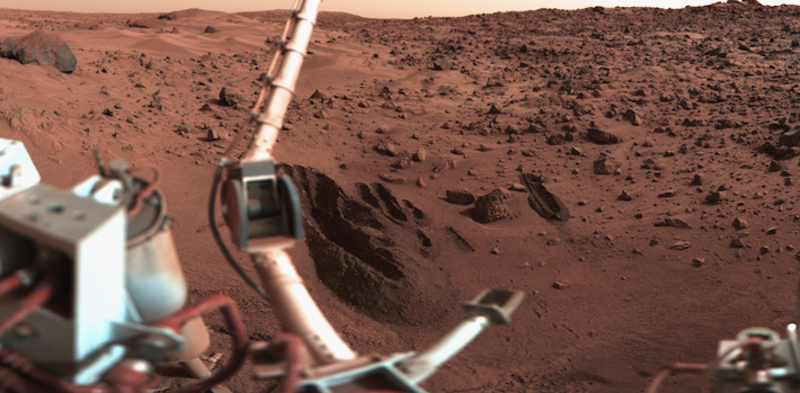
The Viking 1 and 2 landers, which analyzed Martian soil for microbial life in the 1970s and 1980s, yielded inconclusive results. While some experiments suggested the presence of microorganisms, the lack of abundant organic material in the soil led scientists to dismiss the positive results as erroneous. However, a new theory suggests that the soil tests may have accidentally destroyed the microbes. Recent missions, such as Curiosity and Perseverance, have confirmed the presence of organics on Mars, which were previously thought to be contaminants. The addition of water to the soil samples may have drowned the dormant microbes, and it is speculated that Martian microbes could use hygroscopicity to absorb water directly from the atmosphere. Another possibility is that Martian microbes contain hydrogen peroxide, which could explain the puzzling Viking results. The intense heat from the analysis process may have killed the microbes, and the hydrogen peroxide could have reacted with organic compounds, producing carbon dioxide. The debate over whether the Viking landers found life on Mars continues, but the results provide valuable insights for future life-detection missions.
Reading Insights
0
6
7 min
vs 8 min read
88%
1,484 → 178 words
Want the full story? Read the original article
Read on EarthSky