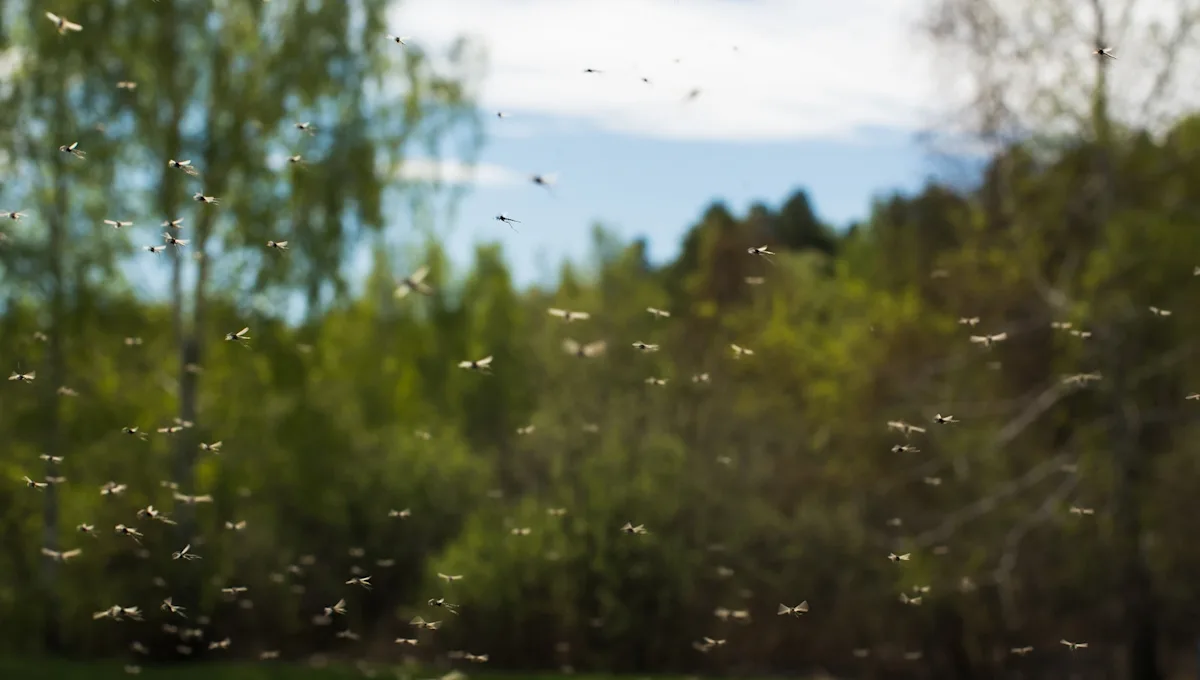
Warmer and wetter weather due to climate change is increasing mosquito populations and altering their behavior, leading to longer mosquito seasons and the emergence of hybrid species that spread deadly diseases like West Nile Virus, raising significant public health concerns.
Health officials in New Jersey have confirmed that ticks carrying Lyme disease are now present in all 21 counties, spreading into suburban and urban areas due to warming temperatures, which increase tick populations and activity seasons. This expansion raises public health concerns, prompting recommendations for personal protection and environmental management, alongside broader efforts to combat climate change to reduce disease risk.
A case of chikungunya in Hong Kong highlights the growing threat of mosquito-borne diseases spreading into new regions due to climate change, with efforts underway to control mosquito populations and prevent further infections.
A US government-funded study warns that climate change could lead to a surge of deadly viruses, ancient diseases like the plague, and new fungal infections due to rising temperatures. Tickborne illnesses, mosquito-borne diseases, and zoonotic diseases are expected to increase as winter temperatures become warmer, allowing disease-carrying insects to survive and spread illness. Cases of diseases like Lyme disease, malaria, and the bubonic plague are already on the rise in the US, with experts urging physicians to maintain a high index of suspicion for diseases on the move. The study also links rising sea levels and extreme events like flooding to the spread of waterborne diseases, and calls for increased surveillance on infectious diseases to stay ahead of climate-related influxes.