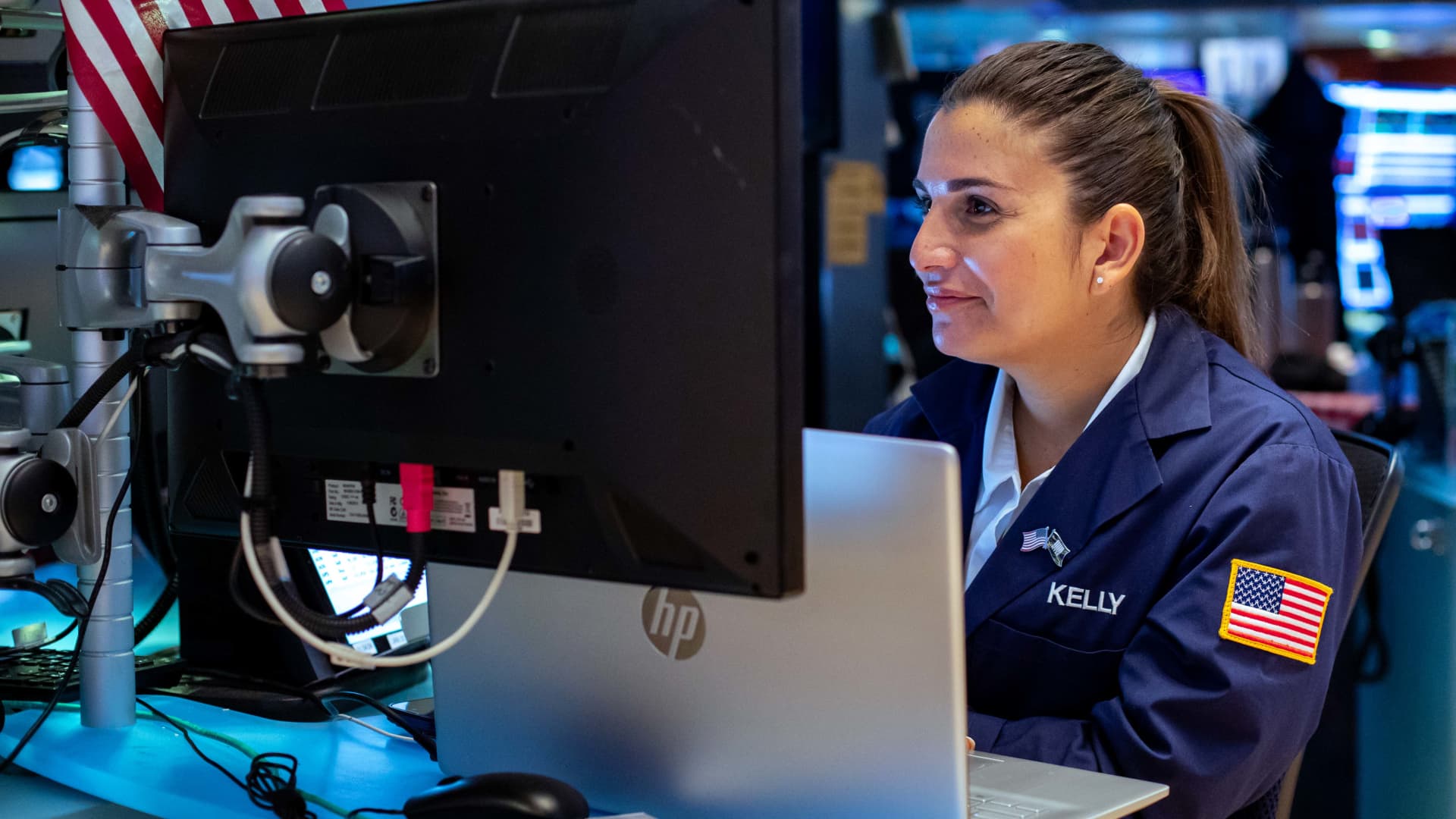
Wall Street CEOs warn of a potential market pullback of over 10% in the next 12 to 24 months, citing high valuations and geopolitical risks, but see such corrections as normal and healthy for market cycles, encouraging investors to stay the course and reassess portfolios.
Perplexity, an AI company with a valuation of $18bn, has made an unsolicited $35bn cash bid for Google Chrome, a move that is unusual since Chrome is not for sale and Google is facing legal challenges that could lead to its divestiture. This reflects the broader trend of inflated valuations and unconventional deal structures in the AI sector, driven by uncertainty over AI's true worth and speculative market dynamics. The AI dealmaking frenzy continues amidst high valuations and complex transactions, but a market correction may be inevitable.
U.S. stocks have declined since August, with warnings from strategists about a potential deeper correction of 7-15% by mid-October, driven by high valuations, seasonal weakness, overbought conditions, and rising market volatility, though the long-term bull market may still be intact.
As the stock market reaches record highs, concerns about a potential bubble are growing due to high valuations and the AI-hype cycle. Economist David Rosenberg highlighted divergences in the market, suggesting an inevitable downturn, while Warren Buffett's favorite valuation signal is nearing records. The 10 most richly valued stocks include companies like Nvidia, MicroStrategy, and Arm Holdings, with price-to-sales ratios indicating potential overvaluation.
As the stock market reaches record highs, concerns about a potential bubble are growing due to stretched valuations and the AI-hype cycle. Economist David Rosenberg and Warren Buffett's favorite valuation signal both suggest a downturn is inevitable. The 10 most richly valued stocks in the market right now, with market valuations of at least $10 billion, based on their price-to-sales ratio, include companies like The Trade Desk, Palantir, Wingstop, Cloudfare, and Crowdstrike.
Some AI stocks, including Nvidia, SoundHound AI, and MicroStrategy, are trading at absurdly high valuations, with investors paying massive premiums for future growth. While Nvidia's impressive revenue growth and profit margin may justify its high valuation, SoundHound AI's unproven profitability and MicroStrategy's flat revenue and operating loss raise concerns about their expensive price tags. Investors should carefully consider the risk and potential before investing in these high-priced AI stocks.
Chief market strategist Matt Orton advises investors to focus on growth opportunities in the stock market despite concerns over high valuations, emphasizing that it's a "stockpicker's market" where idiosyncratic risk is being rewarded. He points out the divergence in performance among the "Magnificent 7" tech stocks and suggests that investors should lean into companies with strong fundamentals while avoiding those without positive earnings inflection. Orton argues that historical comparisons of valuations are irrelevant due to the market's shift towards higher growth, and encourages investors to "find growth" regardless of the valuation multiples.
As the valuations of tech start-ups cool, new hires are being offered fewer shares as part of their compensation packages. This trend reflects the changing dynamics in the tech industry, where companies are adjusting their approach to employee stock options amid market shifts. The adjustment in share offerings could impact the attractiveness of joining tech start-ups for potential employees.
Shaun Rein, founder of the China Market Research Group, believes that valuations of Chinese stocks are "way too low" and investors should cautiously re-enter the market despite concerns about insufficient policy support and deflation. While China has set a GDP target of around 5% for the year, concerns about weak consumer demand and a struggling job market persist. However, Rein sees long-term potential in China's economy and suggests that investors should consider the country for growth opportunities, despite the current economic challenges.
Despite recent record highs, signs indicate that the momentum driving technology stocks is fading, with unprofitable tech companies starting to decline, valuations looking stretched, and options traders showing signs of greed. While the sector remains in an uptrend, a modest pullback is expected, prompting investors to consider buying downside protection for their portfolios.
The surge in investor interest in the 'Magnificent Seven' tech stocks has driven major indexes to record highs, but their rise has left the S&P 500 at its most concentrated in at least the last 100 years, posing risks and spillovers for other assets. While lofty valuations could liken the current tech stock euphoria to the Dotcom bubble of 1999-2000, analysts believe the situation today is different, with proven business models generating substantial free cash flow. However, heightened regulatory scrutiny, geopolitical factors, and the unpredictability of AI pose potential headwinds for these stocks. Despite a recent market decline, the 'Magnificent Seven' members have posted significant gains over the past year, with Nvidia leading the way.
Despite the impact of higher interest rates on dividend stocks, the sell-off presents an opportunity to invest in high-quality dividend stocks like NextEra Energy and Brookfield Infrastructure. NextEra Energy's stock is attractively priced with a 3.3% dividend yield and strong growth prospects, while Brookfield Infrastructure offers a 4.5% dividend yield and strong earnings growth. Both companies are positioned for future growth and trade at low valuations, making them potentially strong investments as interest rates are expected to decline.
Despite the market's all-time highs, some stocks are still attractively priced for long-term investment. In a recent video, Fool.com contributors Matt Frankel and Tyler Crowe discuss two rock-solid businesses to invest in, with Frankel having positions in Realty Income. The Motley Fool has positions in and recommends Realty Income, and Frankel is an affiliate of The Motley Fool, potentially earning compensation for promoting its services.
Despite the frothy valuations in the market, there are still bargains to be found. Ares Capital, Energy Transfer LP, ExxonMobil, PayPal Holdings, and Pfizer are all considered dirt cheap with low forward earnings multiples and attractive dividend yields. These stocks offer potential for value investors and income seekers, presenting opportunities for long-term growth and income generation.
Maybank predicts a potential turnaround for Southeast Asia markets in 2024 due to cheap valuations and expected high economic growth, despite a 3% decline in the MSCI Southeast Asia index in 2023. The region's strong domestic consumption and growing presence in the chips and electric vehicle industries are seen as key drivers for this optimism, with Maybank's head of research highlighting the potential for significant demand for chips in the region.