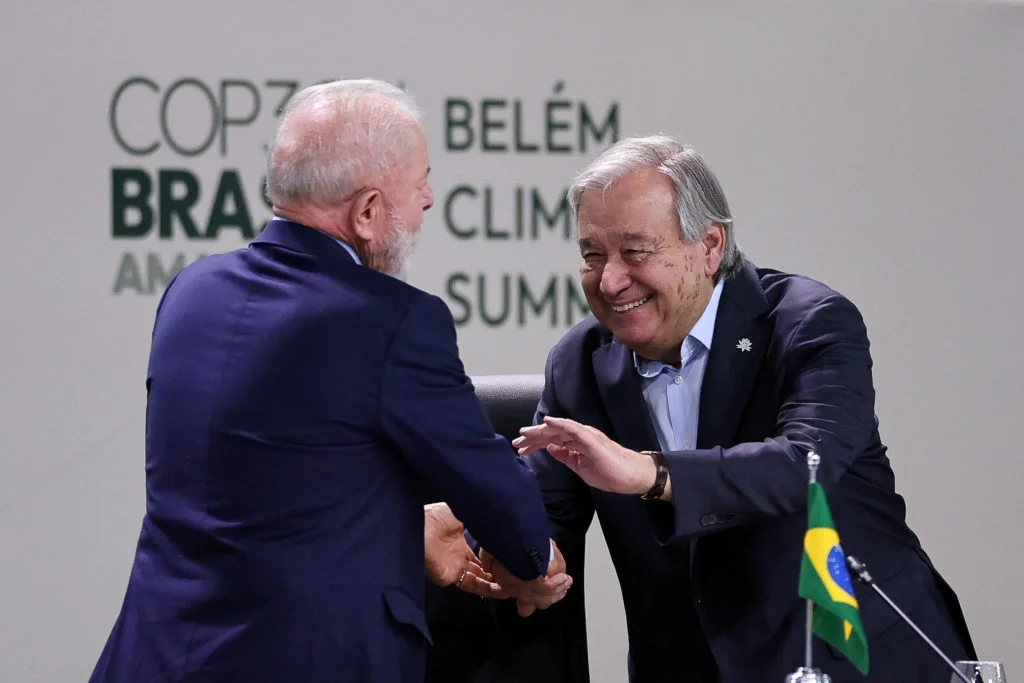
The UN climate chief warned that failure to transition to a low-carbon economy will lead to global disasters like famine and conflict, emphasizing the urgent need for international cooperation at the Cop30 talks to reduce emissions, limit temperature rise, and support vulnerable nations, amid disagreements over climate targets and commitments.
The UN climate summit in Brazil faces challenges with the absence of major polluters like the U.S., China, and India, amid ongoing Amazon deforestation and Brazil's proposal for a multibillion-dollar fund to preserve forests. The summit aims to push for climate action and funding, but political and economic tensions, along with logistical issues, complicate progress.
At the UN Climate Summit, most countries committed to accelerating efforts to reduce greenhouse gases, while the US notably stayed away, highlighting its isolation on climate policy amid global efforts.
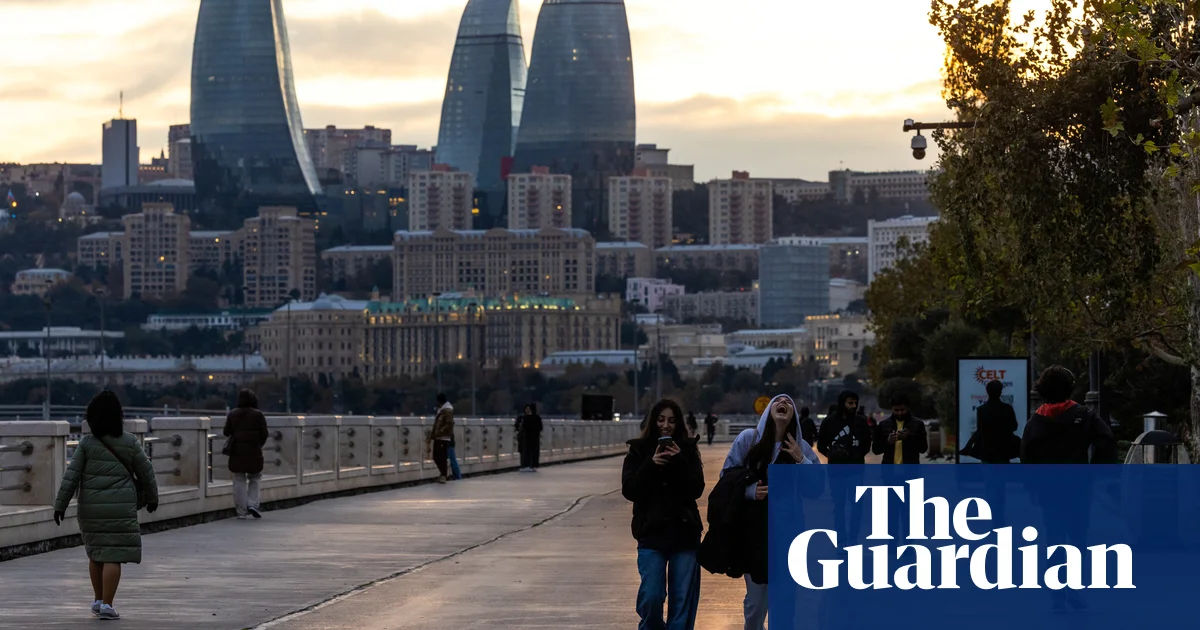
The recent UN climate summit in Azerbaijan was marked by disappointment and frustration, particularly from nations most vulnerable to climate change. Despite an agreement to triple climate financing to $300 billion annually by 2035, many delegates criticized the lack of substantial aid and the influence of fossil fuel interests, with 1,700 lobbyists attending the conference. The re-election of a US president dismissive of climate change further clouded negotiations, highlighting the need for a reevaluation of the COP process to effectively address global warming challenges.
Leading climate policy experts, including Ban Ki-moon and Mary Robinson, argue that UN climate summits should only be hosted by countries committed to climate action, with stricter rules on fossil fuel lobbying. They criticize the current process as ineffective, highlighting the influence of fossil fuel lobbyists at Cop29 in Azerbaijan, a major oil producer. The focus of Cop29 is on securing $1 trillion annually by 2030 to help poor countries reduce emissions and adapt to climate impacts. Proposals for new funding sources include taxes on cryptocurrencies, plastics, and frequent flyers.
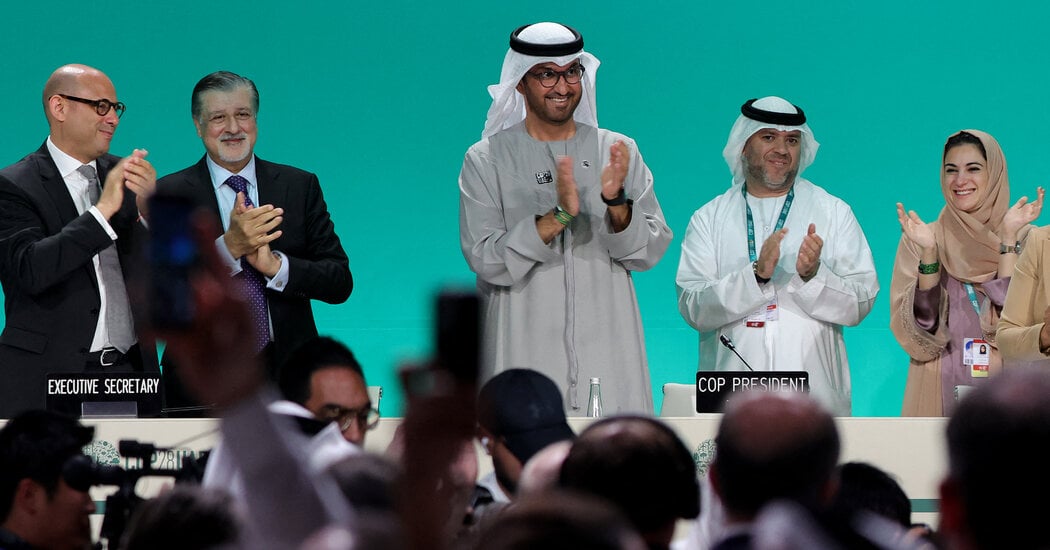
After two weeks of negotiations, diplomats from nearly 200 countries at the U.N. climate summit in Dubai reached a comprehensive agreement that calls for transitioning away from fossil fuels. The deal aims to eliminate carbon dioxide emissions by midcentury, triple global renewable energy installations by 2030, and reduce methane emissions. The agreement was seen as a compromise, with some island leaders expressing dissatisfaction, but it marks a significant step towards acknowledging the need to address the role of fossil fuels in climate change. In other news, Israeli Prime Minister Benjamin Netanyahu's government faces risks and opportunities in its disagreement with the U.S. over the future of the Gaza Strip, and Ukraine prepares for a defensive posture as it faces a harsh winter of Russian strikes and energy shortages.
The ongoing UN climate summit (COP28) has released the first draft text on the global goal on adaptation (GGA), which aims to encourage countries to achieve seven specific targets by 2030. These targets include actions related to food and water security, climate resilient infrastructure, health, ecosystems, poverty reduction, and cultural heritage. However, the adoption of the GGA framework depends on consensus among all countries, as it will require a significant amount of funding. India alone would need Rs 57 lakh crore for adaptation efforts by 2030. The draft also calls for developed countries to increase their provision of climate finance for adaptation to developing countries, but the overall finance provisions appear to be weak. Negotiations are ongoing to finalize the draft text on the global stocktake, with the phase-out of fossil fuels being a major point of contention.
Saudi Arabia is reportedly the biggest obstacle to reaching an agreement at the UN climate summit in Dubai, opposing any mention of fossil fuels and objecting to a provision aimed at tripling global renewable energy capacity by 2030. The Saudi delegation has been accused of using tactics to slow down and block discussions, including inserting poison pill language into draft agreements and refusing to engage with negotiators pushing for a phaseout of fossil fuels. While other countries have raised concerns about ambitious climate change efforts, Saudi Arabia stands out as the most implacable opponent.
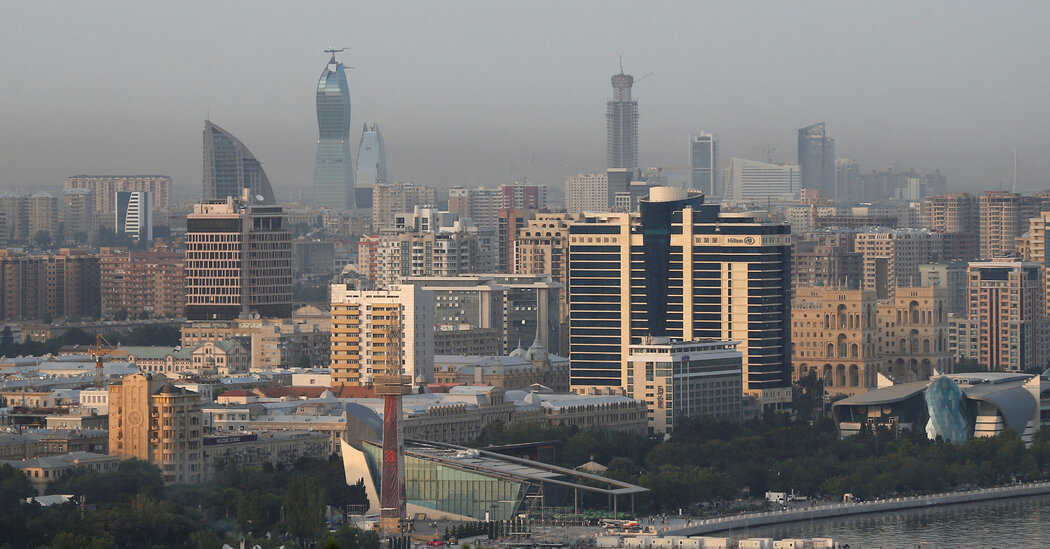
Azerbaijan is expected to host the United Nations climate change summit in 2024, resolving a political standoff over which nation should host the talks. This decision makes Azerbaijan the third major oil and gas producer in a row to host the annual negotiations on tackling global warming. However, concerns have been raised about holding the conference in an authoritarian nation heavily reliant on oil and gas revenue. The selection of Azerbaijan as the host comes after a breakthrough agreement between Azerbaijan and Armenia, who had threatened to veto each other's bids. The uncertainty over the host country had hindered preparations for the conference, where countries are expected to submit updated plans to curb emissions.
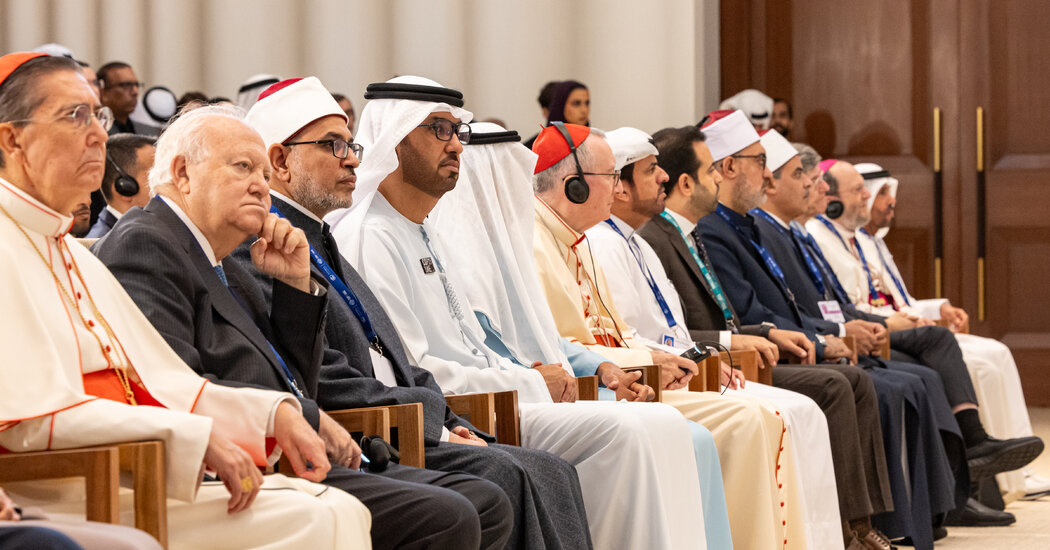
Pope Francis was set to become the first head of the Roman Catholic Church to attend a United Nations climate conference, but due to an acute case of bronchitis, Cardinal Pietro Parolin delivered a speech on his behalf at COP28 in Dubai. The Catholic Church's participation in the conference is part of its ongoing commitment to addressing climate change as a matter of morality and justice. The Vatican, as a sovereign nation, has joined the UNFCCC and signed onto the Paris Agreement, pledging to reduce emissions within the Vatican City State. Pope Francis has consistently engaged with climate conferences, sending messages and delegations to advocate for global action on climate change. His recent papal teaching document, Laudate Deum, highlights the shortcomings of the current multilateral system and calls for a breakthrough in international negotiations to accelerate the ecological transition and eliminate fossil fuels.
The United Nations climate summit, COP28, has introduced a new addition this year: the Faith Pavilion, a space for meditation, prayer, and spiritual guidance amidst discussions on global warming. The pavilion, inaugurated by Pope Francis and the Grand Imam of Al-Azhar, Ahmed Al-Tayeb, allows religious leaders from various faiths to exchange ideas on how to support people affected by climate change. Over 300 religious leaders representing different religions are expected to participate in discussions, offering counseling services to attendees. The pavilion provides a refuge from tensions and distrust that have arisen from past climate summits, where corporate interests, particularly from the fossil fuel industry, have been prominent. The Faith Pavilion aims to address the moral and spiritual aspects of the climate crisis, emphasizing the need for both prayer and action.
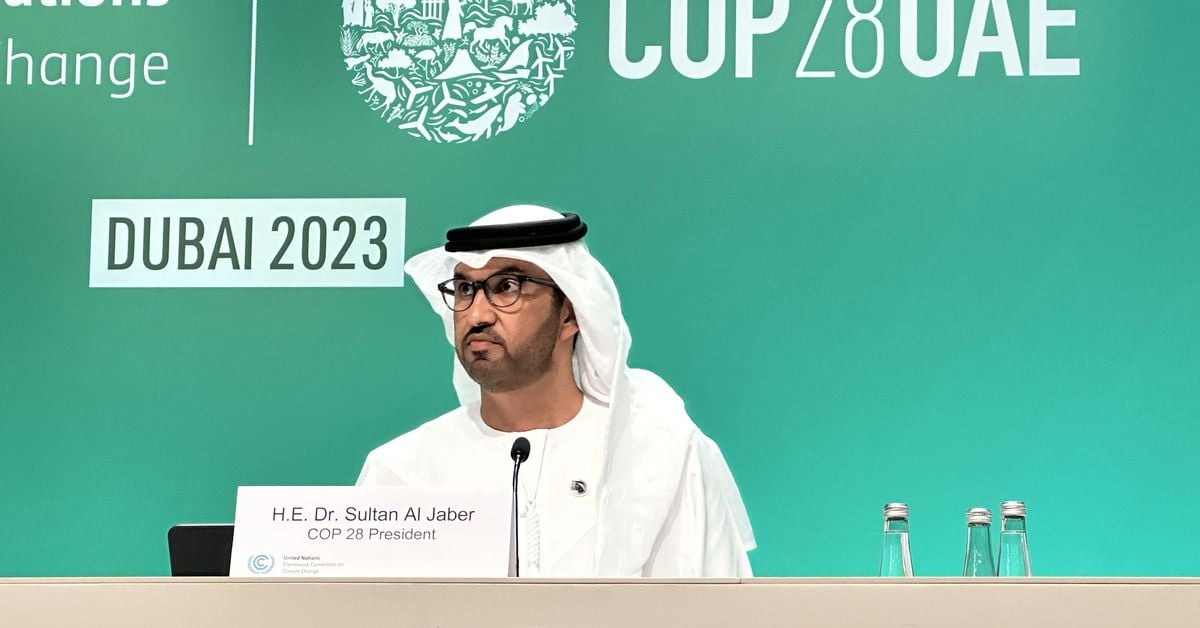
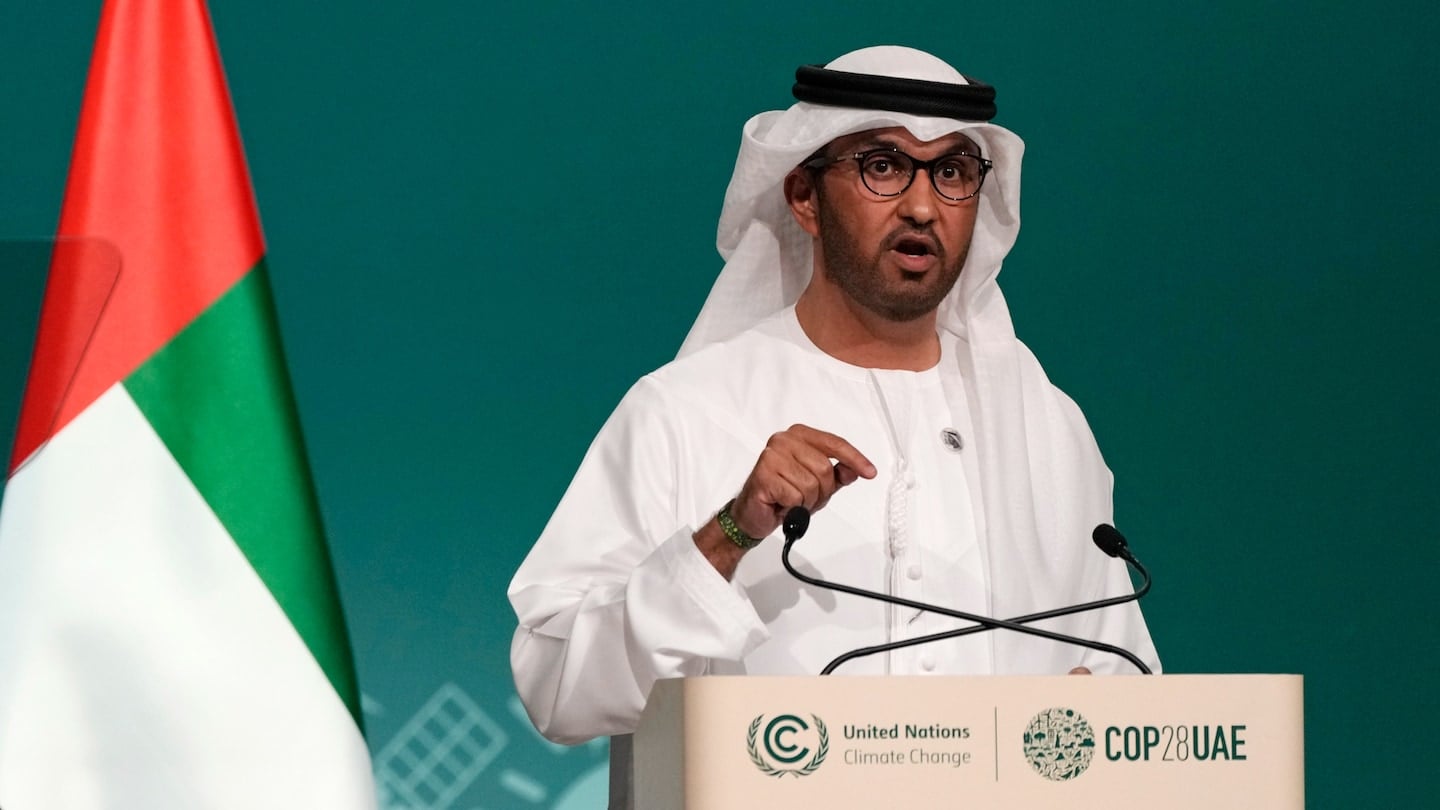
Controversial comments by Sultan Ahmed al-Jaber, the head of the UN climate summit COP28, have raised concerns about the effectiveness of any new fossil fuel agreement. Al-Jaber, who is also the chairman of the Abu Dhabi National Oil Company, stated that there is no scientific evidence to support eliminating fossil fuels to limit global temperature increases. His remarks contradict the consensus among climate scientists and world leaders who advocate for a phase-out of fossil fuels. The debate over a "phase-out" or a "phase-down" of fossil fuels is a key point of contention at the summit, with experts emphasizing the need for drastic cuts in fossil fuel usage to meet climate targets.
The U.N. climate summit, COP28, has commenced in Dubai with conflicts arising over fossil fuels but an agreement reached on the establishment of a new fund. As temperatures continue to rise, heatwaves are becoming more frequent, and some regions are becoming uninhabitable. The article also highlights various climate solutions and the actions taken by the Biden administration on environmental issues.
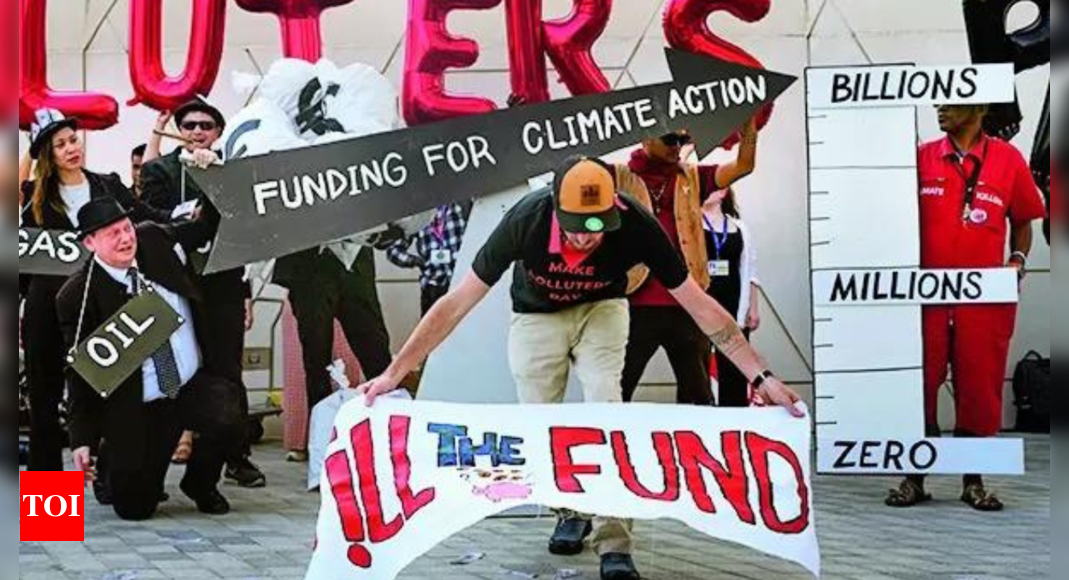
A group of former world leaders and economists, including former UK Prime Minister Gordon Brown, are calling for a $25 billion levy on the bumper revenues of oil-producing states to help fund the impact of climate disasters on the world's poorest and most vulnerable people. The levy, representing just a small fraction of the oil-producing countries' recent profits, would contribute to a fund for "loss and damage" in developing countries affected by the climate crisis. The letter, signed by 70 international figures, is being sent ahead of the UN climate summit, Cop28, and highlights the need for increased climate finance to meet the $1 trillion per year required for development and climate funding in the global south.
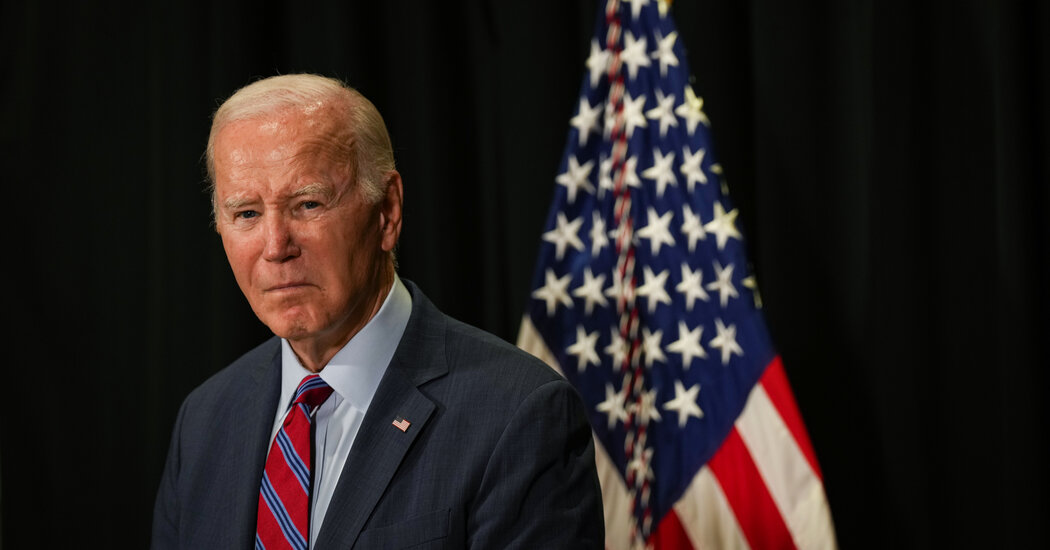
President Biden will not attend the United Nations climate summit, known as COP28, that begins in Dubai on Thursday. While the White House did not provide a reason for his absence, senior aides suggested that Biden's focus on the war between Israel and Hamas and the release of hostages held by Hamas has consumed his attention. Climate activists may be disappointed by his decision, but analysts note that it is not typical for a U.S. president to attend every climate summit. The summit will address progress in limiting global warming to 1.5 degrees Celsius and discuss ways to increase climate action and potentially phase out fossil fuels.