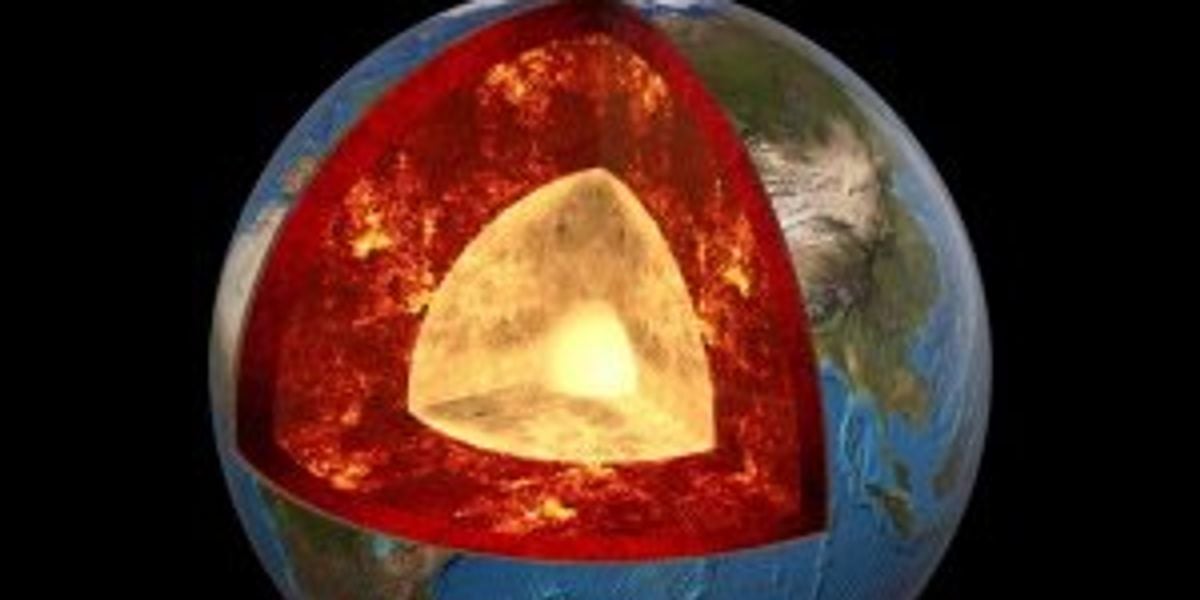
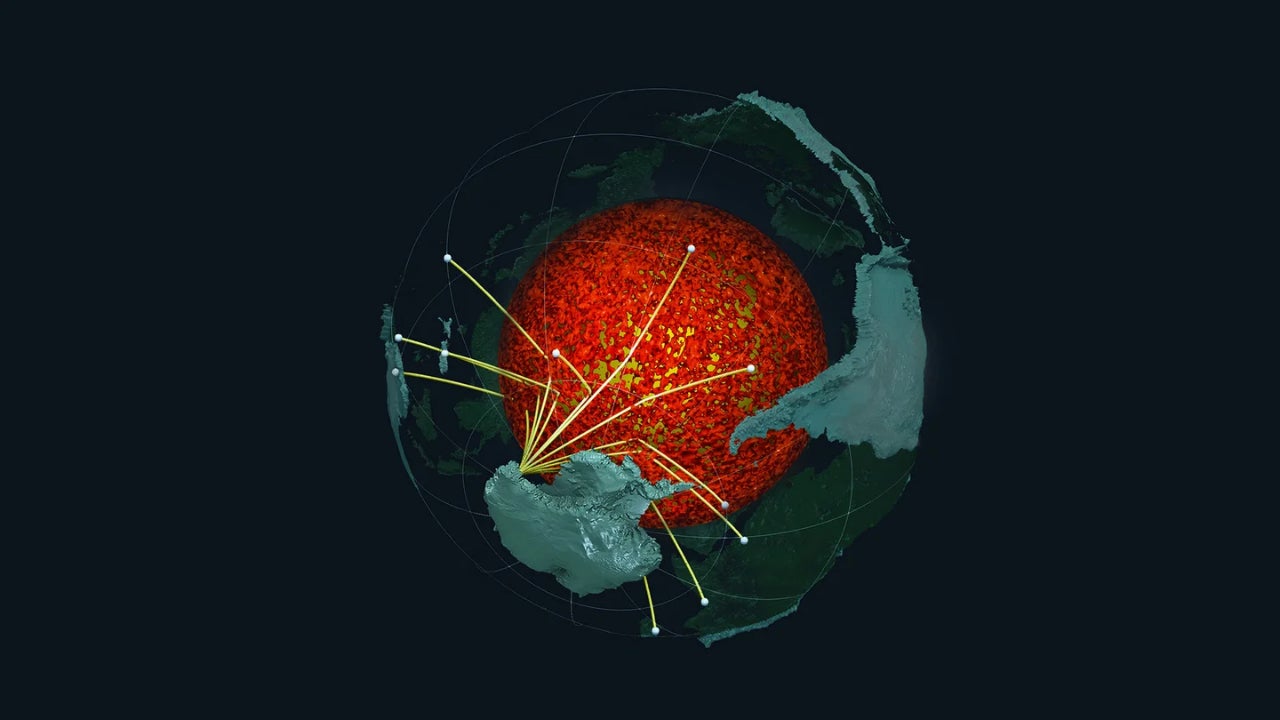
A new study suggests that massive structures in Earth's mantle, called LLSVPs and ULVZs, are remnants of early Earth’s chaotic formation, influenced by material leaking from the core, which helps explain Earth's habitability and surface activity.
A recent study has revealed the presence of an ancient ocean floor structure wrapped around the Earth's core, which could be taller than Mount Everest in certain areas. The discovery, made through high-resolution mapping of the core, shows a thin but dense layer at the Core Mantle Boundary, known as the ultra-low velocity zone (ULVZs). Geologists believe that these underground mountains, up to five times taller than Everest, could impact heat dissipation from the core and influence magnetic fields and volcanic activity. Further research is needed to determine the extent of the layer's coverage around the core.
A recent study has revealed the presence of an ancient ocean floor structure wrapped around the Earth's core, which could be taller than Mount Everest in certain areas. The discovery, made through high-resolution mapping of the core, shows a thin but dense layer at the Core Mantle Boundary, known as the ultra-low velocity zone (ULVZs). Geologists believe that these underground mountains, up to five times taller than Everest, could impact heat dissipation from the core and influence magnetic fields and volcanic activity. Further research is needed to determine the extent of the layer's coverage around the core.
A high-resolution map of Earth's Southern Hemisphere has revealed the presence of an ancient ocean floor that may wrap around the core. This thin but dense layer exists around 2,900 kilometers below the surface, at the core-mantle boundary. Seismic investigations using monitoring stations in Antarctica detected ultralow velocity zones (ULVZs) that suggest the presence of oceanic crust buried over millions of years. The ULVZs could be mountains on the core, some up to five times taller than Mt. Everest. The discovery provides insights into the heat transfer between the core and mantle and the overall processes driving our planet.
Scientists have discovered ultra-low velocity zones (ULVZs) or underground mountains, some of which are over 3-4 times as high as Mt Everest, sandwiched between the Earth's core and mantle. These structures were detected using seismic data from earthquakes and atomic explosions. The mountains likely formed from ancient oceanic crust and play a crucial role in how heat escapes the Earth's core, revealing the planet's complicated inner morphology.
Scientists from Arizona State University have discovered underground mountain peaks, called ultra-low velocity zones (ULVZs), that are three to four times higher than Mount Everest, located around 2,900 kilometres deep inside the Earth. These mountains were formed when oceanic crusts were formed into Earth's interior, and they may play a critical role in how heat escapes the Earth's core. The discovery was made using seismology centres in Antarctica, and scientists believe that these mountains are made of ancient oceanic crust.
Seismic imaging has revealed that a massive ocean floor, likely surrounding much of Earth's core, is lodged roughly 2,000 miles below the surface, between the core and the mantle. This thin, dense layer may encompass the entire core-mantle boundary and is made up of underground mountains that allow heat to escape from Earth's molten core. The presence of this layer could buffer heat flow across the core-mantle boundary, which is important because the temperature conditions in this portion of the Earth have been shown to strongly impact the planet's magnetic field.
Seismic imaging has revealed that a thin, dense layer of ancient ocean floor likely surrounds much, if not all, of the Earth's core. This layer is lodged roughly 2,000 miles below the Earth's surface, between the core and the mantle, and may encompass the entire core-mantle boundary. The layer likely developed when Earth's tectonic plates shifted, causing oceanic material to be carried into the planet's interior at subduction zones. The ULVZs are essentially "underground mountains" that allow heat to escape from Earth's molten core and could buffer heat flow across the core-mantle boundary, which is important because the temperature conditions in this portion of the Earth have been shown to strongly impact the planet's magnetic field.
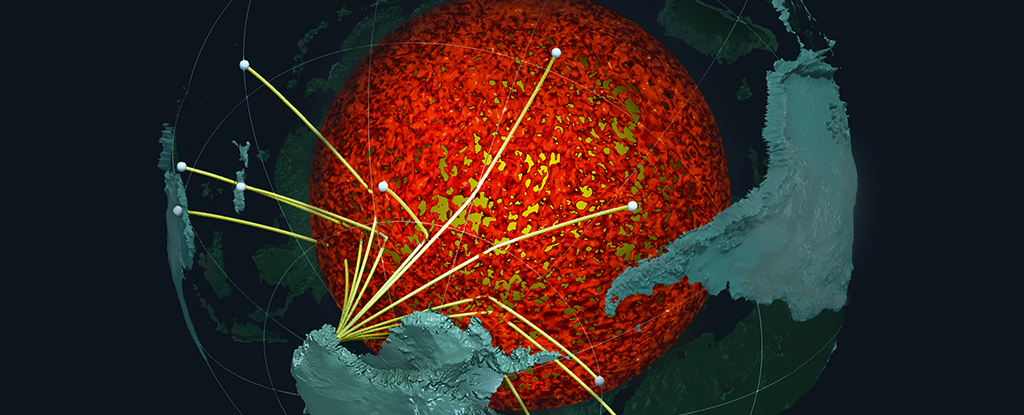
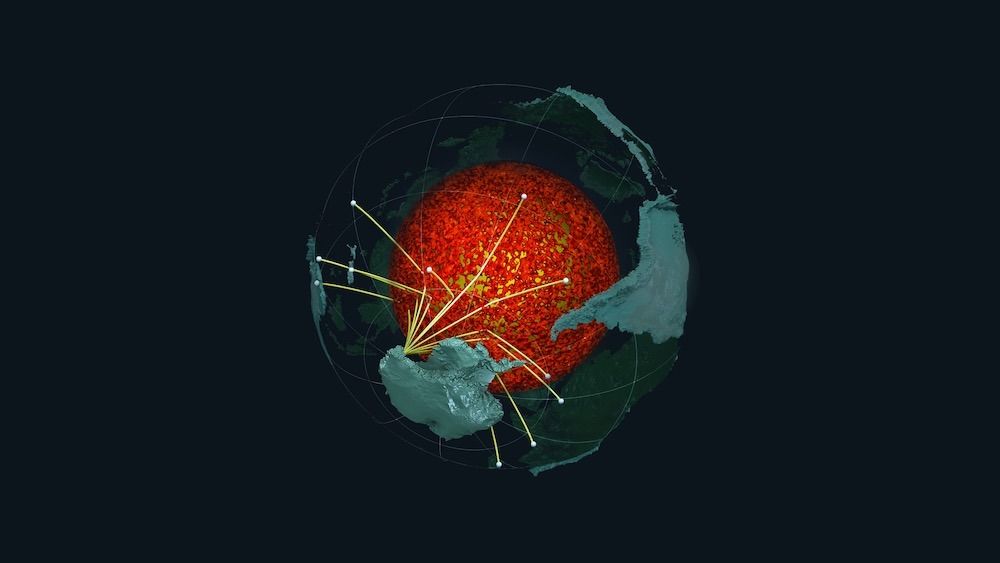
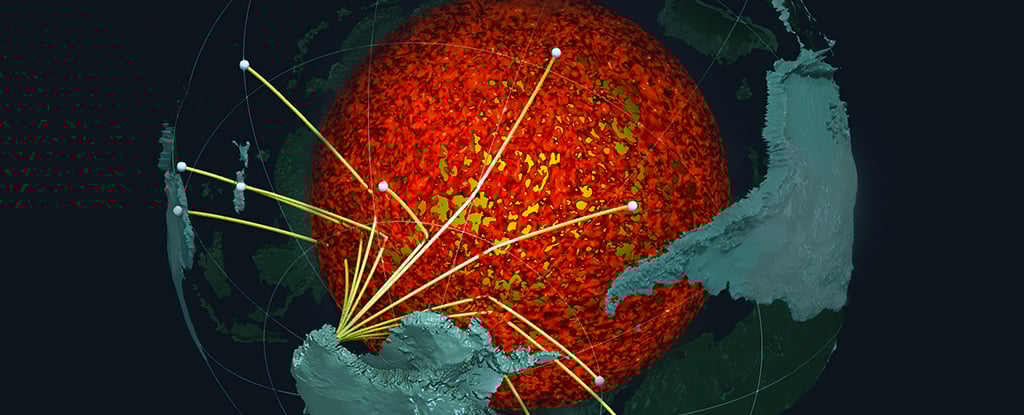
Scientists have created the most high-resolution map of the underlying geology beneath Earth's Southern Hemisphere, revealing an ancient ocean floor that may wrap around the core. This thin but dense layer sits around 2,900 kilometers below the surface, where the molten, metallic outer core meets the rocky mantle above it. The researchers used seismic waves from earthquakes in the southern hemisphere to sample the ULVZ structure along the Earth's core-mantle boundary. The ULVZs are most likely oceanic crust buried over millions of years, and the discovery can help geologists figure out how heat from the hotter and denser core escapes up into the mantle.