Tag

Trojan Asteroids

All articles tagged with #trojan asteroids

"NASA's Lucy Probe Fires Main Engines in Space for First Time"

Originally Published 1 year ago — by Yahoo! Voices

Featured image for "NASA's Lucy Probe Fires Main Engines in Space for First Time"
Source: Yahoo! Voices

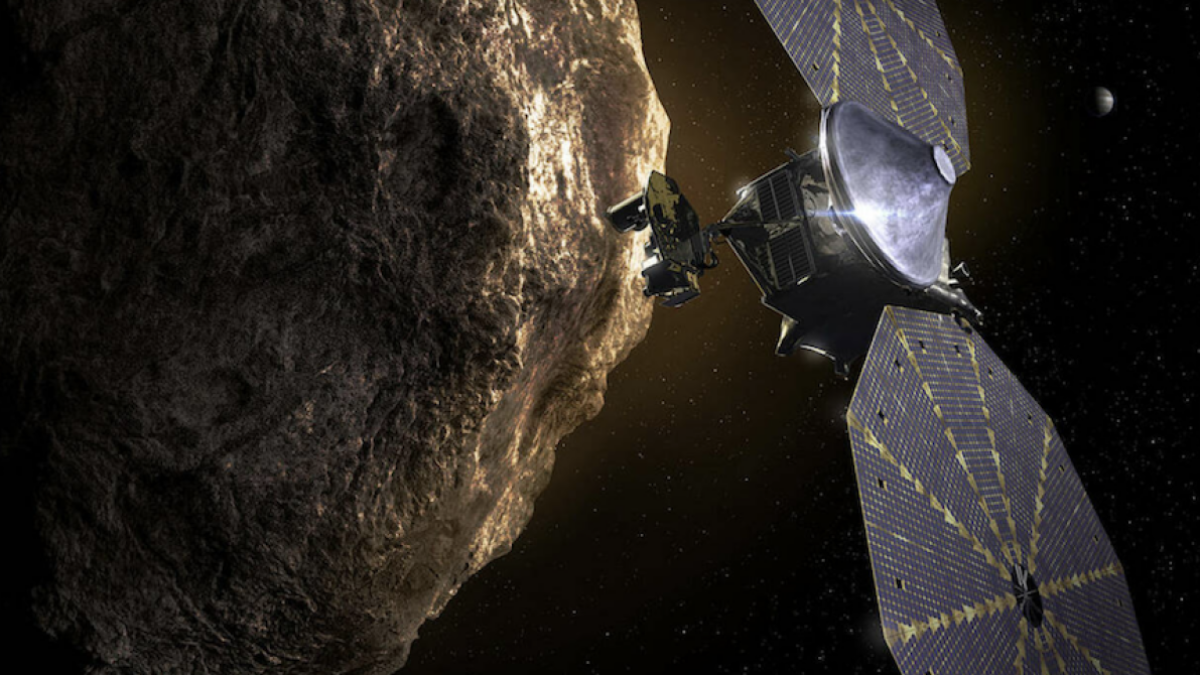
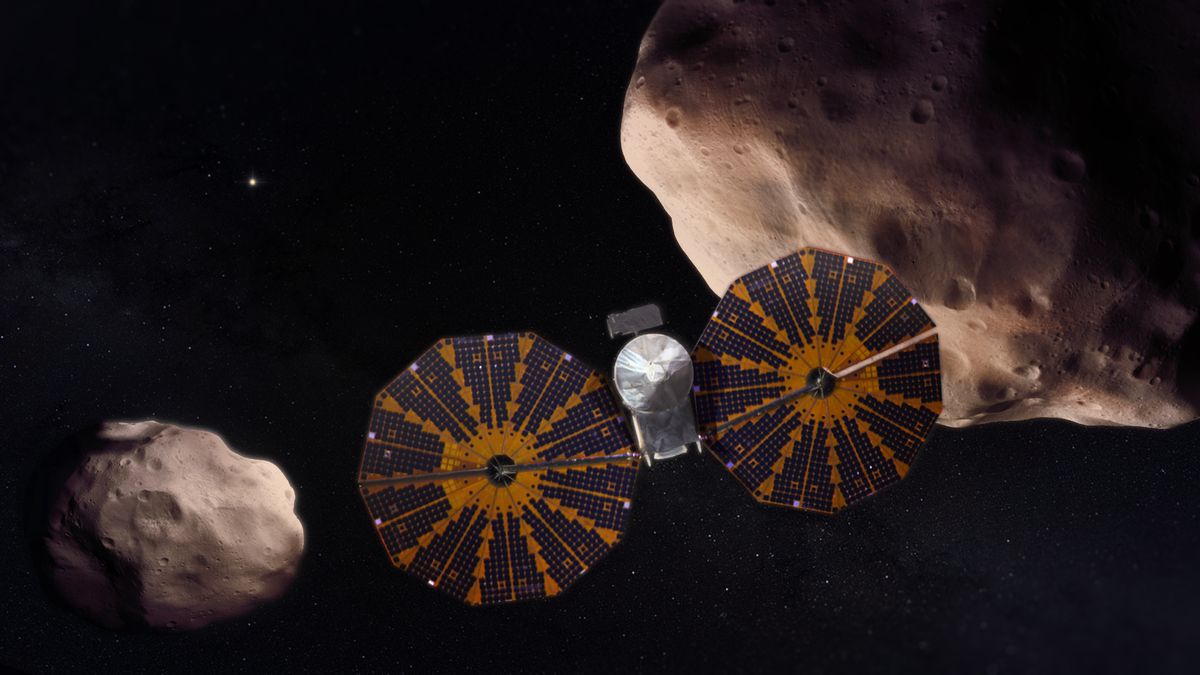
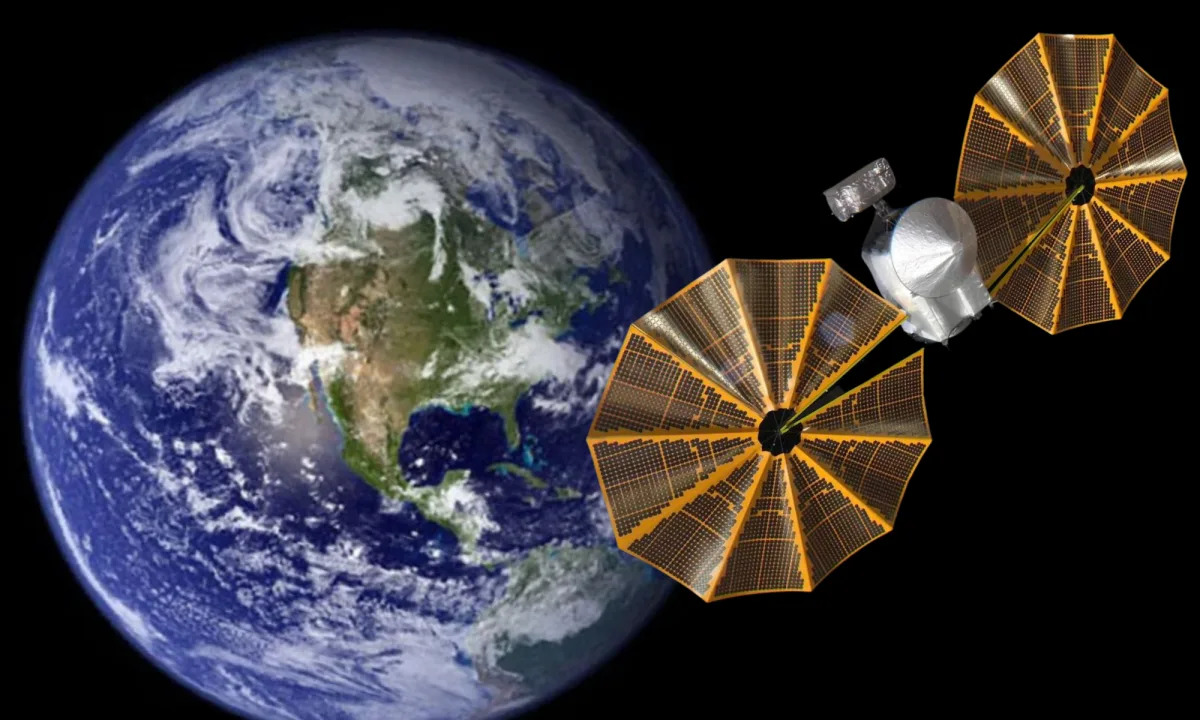
NASA's Lucy spacecraft, on a mission to explore the Trojan asteroids, will fire its main engines in space for the first time this week, burning through half of its onboard fuel. This will be followed by a larger maneuver to change its velocity, setting it on a new trajectory to visit various asteroids and moonlets, including a flyby of Earth in 2024. The spacecraft will then head towards the Trojan asteroids, with the mission concluding in 2033 after visiting multiple asteroids and moonlets.
"Guiding Light Beams with a Trojan Approach via Lagrange Points"

Originally Published 1 year ago — by Phys.org

Featured image for "Guiding Light Beams with a Trojan Approach via Lagrange Points"
Source: Phys.org

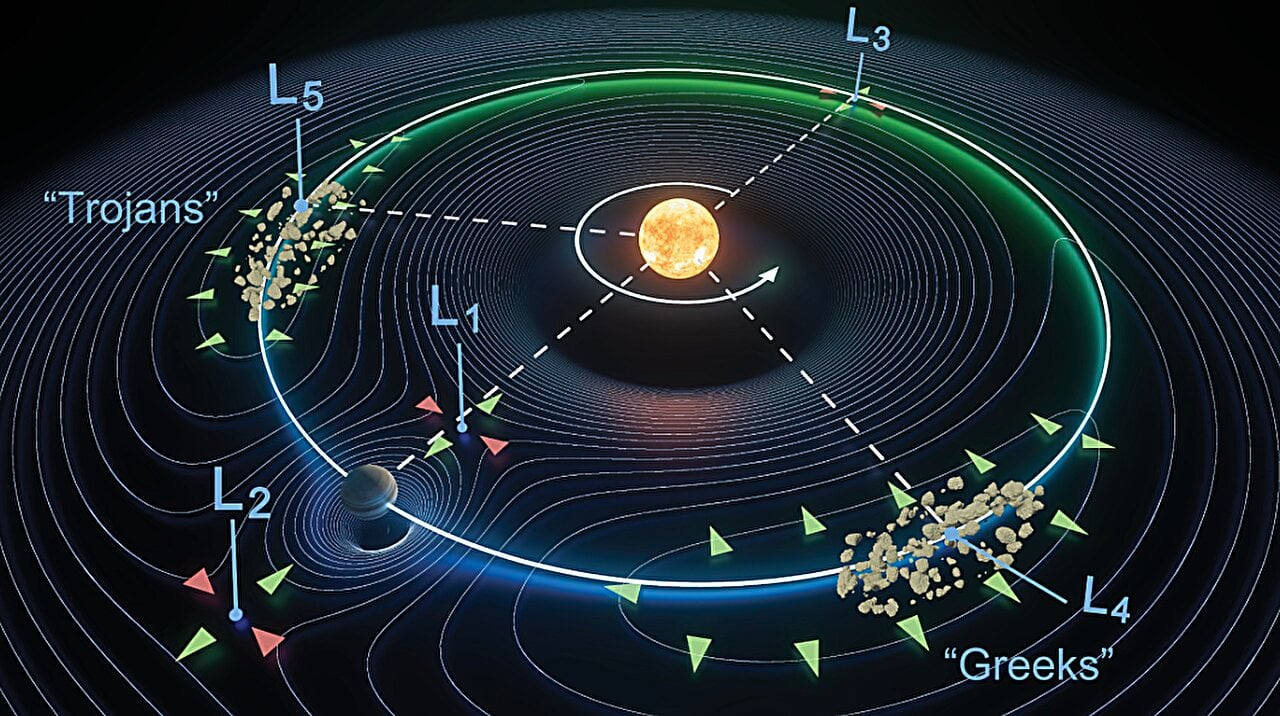
Researchers at the University of Southern California have developed a novel method for trapping light waves by leveraging the unique properties of Lagrange points, which govern the orbits of celestial bodies like Trojan asteroids in the sun-Jupiter system. By creating a compact system in their laboratory that mimics the properties of Lagrange points, the researchers were able to guide and trap optical waves, similar to capturing Trojan asteroids within the sun-Jupiter orbit. This innovative approach could lead to the development of new techniques for guiding optical waves in unconventional environments and may have applications beyond optics, such as guiding acoustic waves or ultracold atoms.

Unveiling Astonishing Discoveries: NASA's Surprising Encounters with Asteroids

Originally Published 2 years ago — by Yahoo! Voices

Featured image for Unveiling Astonishing Discoveries: NASA's Surprising Encounters with Asteroids
Source: Yahoo! Voices

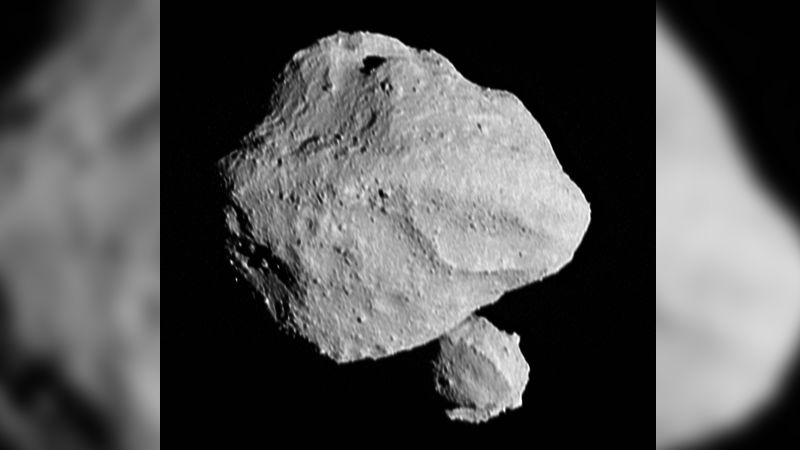
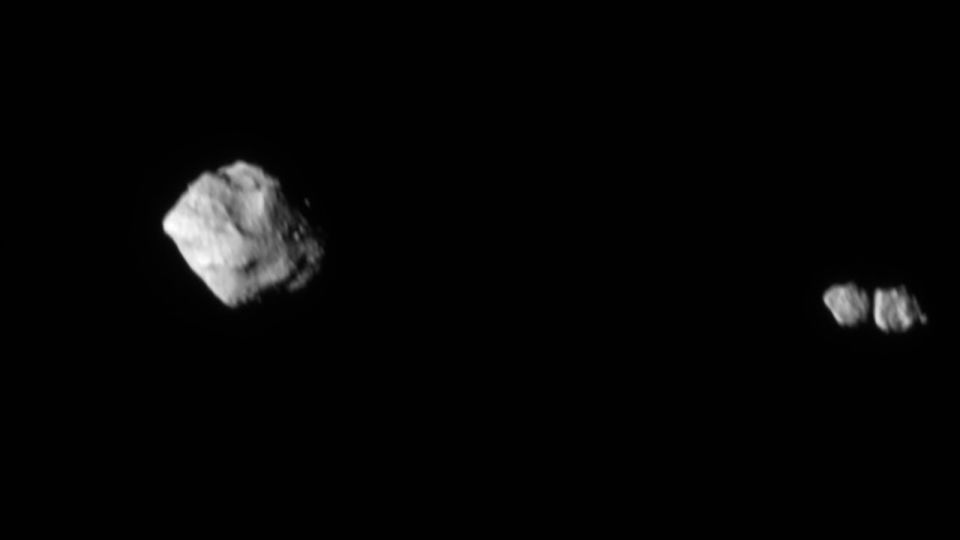
NASA's Lucy mission, which recently flew by the small asteroid Dinkinesh, has made a surprising discovery. Initially believed to be part of a binary pair, new images reveal that Dinkinesh is actually a contact binary, consisting of two smaller asteroids touching each other. The close approach was primarily a test for the spacecraft's equipment, but the unexpected finding has left scientists puzzled. Lucy's main goal is to survey the Trojan asteroids around Jupiter, and its next close encounter will be with another main belt asteroid in 2025 before heading towards the Trojans in 2027.

NASA's Lucy Mission Discovers Unexpected Bonus Asteroid During High-Speed Encounter

Originally Published 2 years ago — by Mashable

Featured image for NASA's Lucy Mission Discovers Unexpected Bonus Asteroid During High-Speed Encounter
Source: Mashable

NASA's Lucy mission, en route to explore the Trojan asteroids, has successfully completed its first high-speed encounter with an asteroid called Dinkinesh. The mission, designed to study the pristine building blocks of planets, discovered that Dinkinesh is actually an "asteroid binary," with a smaller asteroid orbiting a larger one. Lucy's powerful cameras will observe the composition, mass, and geologic history of the Trojans to understand their role in the formation of our solar system. The next asteroid encounter is scheduled for 2025, with the mission reaching the first Trojan in 2027.

Lucy Mission Discovers Second Asteroid and Mini Moon During Flyby

Originally Published 2 years ago — by CNN

Featured image for Lucy Mission Discovers Second Asteroid and Mini Moon During Flyby
Source: CNN

NASA's Lucy mission, designed to explore Jupiter's Trojan asteroid swarms, encountered a surprise when it flew by the small asteroid Dinkinesh in the main asteroid belt. What was initially thought to be a single asteroid turned out to be a binary pair of space rocks. The larger asteroid is estimated to be half a mile wide, while the smaller one is 0.15 miles across. The close approach allowed Lucy to test its equipment and collect data on small asteroids, providing valuable insights for future missions. Lucy's ultimate goal is to provide high-resolution images of the Trojan asteroids, shedding light on the formation of our solar system.

NASA's Lucy Probe Successfully Completes Flyby of Asteroid 'Dinkinesh'

Originally Published 2 years ago — by Space.com

Featured image for NASA's Lucy Probe Successfully Completes Flyby of Asteroid 'Dinkinesh'
Source: Space.com

NASA's Lucy spacecraft is set to make its first flyby of an asteroid named Dinkinesh on November 1, marking the beginning of its 12-year-long mission to investigate 10 asteroid subjects. Lucy's ultimate goal is to study the Trojan asteroids, which are remnants of the solar system's formation. The spacecraft will collect data using its instruments during the flyby, serving as an important test before reaching its Trojan asteroid destinations. After Dinkinesh, Lucy will continue its journey, with the next flyby scheduled for April 2025.

Lucy: NASA's Mission to Confront an Asteroid Begins

Originally Published 2 years ago — by Gizmodo

Featured image for Lucy: NASA's Mission to Confront an Asteroid Begins
Source: Gizmodo

NASA's Lucy spacecraft is set to rendezvous with the asteroid Dinkinesh in the main asteroid belt on Wednesday, marking its first close encounter with an asteroid. Lucy will collect data on Dinkinesh using its instruments, including a color imager and infrared spectrometer. The spacecraft will then continue to image and track the asteroid for about an hour before reorienting itself to resume communications with Earth. Lucy's mission is to study the Trojan asteroids, and it will begin its tour of these rocky bodies in 2027. Dinkinesh was added to Lucy's list of asteroid targets to test its instruments before reaching the Jovian system.

Lucy probe set for historic space rock flyby in November.

Originally Published 2 years ago — by Space.com

Featured image for Lucy probe set for historic space rock flyby in November.
Source: Space.com

NASA's Lucy spacecraft, on its way to explore distant space rocks, has adjusted its course and is set to visit the tiny asteroid Dinkinesh in November 2023 before heading off to become the first craft to visit the Trojan asteroids that follow the orbit of Jupiter around the sun. The spacecraft's operators will have the chance to continue to adjust its course as it travels, and analyze the data collected during its visit to Dinkinesh to calibrate its instruments accordingly.

NASA's Lucy spacecraft captures stunning images of mysterious Trojan asteroids.

Originally Published 2 years ago — by Yahoo Entertainment

Featured image for NASA's Lucy spacecraft captures stunning images of mysterious Trojan asteroids.
Source: Yahoo Entertainment

NASA's Lucy spacecraft has captured a first glimpse of the mysterious Trojan asteroids, which are made up of two swarms trapped in front of and behind Jupiter. The spacecraft will study the Trojan asteroids to discover if they are relics of our early solar system and help us learn more about how the planets within our solar system formed. Lucy won't reach the Trojan asteroids until 2027 and 2028, but it will capture information about the swarms as it completes multiple flybys.

Lucy spacecraft discovers Jupiter's Trojan asteroids.

Originally Published 2 years ago — by Gizmodo

Featured image for Lucy spacecraft discovers Jupiter's Trojan asteroids.
Source: Gizmodo

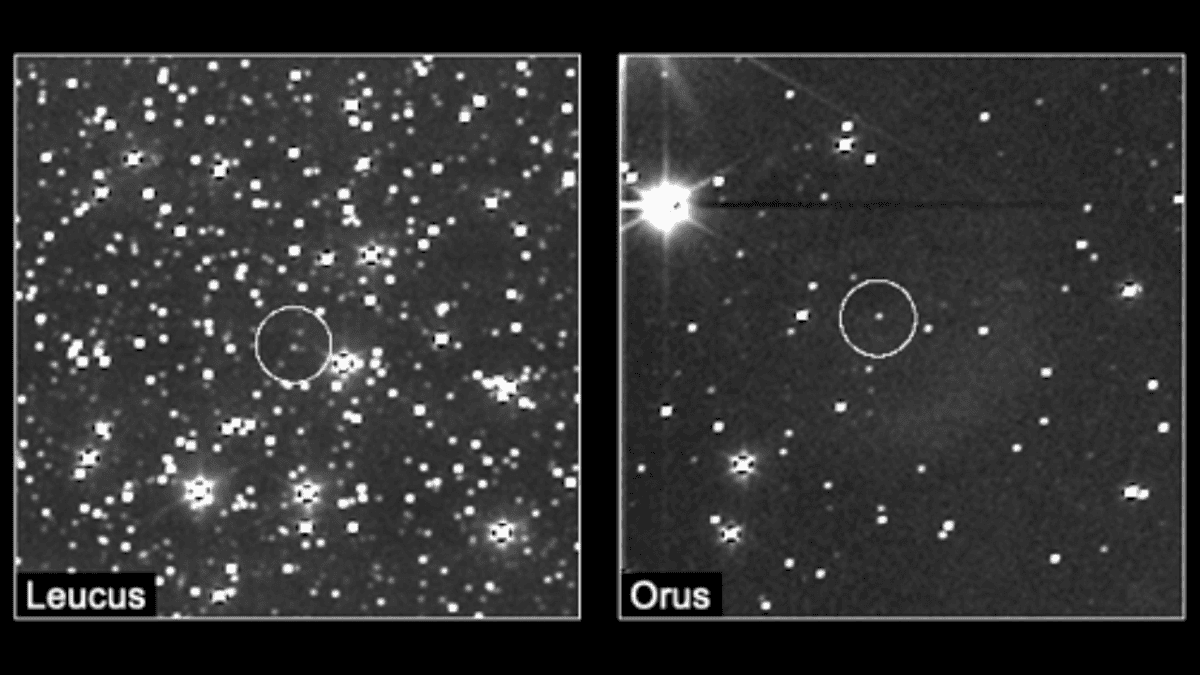
NASA's Lucy spacecraft has captured the first images of Jupiter's Trojan asteroids using its highest resolution imager, L’LORRI. The four asteroids, Eurybates, Polymele, Leucus, and Orus, are part of two large groups of rocky bodies that lead and follow Jupiter as it orbits the Sun. The images will help NASA decide on exposure times to use for Lucy’s close-up observations of the asteroids. Lucy is expected to travel over 4 billion miles during its 12-year mission, during which the probe will visit 10 asteroids, including a tiny main belt asteroid known as 1999 VD57.