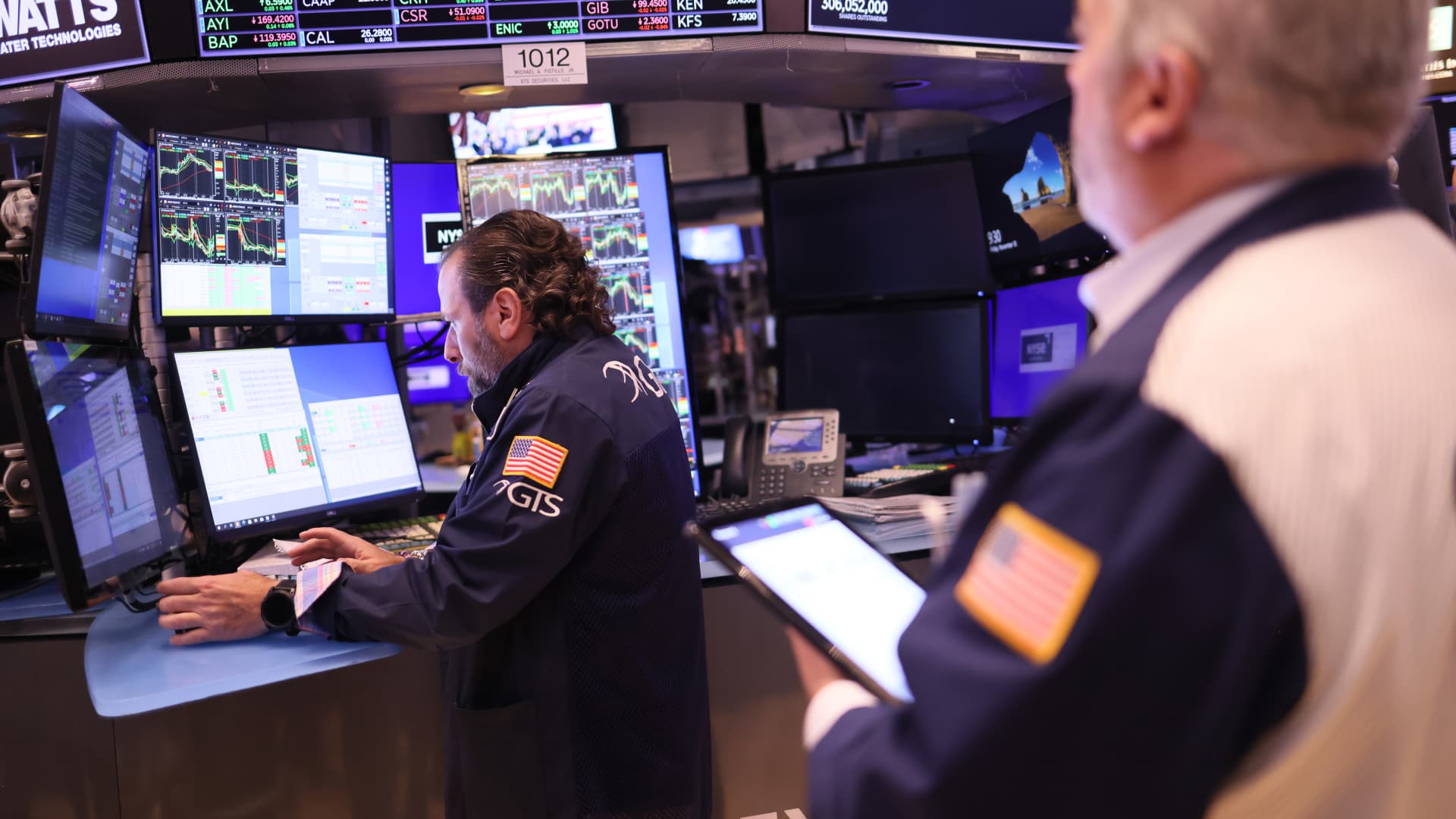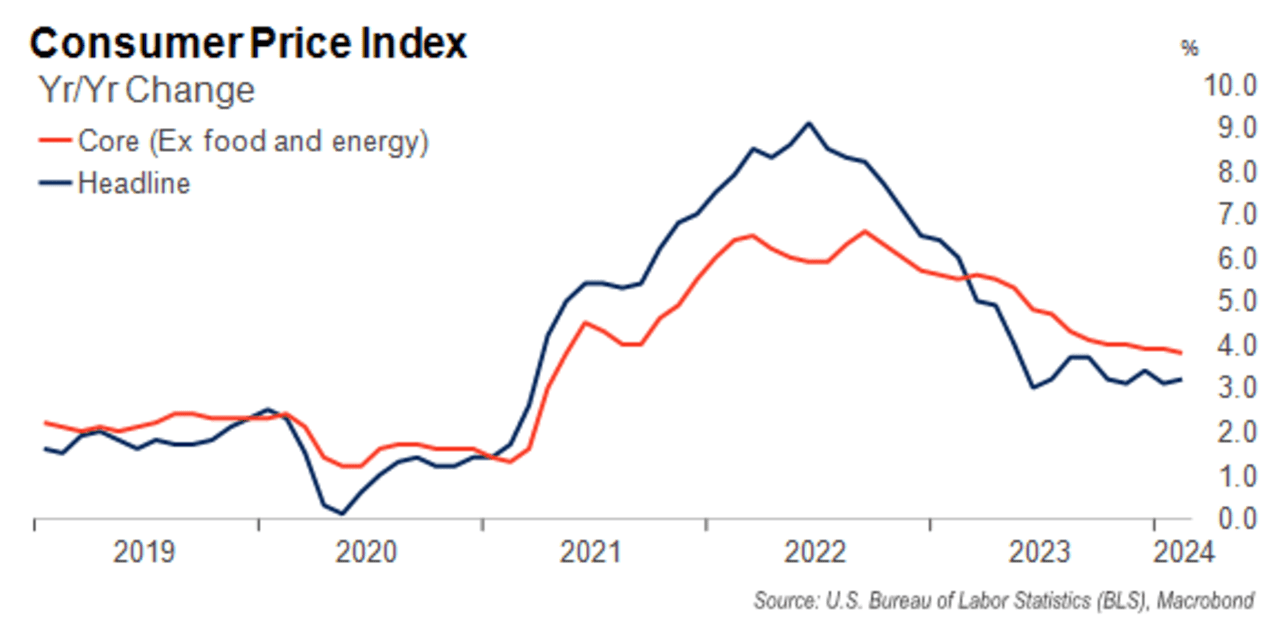
The market's muted reaction to February's Consumer Price Index (CPI) report, which showed higher-than-expected inflation, can be attributed to the fact that it was "clearly braced" for the results, according to analysts. Despite the hotter-than-expected inflation reading, the Dow remained higher, indicating that the market had already priced in the possibility of increased inflation.

The Federal Reserve's rate hikes have made CDs and Treasurys more appealing with competitive rates, offering higher yields than in previous years. While both are considered safe investments, CDs tie up money for a fixed period with a fixed interest rate, while Treasurys offer a wider range of maturities and are more liquid. Currently, Treasurys boast higher rates than CDs, but shopping around for CDs can still yield generous APYs. Factors to consider when choosing between the two include investment horizon, risk tolerance, liquidity needs, taxation, and potential reinvestment risk.
Moody's warning about the massive U.S. debt burden and its potential impact on government-issued fixed income has had little effect on the markets, with traders largely shrugging off the news. The high levels of government debt and deficits, along with political brinkmanship in Washington, are well-known issues that investors are already grappling with. While the warning echoes existing concerns, it is seen as a nonevent, as demand for U.S. Treasurys remains strong. However, some investors are starting to consider the long-term ability of the government to pay its bills, and there is skepticism about bonds if inflation remains elevated and the Federal Reserve maintains high interest rates.
Wall Street is bracing for a larger wave of US Treasurys flooding the bond market, leading to more sticker shock for US debt. As the US government continues to borrow heavily to fund its spending, the supply of Treasurys is expected to increase, putting downward pressure on prices and upward pressure on yields. This could have implications for interest rates and the overall economy.
The Bank of Japan's decision to allow its government bonds to float above the cap could potentially fuel a U.S. bond rout, as it may encourage Japanese investors, who are the largest foreign creditors of the U.S. government, to invest domestically. The 10-year U.S. Treasury yield rose to 3.968% following strong U.S. growth data, while Japan's stash of Treasurys has already decreased to its lowest level since early 2019.
The US has reached a deal on the debt ceiling, but analysts warn that the temporary euphoria may lead to a market correction. Investors who stocked up on short-term T-bills are advised to consider buying longer-term bonds.
Investors may turn to long-term Treasurys as a safe haven if the U.S. hits its debt-ceiling limit, according to Sevens Report Research. The U.S. government is potentially just three weeks away from bumping up against its borrowing limit, which would prevent the Treasury Department from selling additional Treasury debt. In 2011, the yield on the 10-year Treasury note fell in the run-up to the U.S. coming up against its borrowing limit, and longer-dated Treasurys performed well. Gold also saw a strong rally during the height of the debt-ceiling drama in 2011. Defensive sectors, including utilities, consumer staples, and healthcare, handily outperformed, while financials and materials both dropped sharply.
Investors are not fully confident in further price upside for Bitcoin despite its recent gains, as they are hoarding cash positions or short-term government debt instruments in anticipation of inflation or a recession. The recent rescue of Credit Suisse and the emergency credit lifeline provided by the US Treasury to protect the banking sector are not reassuring signs for financial institutions. Professional Bitcoin traders are not bullish above $26,000, and unless crypto investors regain confidence, the chances of the cryptocurrency surpassing $30,000 remain extremely remote.
Wealthy investors and family offices are moving more of their money out of bank cash balances and into Treasurys, money markets and other short-term instruments, following the collapse of Silicon Valley Bank and potential cracks in the network of regional banks. With the rapid Federal Reserve hikes, Treasurys and money markets can now offer a 4% or 5% risk-free return — often double the yield on a savings or checking account. As a result, wealthy investors and family offices have been moving all but a small portion of their cash balances into higher yielding cash-like investments, which are typically not on the balance sheet of the banks.