Google Quantum AI has observed non-Abelian anyons for the first time, a breakthrough that could revolutionize quantum computing by making it more robust to noise and leading to topological quantum computation. Non-Abelian anyons retain a sort of memory, and when two of them are exchanged, their world-lines wrap around one another. The resulting knots and braids form the basic operations of a topological quantum computer. The team demonstrated how braiding of non-Abelian anyons might be used in quantum computations and created a well-known quantum entangled state called the Greenberger-Horne-Zeilinger (GHZ) state.
Google Quantum AI has observed the behavior of non-Abelian anyons, particles that retain a sort of memory, for the first time, opening a new path towards topological quantum computation. Non-Abelian anyons have the potential to revolutionize quantum computing by making operations more resistant to noise. The team successfully used these anyons to perform quantum computations, indicating that the peculiar behavior of non-Abelian anyons could be key to developing fault-tolerant topological quantum computers in the future.
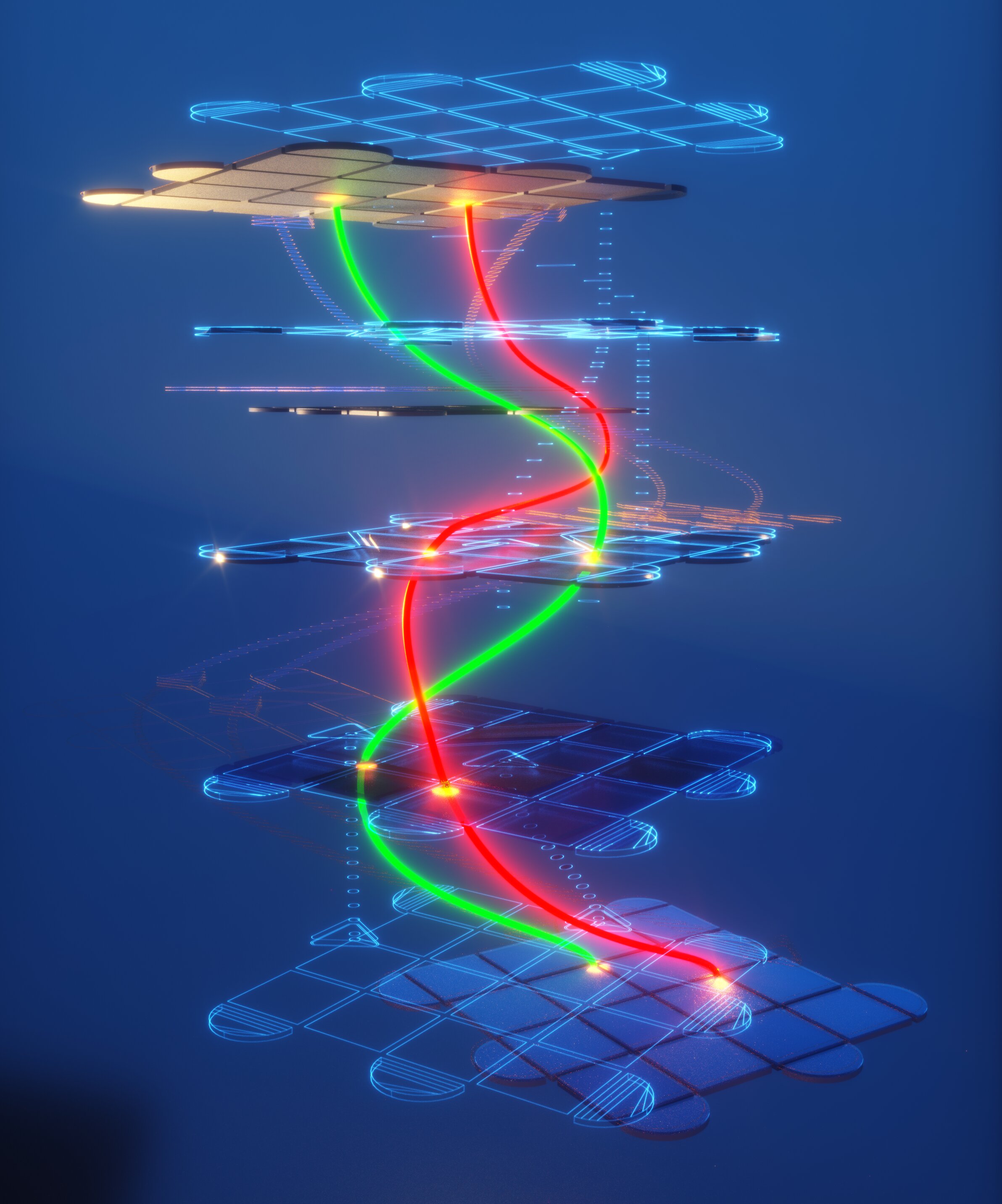
Google Quantum AI has observed the peculiar behavior of non-Abelian anyons for the first time using one of their superconducting quantum processors, opening a new path toward topological quantum computation. Non-Abelian anyons retain a sort of memory, and it is possible to tell when two of them have been exchanged, despite being completely identical. The team demonstrated how braiding of non-Abelian anyons might be used in quantum computations, creating a well-known quantum entangled state called the Greenberger-Horne-Zeilinger (GHZ) state.