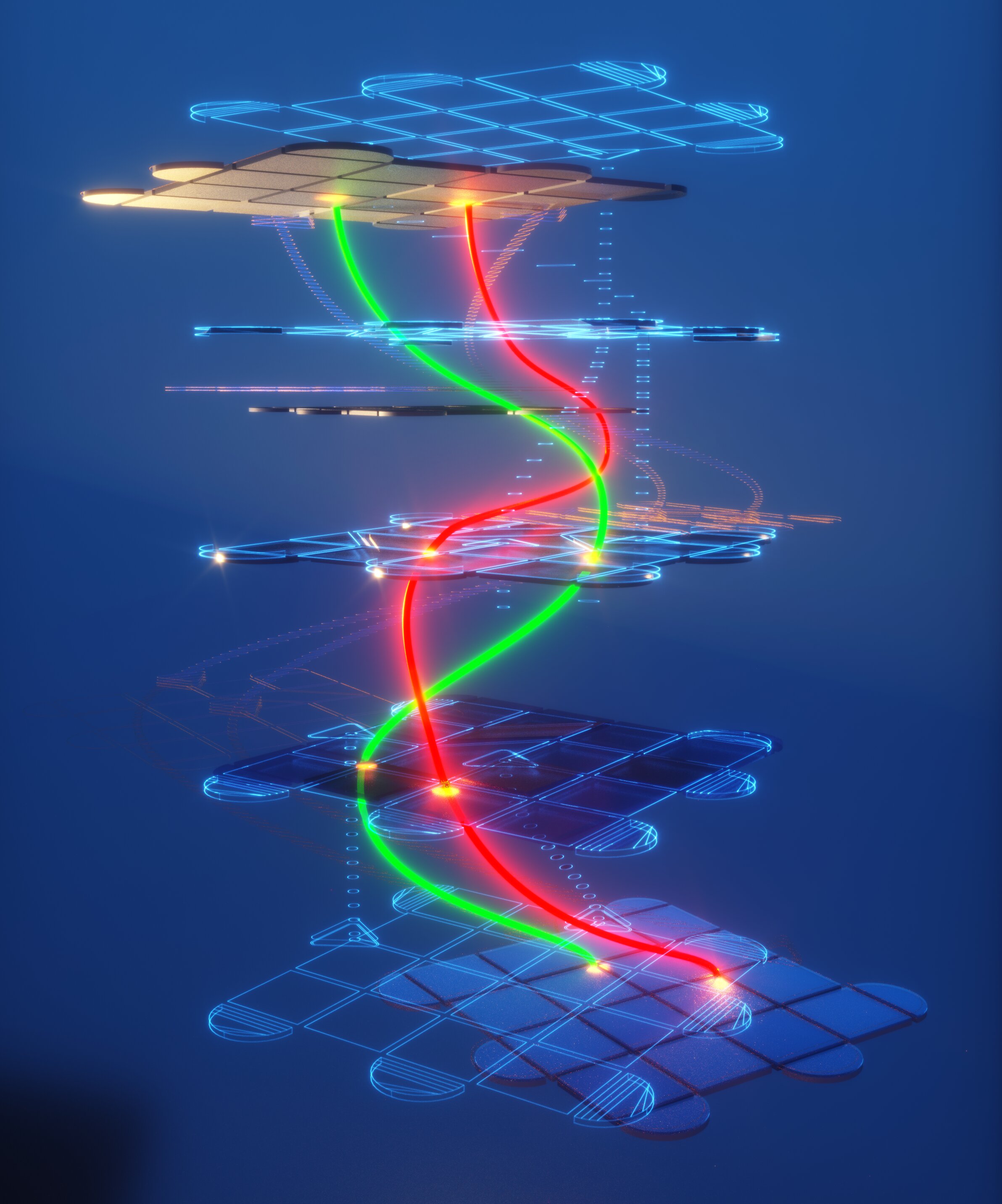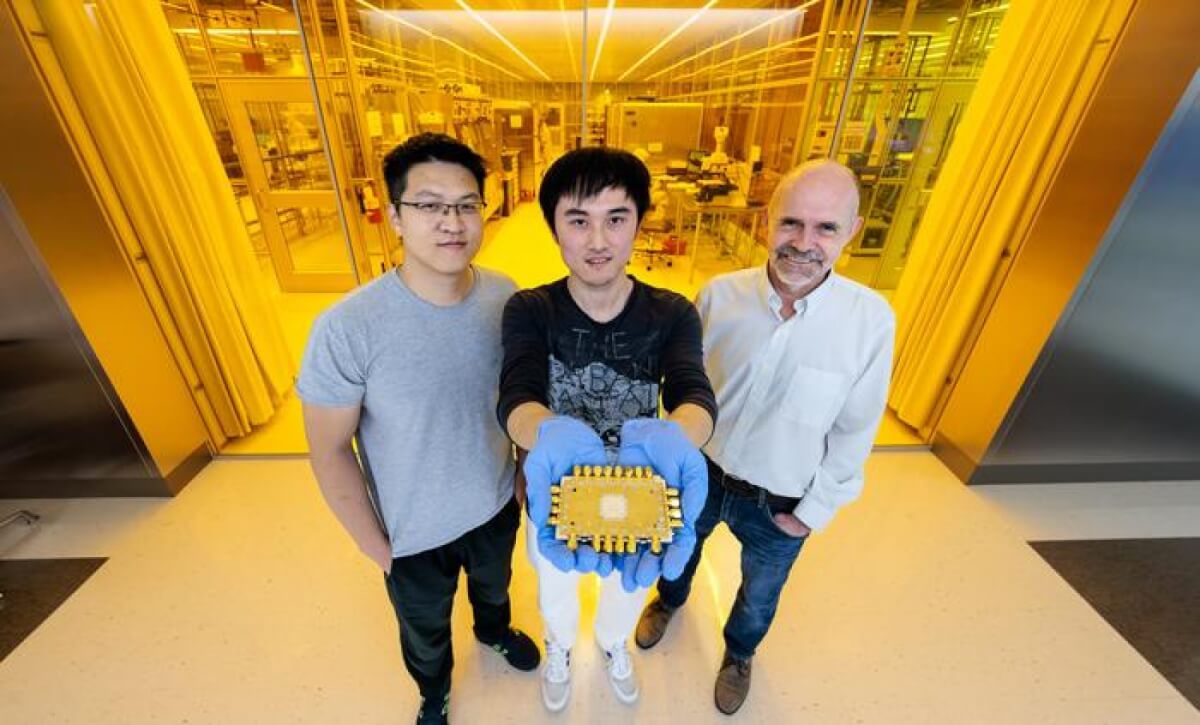
Researchers at the University of Chicago have developed a new design for a superconducting quantum processor that could significantly enhance the capabilities of quantum computers. This design features a central "router" allowing qubits to communicate more freely, addressing scalability and reliability challenges. The study, published in Physical Review X, demonstrates high gate fidelities and suggests a modular approach to quantum computing, potentially transforming fields like cryptography and telecommunications.
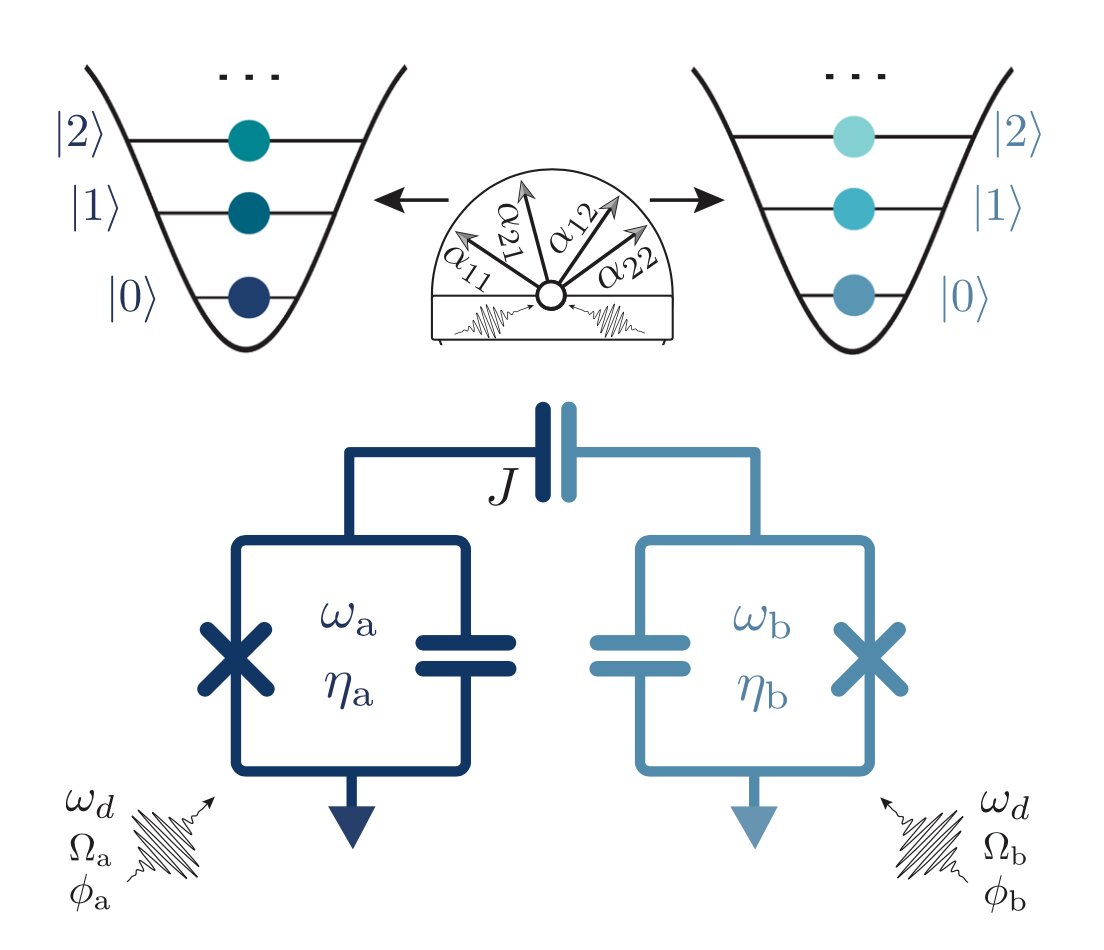
Researchers at Lawrence Berkeley National Laboratory and the University of California, Berkeley have achieved a breakthrough in quantum computing by successfully entangling two qutrits, three-level quantum systems, with high fidelity. This advancement brings us closer to enabling ternary logic, which can encode more information than binary logic. The team used a microwave-activated entanglement technique and achieved gate fidelities significantly higher than previous works. Ternary quantum information processors have the potential to improve quantum simulation, error correction, and certain quantum algorithms and applications.
Google Quantum AI has observed the peculiar behavior of non-Abelian anyons for the first time using one of their superconducting quantum processors, opening a new path toward topological quantum computation. Non-Abelian anyons retain a sort of memory, and it is possible to tell when two of them have been exchanged, despite being completely identical. The team demonstrated how braiding of non-Abelian anyons might be used in quantum computations, creating a well-known quantum entangled state called the Greenberger-Horne-Zeilinger (GHZ) state.