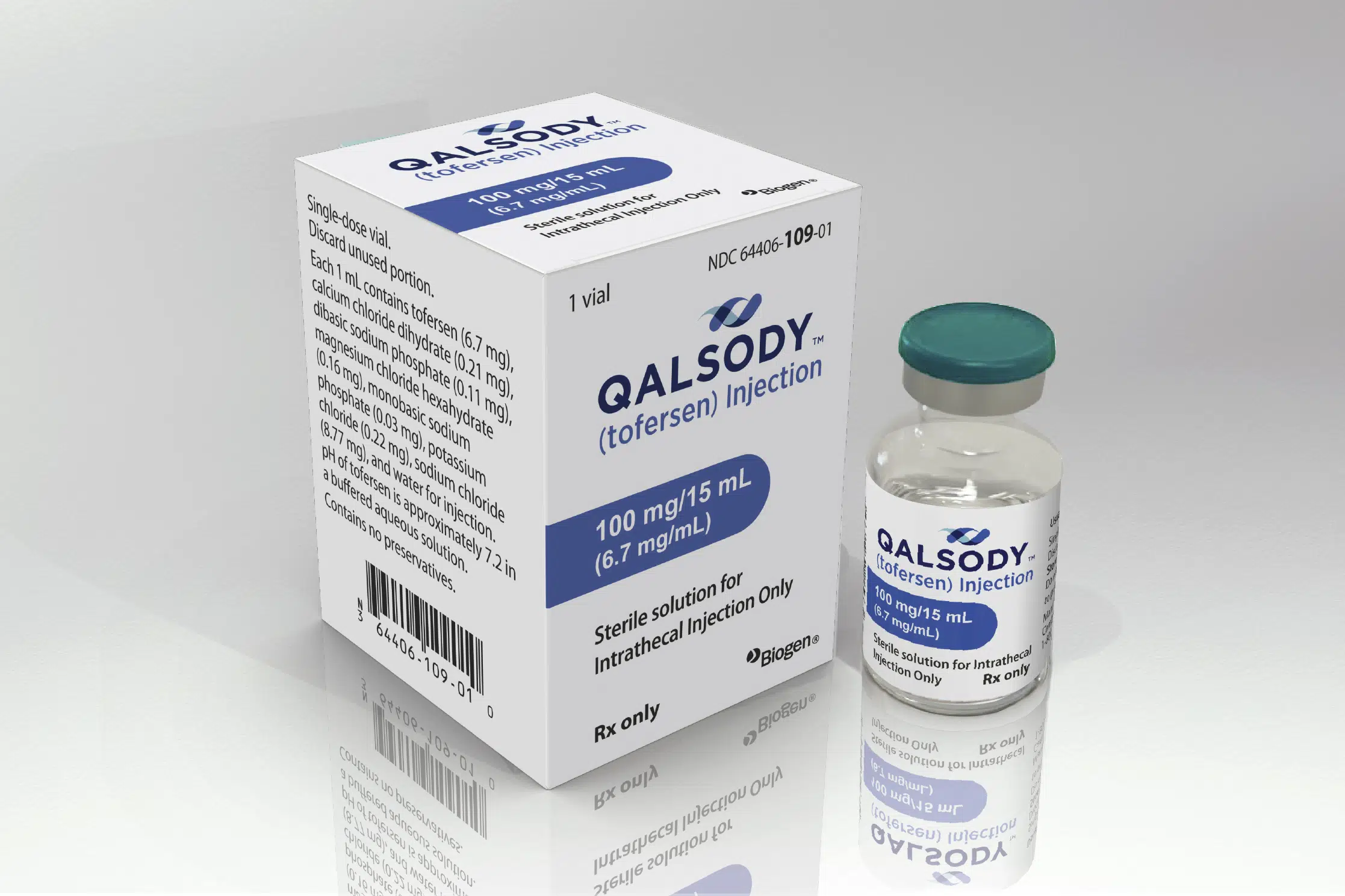
A new drug, tofersen, shows promise in slowing or reversing symptoms of a rare form of ALS by targeting the SOD1 mutation, with some patients experiencing significant improvements and reduced risk of death, marking a potential breakthrough in ALS treatment.

A Ballynahinch man with MND advocates for wider access to the groundbreaking drug Tofersen, which may slow disease progression, emphasizing the importance of timely treatment to improve quality of life and extend independence. The drug is currently not widely available in the UK, with efforts ongoing to increase access and funding.
The FDA has approved Biogen's injectable drug, tofersen, for a rare genetic mutation that causes ALS, or Lou Gehrig's disease, which affects less than 500 people in the US. The drug is the first for an inherited form of ALS and was approved via the FDA's accelerated pathway, which allows drugs to launch based on promising early results. However, the FDA is requiring Biogen to continue studying the drug in a trial of people who carry the genetic mutation but do not yet have ALS symptoms.
The FDA has granted accelerated approval for Biogen's drug tofersen, which targets a rare and aggressive form of ALS caused by mutations in the SOD1 gene. While the drug failed to meet its main goal of slowing disease progression, it significantly reduced SOD1 protein levels and showed promise in reducing neurofilament light levels, which are more strongly associated with disease severity and progression. Biogen and its co-developer Ionis will conduct further studies to verify the drug's clinical benefits. The approval could pave the way for new research on targeting the genetic cause of ALS, which afflicts an estimated 5,000 new people in the U.S. every year.
The US FDA is expected to rule soon on the approval of a new drug for a rare form of ALS, which could pave the way for more flexible regulation of neurological drugs. Tofersen, developed by Biogen and Ionis Pharmaceuticals, did not slow patients' decline in a phase III trial, but some say the trial was too short. Biogen has asked the FDA to approve the drug on an 'accelerated' basis, with future trial data to determine whether it works. The FDA's willingness to review and discuss the tofersen data highlights its newfound flexibility in neurological drug development.
A panel of outside advisors to the FDA unanimously recommended that the agency grant accelerated approval to Biogen’s ALS drug tofersen despite the drug failing the primary goal of its Phase III study, an endorsement that could pave a path forward for the treatment.
The FDA's independent panel of advisors voted against the effectiveness of Biogen's investigational ALS drug, Tofersen, for a rare and aggressive form of the disease. The drug failed to meet the primary and secondary endpoint in a phase three clinical trial, but the panel voted unanimously that the drug could have a clinical benefit in reducing a protein associated with disease severity. The FDA will make a final decision on April 25. ALS is a progressive and fatal neuromuscular disease that causes nerve cells in the brain and spinal cord to waste away over time.
The FDA's independent panel of advisors voted against the effectiveness of Biogen's investigational ALS drug, Tofersen, for a rare and aggressive form of the disease. The drug failed to meet the primary and secondary endpoint in a phase three clinical trial, but the panel voted unanimously that the drug could have a clinical benefit in reducing a protein associated with disease severity. The FDA will make a final decision on April 25, and if approved, Biogen will study the drug further to verify its clinical benefits.
FDA staff has said that Biogen's investigational ALS drug, Tofersen, may have a "clinical benefit" on a rare and aggressive form of the disease, despite failing a broader late-stage clinical trial last year. The FDA's accelerated approval designation is meant to allow for faster approval of drugs for serious conditions that fill an unmet medical need. The panel will examine mixed evidence from the trial related to Tofersen's effectiveness and safety, and vote on whether it demonstrates whether the drug will produce a clinical benefit in patients with the rare form of ALS.