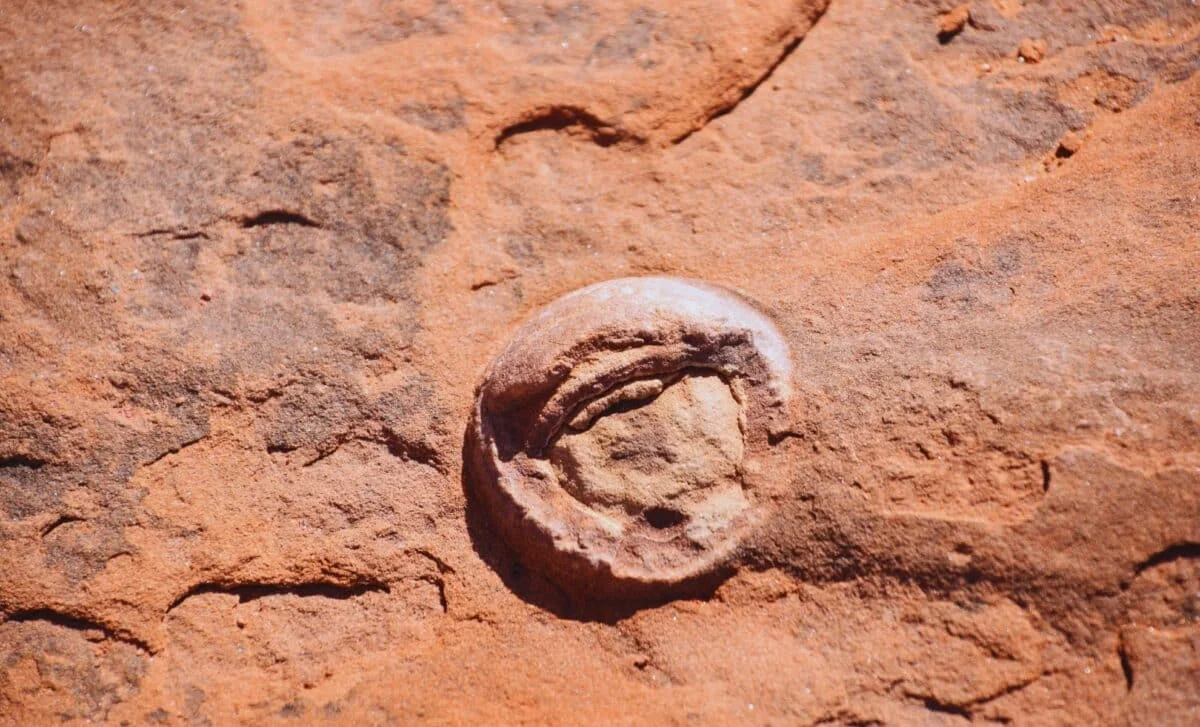
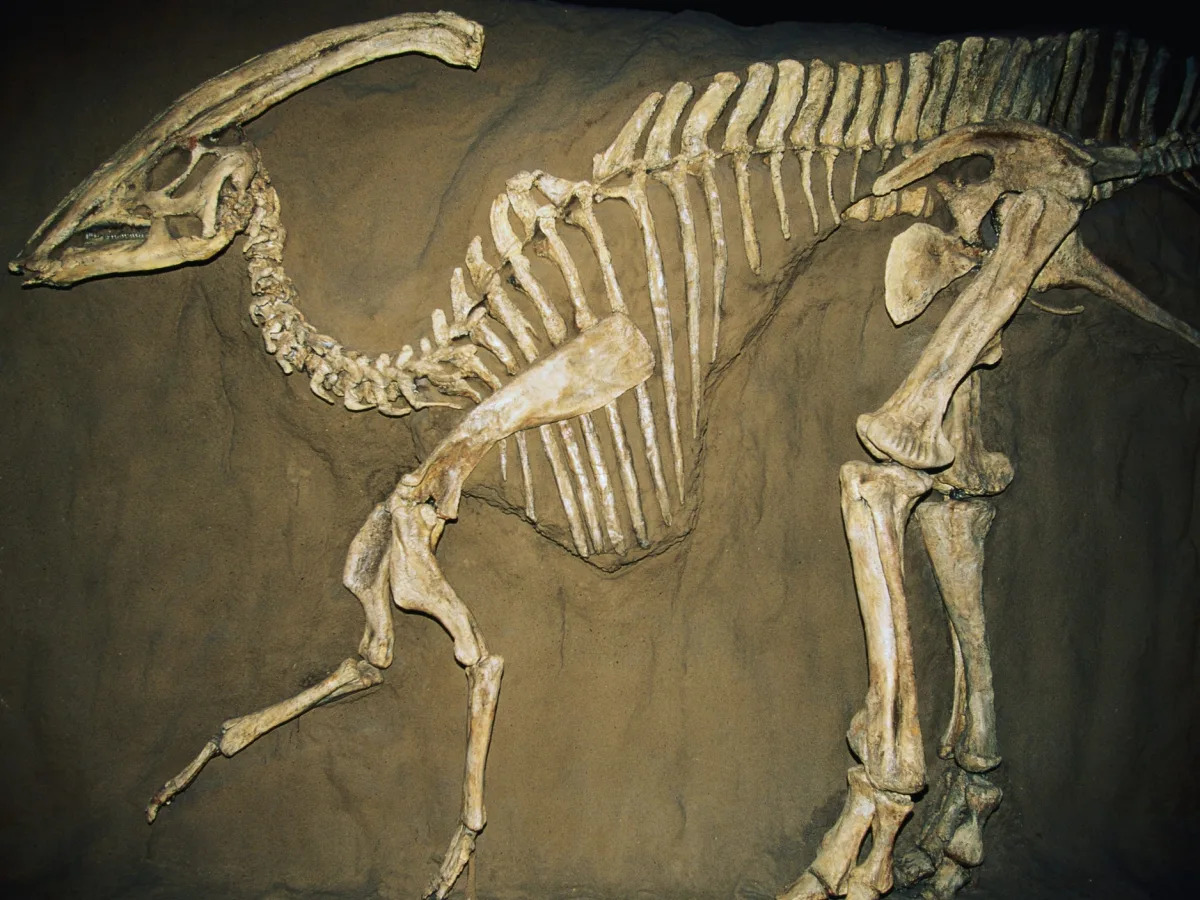
Paleontologists in India discovered the first dinosaur egg containing another egg, a condition previously known only in birds, suggesting similarities in reproductive anatomy between titanosaurs, birds, and crocodiles, and providing new insights into dinosaur biology.
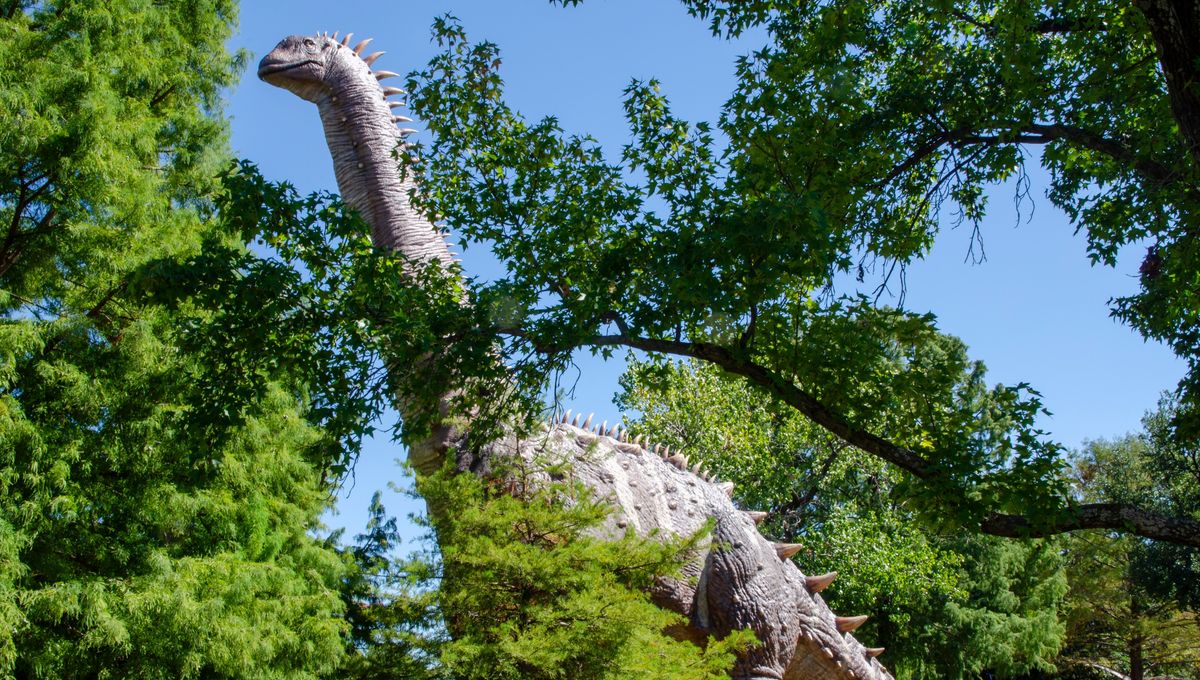
Alamosaurus, the largest land animal ever in North America, was a 21-meter-long titanosaur that lived during the Late Cretaceous period, with fossils first discovered in 1921. Its existence after a 30-million-year sauropod hiatus raises intriguing questions about dinosaur migration and extinction patterns on the continent.
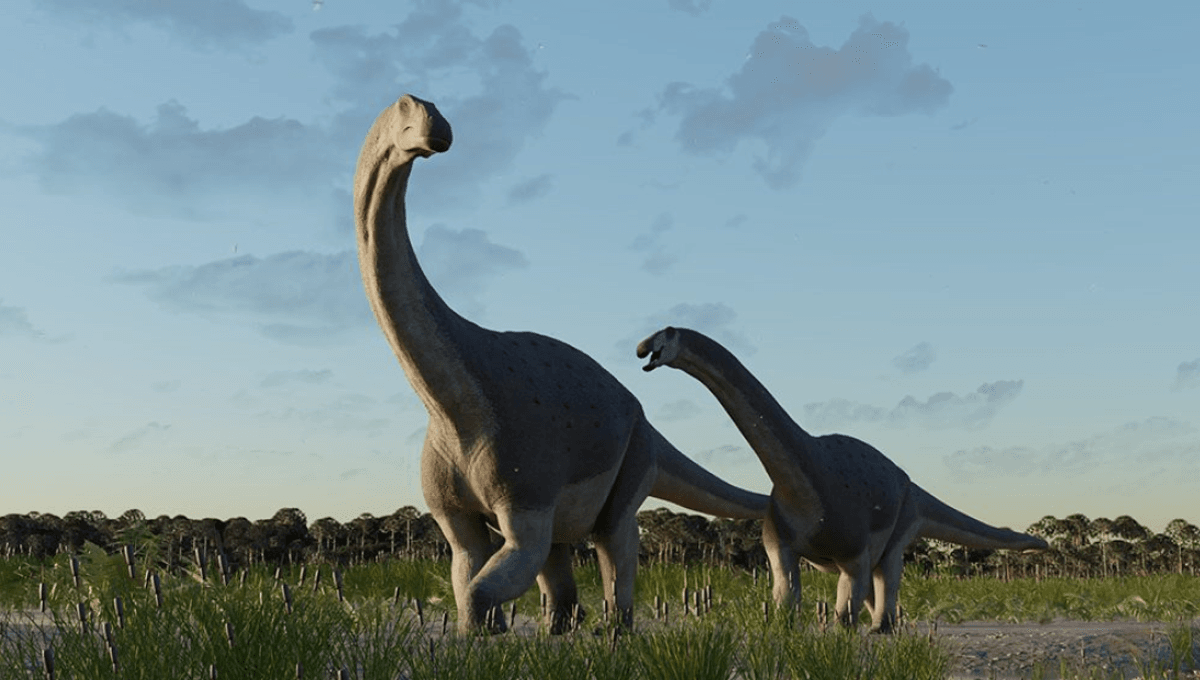
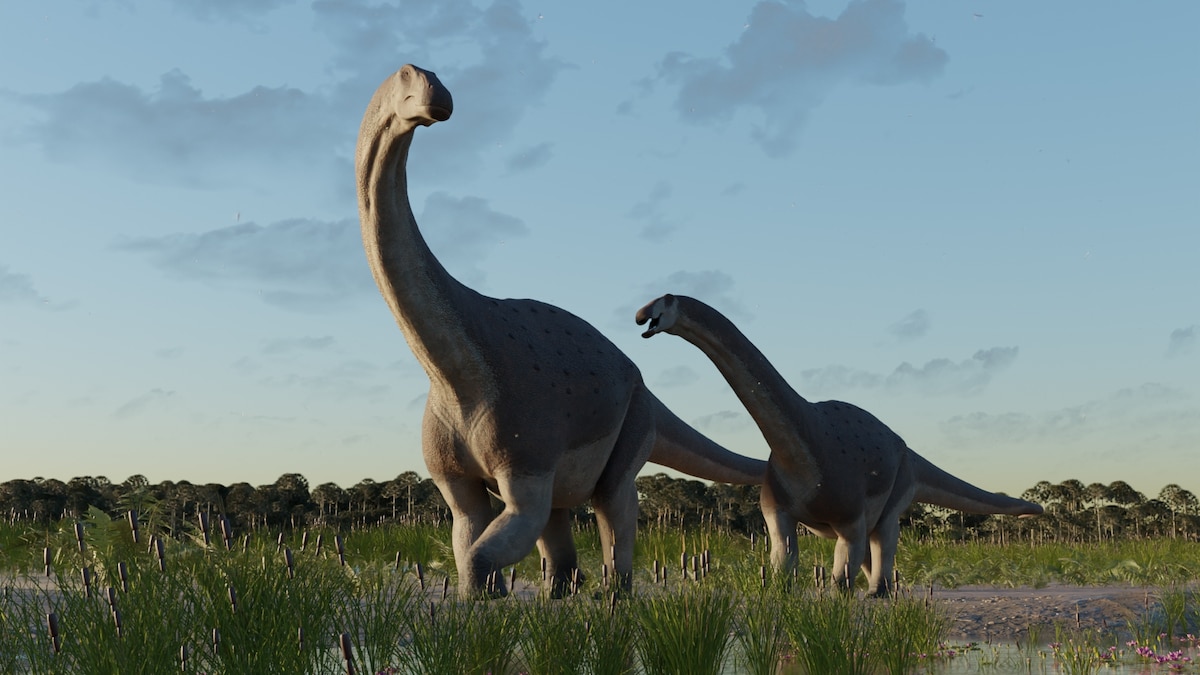
A new species of titanosaur, Titanomachya gimenezi, has been discovered in Argentina, measuring 10 times smaller than its largest relatives and resembling the size of a cow. The fossils were found in the La Colonia Formation in Chubut Province, marking the first sauropod from this formation to be recognized. This discovery sheds light on the ecological changes and downsizing of titanosaurs during the Late Cretaceous Epoch, providing insights into the landscape of dinosaurs in Patagonia.
A new genus and species of small-sized titanosaurian sauropod, Titanomachya gimenezi, has been discovered in Patagonia, Argentina. This ancient species roamed the Earth during the latest Cretaceous period and belonged to the group of derived titanosaurian sauropods called Lithostrotia. The fossilized remains were recovered from the La Colonia Formation in Chubut Province, and despite being represented only by limb elements, it exhibits a unique combination of characteristics for a Late Cretaceous titanosaur. Further research is needed to understand the evolutionary significance of titanosaurian sauropods in Patagonia during the Late Cretaceous epoch.
A new dinosaur, Titanomachya gimenezi, discovered in Patagonia is one of the smallest titanosaurs ever found, about the size of a cow. Uncovered by paleontologist Diego Pol and colleagues, this find sheds light on the late Cretaceous period in South America, offering new insights into the diverse dinosaur species that roamed the region. The discovery hints at significant environmental changes and raises questions about why Titanomachya was so small, prompting further investigation into the factors that may have influenced its size and the broader ecosystem.
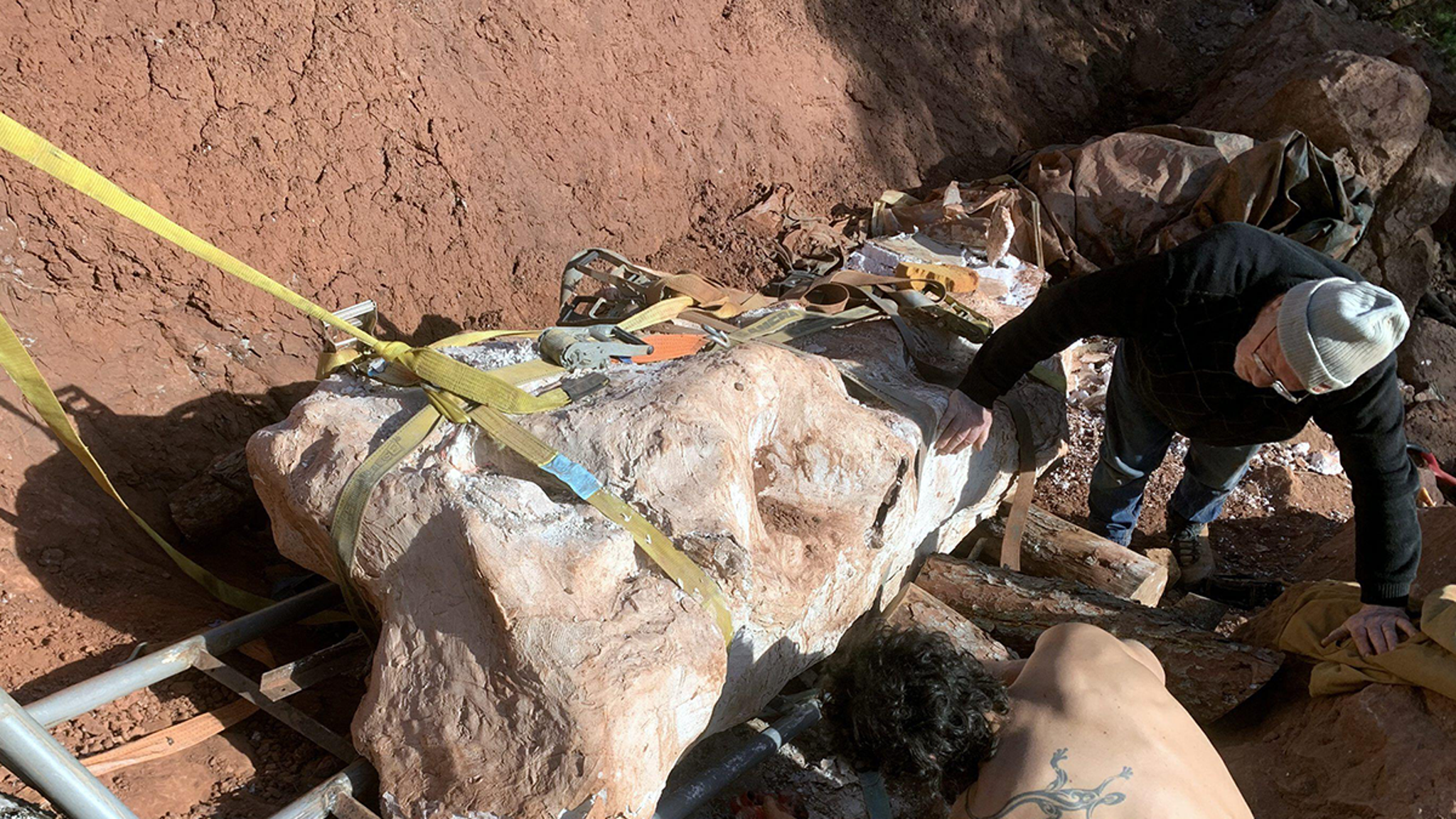
A hiker in France stumbled upon a 32.8-foot Titanosaur skeleton while walking his dog, leading to the discovery of a complete long-necked sauropod fossil from around 66 million years ago. The find has excited researchers and local associations, with experts also uncovering other fossils from the same period at the site. The hiker, Damien Boschetto, plans to pursue paleontology following this remarkable discovery.
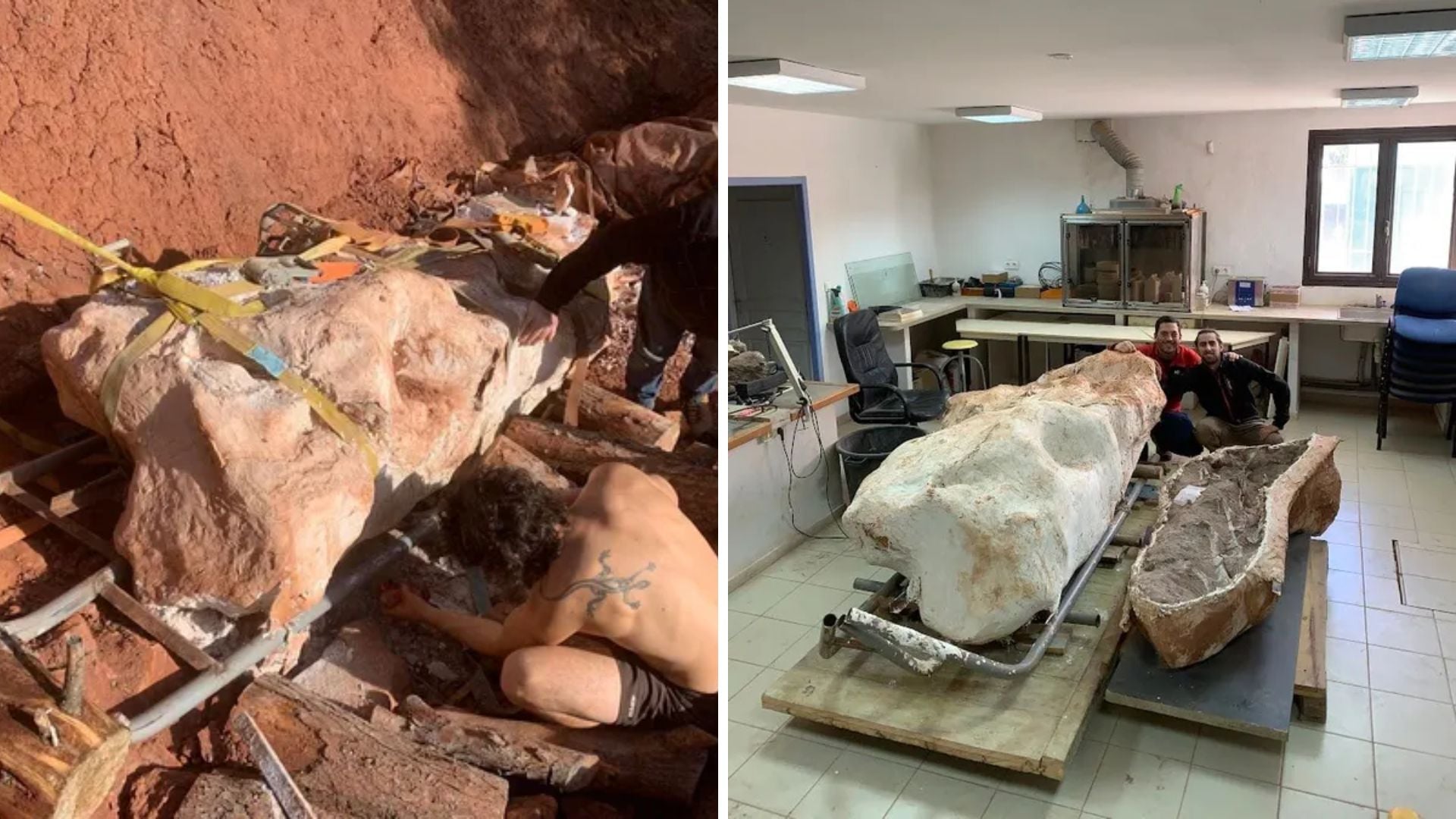
Amateur paleontologist Damien Boschetto stumbled upon nearly complete 70-million-year-old Titanosaur fossils while walking his dog in Montouliers, France, following a recent landslide. The 30-foot-long skeleton, believed to be about 70% complete, is an exceedingly rare find and will be displayed at the Cruzy Museum. Boschetto's discovery has led him to pursue a master's degree in paleontology, marking the beginning of a promising career in the field.
Amateur paleontologist Damien Boschetto stumbled upon a 32.8-foot Titanosaur skeleton while walking his dog in a forest in southern France, astonishing researchers with its almost original anatomical position. The find, including connecting tissues, is a rare discovery of a largely intact Titanosaur, and experts are still determining its exact species. The area where the discovery was made is a bone bed, teeming with animal bones and fossils, including remains of other dinosaurs. Boschetto's find has led him to pursue a master's degree in paleontology, leaving his job to delve further into his passion for prehistoric creatures.
In France, an almost fully intact Titanosaur skeleton, estimated to be around 70 million years old, has been discovered by an amateur paleontologist and his dog. The nearly complete skeleton offers valuable insight into the physiology of Titanosaurs and sauropods, and is expected to be a significant educational and display piece. The discovery has led to plans for a new museum to showcase the findings, including other dinosaur and ancient creature fossils found in the same bone bed.
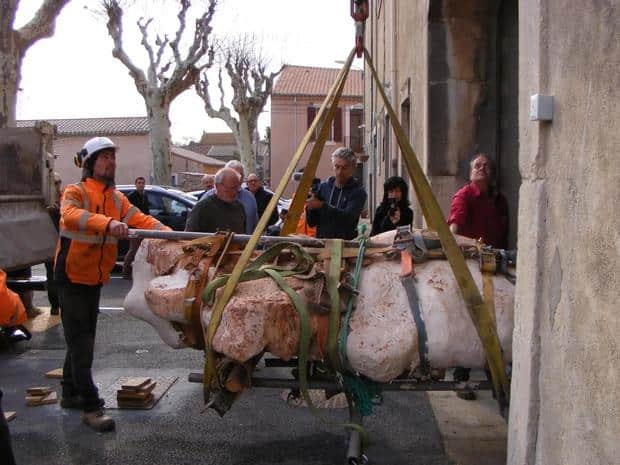
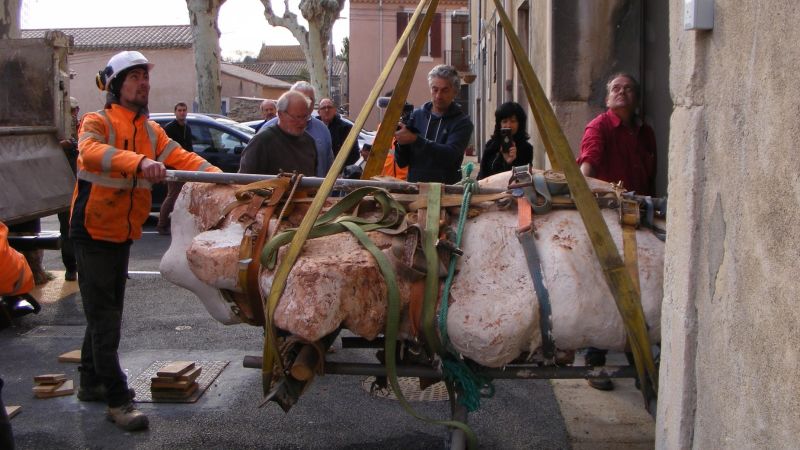
Frenchman Damien Boschetto discovered a nearly intact 70-million-year-old titanosaur skeleton while walking his dog in a forest near his hometown in southern France, keeping the find secret for almost 2 years to protect it from pillagers. The fossil is now on display at the Cruzy Museum, and Damien has left his job in the energy sector to pursue a master’s degree in paleontology.
A 70-million-year-old near-complete Titanosaur skeleton has been discovered in southern France by a 25-year-old man and his dog, who stumbled upon it while walking in the forests near Montouliers.
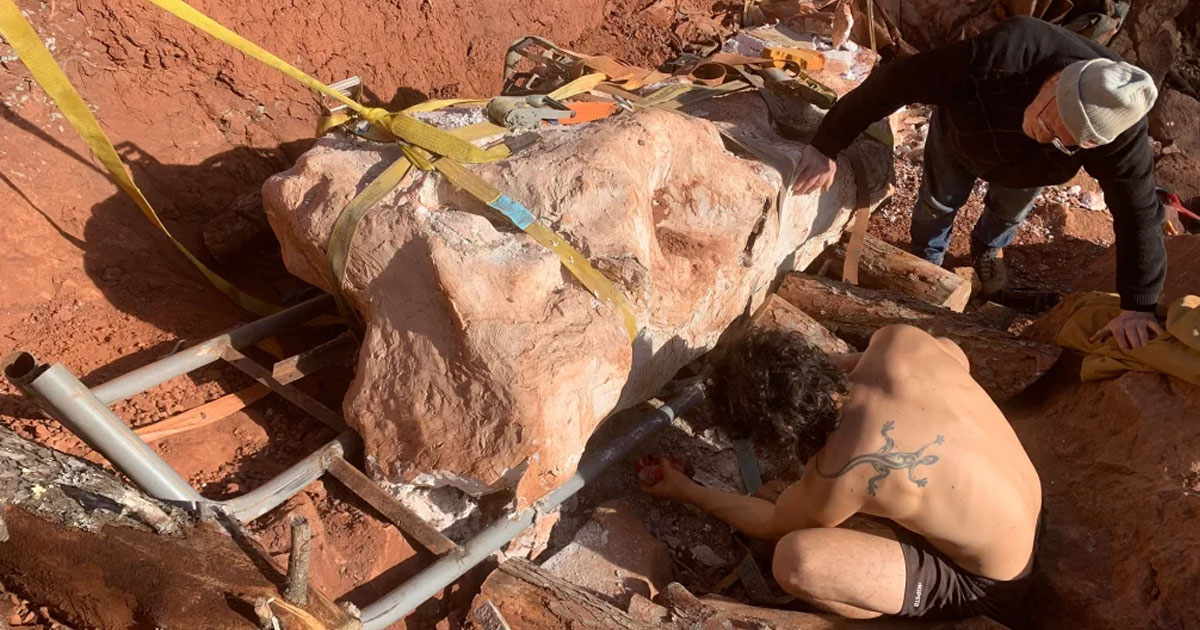
A 70 million-year-old almost complete Titanosaur skeleton, measuring nearly 32.8 feet long, was discovered in southern France by amateur paleontologist Damien Boschetto and his dog. The fossil, found in anatomical connection from hind skull to tail, is a rare and significant find, shedding light on the ecosystems of that time. The Archaeological and Paleontological Cultural Association at the Cruzy Museum, in collaboration with the French National Center for Scientific Research, identified and excavated the specimen, which also included fossils of other dinosaurs and vertebrates. The region is known for its rich fossil deposits, and the association plans to continue research and hopes to create a museum to showcase their collections.
A man in France stumbled upon a 70-million-year-old titanosaur fossil while walking his dog, but kept the discovery secret for two years to protect the site from vandals. The nearly 30-foot-long skeleton, nearly 70% complete, was found in Montouliers near Hérault, sparking a career change for the man who found it. The fossil will soon be displayed at the Cruzy Museum, and the man has since quit his job to pursue a master's degree in paleontology.
A man in France stumbled upon a 70-million-year-old titanosaur fossil while walking his dog, but kept the discovery secret for two years to protect the site from vandals. The nearly 70% complete skeleton sparked a career change for the man, Damien Boschetto, who found it, leading him to pursue a master's degree in paleontology. The fossil will soon be displayed at the Cruzy Museum, and Boschetto's volunteering there has been valuable for its paleontology department.
A man stumbled upon a 70-million-year-old titanosaur fossil while walking his dog in Montouliers, France, and kept the discovery secret for two years to protect it from vandals. The nearly complete 30-foot-long fossilized titanosaur, found to be around 70% complete, will soon be displayed at the Cruzy Museum. The man, Damien Boschetto, a paleontology enthusiast, quit his job to pursue a master's degree in paleontology after volunteering at the museum for two years.