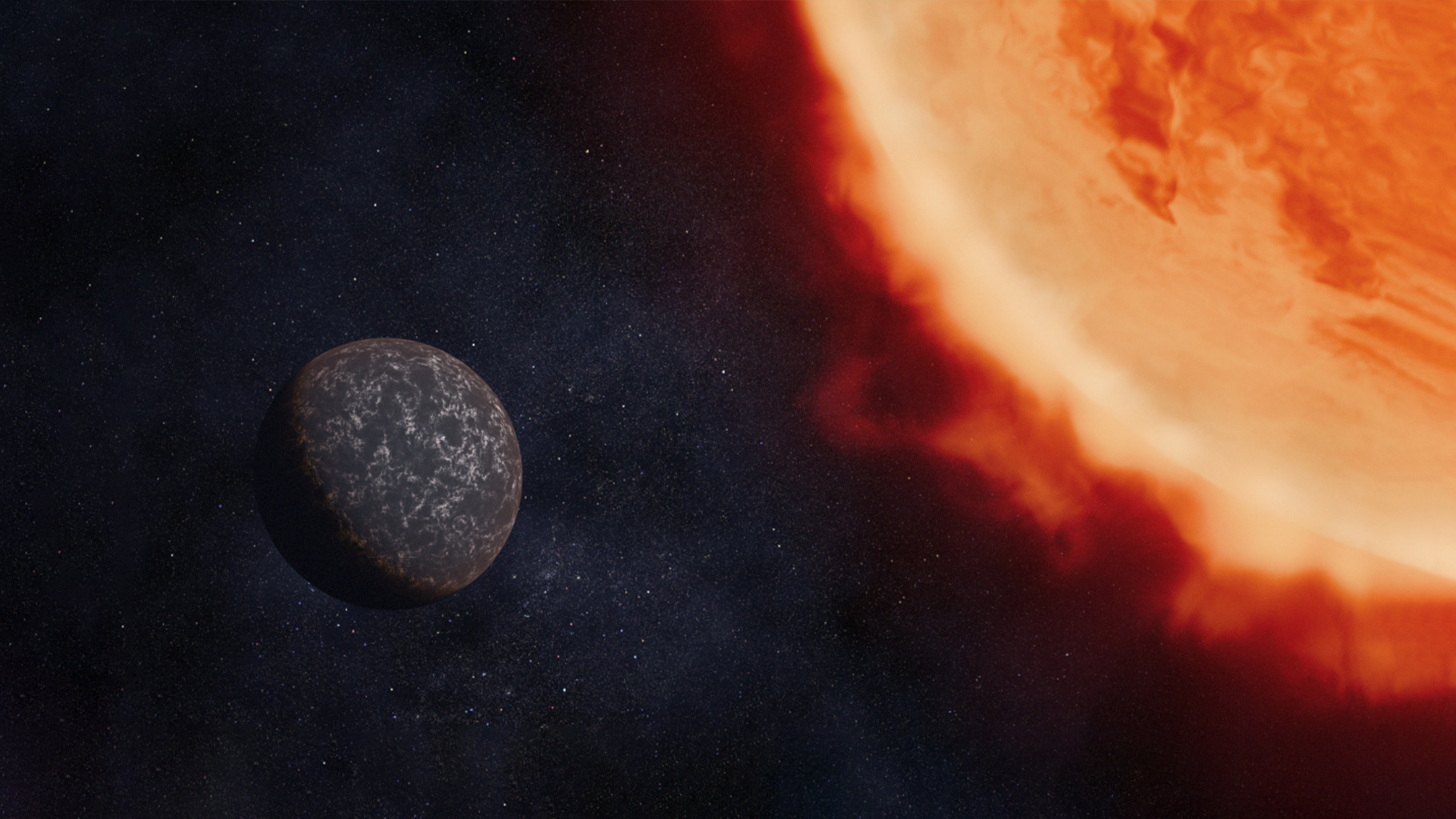
Scientists have confirmed the existence of a Super-Earth exoplanet, LHS 3844b, which is tidally locked, with one side in perpetual sunlight and the other in eternal darkness. Located 49 light-years away, the planet orbits very close to its star and is unlikely to have a substantial atmosphere. NASA's James Webb Space Telescope has been investigating the planet and confirmed the existence of tidally locked exoplanets within the Milky Way. This discovery sheds light on the nature of super-Earths, which are of great interest to researchers for providing insights into early Earth and the potential for life beyond our solar system.
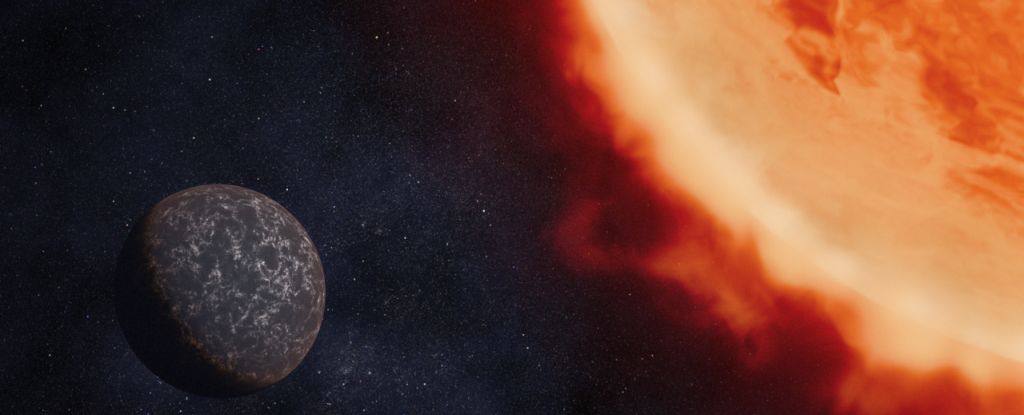
Astronomers have confirmed the existence of a "bizarre eyeball planet," LHS 3844b, which is tidally locked to its host star, with one side in perpetual darkness and the other in constant sunlight. This finding provides compelling evidence that tidally locked exoplanets are possible and potentially common in the Milky Way. The planet, located 48 light-years away, is too hot for life as we know it and likely has a rocky composition without an atmosphere. Researchers used infrared observations to determine the planet's rotation and confirmed that it is tidally locked, similar to the Moon's relationship with Earth. This study sheds light on the nature of exoplanets and provides valuable insights into their unique characteristics.
Tidal locking, the condition where a planet's rotation is the same as its orbit around its parent body, has fascinated many science fiction authors. This article highlights five classic SF stories that explore the phenomenon of tidal locking, including tales of explorers on Venus, Mercury, and an Earth that has slowed to a stop. These stories offer thrilling adventures and imaginative worlds, showcasing the endless possibilities of science fiction.
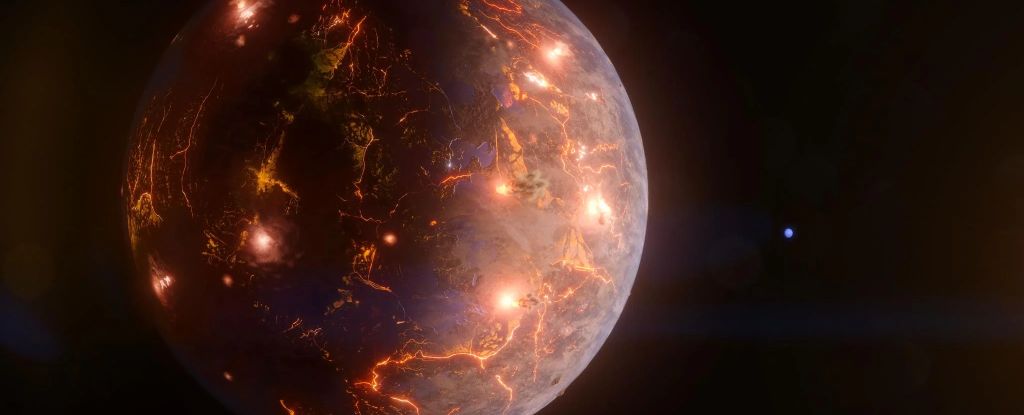
Astronomers have discovered an exoplanet, LP 791-18d, that is almost the same size as Earth and sits in the habitable zone of its star. However, the planet's rotation is tidally locked, meaning one side is always in scorching hot daylight, and the other in perpetual night. The planet's insides are probably a roiling hot mess that erupt from its surface in the form of raging volcanoes. The discovery could help astronomers better understand how habitable conditions emerge on Earth-like planets and the importance of studying each planetary system holistically.
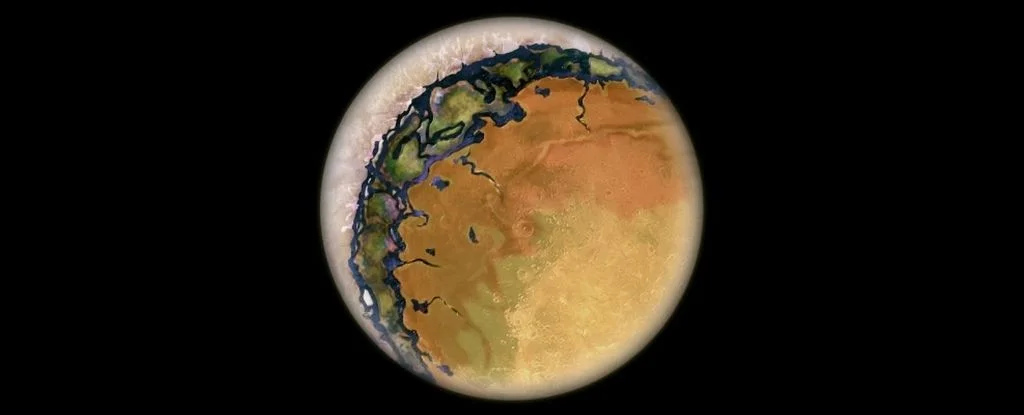
A new study has found that the thin twilit zone where day meets night, known as the terminator, on closely-orbiting, duel-personality exoplanets may be habitable. The team employed modified climate modeling software usually used for Earth to determine if there's any way such worlds could be habitable. Interestingly, the team's work showed that more water was likely to render eyeball planets less habitable. The team's research has been published in The Astrophysical Journal.